
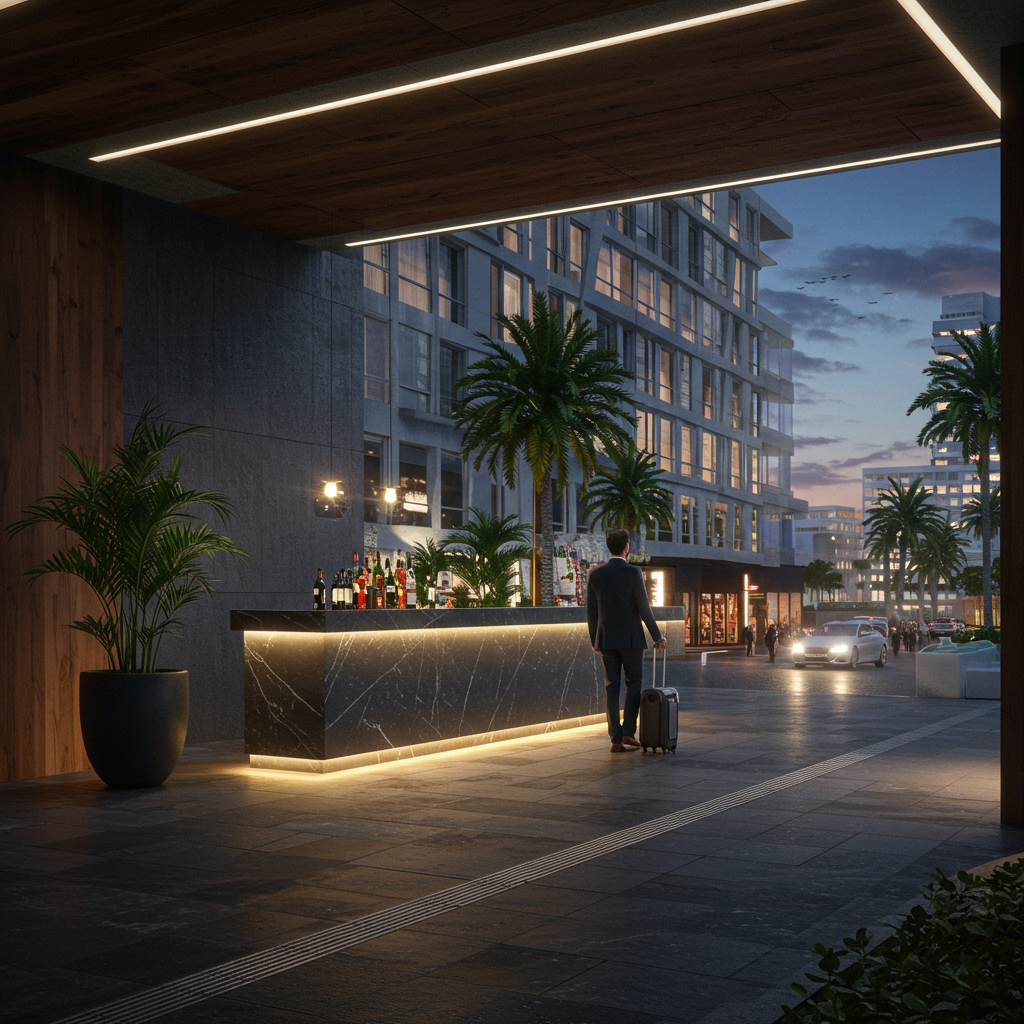
Explore the critical guest journey stages in hospitality. This definitive guide covers optimizing arrivals, seamless transitions, and vibrant late-night energy to boost satisfaction and revenue.
This article provides a comprehensive framework for hospitality managers and owners to deconstruct, analyze, and elevate the guest experience. By focusing on distinct guest journey stages—from the initial arrival and crucial in-stay transitions to cultivating a captivating late-night atmosphere—we offer actionable strategies to enhance customer satisfaction, operational efficiency, and profitability. We will delve into specific KPIs such as Net Promoter Score (NPS), average check-in time, and ancillary revenue per guest, providing verifiable processes and real-world case studies. The goal is to transform standard service into a memorable, brand-defining arc of experience that drives loyalty and positive reviews, ultimately impacting metrics like ADR and RevPAR.
Introduction
In the hyper-competitive hospitality landscape, the difference between a good stay and an unforgettable one lies in the details of the experience. The modern guest doesn’t just buy a room; they invest in a story, a feeling, an escape. This narrative is best understood as the “guest experience arc,” a carefully choreographed sequence of moments that begins long before arrival and lingers long after departure. A critical component of this arc is the strategic management of the various guest journey stages. From the seamless efficiency of arrival, through the fluid and intuitive transitions between hotel spaces and activities, to the curated vibration of its late-night energy, every touchpoint matters. Neglecting any single stage can disrupt the entire arc, leading to dissatisfaction and lost revenue opportunities.
This guide adopts a data-driven, process-oriented methodology to dissect these stages. We will move beyond vague notions of “good service” to establish concrete Standard Operating Procedures (SOPs), Key Performance Indicators (KPIs), and training protocols. Success will be measured through a balanced scorecard of metrics including guest-facing indicators like Customer Satisfaction (CSAT) scores and Net Promoter Score (NPS), operational metrics like check-in time (in minutes) and staff-to-guest ratio, and financial outcomes such as increased Food & Beverage (F&B) spend per guest and higher Ancillary Revenue Per Available Room (ARPAR). By mastering these elements, a property can transform its service delivery from a series of transactions into a cohesive, memorable, and profitable journey.
Vision, values and proposal
Focus on results and measurement
Our vision is to empower hospitality brands to achieve operational excellence and create emotional resonance through a granular focus on the guest journey. We adhere to the Pareto Principle (80/20 rule), identifying the 20% of touchpoints that generate 80% of the guest’s overall impression and revenue contribution. Our core values are precision, empathy, and profitability. We believe that a deeply empathetic understanding of guest needs, when combined with rigorous, data-driven process optimization, leads directly to superior financial performance. Our standards are aligned with best practices from leading luxury hotel groups and lean management principles, ensuring that every proposed change is not only impactful but also efficient and sustainable.
- Key Value Proposition: We transform operational friction into seamless, brand-enhancing experiences that increase guest lifetime value.
- Main Quality Criterion: Any implemented strategy must demonstrate a measurable improvement in a core KPI (e.g., a >10% increase in NPS or a <3-minute average check-in time) within two fiscal quarters.
- Decision Matrix: Initiatives are prioritized based on a matrix scoring potential impact on guest satisfaction against the operational cost and complexity of implementation. High-impact, low-complexity initiatives (“quick wins”) are tackled first.
- Sustainability: We advocate for solutions that not only enhance the guest experience but also improve energy efficiency and reduce waste, contributing positively to both the bottom line and corporate responsibility.
Services, profiles and performance
Portfolio and professional profiles
We offer a suite of specialized consulting services designed to analyze and enhance every facet of the guest experience arc. Our team consists of experienced hospitality strategists, operations analysts, service design experts, and training facilitators who work collaboratively to deliver holistic solutions. Our services are tailored to address the unique challenges of different property types, from boutique urban hotels to large-scale resorts.
- Guest Journey Mapping & Audit (Phase 1): Our analysts conduct a comprehensive audit of all existing guest journey stages. This involves process mapping, staff interviews, guest shadowing (with permission), and analysis of review data. Key deliverable: A detailed journey map highlighting friction points and opportunities, with a baseline KPI dashboard. KPI: Audit completion within 3 weeks.
- Experience Design & Process Re-engineering (Phase 2): Based on the audit, our service designers and operations experts co-create new, optimized workflows for arrivals, transitions, and late-night programming. This includes everything from front desk choreography to F&B menu engineering for different times of day. KPI: Reduction of negative mentions related to check-in by 25% in post-implementation surveys.
- Staff Training & Culture Development (Phase 3): We deploy training specialists to implement the new SOPs. Modules focus on technical skills, emotional intelligence, proactive service, and empowerment to resolve issues on the spot. KPI: Achieve a >90% score on post-training competency tests.
- Technology & Systems Integration (Phase 4): Our consultants advise on and help implement technology that supports a seamless journey, such as mobile check-in, keyless entry, guest messaging platforms, and CRM integration. KPI: Increase adoption of mobile check-in by 30% within 6 months.
- Performance Monitoring & Continuous Improvement (Phase 5): We establish a framework for ongoing measurement, providing monthly performance dashboards and quarterly strategic reviews to ensure sustained success. KPI: Maintain a Net Promoter Score above 50.
Tables and examples
| Objective | Indicators | Actions | Expected result |
|---|---|---|---|
| Optimize Arrival | Check-in time (min); NPS (Check-in); Upsell conversion (%) | Implement pre-arrival mobile check-in; Redesign front desk layout for better flow; Train staff on proactive welcoming. | Average check-in time < 3 minutes; NPS for check-in > 60; 15% conversion on room upgrade offers. |
| Improve Transitions | Guest requests response time; F&B capture rate (in-house); Spa booking rate. | Deploy guest messaging platform; Create “transition” offers (e.g., pre-dinner cocktail voucher at check-in). | 95% of requests acknowledged in < 5 minutes; Increase F&B capture rate by 10%. |
| Boost Night Energy | Bar revenue per guest; Noise complaints (per 100 rooms); Social media tags. | Curate a live music schedule; Design a signature late-night cocktail menu; Optimize lighting and acoustic design. | Increase average bar spend by €15 per guest after 9 PM; Reduce noise complaints by 50%. |
Representation, campaigns and/or production
Executing the Guest Experience Vision
Transforming a guest journey map from a document into a living, breathing reality is a complex production. It requires meticulous project management, vendor coordination, and a clear execution schedule. Our role is to act as the “producer” of the new guest experience, ensuring every element, from staff uniforms to the background music in the elevator, is perfectly aligned with the desired brand narrative. We manage the logistics of change, whether it’s sourcing new lobby furniture that encourages social interaction, obtaining the necessary permits for a new terrace bar, or coordinating the installation of a new property management system (PMS) with minimal disruption to operations.
- Supplier Coordination Checklist:
- RFQ/RFP process completed for all new technology and FF&E (Furniture, Fixtures, and Equipment).
- Contracts vetted and signed with clear Service Level Agreements (SLAs).
- Installation and delivery schedules confirmed and integrated into the master project plan.
- On-site contact person designated for each vendor.
- Contingency Plan:
- Alternative suppliers identified for critical items (e.g., keycard systems, linens).
- Phased rollout plan to mitigate risk of full-system failure.
- Temporary staffing plan in case of training-related service delays.
- Communication plan for guests in case of unavoidable disruption during renovations.
- Execution Schedule (Simplified Example):
- Weeks 1-4: Finalize design, sign vendor contracts.
- Weeks 5-8: Staff training on new processes (Phase 1). Technology installation and testing.
- Weeks 9-10: Phased rollout of new arrival process in one wing of the hotel.
- Week 11: Full rollout of arrival process. Begin late-night program soft launch.
- Week 12: Performance review, adjustments, and full launch.
Content and/or media that converts
Crafting Messages for Each of the Guest Journey Stages
Content is the connective tissue of the guest journey. It’s the pre-arrival email that builds anticipation, the in-room tablet that serves as a digital concierge, and the social media post that captures the hotel’s late-night vibe. Our approach is to create a content strategy that delivers the right message, in the right format, at the right moment to guide the guests and drive conversions. We use A/B testing for email subject lines to maximize open rates and analyze click-through rates on in-app offers to optimize their placement and value. The goal is to make every piece of content feel less like marketing and more like a helpful, personalized conversation.
-
- Pre-arrival phase:
-
- Task: Create a series of 3 automated emails.
- Responsible: Digital Marketing Specialist.
- Content: Email 1 (post-reservation): Confirmation and presentation of the hotel. Email 2 (7 days prior): Upgrade opportunities and activity bookings (spa, restaurants). Email 3 (24 hours prior): Link for mobile check-in and arrival information.
CTA: “Check in now”, “Reserve your table”, “Enhance your stay”.
-
- Pre-arrival phase:
KPI: Open rate > 40%, Upsell conversion rate > 5%.
In-Stay Phase:
Task: Develop content for the hotel app/in-room tablet.
Responsible: Guest Experience Manager.
Content: Room service menus, daily activities guide, “flash” offers (e.g., 2-for-1 cocktails from 5:00 PM to 6:00 PM), messaging platform with the Concierge.
CTA: “Order now”, “Reserve my spot”, “Chat with us”.
KPI: 20% increase in room service orders through the app, message response time < 5 min.
Post-Stay Phase:
Task: Design a feedback survey and a “see you soon” email.
Responsible: Digital Marketing Specialist.
Content: Email 1 (24 hours after check-out): Request for feedback (NPS) and link to TripAdvisor/Google. Email 2 (30 days later): Exclusive offer for future stays.
- CTA: “Share your opinion”, “Book your next getaway”.
- KPI: Survey response rate > 25%, 5% repeat booking rate attributed to the email.
Training and employability
Demand-driven catalog
A flawless process is only as good as the people executing it. Our training programs are designed to be practical, engaging, and directly linked to the hotel’s performance KPIs. We go beyond simple instruction to foster a culture of proactive hospitality and empowerment.
- Module 1: The Psychology of the Guest Upon Arrival. Focused on reception staff, valet parking attendants, and bellhops. Covers techniques for reading body language, managing stressful arrivals (delayed flights), and creating a memorable first impression in under 90 seconds.
- Module 2: The Art of a Smooth Transition. Aimed at concierge, food and beverage, and housekeeping staff. Teaches how to anticipate guest needs as they move through the hotel, offering relevant suggestions without being intrusive. Includes role-playing of upselling and cross-selling scenarios.
- Module 3: Orchestrating Nighttime Energy. For bar managers, security personnel, and F&B hosts. Focuses on ambiance management (music, lighting), responsible alcohol service, crowd management, and conflict resolution in a high-energy environment.
- Module 4: Empowerment and Real-Time Problem Solving. A cross-functional course for all front-line staff. Provides a framework for making autonomous decisions to resolve guest complaints (e.g., authorizing a complimentary dessert) without escalation, improving satisfaction and efficiency.
Methodology
Our training methodology is blended, combining interactive face-to-face sessions, e-learning modules for technical knowledge, and practical on-the-job assessments. The evaluation is conducted using a rubric that measures both the correct execution of the process and the demonstrated interpersonal skills. Participants who successfully complete the program receive certification and, in collaboration with hotel management, may be offered a career advancement path within the organization, creating an internal pool of highly qualified talent. The expected result is a 15% reduction in staff turnover and a direct increase in guest satisfaction scores related to staff service.
Operational Processes and Quality Standards
From Request to Execution
We implement a clear and auditable process optimization pipeline, ensuring that each stage has defined deliverables and measurable acceptance criteria.
- Diagnosis and Mapping (Weeks 1-2): A comprehensive analysis of the current state is performed. The deliverable is a “Guest Experience Diagnostic Report,” which includes “as-is” process maps and a benchmark of KPIs against the competition. Acceptance criterion: Approval of the report by hotel management.Design and Proposal (Week 3): The new “to-be” workflows are designed. The deliverable is a “Strategic Optimization Plan” that details the new SOPs, the required technological changes, and a cost-benefit analysis. Acceptance criterion: Agreement on the scope, budget, and timeline.
Pre-production and Training (Weeks 4-6): All resources are prepared. Deliverables: Printed and digital SOP manuals, completed training plan, and configured and tested technological systems. Acceptance Criteria: 100% of relevant staff have passed the training assessment.
- Implementation and Launch (Weeks 7-8): The new processes are implemented, often gradually. Deliverable: “Launch Report” with initial performance data. Acceptance Criteria: Stable operation for 48 hours without critical incidents.
- Closure and Ongoing Optimization (Week 9 onwards): Monitoring is transferred to the hotel team. Deliverable: Automated KPI dashboard and a plan for quarterly reviews. Acceptance Criteria: The internal team is able to manage the dashboard and lead review meetings autonomously.
Quality Control
- Roles: The “Experience Champion” (a senior hotel manager) is ultimately responsible. The “Stage Leaders” (department heads) are responsible for their specific areas (reception, F&B).Escalation: Issues not resolved by frontline staff within 15 minutes are escalated to the Stage Leader. Systemic issues are discussed in a weekly quality meeting.
Acceptance Indicators and SLAs: Each SOP has clear SLAs. For example, the SLA for mobile check-in is that the digital key is delivered to the guest’s smartphone in less than 60 seconds after completing the online process.
Transition (to the room)Room 100% ready, clear information, welcoming atmosphere.Room inspection rate > 98%; 0 cleanliness complaints; Room temperature preset to 21°C.Risk: The room is not ready.Mitigation: Real-time communication between housekeeping and reception; Complimentary drink offer at the bar.
| Phase | Deliverables | Control Indicators | Risks and Mitigation |
|---|---|---|---|
| Arrival | Personalized welcome, efficient check-in, luggage delivery. | Average wait time <2 min; Total check-in time <5 min; 0 room assignment errors. | Risk: Unexpected arrival peaks. Mitigation: On-call staff and cross-training of concierge staff to support reception. |
| Nighttime Energy | Controlled environment, fast bar service, visible but discreet security. | Decibel level below 85 dB in lounge areas; Drink service time <4 min; Bar NPS > 55. | Risk: Disruptive guest behavior. Mitigation: Clear escalation protocol for security personnel; Verbal De-escalation Training. |
Application Cases and Scenarios
Case 1: Revitalizing the Bar of an Urban Boutique Hotel
Challenge: An 80-room boutique hotel in the center of a major city had an elegant but underutilized bar. F&B revenue after 8:00 p.m. was 40% lower than its competitors. The atmosphere was perceived as “too quiet” and failed to retain guests or attract local customers. The bar’s NPS was only 15.
Solution: A comprehensive “Nighttime Energy” strategy was implemented. This included:
Scheduling: An events calendar was introduced: live jazz Tuesdays, DJ vinyl Thursdays, and guest mixologists on weekends.
Menu Design: A seasonally changing menu of signature tapas and specialty cocktails was created. A “Night Caps” section was added to attract late-night guests.
Ambiance: A smart lighting system was installed to change the atmosphere throughout the evening, and the acoustics were improved to allow for conversation even with music playing.
Marketing: A social media campaign targeting local professionals was launched, and “Dinner and Jazz” packages were created for hotel guests.
Results: Within six months, bar revenue increased by 65%. The bar’s NPS soared to 58. 30% of the nighttime clientele were now non-guests, creating a new revenue stream and a more vibrant atmosphere. The hotel positioned itself as a local nightlife destination, which in turn increased its overall appeal and ADR by 5%.
Case 2: Redesigning the Arrival Experience at a Luxury Resort
Challenge: A 300-room beachfront resort suffered from long wait times at reception during peak weekend arrivals, often exceeding 15 minutes. This led to frustration and complaints, tarnishing the first impression of a luxury stay. The CSAT for the check-in process was 6.5/10.
Solution: The arrival phase was completely restructured, moving away from the traditional counter model.
- Pre-Check-in: A robust mobile check-in system was implemented, allowing guests to complete registration and identity verification 24 hours in advance.
- Counterless Reception: The large reception desk was removed and replaced with several smaller welcome pods and a comfortable lounge area. Upon arrival, guests were greeted by a host with a tablet, offered a welcome drink (coconut water or a glass of sparkling wine), and escorted directly to their room, where the digital key was already on their phone or a physical card was discreetly handed to them.Luggage Management: Luggage was tagged upon arrival at the resort and guaranteed to be delivered to the room within 10 minutes of the guest’s check-in.
Results: The average curbside-to-room time was reduced to less than 5 minutes. The check-in Customer Satisfaction Score (CSAT) increased to 9.2/10. Arrival-related complaints were completely eliminated. This “frictionless arrival” approach became a key marketing differentiator, and the resort saw a 10% increase in direct bookings, with guests specifically citing the arrival experience in their positive reviews.
Case 3: Standardizing Transitions in a Business Hotel Chain
Challenge: A chain of 20 business hotels had inconsistent service. The guest transition from their workday (often in the hotel’s conference facilities) to their evening leisure time was a point of friction. Guests complained about the lack of quick dinner options and the difficulty of relaxing after a day of meetings.
Solution: A standardized “Evening-to-Night Transition Playbook” was developed for all properties.
- Networking Happy Hour: A happy hour was instituted from 5:00 PM to 7:00 PM in each hotel bar, designed not only as a drinks offer but also as a facilitated networking opportunity for business guests.
- Quality Grab & Go Menu: A high-quality yet quick menu was created, available both at the bar and for room service, featuring healthy and substantial options that could be ready in under 15 minutes.
- Relaxation Kits: Guests were offered the option to request a complimentary Relaxation Kit through the hotel app, which included items such as a face mask, herbal tea, and a code for a meditation app.
- Proactive Communication: At 4:30 PM, all guests received a push notification from the hotel app reminding them Evening options.
Results: Evening/night F&B revenue capture increased by 25% chain-wide. Satisfaction scores in the “Food and Beverage Options” category rose from 7.1 to 8.5. The chain received an industry award for innovation in business hospitality, strengthening its brand and justifying a slight rate increase that improved overall RevPAR by 4%.
Step-by-step guides and templates
Guide 1: How to Conduct a Guest Journey Stages Audit
- Define Scope: Decide which journey you will map first. A business traveler’s weekday journey or a family’s weekend journey? Their needs and touchpoints will be different.
- Gather Existing Data: Collect all sources of feedback: online reviews (TripAdvisor, Google, OTAs), internal satisfaction surveys, direct staff feedback. Categorize them by journey stage (booking, arrival, stay, departure).
- Build a Cross-Functional Team: Include representatives from front desk, housekeeping, food and beverage, maintenance, and marketing. Their combined perspective is crucial.
- “Walk the Process” (Guest Shadowing): Follow the exact physical and digital path of a guest. Make a test booking, arrive at the hotel, check in, go to the room, order room service, etc. Document every step, every interaction, and every potential point of friction. Use a stopwatch to time things.
- Interview Frontline Staff: Ask them about the most common problems guests face, the makeshift solutions they’ve created, and any suggestions they have. They are your most valuable source of information.
- Map Touchpoints: Use a whiteboard or diagramming software (such as Miro or Lucidchart) to create a visual map. For each touchpoint, note:The Guest Action: (e.g., “Searches for the hotel on Google Maps”).
The Channel: (e.g., “Smartphone”).
The Guest Emotions: (e.g., “Anxious to find parking”).
The Pain Points: (e.g., “The address on Google Maps is inaccurate”).
The Opportunities for Improvement: (e.g., “Send an SMS on arrival day with a direct and accurate link to Google Maps and photos of the parking entrance”).
Synthesize and Prioritize: Group the findings into key themes. Use una matriz de impacto/esfuerzo para decidir qué mejoras abordar primero.
- Crear un Informe de Auditoría: Presente el mapa visual, los hallazgos clave, los datos que los respaldan y una hoja de ruta de acciones recomendadas.
Guía 2: Plantilla para Diseñar un Proceso de Llegada en 5 Minutos
- Minuto 0-1: La Bienvenida Proactiva. El personal de la puerta o un anfitrión debe establecer contacto visual y saludar al huésped antes de que llegue a la puerta. El objetivo es abrir la puerta y ofrecer ayuda con el equipaje. KPI: 95% de los huéspedes recibidos proactivamente.
- Minuto 1-2: Identificación y Oferta Inicial. En el pod de bienvenida o recepción. El anfitrión confirma el nombre y ofrece una bebida de bienvenida. Usar frases como: “¿Ha tenido un buen viaje, [Nombre del Huésped]? Permítame ofrecerle algo refrescante mientras preparamos su llave.” KPI: Nombre del huésped usado en los primeros 30 segundos.
- Minuto 2-3: Transacción Mínima. Si el check-in no se hizo online, este es el único momento para la transacción. La tarjeta de crédito se pre-autoriza, se confirma la duración de la estancia. No se intenta hacer upselling en este momento crítico; eso se hizo pre-llegada. KPI: Tiempo de transacción < 60 segundos.
- Minuto 3-4: Orientación Clave. Se entrega la llave (física o se confirma la digital). El anfitrión proporciona 2-3 piezas de información esencial de forma concisa. “Su habitación está en el tercer piso. El desayuno se sirve en nuestro restaurante, The Grove, de 7 a 11. La contraseña del Wi-Fi es [contraseña].” Se confirma que el equipaje está en camino. KPI: Información entregada de forma clara y concisa.
- Minuto 4-5: Acompañamiento y Cierre. El anfitrión acompaña al huésped hacia los ascensores, indicando la dirección. La frase de cierre debe ser cálida y abierta: “Si necesita cualquier cosa durante su estancia, no dude en contactarnos a través de la app del hotel o marcando el cero. Disfrute de su estancia, [Nombre del Huésped].” KPI: NPS de la experiencia de llegada > 60.
Guía 3: Checklist para Activar la “Energía Nocturna”
- Evaluación del Espacio (1 semana antes):
- [ ] ¿La disposición de los muebles fomenta la interacción o el aislamiento?
- [ ] ¿El sistema de sonido está funcionando correctamente en todas las zonas?
- [ ] ¿El sistema de iluminación es regulable y permite crear diferentes ambientes?
- Programación y Talento (Diariamente):
- [ ] ¿El evento o música programada para esta noche está confirmado?
- [ ] ¿El DJ/músico ha recibido el brief sobre el ambiente deseado?
- [ ] ¿Hay un plan B en caso de cancelación del artista?
- Briefing del Personal (1 hora antes del servicio):
- [ ] ¿Todo el personal conoce las ofertas especiales de la noche?
- [ ] ¿Se han comunicado los niveles de ocupación esperados y las reservas importantes?
- [ ] ¿Se ha repasado el protocolo de seguridad y de servicio responsable de alcohol?
- Puesta en Escena (30 minutos antes del servicio):
- [ ] Ajustar la iluminación a un nivel más íntimo.
- [ ] Seleccionar la playlist de música inicial.
- [ ] Comprobar la limpieza y disposición de todas las mesas y la barra.
- Durante el Servicio (Monitoreo continuo):
-
- [ ] Ajustar el volumen de la música según la afluencia de gente (más alto cuando está lleno, más bajo al principio y al final).
– [ ] Ajustar la iluminación si es necesario.
- [ ] El gerente debe estar visible y circulando, interactuando con los huéspedes.
- [ ] Monitorear los tiempos de servicio en la barra para evitar cuellos de botella.
-
Recursos internos y externos (sin enlaces)
Recursos internos
- Plantilla de Mapeo de la Experiencia del Huésped
- Manual de Estándares de Servicio de la Marca
- Catálogo de Formación de Personal por Roles
- Dashboard de KPIs de la Experiencia del Huésped (plantilla Excel/Power BI)
- Playbook de Gestión de Crisis y Resolución de Quejas
Recursos externos de referencia
- Estándares de Calidad de Forbes Travel Guide
- Guías de la American Hotel & Lodging Association (AHLA)
- Principios de Service Design Thinking del Nielsen Norman Group
- Informes de tendencias de la industria de STR y Phocuswright
- Normativa local sobre servicio de alcohol y seguridad en locales públicos
Preguntas frecuentes
¿Cuál es la etapa más importante del viaje del huésped?
Si bien todas las etapas están interconectadas, la llegada es a menudo considerada la más crítica. Es donde se establece la primera impresión y se define el tono para el resto de la estancia. Una experiencia de llegada negativa es extremadamente difícil de remontar, mientras que una llegada excepcional crea una reserva de buena voluntad que puede mitigar problemas menores más adelante.
¿Cómo puedo medir la “energía nocturna” de mi hotel?
Se mide a través de una combinación de métricas cuantitativas y cualitativas. Las cuantitativas incluyen: ingresos de F&B por hora después de las 20:00, duración media de la estancia en el bar, y el ratio de captura (porcentaje de huéspedes alojados que consumen en el bar). Las cualitativas incluyen: análisis de sentimiento en redes sociales y reseñas online, número de menciones y etiquetas, y encuestas de pulso directamente a los huéspedes.
¿Implementar tecnología como el check-in móvil no deshumaniza la experiencia?
No, si se implementa correctamente. La tecnología debe usarse para eliminar los puntos de fricción transaccionales (como hacer cola o rellenar formularios) para que el personal pueda centrarse en interacciones humanas de mayor valor. Un anfitrión que te da la bienvenida por tu nombre y tiene tiempo para conversar sobre tus planes es mucho más humano que alguien que está ocupado tecleando en un ordenador.
¿Cuánto cuesta implementar una revisión completa de los guest journey stages?
El coste varía enormemente dependiendo del tamaño del hotel y del alcance de los cambios. Una auditoría y un rediseño de procesos pueden tener un coste de consultoría inicial. Sin embargo, muchas de las mejoras más impactantes son de bajo coste y se centran en la formación y el cambio de procesos. Las inversiones más grandes, como la tecnología o la remodelación, deben evaluarse con un claro análisis de ROI, esperando un retorno de la inversión en 18-24 meses a través del aumento de ingresos y la eficiencia operativa.
Mi hotel no es de lujo. ¿Siguen aplicando estos principios?
Absolutamente. Los principios de un viaje del huésped sin fricciones y bien diseñado son universales. La ejecución se adapta al segmento del mercado. En un hotel económico, una llegada fluida puede significar un quiosco de auto-check-in que funciona a la perfección y una comunicación por SMS clara. Una buena “energía nocturna” podría ser una zona común bien diseñada con juegos y opciones de vending de calidad. La clave es entender las expectativas de su cliente específico y superarlas de manera eficiente y coherente con su marca.
Conclusión y llamada a la acción
El concepto del arco de la experiencia del huésped no es una mera filosofía hotelera; es un imperativo estratégico y comercial. Al deconstruir la estancia en sus guest journey stages fundamentales —llegada, transiciones y energía nocturna—, los operadores pueden pasar de una gestión reactiva a un diseño proactivo de experiencias memorables. Los datos lo demuestran: una reducción del tiempo de check-in a menos de 3 minutos puede correlacionarse con un aumento de 5 a 10 puntos en el NPS. Un programa de “energía nocturna” bien ejecutado puede aumentar los ingresos de F&B en más de un 50%. Estos no son resultados marginales; son transformadores. El próximo paso es dejar de ver su propiedad como un conjunto de servicios aislados y comenzar a verla como un escenario donde se desarrolla un viaje coherente y emocionante. Comience hoy mismo: elija una etapa, audítela con la guía que le hemos proporcionado y aplique un cambio medible. La excelencia en la hospitalidad moderna se construye un punto de contacto optimizado a la vez.
Glosario
- ADR (Average Daily Rate)
- Tarifa Diaria Promedio. Un KPI hotelero que se calcula dividiendo los ingresos totales por habitaciones por el número de habitaciones vendidas.
- ARPAR (Ancillary Revenue Per Available Room)
- Ingresos Auxiliares por Habitación Disponible. Mide los ingresos generados por fuentes distintas al alojamiento (F&B, spa, etc.) por habitación disponible.
- CSAT (Customer Satisfaction Score)
- Puntuación de Satisfacción del Cliente. Una métrica que mide la satisfacción del cliente con un producto, servicio o interacción específica, generalmente en una escala (por ejemplo, de 1 a 10).
- Guest Journey Stages
- Las distintas fases por las que pasa un huésped en su interacción con un hotel, desde la concienciación y la reserva (pre-llegada) hasta la llegada, la estancia, la salida y la fase posterior a la estancia (fidelización).
- NPS (Net Promoter Score)
- Una métrica de lealtad del cliente que mide la probabilidad de que un cliente recomiende una empresa a otros, calculada a partir de una única pregunta en una escala de 0 a 10.
- RevPAR (Revenue Per Available Room)
- Ingresos por Habitación Disponible. Un KPI fundamental en la industria hotelera, calculado multiplicando el ADR por la tasa de ocupación.
Internal links
- Click here👉 https://us.esinev.education/diplomas/
- Click here👉 https://us.esinev.education/masters/
External links
- Princeton University: https://www.princeton.edu
- Massachusetts Institute of Technology (MIT): https://www.mit.edu
- Harvard University: https://www.harvard.edu
- Stanford University: https://www.stanford.edu
- University of Pennsylvania: https://www.upenn.edu