
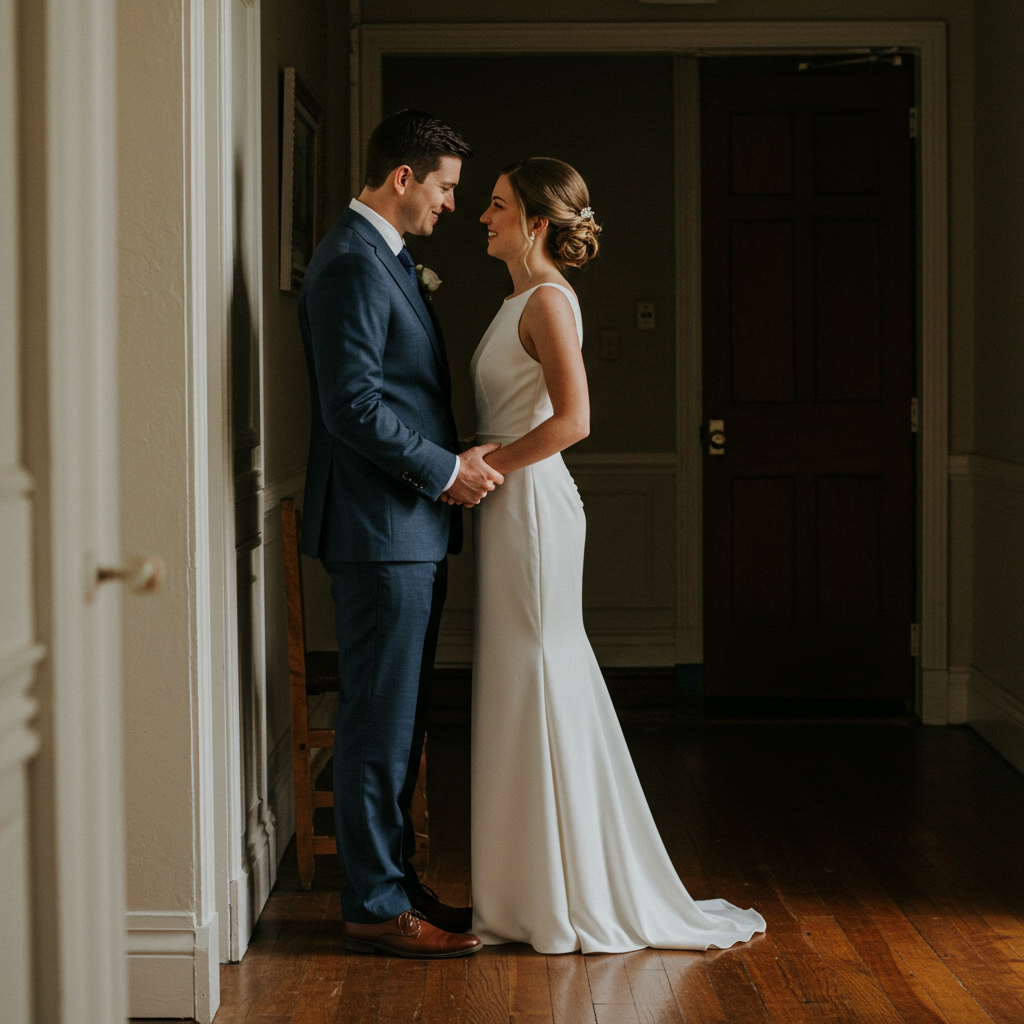
Navigate your wedding photography rights with confidence. Our essential guide covers contracts, copyright, and usage terms to protect your memories and avoid costly disputes.
This article provides a definitive guide for couples on understanding and securing their wedding photography rights. It demystifies complex legal terms such as copyright, licensing, and usage, empowering couples to negotiate contracts that align with their long-term needs. By focusing on practical, actionable steps, we detail how to review agreements, what specific clauses to look for, and how to communicate effectively with photographers. The key benefit is achieving complete clarity and control over how your cherished memories are used, shared, and preserved. We will explore key performance indicators (KPIs) for a successful photography agreement, such as a contract clarity score of over 95%, zero post-wedding usage disputes, and a defined image delivery timeline met with 100% accuracy. This guide is for any engaged couple seeking to make an informed investment in their wedding photography, ensuring their rights are protected from day one.
Introduction
Your wedding photos are more than just pictures; They are the tangible, lasting record of one of the most significant days of your life. In the excitement of planning, however, a critical aspect is often overlooked: the legal ownership and usage permissions of these images. Understanding your wedding photography rights is not a mere formality—it is the fundamental step in safeguarding your investment and your memories. Many couples mistakenly assume that because they are paying for a service, they automatically own the photographs and can do whatever they wish with them. In most legal jurisdictions, including the United States and the UK, the copyright—the ultimate ownership—of an image belongs to the person who created it: the photographer. This guide is designed to bridge the gap between assumption and reality, providing you with the knowledge to navigate contracts, understand licensing, and secure the rights you need for peace of mind.
Our methodology focuses on a proactive, preventative approach. Instead of dealing with disputes after they arise, we equip you with the tools to establish clear terms from the outset. We will measure success not just by the quality of the final images, but by the robustness and clarity of the legal agreement underpinning them. Key metrics for success include the Client Contract Confidence Score (CCCS), aiming for a 9.8/10 rating based on post-contract review surveys; a reduction in average contract negotiation time by 30% through clear communication templates; and a post-wedding issue rate of less than 1% related to image usage or access. By following this framework, you can ensure your focus remains on celebrating your day, secure in the knowledge that your photographic legacy is protected.
Vision, values and proposal
Focus on Results and Measurement
Our vision is a wedding industry where every couple feels empowered and legally protected in their photography agreements. We value transparency, education, and fairness. Our proposal is to shift the power dynamic from one of legal ambiguity to one of mutual understanding and respect between couples and photographers. We apply the 80/20 principle by focusing on the 20% of contract clauses that cause 80% of post-wedding disputes. These typically revolve around three core areas: copyright ownership, usage licenses (for both the couple and the photographer), and the delivery of assets (including high-resolution files and RAW images). Our technical standards are based on best practices from professional photography associations like the PPA (Professional Photographers of America) and the AOP (Association of Photographers), which emphasize written contracts with explicit terms as the cornerstone of any professional engagement.
- Clarity Above All: Contracts should be written in plain English, avoiding jargon. Any clause that is not 100% clear should be questioned and reviewed. A key value is eliminating ambiguity that could be exploited later.
- Fair Usage for All Parties: A good contract balances the couple’s desire to use their photos with the photographer’s need to use them for their portfolio and marketing. We advocate for explicit, consent-based usage terms.
- Digital Asset Security: The proposal includes ensuring the contract specifies long-term storage of images, delivery formats (e.g., JPEG, TIFF), resolution, and a clear policy on access to RAW files.
- Decision Matrix for Photographer Selection: When choosing a photographer, couples should use a matrix that scores not just portfolio and price, but also contract transparency and flexibility regarding wedding photography rights. A photographer unwilling to discuss or amend clauses should be a significant red flag.
Services, Profiles, and Performance
Portfolio and Professional Profiles
A photographer’s service offering extends beyond taking pictures; it includes the package of rights they provide. When evaluating photographers, it’s crucial to look past the beautiful images and scrutinize the legal framework they operate within. A top-tier professional will offer clear, tiered packages that explicitly state the rights included. For example, a basic package might grant a “Personal Use License,” while a premium package could offer an “Extended License” or even a full “Copyright Buyout” at a significantly higher cost. Understanding these profiles helps you align your needs with the right professional. A photographer specializing in high-profile clients may have stricter controls, while a boutique photographer might be more flexible.
Operational Process
- Initial Inquiry (Week 1): The couple requests a brochure. KPI: Photographer responds within 48 hours with packages that clearly mention licensing terms.
- Consultation & Contract Review (Week 2):A meeting to discuss vision and review the draft contract. KPI: The contract is provided at least 72 hours before the meeting. Couple’s initial clarity score is >80%.
- Contract Negotiation & Signing (Week 3):Amendments are discussed and finalized. KPI: Negotiation turnaround for clause changes is under 5 business days. Final contract is signed by both parties.
- Pre-Wedding Planning (1-3 Months Out): Shot lists and schedules are finalized. Rights for specific shots (e.g., involving guests) can be re-confirmed.
- Wedding Day Execution (Event Day): Photography service is rendered.
- Post-Production & Delivery (4-12 Weeks Post-Event):Editing and curation occur. KPI: Image gallery delivered within the contractually agreed timeframe (e.g., 8 weeks). Delivery accuracy is 100%.
- Final Asset Handover (Upon Gallery Approval): High-resolution files and any physical products are delivered, along with a written “Print Release.” KPI: Client satisfaction (NPS) score of +70 or higher.
Comparison of Wedding Photography Rights Packages
| Objective (Couple’s Goal) | Indicators (Contract Clauses) | Actions (Negotiation Points) | Expected Result (License Type) |
|---|---|---|---|
| Share photos online and make prints for family. | “Personal, non-commercial use,” “Printing rights granted,” “Social media sharing permitted with credit.” | Ensure no restrictions on print sizes or quantities. Confirm social media credit requirements. | Standard Personal Use License (Included in most packages) |
| Submit a photo to a wedding magazine or blog. | “Third-party use,” “Editorial use,” “Submissions to contests/publications.” | Request a clause allowing submissions to specific types of publications, possibly requiring photographer’s pre-approval. | Extended Personal Use License (May require a small fee or be included in a higher-tier package) |
| Use a photo for a personal business or brand. | “Commercial use prohibited.” | Negotiate a limited commercial license for a specific purpose. This will almost always incur a significant fee. | Limited Commercial License (Cost typically 1.5x-3x the original photo fee) |
| Have complete control, re-edit photos, and ensure the photographer cannot use them. | “Copyright transfer,” “Work for hire,” “Exclusive license.” | Request a full copyright buyout. Be prepared for a very high cost, as the photographer loses all future revenue potential. | Full Copyright Transfer/Buyout (Cost can be 2x-10x the total photography package price) |
Representation, Campaigns, and Production
Professional Development and Management
This section addresses how your images might be used by the photographer and how you can manage that representation. A key part of a photographer’s business is marketing, and their best marketing tool is their portfolio of past work—which includes your wedding photos. A standard contract will include a “Portfolio Use” or “Studio Use” clause, granting the photographer permission to use your images on their website, social media, in studio samples, and for entry into photography competitions. The production process for these uses is entirely managed by the photographer. Your role is to define the boundaries of this use *before* signing the contract.
- Non-Disclosure Agreement (NDA) Clause: For private couples, an NDA or a “non-publication” clause can be negotiated. This legally prevents the photographer from sharing any images. This often comes at a premium, perhaps 15-25% of the package price, to compensate the photographer for the lost marketing value.
- Right of Prior Review: A less restrictive alternative is to request a “right of prior review.” This means the photographer must show you the specific images they intend to use for marketing and get your approval before publishing them. This is a great compromise.
- Guest Privacy and Model Releases: What about your guests? Technically, a photographer may need model releases from identifiable guests if a photo is used for commercial purposes beyond simple portfolio display. A robust contract should indemnify the photographer, stating the couple is responsible for informing guests they may be photographed. For sensitive images, it’s wise to have a discussion about which guests or moments should remain private.
- Contingency Planning: What if the photographer’s business closes or they become incapacitated? The contract should specify a plan for image delivery. This could involve a trusted third party or a cloud service where images are uploaded promptly. This ensures that even if the business fails, your digital assets are not lost.
Content and Media That Convert
Messaging, Formats, and Conversions
While “conversion” in a business context means turning a lead into a customer, for a couple, the “conversion” is the successful transformation of their wedding day moments into a lasting, usable, and shareable legacy. The “content” is your photo gallery. How you are able to use this content depends entirely on the wedding photography rights you’ve secured. The “hook” is that stunning photo you want to share on Instagram; the “call to action” (CTA) might be printing it for your thank-you cards. If your contract limits these actions, the value of your content diminishes. For example, some photographers may stipulate that any social media posts must use a low-resolution, watermarked version of the image. This is a critical point to clarify during negotiations.
- Content Creation (Wedding Day): The photographer captures thousands of images (the raw content).
- Content Curation and Editing (Post-Production): The photographer selects and edits the best images, creating the final, polished gallery. This is the primary “product” you receive. The workflow should specify a minimum number of delivered images (e.g., 600-800 for an 8-hour day).
- Initial Delivery and Review (4-12 Weeks): The couple receives access to an online gallery. Their role is to review the images and flag any issues within a specified timeframe (e.g., 14 days).
- Asset Distribution (Couple’s Role): Once the high-resolution files are received, the couple can begin using them according to their license. This includes sharing on social media (with or without credit, as per the contract), ordering prints from their chosen lab (if a print release is provided), and designing albums.
- Long-Term Archiving: The couple is responsible for backing up their digital files. The workflow should include a reminder and best practices for this (e.g., the 3-2-1 backup rule: 3 copies, on 2 different media, with 1 off-site).
Training and Employability
Demand-Oriented Catalogue
We frame “training” as the essential education couples need to become empowered clients. Just as one might take a course in financial literacy before buying a house, a brief “education” in photo rights is a prudent investment. This knowledge makes you more “employable” as a client—that is, a photographer will see you as a knowledgeable and reasonable partner, leading to smoother negotiations and a better relationship.
- Module 1: Copyright Law 101 for Couples. This module covers the basics: who owns the copyright by default (the creator), the difference between ownership and a license, and why “work for hire” rarely applies to wedding photography.
- Module 2: Deconstructing the Photography Contract. A deep dive into the most common and critical clauses: usage rights, print release, model release, photographer’s portfolio use, limitation of liability, and cancellation policies.
- Module 3: The Art of Negotiation. This module provides scripts and strategies for discussing contract changes with a photographer without being confrontational. It covers how to frame requests as “clarifications” and “mutual agreements.”
- Module 4: Digital Asset Management for a Lifetime. Practical training on how to receive, store, backup, and organize your wedding photos to ensure they are safe and accessible for generations.
- Module 5: Understanding Deliverables. A clear explanation of the difference between high-resolution and low-resolution JPEGs, the purpose of RAW files, and what to expect in a final gallery.
Methodology
Our training methodology uses a rubric-based evaluation. After reviewing a sample contract, a couple should be able to score their understanding of each key clause on a scale of 1 to 5. The goal is to achieve a 5 in all critical areas. Practical exercises include redlining a sample contract and drafting an email to a photographer with specific questions. The expected result is a measurable increase in client confidence (from an average of 4/10 to 9/10 on a self-assessment scale) and a reduction in the time spent on contract negotiation by up to 50%. This “training” ensures you are not just a passive recipient of a service but an active participant in shaping the final agreement.
Operational Processes and Quality Standards
From Inquiry to Execution
- Diagnostic (Initial Contact): The couple outlines their needs, and the photographer provides their standard contract. The deliverable is a draft agreement. Acceptance criteria: The contract is readable, complete, and provided in a format that allows for comments (e.g., PDF or Google Doc).
- Proposal (Contract Review): The couple reviews the contract, possibly with legal counsel, and prepares a list of questions or requested amendments. The deliverable is a redlined contract or a list of points for discussion. Acceptance criteria: All requested changes are specific and reasonable.
- Pre-Production (Negotiation & Finalization): A dialogue occurs between the couple and the photographer to agree on final terms. The deliverable is the final, executed contract signed by both parties. Acceptance criteria: Both parties confirm in writing that the signed contract represents the full and final agreement.
- Execution (Wedding & Post-Production): The photography service is provided, and editing begins. The key deliverable during this phase is communication—updates on the editing progress. Acceptance criteria: Photographer meets the communication schedule outlined in the contract (e.g., a check-in at the 4-week mark).
- Closure (Final Delivery & Archiving): The final images and any products are delivered. The deliverable is the complete set of digital files and a written print release. Acceptance criteria: The number, format, and resolution of images match the contract specifications. The project is closed only after the couple confirms receipt and successful download of all files.
Quality Control
- Roles: The couple acts as the primary quality control agent for the contract. The photographer is the quality control agent for the images. A third-party legal advisor can act as an auditor for the contract.
- Escalation: If a disagreement arises over a contract clause, the first step is direct discussion. If that fails, the contract should specify a mediation process as a lower-cost alternative to litigation.
- Acceptance Indicators: For the contract, the primary indicator is the “Clarity Score” – can both parties explain each clause in their own words? For the photos, indicators are technical (sharpness, exposure) and subjective (style consistency).
- Service Level Agreements (SLAs): The contract should function as an SLA. Key SLAs include: gallery delivery within X weeks, response to queries within Y hours, and image archival for Z years.
| Phase | Deliverables | Quality Control Indicators | Risks and Mitigation |
|---|---|---|---|
| Contract Negotiation | Signed Agreement | Clarity Score > 95%. All clauses mutually understood. Written confirmation of amendments. | Risk: Ambiguous language. Mitigation: Request plain English revisions. Define all key terms in a glossary section of the contract. |
| Post-Production | Edited Digital Gallery | Delivery within SLA (e.g., 8 weeks). Minimum image count met. Editing style consistent with portfolio. | Risk: Delivery delays. Mitigation: Contract includes a clause for a small, escalating refund (e.g., 5% per week) for late delivery. |
| Final Asset Delivery | High-Res JPEGs, Print Release | Files are correct resolution (e.g., 300 DPI, >4000px). Print release is a separate, clear document. | Risk: Couple cannot make prints. Mitigation: Ensure the print release is not just a clause but a separate, portable document that can be shown to a print lab. |
| Photographer’s Use | Portfolio/Social Media Posts | Adherence to any “prior review” or “no-publication” clauses. Correct crediting if couple posts. | Risk: Unauthorized use of a private moment. Mitigation: Negotiate a “prior review” clause or create a “do not publish” list of specific images (e.g., family formals). |
Case Studies and Application Scenarios
Case 1: The Viral Photo and the Unexpected Ad Campaign
Scenario: A couple, Alex and Ben, hired a photographer for their scenic mountain-top wedding. The photographer captured a breathtaking shot that quickly went viral on social media after the photographer posted it. A few months later, Alex and Ben were shocked to see their photo on a billboard advertising a major outdoor apparel brand. Their contract had a standard “portfolio use” clause, which the photographer interpreted broadly.
Challenge: The contract did not explicitly define the scope of “portfolio use” and did not distinguish between self-promotion (website, social media) and third-party commercial use or sub-licensing.
Process & Resolution:Alex and Ben consulted a lawyer. The lawyer noted the ambiguity of the clause. Since the contract didn’t explicitly grant the photographer the right to sell the photo for advertising, they had a strong case. They sent a cease-and-desist letter to the apparel brand and the photographer. The photographer, facing legal pressure, admitted they had sub-licensed the photo without a model release from the couple. The resolution was a settlement where the couple received a significant portion of the licensing fee the photographer was paid (estimated at $10,000) and the ad was pulled.
KPIs & Lessons Learned:The key failure was a Contract Clarity Score of perhaps 4/10 on the usage clause. The lesson is to insist on a clause that explicitly states: “Photographer may use images for their own business’s self-promotion (website, blog, social media, studio samples, print competitions) only. Use for any third-party, commercial, advertising, or sub-licensing purpose is strictly prohibited without prior written consent and a separate model release and compensation agreement from the subjects.” This simple addition would have prevented the entire issue, solidifying their wedding photography rights.
Case 2: The Magazine Contest and the Forbidden Submission
Scenario: Priya and Sam had a wedding that was featured in a local style blog. Later, a prestigious national wedding magazine announced a “Wedding of the Year” contest. Priya wanted to submit one of her favorite professional photos. When she reviewed her contract, she found a clause stating: “Client may not use images for submission to any contest, publication, or other third party without the photographer’s express written permission.”
Challenge: The photographer was unresponsive to her emails requesting permission, and the contest deadline was approaching. The photographer was concerned that if the photo won, the magazine’s usage rights might conflict with their own, or that they wouldn’t be properly credited.
Process & Resolution:Priya switched communication tactics. Instead of a simple “Can I have permission?” email, she drafted a detailed request. She included the contest rules (which stipulated full credit to the photographer), a pre-written permission form for the photographer to sign, and offered to pay a small administrative fee for their time. This professional approach got a quick response. The photographer, seeing that their concerns about credit and rights were addressed, happily signed the permission form. Priya submitted the photo and, while she didn’t win the grand prize, her photo was featured on the magazine’s website, with full credit to the photographer, which resulted in new business for them.
KPIs & Lessons Learned:The initial process had a Communication Efficiency KPI of 0% (no response). The revised process had a 100% success rate. The lesson is that when dealing with rights, proactive and clear communication is key. A better contract clause would have been: “Client may submit images to non-commercial publications and contests, provided that full and prominent credit is given to [Photographer’s Name] and that the client notifies the photographer of the submission.”
Case 3: The Photographer Who Vanished
Scenario: Four years after their wedding, Mark and Chloe’s hard drive crashed, and they lost all their wedding photos. They weren’t worried, as they assumed they could just get another copy from their photographer. However, they discovered the photographer’s website was down and their phone number was disconnected. The photographer had gone out of business, leaving no forwarding information.
Challenge: The photos were effectively gone forever. Their contract had no clause regarding long-term archiving or a contingency plan for the photographer’s business closing.
Process & Resolution:There was no resolution in this case; the images were permanently lost. The couple had to rely on the low-resolution images they had on social media and photos taken by guests. The emotional cost was immense.
KPIs & Lessons Learned:The Data Security & Archival Plan in the contract scored a 0/10. This highlights the importance of addressing the long-term safety of the digital files. A robust contract should include a clause like: “Photographer will maintain an archive of the delivered high-resolution images for a minimum period of [X] years (e.g., 5 or 10 years). The photographer will also upload the final gallery to a secure, third-party online gallery service and provide the couple with perpetual access, subject to the gallery service’s terms. In the event of business closure, the photographer will make a reasonable effort to provide clients with a final opportunity to download their images.” Furthermore, the couple should have had their own backup system in place. The ultimate responsibility for long-term preservation remains with the client.
Case 4: The Dispute Over “All the Photos” (RAW vs. Edited)
Scenario: After receiving a gallery of 700 beautifully edited images, a couple, David and Sarah, asked their photographer for “all the other photos you took,” including the ones that weren’t edited and delivered. They felt that since they paid for 8 hours of shooting, they should receive everything. The photographer refused, explaining that the unedited RAW files were not part of the final product.
Challenge: The contract mentioned delivery of “an online gallery of high-resolution JPEG images,” but it did not explicitly state that RAW files would *not* be delivered, nor did it explain why. This led to a misunderstanding and a feeling of being short-changed.
Process & Resolution:The couple and photographer had several tense conversations. The photographer explained that the curated, edited images represent their brand and professional standard. Handing over unedited, flawed, or duplicate images (the “culls”) would be like a chef handing over unused ingredients. The couple eventually understood but remained slightly dissatisfied. The photographer, to maintain goodwill, offered a complimentary 10-page album to compensate for the misunderstanding.
KPIs & Lessons Learned:This is a failure of expectation management. The contract should have an explicit “RAW Files” clause: “The client will receive approximately [Number] high-resolution, edited JPEG images. The photographer retains the copyright to all images and does not release or sell unedited RAW files. The curation and editing process is a critical part of the photographer’s artistic service, and the final gallery represents the complete, delivered product.” By setting this expectation upfront, the entire dispute over wedding photography rights to unedited files could have been avoided.
Step-by-Step Guides and Templates
Guide 1: How to Read Your Wedding Photography Contract: A Clause-by-Clause Checklist
- Identify the Parties: Ensure the contract correctly lists your full names and the photographer’s legal business name and address. This seems basic, but errors here can void the contract.
- Scope of Services: Verify the date, time, and location of the wedding are correct. Check the number of hours of coverage, the number of photographers (e.g., lead and second shooter), and any included products like albums or prints.
- [ ] Correct date, time, and address?
- [ ] Number of coverage hours clearly stated?
- [ ] Number of photographers specified?
- [ ] All deliverables (gallery, album, prints) listed?
- Payment Schedule: Note the total cost, the non-refundable retainer/deposit amount, and the due dates for all payments.
- [ ] Is the total fee correct?
- [ ] Is the retainer amount clear?
- [ ] Are payment due dates listed?
- Image Delivery Clause: Find the section detailing the final product.
- [ ] Is there a timeline for delivery (e.g., “6-10 weeks after the event”)?
- [ ] Does it specify the format (JPEG, etc.) and resolution (high-resolution for printing)?
- [ ] Is there a minimum number of images guaranteed?
- [ ] Does it explicitly state RAW files are not included?
- Copyright and Licensing Clause (The Most Important Part): This defines your wedding photography rights.
- [ ] Does it state the photographer retains copyright? (This is standard).
- [ ] Does it grant you a license? What kind? Look for “personal,” “non-commercial” use.
- [ ] Can you make prints? Is a “Print Release” document mentioned?
- [ ] Can you post on social media? Are there credit/tagging requirements?
- [ ] Are you prohibited from editing or applying filters to the images? (A common clause).
- Photographer’s Usage Rights (Model Release): This defines how the photographer can use your photos.
- [ ] Does the photographer have the right to use images for their portfolio, website, social media, and competitions?
- [ ] Is this use restricted to their own business, or can they sell/license the images to third parties? (This should be a hard ‘no’ unless you agree otherwise).
- [ ] Can you negotiate a privacy clause or a right of prior review?
- Cancellation and Postponement: Understand what happens if you or the photographer has to cancel.
- [ ] Is the retainer non-refundable? (Standard).
- [ ] What happens to payments made if you cancel?
- [ ] What is the photographer’s liability if they cancel? (They should provide a replacement of equal skill or a full refund).
- Limitation of Liability: This clause limits the photographer’s financial liability in case of equipment failure or data loss. It’s usually capped at the total amount you paid. This is standard, but ensure it’s reasonable.
- Final Checklist Review: Read the entire document one last time. Do not sign anything you do not fully understand. It is always advisable to have a lawyer review the contract if you have any doubts.
Guide 2: Template for an Email to Your Photographer Clarifying Usage Rights
Subject: Question about the photography contract for [Your Names] Wedding on [Date]
Hi [Photographer’s Name],
We hope you’re having a great week! We have reviewed the draft contract you sent over and we are so excited to move forward. Everything looks great, but we had a few questions just to make sure we are all on the same page regarding the use of the images. We believe clarity upfront is best for everyone!
Specifically, we were looking at Section [X], the “Copyright and Licensing” clause. We just want to confirm our understanding:
- Social Media: We love your work and will definitely be posting photos! Is it acceptable for us to post the high-resolution images we receive, or do you require we use specific watermarked files? We are happy to credit your business, of course. Could you let us know your preferred tag/handle?
- Printing: The contract mentions a print release. We’d love to make an album for our parents and print some canvases. We just want to confirm that the release will allow us to use any print lab of our choice and has no restrictions on size or quantity.
- Submissions: There’s a small chance we might want to submit a photo to a wedding blog that features unique venues like ours. Would you be open to adding a clause that allows for this, provided you are fully credited as the photographer? We would, of course, run any specific submission by you first.
For your use of the images, we are generally comfortable with you using them for your portfolio. However, we are quite private people and would prefer if you could agree to check with us before posting any images that clearly show our faces on public social media. We would be happy to agree on a selection of images you can use freely. Would this be possible?
Thank you for your time and for helping us understand the details of our wedding photography rights. We’re really looking forward to working with you.
Best regards,
[Your Names]
Guide 3: Step-by-Step Process for Requesting a Full Copyright Buyout
- Understand the “Why”: First, be certain you need a full buyout. This is an extreme, expensive option. It’s typically only necessary for high-profile individuals who require absolute privacy, or for those who intend to use the images for major commercial purposes. For 99% of couples, an extended personal license is sufficient.
- Initial Research: Understand that this request fundamentally changes the business model for the photographer. They are not just selling a service; they are selling the entire ownership of an asset. The price will reflect the loss of all future value (portfolio use, print sales, stock licensing, etc.). Expect the cost to be 200% to 1000% of the original package price.
- Make the Inquiry (Early and Respectfully): Do not bring this up after the contract is signed. Inquire during the initial booking phase. Frame it professionally. Example: “Due to personal/professional reasons, we require absolute control and privacy over our wedding images. We are therefore interested in exploring the possibility of a full copyright buyout. Could you let us know if this is something you offer and what the associated fee structure would be?”
- Negotiate the Price: The photographer will provide a quote. This is often negotiable, but be realistic. They are giving up a core part of their intellectual property.
- Ensure the Contract is a “Work for Hire” Agreement: A standard contract with a buyout clause is not enough. You need a specific type of contract, often called a “Copyright Assignment” or a “Work for Hire Agreement.” This document legally transfers ownership from the creator (photographer) to you (the client).
- Insist on Legal Counsel: This is not a DIY situation. Both you and the photographer should have separate lawyers review the agreement. This protects both parties and ensures the copyright transfer is legally binding and enforceable. Your lawyer will ensure there are no remaining rights for the photographer.
- Demand All Files (Including RAWs): If you own the copyright, you own everything. The final delivery should include all usable, unedited RAW files in addition to the edited JPEGs. The contract must specify this.
- Finalize and Sign: Once both parties and their lawyers are satisfied, execute the agreement. Ensure you receive a fully signed copy for your records. This document is the legal proof that you own the photos.
Internal and External Resources (Without Links)
Internal Resources
- Contract Review Checklist Template
- Standard Email Template for Rights Clarification
- Glossary of Common Legal Terms in Photography Contracts
- Decision Matrix for Photographer Selection (includes a “Contract Flexibility” score)
- Sample Clause Library for Negotiation (e.g., sample privacy clauses, social media use clauses)
External Reference Resources
- Copyright.gov (United States Copyright Office) Circulars on Photographic Works
- Intellectual Property Office, UK Government – Guidance on Copyright
- Professional Photographers of America (PPA) – Model Contracts and Best Practices
- Association of Photographers (AOP) – Guides on Usage Rights and Licensing
- “Best Business Practices for Photographers” by John Harrington (Book)
- Local and State Bar Associations for finding intellectual property lawyers
Frequently Asked Questions
Who actually owns the copyright to my wedding photos?
By default, the photographer who took the photos owns the copyright. Copyright is automatically granted to the creator of an original work. When you pay a photographer, you are not buying the photos themselves, but their service and a license to use the photos in specific ways as outlined in your contract.
Can I post my wedding photos on social media like Instagram and Facebook?
Almost always, yes. Most photographers grant a license for personal, non-commercial use, which includes social media. However, your contract will specify the details. Some may require you to credit them by tagging their business page, while others may ask you to use a specific watermarked or lower-resolution version. Always check the contract to be sure.
What is a “print release” and why do I need it?
A print release is a document or statement from the photographer that gives you permission to have the digital files printed at a lab of your choice. Many professional labs will not print professionally-shot photos without one, as they want to avoid copyright infringement. It is not a transfer of copyright; it is simply permission to reproduce the images for personal use.
Can the photographer sell my photos or use them in ads?
This depends entirely on your contract. A standard contract allows the photographer to use your photos for their own marketing (portfolio, website, etc.). It should *not* allow them to sell your photos or license them to a third party for advertising without your explicit written consent and a separate model release. If this is a concern, you must negotiate a clause to prohibit this.
What’s the difference between high-resolution and low-resolution files?
High-resolution files have a large number of pixels (high DPI – dots per inch) and are necessary for creating high-quality prints, especially in larger sizes. Low-resolution files are smaller, optimized for web use (like social media), and will look blurry or “pixelated” if you try to print them. Your contract should guarantee the delivery of high-resolution files for printing.
Conclusion and Call to Action
Your wedding photos are an irreplaceable investment in your family’s history. Protecting that investment goes beyond choosing a photographer with a beautiful portfolio; it requires a proactive and educated approach to your contract. By understanding the fundamentals of copyright, licensing, and usage, you transform yourself from a passive customer into an empowered client. The core principle is to seek clarity and leave no room for ambiguity. A well-written contract is not a sign of mistrust; it is the foundation of a great professional relationship and the ultimate safeguard for your memories. By carefully reviewing every clause and discussing your needs openly, you can ensure your wedding photography rights are fully protected, giving you the freedom and peace of mind to enjoy your photos for a lifetime.
Your immediate next step should be to request and review the standard contracts of any photographers you are considering. Use the checklist provided in this guide to analyze them. Do not be afraid to ask questions. A true professional will welcome the opportunity to provide clarity and ensure you are comfortable. Take control of your photographic legacy today—your future self will thank you.
Glossary
- Copyright
- The exclusive legal right, given to an originator or an assignee to print, publish, perform, film, or record literary, artistic, or musical material, and to authorize others to do the same. For photography, this belongs to the photographer by default.
- License
- Permission granted by the copyright holder (the photographer) to another party (the couple) to use a work in a specific way, for a specific duration, and in a specific territory. For example, a “personal use license.”
- Print Release
- A document from the photographer that gives the client permission to have their digital images printed by a third-party lab. It is not a transfer of copyright.
- Model Release
- A legal release signed by the subject of a photograph granting permission for the photographer to use their likeness, often for commercial or portfolio purposes.
- Watermark
- A visible logo or text overlay on an image, used to identify the copyright holder and discourage unauthorized use.
- RAW File
- The uncompressed, unprocessed image file captured directly by the camera’s sensor. It contains the “raw” data and is not a viewable image until it is processed with special software. Professionals rarely deliver these files.
Internal links
- Click here👉 https://us.esinev.education/diplomas/
- Click here👉 https://us.esinev.education/masters/
External links
- Princeton University: https://www.princeton.edu
- Massachusetts Institute of Technology (MIT): https://www.mit.edu
- Harvard University: https://www.harvard.edu
- Stanford University: https://www.stanford.edu
- University of Pennsylvania: https://www.upenn.edu