
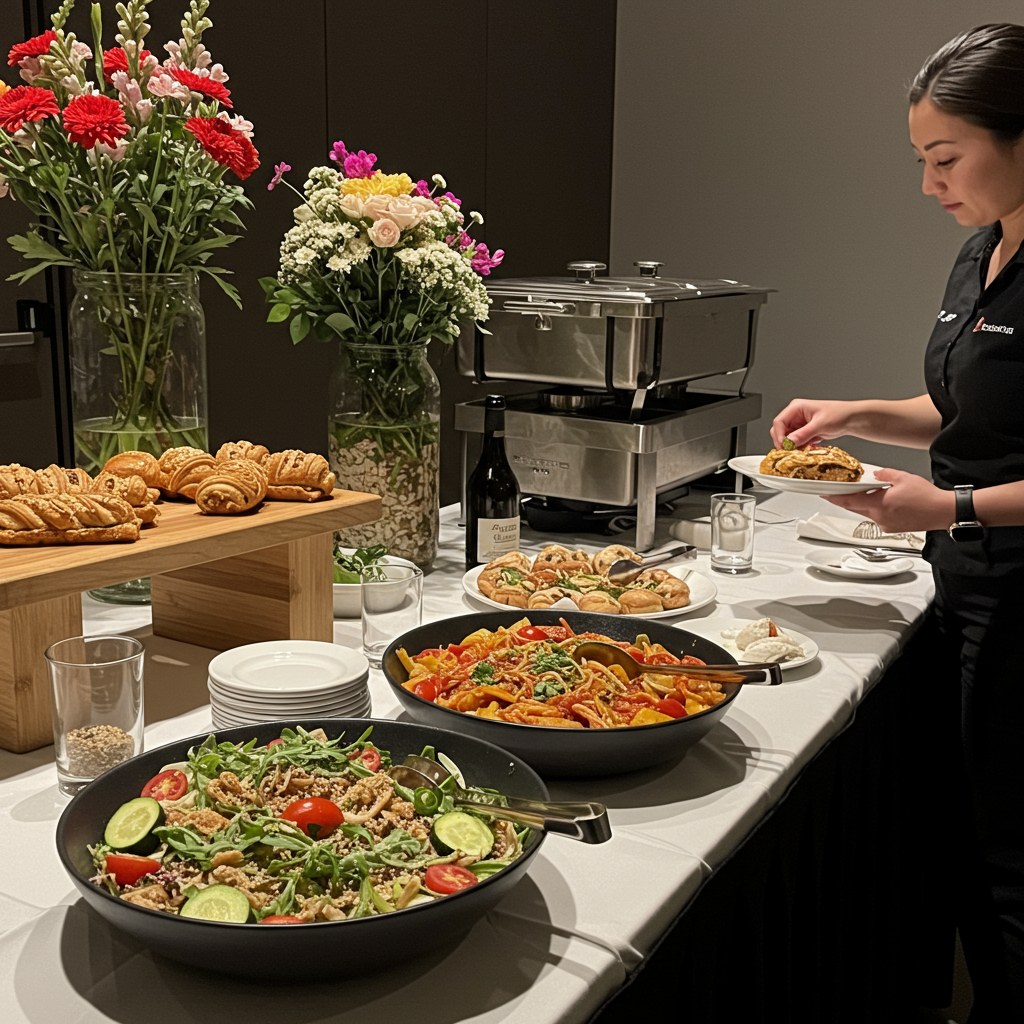
Implement effective zero waste buffet strategies to cut costs, enhance brand reputation, and support your community through smart portioning, clear signage, and reliable donation partners.
This guide provides a detailed framework for hospitality managers, F&B directors, and chefs seeking to minimize food waste in buffet settings. It focuses on three core pillars: precise portion control, strategic guest communication via signage, and establishing robust food donation programs. By implementing these zero waste buffet strategies, establishments can achieve significant financial savings (up to 5-8% on food costs), reduce their environmental footprint by diverting tons of food from landfills annually, and improve customer perception, with potential Net Promoter Score (NPS) increases of 5-10 points among sustainability-conscious diners. We will explore actionable processes, key performance indicators (KPIs), staff training modules, and real-world case studies to transform your buffet into a model of efficiency and social responsibility.
Introduction
The modern buffet, a symbol of abundance and choice, carries a significant hidden cost: food waste. Industry estimates suggest that up to 20% of food purchased for buffets is never consumed, contributing to staggering economic losses and severe environmental consequences. This reality presents a critical challenge but also a profound opportunity for the hospitality sector. By adopting a systematic approach, operators can transform this liability into a powerful asset. This article provides a comprehensive blueprint for implementing effective zero waste buffet strategies, focusing on the tactical trifecta of intelligent portioning, persuasive signage, and structured donation partnerships. These are not merely idealistic goals; they are practical, data-driven initiatives that yield measurable returns, enhance brand image, and foster a culture of sustainability that resonates with both employees and guests.
Our methodology is rooted in a continuous improvement cycle: Measure, Analyze, Implement, and Review. We will delve into how to conduct detailed food waste audits to establish a baseline, using metrics like Waste per Cover (WPC) and the Food Waste Diversion Rate. Key Performance Indicators (KPIs) will be central to our discussion, including targets such as a 25% reduction in overproduction waste within six months, a 90% food donation success rate for edible surplus, and a cost savings of at least $1.50 per cover. We will demonstrate how seemingly small changes—like using smaller serving utensils or placing a sign that encourages mindful consumption—can lead to dramatic reductions in waste and significant improvements to the bottom line.
Vision, values and proposal
Focus on results and measurement
Our vision is a hospitality industry where profitability and sustainability are not mutually exclusive but are deeply intertwined. We champion the 80/20 principle, focusing on the 20% of interventions that yield 80% of the results in waste reduction. This means prioritizing high-impact actions like menu engineering to minimize trim waste and attended stations for high-cost proteins over less impactful, more complex initiatives. Our values are grounded in data-driven decision-making, operational transparency, and community partnership. We adhere to international standards such as the Food Loss and Waste Accounting and Reporting Standard (FLW Standard) to ensure that our methodologies are credible and our results are verifiable. The core value proposition is clear: implementing zero waste buffet strategies is the fastest way to simultaneously cut operational costs, meet growing consumer demand for corporate responsibility, and build a resilient, efficient food and beverage program.
- Value Proposition: Transform waste from a cost center into a source of savings, marketing value, and community goodwill.
- Quality Criteria: Success is measured by quantifiable metrics: reduction in kilograms of food waste, cost savings on purchasing, number of meals donated, and improvements in staff and guest satisfaction scores.
- Decision Matrix: Initiatives are prioritized based on a matrix of Impact (high, medium, low) vs. Effort (high, medium, low). For example, switching to smaller plates (high impact, low effort) is prioritized over implementing a complex, staff-intensive composting program (high impact, high effort) in the initial phase.
- Ethical Commitment: We operate on a “food recovery hierarchy” model: first, reduce at the source; second, donate edible surplus to feed people; third, divert scraps for animal feed; fourth, use for industrial purposes like anaerobic digestion; and only as a last resort, compost or send to landfill.
Services, profiles and performance
Portfolio and professional profiles
We offer a suite of services designed to guide hospitality operations through every stage of their waste reduction journey. This requires a multidisciplinary team, including F&B Analysts, Sustainability Consultants, and Partnership Coordinators. Our services are not one-size-fits-all; they are tailored to the specific context of each client, whether a 1,000-room resort or a local catering company. The ultimate goal is to embed these zero waste buffet strategies into the client’s core operational DNA.
- Phase 1: Waste Audit & Opportunity Analysis. An F&B Analyst conducts a two-week, segregated food waste audit (prep, spoilage, overproduction, plate waste). KPI: Deliver a baseline report with a margin of error less than 5%, identifying the top three sources of waste by weight and cost.
- Phase 2: Strategy Design & Menu Engineering. A Sustainability Consultant and an Executive Chef collaborate to redesign menus for maximum cross-utilization of ingredients and create a portioning guide. KPI: Develop a new menu plan projected to reduce food costs by at least 3% and trim waste by 40%.
- Phase 3: Implementation & Staff Training. Our team provides hands-on training for all kitchen and front-of-house staff on new procedures, from prep techniques to guest communication. KPI: Achieve a 95% pass rate on a post-training knowledge assessment.
- Phase 4: Donation Program & Partnership Management. A Partnership Coordinator vets local non-profits, establishes a legally sound donation agreement, and sets up the logistics for safe and efficient food pickup. KPI: Secure a reliable donation partner and execute the first successful donation within 30 days of program launch.
- Phase 5: Monitoring & Reporting. Ongoing support with monthly performance dashboards tracking waste reduction, cost savings, and donation metrics. KPI: Provide monthly reports showing progress against baseline and identifying areas for further improvement.
Tables and Examples
Reduction of 150 kg of food waste per month.Divert 90% of edible food surplus from landfill.Percentage of surplus donated; Number of meals donated; Diversion rate.Establish a formal partnership with a local food bank. Create cooling and safe storage protocols for donations.Donate more than 2,000 meals per year. Improve brand reputation in the local community.Reduce waste on customer plates by 20%.Average weight of leftover food per customer; Customer satisfaction surveys.Introduce friendly signage (“Take what you want, eat what you take”). Slightly reduce plate sizes.Reduction of 25 kg of post-consumer waste per day. Increase of the sustainability-related NPS by 5 points.Improve the accuracy of demand forecasting.Reduce the gap between forecast and actual attendance; improve raw material stock levels.Implement data tracking software that analyzes historical attendance and consumption patterns.Reduce spoilage waste by 15% due to over-ordering. Deviation from forecast less than 10%.
| Objective | Indicators | Actions | Expected Result |
|---|---|---|---|
| Reduce waste from overproduction by 30% in 6 months. | Kilometers of edible leftover food per service; Cost of overproduction. | Implement the use of smaller serving containers that are refilled more frequently. Introduce live cooking stations for high-value items. | Monthly savings of €1,500 in raw food costs. |
Representation, campaigns and/or production
Professional development and management
Successfully launching a zero-waste buffet initiative is akin to a production. It requires meticulous project management, coordination across multiple departments, and management of third-party suppliers and partners. The execution calendar typically spans 12 weeks, from initial audit to full implementation and review. Key logistical considerations include securing necessary equipment (e.g., digital scales for tracking, blast chillers for donations, color-coded bins for waste segregation) and ensuring all legal requirements are met, particularly regarding food donation liability protections such as the Bill Emerson Good Samaritan Food Donation Act in the U.S. or similar regulations elsewhere. This process must be managed with precision to avoid disruption to daily operations.
Documentation Checklist: Service contracts, donation agreements with partners, staff training manuals, food safety records (HACCP), waste tracking records.
Supplier Management: Collaborate with suppliers to optimize deliveries (just-in-time), reduce packaging, and return reusable containers.
Contingency Plans: What to do if a donation partner cannot pick up the food? Having a backup partner or a plan for rapid composting is crucial. What to do if a key dish runs out due to the “cook little and often” strategy? Have quick-to-prepare ingredients ready for rapid replenishment.
- Implementation Schedule:
- Weeks 1-2: Audit and waste analysis.
- Weeks 3-4: Strategy and menu design.
- Week 5: Equipment acquisition and development of training materials.
- Weeks 6-7: Staff training and pilot testing.
- Week 8: Full launch.
- Weeks 9-12: Monitoring, adjustments, and first performance report.
Content and/or media that converts
Messages, formats and conversions
Communicating your sustainability efforts is not about boasting; it’s about educating and engaging your guests to become partners in the initiative. The content strategy should be subtle, positive, and informative. The goal is to influence behavior without making guests feel restricted or guilty. We use A/B testing on signage to determine the most effective messaging. For example, testing “Help us save the planet” vs. “Take what you love, eat what you take” can reveal significant differences in plate waste. The key conversion metric here is not a sale, but a behavior: a measurable reduction in post-consumer food waste. Our approach to creating content on zero-waste buffet strategies focuses on authenticity and transparency.
- Ideation Phase: The marketing team and the sustainability consultant brainstorm key messages. The goal is to find a “hook” that resonates with the establishment’s customer profile (for example, for a business hotel: “Smart efficiency, from plate to profit”; for a family resort: “A healthier planet for our children”).Content Production: Asset Creation:
Buffet Signage: Small signs next to the plates, table tents, larger signs at the buffet entrance.
Digital Content: Social media posts highlighting donation partners, blog posts explaining the program, a sustainability landing page on the hotel website.
Staff Scripts: Talking points for staff to confidently explain the initiative if guests ask.
Deployment and Testing: Signage is rolled out The “Version A” is tested for two weeks, and food waste is measured. Then, “Version B” is rolled out, and the data is compared.
Analysis and Optimization: The team analyzes the waste data along with customer feedback (formal and informal) to determine the most effective content and refine the approach for the future. The person responsible for this phase is the Marketing Manager in collaboration with the F&B Director.
Training and employability
Demand-oriented catalogue
A successful zero-waste program is driven by a well-trained and motivated team. Staff are the frontline ambassadors and executors of the strategy. Our training modules are designed to be practical, engaging, and directly relevant to each role, building skills that not only improve performance but also enhance employability in an increasingly sustainability-focused industry.
-
- Module 1: The Zero Waste Mindset (For all staff).
- The true cost of food waste (financial, environmental, social).
- Introduction to the food recovery hierarchy.
- Everyone’s role in the program’s success.
- Module 2: Low-Waste Cooking Techniques (For kitchen staff).
- Cutting techniques to maximize yield (e.g., using vegetable trimmings for stocks).
- Batch production planning and “cook little, often”.
- Precise temperature management and Storage to reduce spoilage.
- Module 3: Buffet Management and Customer Communication (For front-of-house staff).
Smart replenishment strategies to keep the buffet looking plentiful but not overflowing.
- Module 1: The Zero Waste Mindset (For all staff).
How to respond positively to customer questions about the initiative.
Identifying and segregating surplus food for donation.
Module 4: Safe Handling of Donated Food (For designated staff).
Rapid cooling and packaging protocols.
Labeling and recording donated food.
Compliance with local health and safety regulations.
Methodology
Our training methodology combines classroom-style learning with hands-on practical sessions in a real kitchen or buffet environment. We use a rubric-based evaluation system to assess competence. For example, a chef’s skills might be evaluated on their ability to butcher a chicken with less than 5% trim waste. Service staff are evaluated through role-playing scenarios. Successful completion of the training program results in a “Zero-Waste Champion” certification, which can be a valuable addition to a hospitality professional’s resume. We also connect high-performing individuals with a network of sustainability-focused hotels and restaurants, creating a talent pipeline that benefits both the employee and the industry.
Operational processes and quality standards
From request to execution
A structured operational pipeline ensures consistency, quality, and measurable results. Our process transforms a client’s general interest in sustainability into a fully implemented, data-backed zero-waste program.
Diagnosis (Week 1): Initial meeting to understand the client’s objectives, business volume, and current operations. Conducting an initial visual audit. Deliverable: A preliminary diagnostic report. Acceptance criteria: The client agrees with the scope of the identified problems and opportunities.
Proposal (Week 2): Development of a customized proposal detailing the action plan, timeline, costs, and projected ROI. Deliverable: Detailed project proposal. Acceptance criteria: Client signatory service contract.
Pre-production (Weeks 3-5): Project setup. This includes forming a joint project team (client and consultant), scheduling the in-depth waste audit, acquiring equipment, and initiating the search for donation partners. Deliverable: Detailed project plan with milestones. Acceptance criteria: All resources are in place, and the project plan is approved by both parties.
- Implementation (Weeks 6-8): Implementing the strategies. This includes staff training, introducing new menus and portion sizes, deploying signage, and launching the donation program. Deliverable: Fully operational zero-waste program. Acceptance criteria: All new SOPs are in place, and staff are trained.
- Closure and Review (Weeks 9-12): Conducting a post-implementation waste audit to measure the impact. Analyzing the data and presenting a final performance report. Deliverable: A comprehensive impact report detailing waste reduction, cost savings, and donation metrics. Acceptance criteria: The client confirms that the results meet or exceed the objectives established in the proposal.Quality Control
Quality control is embedded in every phase through clear roles, escalation protocols, and data-driven checkpoints. Service Level Agreements (SLAs) ensure accountability.
Roles: A designated project manager is the single point of contact for the client. Head chefs are the internal “champions” responsible for implementation in the kitchen.
Escalation: If a KPI falls below target by more than 10% for two consecutive weeks, a review meeting is automatically triggered to identify the root cause and implement corrective measures.
Acceptance Criteria: Each deliverable has clear and quantifiable acceptance criteria (see pipeline above). The project does not advance to the next phase until the criteria for the current phase are met.
SLAs: We guarantee a response to customer inquiries within 24 hours. Monthly reports are submitted before the fifth working day of each month.
Training completion rate (>95%); SOP adherence (verified using observation checklists); Weight of food donated per weekRisk: Staff resistance to change. Mitigation: Involve staff in the design phase; clearly communicate the benefits (for them and the company); appoint internal champions.Closure and reviewFinal impact report; Long-term sustainability planPercentage reduction in waste compared to baseline; Calculated project ROI; Customer satisfaction scoreRisk: Impact does not meet projections. Mitigation: Continuous monitoring during execution to make real-time adjustments; transparent analysis of why objectives were not met and a revised action plan.
| Phase | Deliverables | Control Indicators | Risks and Mitigation |
|---|---|---|---|
| Diagnosis | Baseline Waste Audit Report | Accuracy of waste data (margin of error <5%); Identification of the 3 main sources of waste | Risk: Inaccurate data due to poor segregation by staff. Mitigation: Comprehensive staff training on audit procedures before starting; direct supervision during the first few days. |
| Execution | Trained staff; New SOPs implemented; Active donation program |
Application Cases and Scenarios
Case 1: Luxury Conference Hotel (500 Rooms)
Problem: The hotel hosted large conferences, resulting in massive and variable food waste at the buffet. The initial audit revealed an average of 0.8 kg of food waste per deck, with an estimated annual cost of over $250,000 in overproduction alone. The Food & Beverage Net Promoter Score (NPS) was stagnating.
Solution – Implementation of zero-waste buffet strategies:
Data-driven forecasting: Instead of relying on the number of reservations, the hotel began using historical data on actual attendance per session to more accurately predict the number of diners. The forecast deviation was reduced from 25% to less than 10%.
Buffet redesign: Large trays of food were replaced with multiple smaller plates, creating a sense of abundance and reducing the amount of food on display at any one time. Live cooking stations were introduced for higher-priced dishes, such as roast beef and pasta, which were served made to order.
Donation Partnership: A partnership was established with a local food rescue organization that could manage large-scale, last-minute collections. Rapid cooling and packaging protocols were implemented to ensure food safety.
Results: Within 12 months, food waste per deck was reduced to 0.3 kg (a 62.5% decrease). Food cost savings exceeded $180,000 in the first year. More than 10,000 kg of food were donated, equivalent to approximately 25,000 meals. The F&B NPS increased by 8 points, and guest reviews frequently mentioned the hotel’s sustainability initiatives. The project’s ROI was achieved in 7 months.
Case 2: All-Inclusive University Cafeteria
Problem: An all-you-can-eat buffet-style cafeteria was experiencing enormous plate waste. Students, who didn’t pay for food, tended to serve themselves more than they could eat. Post-consumer waste accounted for 60% of all food waste.
Solution:
- Awareness and Signage Campaign: A student-led campaign called “Clean Your Plate” was launched. Eye-catching signage in the buffet displayed the total weight of food wasted the previous day, turning it into a community challenge. Messages like “Are your eyes bigger than your stomach?” They were placed at key decision points.
- Introduction of smaller trays and elimination of trays: The most impactful change was the elimination of trays. Students could only take what they could carry in their hands (a plate, a bowl, a glass), which forced them to make more frequent but more mindful trips. The size of the plates was also reduced from 28 cm to 25 cm in diameter.
- “Tasting” stations: Small tasting cups were introduced for new dishes or “daily specials,” allowing students to sample before committing to a full portion.
Results: Food waste on plates was reduced by 45% in one semester. The total volume of food waste decreased by 28%. The savings in food costs were reinvested in higher-quality ingredients, which improved student satisfaction. The campaign generated positive local media coverage and became a point of pride for the university.
Case 3: Sunday Brunch at an Independent Restaurant
Problem: A popular 80-seat restaurant offered a high-end Sunday brunch, but profits were slim due to the high cost of ingredients and overproduction to keep the buffet looking impeccable until the end of service. The chef was frustrated by having to throw away seafood dishes and expensive desserts.
Solution:
- Hybrid Buffet Model: The restaurant switched to a hybrid model. Cold dishes, salads, and pastries were kept in a small self-service buffet. However, all hot dishes and high-cost proteins (e.g., eggs Benedict, smoked salmon, sliced steak) were converted into an à la carte “small plates” menu, included in the fixed brunch price. Customers could order as many as they liked, but each item was prepared to order.
- Creative Use of Leftovers: The kitchen team developed a plan to utilize the inevitable leftovers from the cold buffet. Croissants were turned into bread pudding for Monday’s dessert. Roasted vegetables were pureed for a special soup. This was transparently communicated to customers as a “root-to-stem” cooking initiative.
Results: The cost of food for Sunday brunch was reduced by 22%. Overproduction was almost entirely eliminated. Customer satisfaction increased significantly, as they perceived the à la carte dishes as fresher and of higher quality than a traditional buffet. The profit margin for brunch increased from 8% to 25%, making it one of the most profitable services of the week.
Step-by-step guides and templates
Guide 1: How to conduct a food waste audit at a buffet
- Step 1: Preparation (1 week prior).
-
- Define the scope: Which buffet(s) and which days will be audited?
(Se recomienda un ciclo de servicio completo, por ejemplo, una semana entera).
-
- Reunir el equipo: Designar a un “campeón de residuos” y formar a 2-3 miembros del personal para que ayuden.
- Preparar el material: Conseguir de 4 a 6 cubos o contenedores de basura transparentes y claramente etiquetados, una báscula digital calibrada (con una precisión de 0,1 kg), guantes, hojas de registro de datos (o una tableta con una hoja de cálculo) y una cámara para documentar.
- Etiquetar los cubos: Las categorías estándar son: 1. Residuos de preparación (cáscaras, recortes), 2. Deterioro (alimentos caducados o en mal estado), 3. Sobreproducción (excedentes de comida cocinada y no servida), 4. Residuos de platos (comida que los clientes dejan).
- Paso 2: Formación del personal (1-2 días antes).
- Celebrar una breve reunión para explicar el “porqué” de la auditoría.
- Demostrar el proceso: cómo raspar los platos en el cubo correcto, cómo pesar los cubos, cómo registrar los datos.
- Aclarar cualquier duda. Asegurar al personal que no se trata de culpar, sino de recopilar datos.
- Paso 3: Recogida de datos (Durante la auditoría).
- Colocar los cubos etiquetados en la zona de lavado de vajilla y en las estaciones de preparación.
- Al final de cada servicio (desayuno, comida, cena), pesar cada cubo. Tarea (pesar el cubo lleno) – Tara (pesar el cubo vacío) = Peso neto de los residuos.
- Registrar el peso de cada categoría, la fecha y el servicio.
- Registrar el número de cubiertos (clientes) para ese servicio. Esto es crucial.
- Hacer fotos de los cubos para tener una referencia visual de los tipos de alimentos que se desperdician.
- Paso 4: Análisis de datos (Después de la auditoría).
- Sumar los totales de cada categoría de residuos durante todo el periodo de la auditoría.
- Calcular los KPIs clave:
- Residuos totales (kg): Suma de todos los pesos.
- Porcentaje por categoría: (Peso de la categoría / Peso total) * 100. Esto muestra dónde está el mayor problema.
- Residuos por cubierto (kg): Peso total / Número total de cubiertos. Este es el KPI más importante para el seguimiento a lo largo del tiempo.
- Coste estimado de los residuos: Multiplicar el peso de los residuos de sobreproducción y deterioro por el coste medio de los alimentos por kg.
- Crear gráficos y tablas sencillas para visualizar los resultados. Un gráfico circular que muestre el porcentaje por categoría es muy eficaz.
- Checklist final:
- [ ] ¿Se han recopilado los datos de un ciclo de servicio completo?
- [ ] ¿Se ha registrado el número de cubiertos de cada servicio?
- [ ] ¿Se han calculado los residuos totales y los residuos por cubierto?
- [ ] ¿Se han identificado las 2-3 principales categorías de residuos?
- [ ] ¿Se han identificado los 5 alimentos más desperdiciados (a partir de las fotos y las observaciones)?
- [ ] ¿Se han compartido los resultados con el equipo de cocina y de dirección?
Guía 2: Establecimiento de un programa de donación de alimentos
- Paso 1: Evaluar la viabilidad. Determinar qué tipo de alimentos y qué cantidad es probable que se tenga como excedente de forma regular. La mayoría de las organizaciones de rescate de alimentos no pueden aceptar todo (por ejemplo, marisco abierto, sushi, alcohol).
- Paso 2: Investigar y contactar con socios potenciales. Buscar bancos de alimentos locales, refugios o aplicaciones de rescate de alimentos. Preguntarles sobre su capacidad de recogida, los horarios, los requisitos de envasado y los tipos de alimentos que aceptan.
- Paso 3: Entender las protecciones legales. Familiarizarse con la legislación local y nacional sobre la donación de alimentos, como la Ley del Buen Samaritano Bill Emerson en EE.UU., que protege a los donantes de alimentos de la responsabilidad legal.
- Paso 4: Desarrollar protocolos de manipulación segura. Crear un Procedimiento Operativo Estándar (POE) claro para el personal. Debe incluir:
- Criterios para los alimentos donables (por ejemplo, nunca se han servido a un cliente, se han mantenido a temperaturas seguras).
- Procedimientos de enfriamiento rápido (por ejemplo, utilizando un abatidor de temperatura para llevar los alimentos calientes a menos de 5 °C en 2 horas).
- Directrices de envasado (recipientes resistentes y aptos para alimentos).
- Requisitos de etiquetado (nombre del artículo, fecha de producción, posibles alérgenos).
- Paso 5: Formalizar la asociación. Firmar un Memorando de Entendimiento (MDE) con el socio elegido. Este documento debe describir las responsabilidades de cada parte, los horarios de recogida y los datos de contacto.
- Paso 6: Formar al equipo. Asegurarse de que el personal clave esté totalmente formado en los protocolos de manipulación segura y sepa qué hacer cuando hay un excedente de comida.
- Paso 7: Lanzar y hacer un seguimiento. Iniciar el programa. Llevar un registro de cada donación: qué se donó, cuánto pesaba y la fecha. Utilizar estos datos para informar sobre el impacto del programa.
Guía 3: Diseño de señalización eficaz para el buffet
- Paso 1: Definir el objetivo. ¿Qué comportamiento específico se quiere fomentar? (Ej: tomar porciones más pequeñas, evitar la contaminación cruzada, probar algo nuevo). Cada cartel debe tener un único objetivo.
- Paso 2: Mantenerlo positivo y breve. Utilizar un lenguaje positivo y proactivo. En lugar de “No desperdicies comida”, prueba “Gracias por ayudarnos a reducir el desperdicio”. Los mensajes deben ser escaneables en 3-5 segundos.
- Paso 3: La ubicación es clave. Colocar los carteles en los puntos de decisión. Un cartel sobre el tamaño de las porciones debe estar donde se cogen los platos. Un cartel sobre alérgenos debe estar junto al plato en cuestión.
- Paso 4: Utilizar elementos visuales. Los iconos, las imágenes o los gráficos sencillos pueden transmitir un mensaje más rápido que el texto. Un corazón para las opciones saludables o una hoja para las vegetarianas son ejemplos clásicos.
- Paso 5: Ser informativo, no prescriptivo. Proporcionar información útil. Por ejemplo, etiquetar claramente cada plato con su nombre e ingredientes principales (incluidos los alérgenos comunes). Esto reduce el “desperdicio por experimentación” de los clientes que toman algo que no les gusta.
- Paso 6: Contar una historia. Utilizar la señalización para contar la historia de la sostenibilidad. Un pequeño cartel que diga “Estas verduras proceden de la granja local de Smith” o “Las sobras de hoy se donarán al refugio del centro” crea una conexión con los clientes.
- Paso 7: Probar y perfeccionar. No hay que tener miedo de probar diferentes mensajes y diseños. Recoger los comentarios de los clientes y observar su comportamiento para ver qué es lo que mejor funciona.
Recursos internos y externos (sin enlaces)
Recursos internos
- Plantilla de hoja de registro de auditoría de residuos
- Manual de formación del personal sobre la reducción de residuos
- Lista de control de procedimientos operativos estándar (POE) para la donación de alimentos
- Plantillas de señalización para buffets (por ejemplo, “Toma lo que quieras, come lo que tomes”)
- Catálogo de recetas de utilización de recortes (por ejemplo, caldos, pestos, sopas)
Recursos externos de referencia
- Norma de Contabilidad e Información sobre Pérdidas y Residuos de Alimentos (FLW Standard)
- Jerarquía de recuperación de alimentos de la Agencia de Protección Ambiental (EPA)
- Guías de la Organización Mundial de la Salud (OMS) sobre la manipulación segura de alimentos
- Ley del Buen Samaritano Bill Emerson sobre la donación de alimentos (o legislación local equivalente)
- Informes del Programa de Acción sobre Residuos y Recursos (WRAP) sobre el desperdicio de alimentos en la hostelería
Preguntas frecuentes
¿La implementación de estrategias de buffet de cero residuos hará que mi buffet parezca vacío o barato?
No, si se hace correctamente. La clave no es ofrecer menos, sino ser más inteligente en la presentación. El uso de recipientes más pequeños, platos de diferentes alturas y guarniciones atractivas puede crear una sensación de abundancia y lujo. La estrategia de “cocinar poco y a menudo” garantiza que la comida esté siempre fresca, lo que aumenta la percepción de calidad. Se trata de pasar de una abundancia desbordante y estática a una experiencia vibrante y dinámica.
¿Cuánto cuesta realmente implementar estos programas?
Los costes iniciales suelen ser mínimos y se centran en la formación del personal y la posible compra de nuevos utensilios de servicio más pequeños o una báscula digital. El retorno de la inversión (ROI) es rápido. La mayoría de los establecimientos ven un ahorro neto en los costes de los alimentos en un plazo de 3 a 6 meses que supera con creces la inversión inicial. La reducción de las tasas de eliminación de residuos también contribuye al ahorro.
¿No se ofenderán los clientes si les decimos que no desperdicien la comida?
El tono del mensaje es crucial. No se trata de sermonear, sino de invitar. La señalización debe ser positiva y colaborativa. Mensajes como “Juntos, hemos donado 500 comidas este mes. Gracias por formar parte de la solución” hacen que los clientes se sientan bien por su participación. La mayoría de los clientes, especialmente las generaciones más jóvenes, aprecian y apoyan activamente a las empresas que demuestran una auténtica responsabilidad medioambiental.
Mi personal ya está sobrecargado. ¿No añadirá esto más trabajo?
Aunque hay una curva de aprendizaje inicial, muchas de estas estrategias en realidad agilizan las operaciones a largo plazo. Una mejor previsión y planificación de la producción significa menos tiempo dedicado a cocinar en exceso y a gestionar las sobras. Unos procedimientos de cierre más claros para la donación o el compostaje pueden ser más eficientes que la eliminación de residuos sin un sistema. Se trata de cambiar los flujos de trabajo, no necesariamente de añadir más.
¿Y si no podemos encontrar un socio de donación fiable en nuestra zona?
Si las donaciones para el consumo humano no son viables, hay que pasar al siguiente nivel de la jerarquía de recuperación de alimentos. Explorar asociaciones con granjas locales para la alimentación de animales (si la normativa lo permite). Si eso no es una opción, la siguiente mejor alternativa es el compostaje o la digestión anaeróbica. Aunque no es tan impactante socialmente como la donación, sigue siendo infinitamente mejor que enviar los alimentos a un vertedero, donde generan metano, un potente gas de efecto invernadero.
Conclusión y llamada a la acción
La transición a un buffet de cero residuos es más que una iniciativa de sostenibilidad; es una decisión empresarial estratégica. A través de una aplicación meticulosa de la porción inteligente, la señalización persuasiva y las asociaciones de donación estructuradas, los operadores de servicios de alimentos pueden desbloquear beneficios significativos. Hemos visto cómo los hoteles pueden reducir los residuos en más de un 60%, ahorrando cientos de miles de dólares. Hemos explorado cómo las universidades pueden reducir el desperdicio en los platos en un 45% simplemente cambiando los platos y los mensajes. El camino hacia un futuro más sostenible y rentable en la hostelería es claro y alcanzable. El primer paso no requiere una gran inversión, sino un compromiso con la medición. Comience por realizar una simple auditoría de residuos. Los datos que recoja no solo le sorprenderán, sino que le proporcionarán la hoja de ruta clara para implementar las zero waste buffet strategies más impactantes para su operación. Empiece a medir hoy para poder gestionar mañana.
Glosario
- Residuos por cubierto (WPC)
- Un indicador clave de rendimiento (KPI) que se calcula dividiendo el peso total de los residuos de alimentos por el número de clientes atendidos. Permite hacer un seguimiento estandarizado de la eficiencia.
- Jerarquía de recuperación de alimentos
- Un modelo de la Agencia de Protección Ambiental (EPA) que prioriza las acciones para prevenir y desviar los residuos de alimentos. El orden de preferencia es: reducción en la fuente, alimentar a las personas hambrientas, alimentar a los animales, usos industriales, compostaje y, por último, el vertedero.
- Sobreproducción
- Alimentos que se cocinan pero nunca se sirven a los clientes. Es una de las principales fuentes de desperdicio de alimentos en los buffets y una de las más fáciles de abordar.
- Residuos de preparación
- Residuos generados durante la preparación de los alimentos, como las cáscaras de las verduras, los recortes de la carne y los posos del café. Las buenas técnicas culinarias pueden minimizar esto.
- Ley del Buen Samaritano Bill Emerson
- Una ley de EE.UU. que protege a las empresas de la responsabilidad civil y penal cuando donan alimentos de buena fe a una organización sin ánimo de lucro. Leyes similares existen en muchos otros países.
- Net Promoter Score (NPS)
- Una métrica de la experiencia del cliente que mide la probabilidad de que los clientes recomienden una empresa a otros. Se utiliza para medir la lealtad y la satisfacción del cliente.