
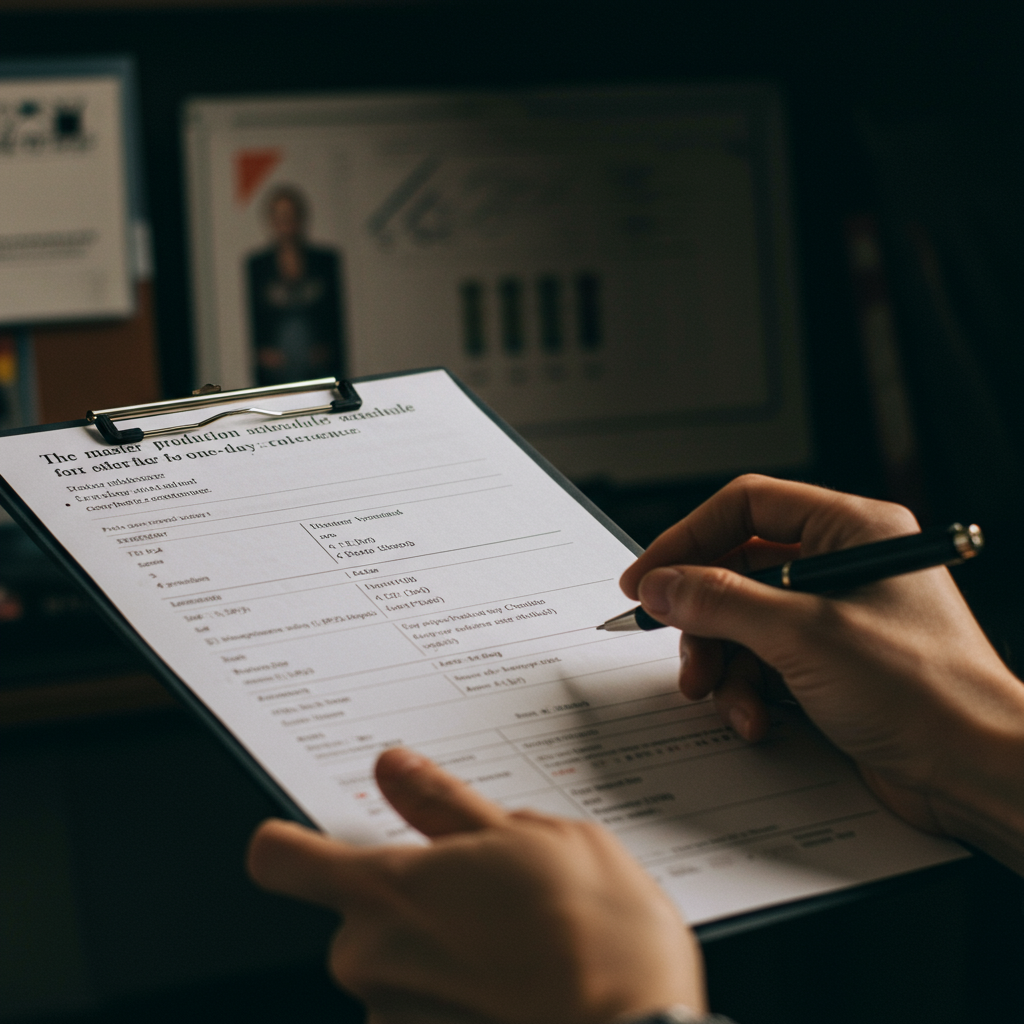
This article provides a detailed and actionable methodology for creating and executing a master production schedule for a one-day conference. It is aimed at event organizers, project managers, and marketing coordinators looking to optimize their processes, minimize risks, and maximize ROI. Through a structured approach, we break down each phase of the event lifecycle, from strategic vision to operational execution and post-event analysis. Key performance indicators (KPIs) such as Net Promoter Score (NPS), budget variance, cost per attendee, and sponsorship ROI will be presented. The value proposition lies in transforming the complex task of organizing a conference into a manageable, predictable, and measurable process, guaranteeing an exceptional experience for attendees, speakers, and sponsors.
Introduction
Organizing a conference, even one lasting only a single day, is a logistical and strategic challenge of enormous complexity. Condensing months of planning into a few hours of flawless execution requires a central tool that orchestrates every detail. This is where the master production schedule for a one-day conference becomes the cornerstone of success. This document is not a simple timeline; it is a dynamic and comprehensive plan that integrates all variables: from speaker management and venue logistics to the marketing campaign, budget control, and attendee experience. Without a robust production master plan, teams operate in silos, deadlines are missed, costs spiral out of control, and event quality is compromised, directly impacting the organizing brand’s reputation.
The methodology presented below is based on project management principles, adapted to the ephemeral and high-pressure nature of live events. The goal is to provide a framework that enables organizers to anticipate problems, allocate resources efficiently, and measure performance at every stage. Key KPIs that will guide our approach include budget variance (target: <5%), attendee satisfaction rate (target NPS >40), schedule adherence (target: 98% of tasks on time), and return on investment (ROI) for sponsors (target: >3:1). Through this systematic approach, we will transform uncertainty into control and reactivity into proactivity.
Vision, values, and proposal
Focus on results and measurement
Our vision for conference management focuses on operational excellence as the driving force behind a memorable experience.
We adopt the Pareto principle (80/20), identifying the 20% of activities that generate 80% of the value for attendees and sponsors, such as content quality, networking opportunities, and smooth logistics. Our values are based on transparency, anticipation, and accountability. Every decision is data-driven and aligned with the event’s strategic objectives. We adhere to recognized quality standards in the events industry, such as ISO 20121 for event sustainability management, ensuring a positive impact on both the attendee experience and the environment.
- Attendee-Centric Value Proposition: The design of each element of the production plan begins with the question: How does this improve the participant experience? From ease of registration to coffee quality.
- Non-Negotiable Quality Criteria: Audiovisual quality (clear sound, sharp projections), session punctuality, and facility cleanliness are non-negotiable.
- Supplier Decision Matrix: Partner selection (venue, catering, technology) is based on a weighted matrix that evaluates cost (30%), proven quality (40%), reliability (20%), and sustainability (10%).
- Agility and Flexibility: The master plan is a guide, not a dogma. Change management protocols are designed to adapt the plan to unforeseen events without compromising the main objectives.
Services, Profiles, and Performance
Portfolio and Professional Profiles
Executing a master production schedule for a one-day conference requires a blend of specialized services and profiles. It’s not just about logistics, but about orchestrating talent. Our service portfolio ranges from initial strategic consulting to turnkey event execution and post-mortem analysis. The key profiles involved are:
-
- Event Producer: The architect of the plan. Ultimately responsible for the budget, strategy, and KPI achievement.Production Coordinator: The on-the-ground executor. Manages suppliers, detailed run-of-show schedules, and day-of-event logistics.
Content & Speaker Manager: Responsible for program curation, communication, and speaker preparation.
Event Marketing Specialist: Designs and executes the promotional campaign to achieve attendance and brand awareness goals.
AV Lead: Oversees all audiovisual, streaming, and lighting aspects.
Sponsorship Manager: Manages sponsor relationships to ensure value delivery and agreement fulfillment.
Operational Process
ol>
Phase 1: Diagnosis and Strategy (Weeks -24 to Phase 1: Master Planning (Weeks -20 to -12): Definition of objectives (SMART), target audience, preliminary budget, and KPIs. Deliverable: Event vision document. KPI: Budget approval with a deviation of less than 10% from the estimate.
Phase 2: Master Planning (Weeks -20 to -12): Creation of the master production plan. Selection of venue, key suppliers, and main speakers. Launch of the initial marketing campaign. Deliverable: First version of the Master Production Schedule. KPI: 90% of suppliers and key speakers confirmed.
Phase 3: Detailed Pre-Production (Weeks -12 to -2): Execution of the marketing campaign, registration management, content coordination, and fine-tuning of logistics with suppliers. Deliverable: Detailed run-of-show schedule. KPI: Achieve 80% of the registration target.
Phase 4: Execution (Week -1 and Event Day): Setup, rehearsals, live performance, and teardown. Deliverable: The event itself. KPI: NPS > 40, 98% schedule adherence.
Phase 5: Post-Event and Analysis (Weeks +1 to +4): Satisfaction surveys, KPI analysis, final report for stakeholders and sponsors, and financial closing. Deliverable: Post-event report. KPI: Financial close with total deviation < 5%.
Tables and examples
Strict Budget ControlTotal Budget Deviation, Savings in Supplier NegotiationsWeekly Expense Tracking, Package Negotiations with Suppliers, 10% Contingency Fund.Total Deviation < 5%, 8% Savings on List Prices
| Objective | Indicators | Actions | Expected result |
|---|---|---|---|
| Maximize Qualified Attendance | Number of registrants, Website conversion rate, Cost Per Acquisition (CPA) | Segmented email marketing campaign, LinkedIn ads, affiliate program with speakers. | 200 registered attendees, Conversion rate > 3%, CPA < 50 € |
| Ensuring Attendee Satisfaction | Net Promoter Score (NPS), Session Rating (scale 1-5), Positive Social Media Mentions | Rigorous selection of speakers, high-quality catering, event app for interaction. | NPS > 45, Average session rating > 4.2, >100 mentions with the official hashtag |
| Ensuring Sponsor ROI | Number of leads generated at the booth, Brand media value, Sponsor satisfaction survey | Facilitating 1-on-1 meetings, prominent branded spaces, personalized post-event reports. | Average ROI > 3:1, >30 leads per Gold sponsor, Satisfaction > 8/10 |
Representation, Campaigns and/or Production
Professional Development and Management
The production phase is where the master plan comes to life. It requires meticulous management of logistics, permits, and suppliers. The execution schedule is broken down from the macro level (weeks) to the micro level (minutes on the day of the event). Coordination with the venue is crucial, encompassing everything from layout plans to power and internet connectivity requirements. Necessary permits (if applicable, such as music licenses or municipal permits for exterior signage) are obtained in advance to avoid last-minute surprises. The selection and management of suppliers is formalized with contracts that clearly specify service levels (SLAs), setup/teardown schedules, and contingency plans.
Critical Documentation Checklist:
Contracts signed with all suppliers (venue, AV, catering, etc.).
Up-to-date public liability insurance policies.
Technical and layout plans approved by the venue.
Emergency contact list (suppliers, staff, local services).
Final Run-of-Show distributed to all staff and speakers.
Contingency Plans:
Speaker Cancellation: Have a backup speaker or an alternative session prepared.
- Technical Issues (AV): On-site AV technician with backup equipment (microphones, projectors).
- Overcrowding: Prior arrangement with the venue to provide additional space or viewing areas.
- Adverse Weather Conditions: Signage plan and staff to guide attendees in case of rain.
- Medical Emergency: Staff trained in first aid and knowledge of the location of the nearest defibrillator.
Content and/or Media that Convert
Messages, Formats, and Conversions in Event Promotion
Content is king, not only during the conference but also in its promotion. The success of the event depends on a communication strategy that generates excitement and demonstrates value. We use powerful hooks in our messages, such as “Discover the 3 strategies that will define the future of digital marketing” instead of a generic “Register for our conference.” Calls to action (CTAs) are clear and urgent (e.g., “Get your Early Bird ticket – Only 50 available!”). We conduct A/B testing on email campaigns (subject lines, CTAs) and ads (images, text) to optimize the conversion rate, which we rigorously measure from the first click to final registration. The master production schedule for a one-day conference must include a detailed content calendar for the promotion phase.
Awareness Phase (Weeks -16 to -10): Publish blog articles on the conference topics. Announce the first keynote speakers on social media. Launch the event website with the value proposition. Responsible: Marketing Specialist.
Consideration Phase (Weeks -10 to -4): Email marketing campaigns with speaker interviews. Free webinars prior to the event. Publication of testimonials from previous editions. Responsible: Marketing Specialist, Content Manager.
- Conversion Phase (Weeks -4 to -1): Limited-time offers (Early Bird, group discounts). Retargeting campaigns for website visitors who haven’t registered. Announcement of the full program to create a sense of urgency. Responsible: Marketing Specialist.
- Loyalty Phase (Event Day and Post-Event): Live coverage on social media. Sending presentations and recordings to attendees. Satisfaction survey and discount offer for the next edition. Responsible: Community Manager, Event Director.
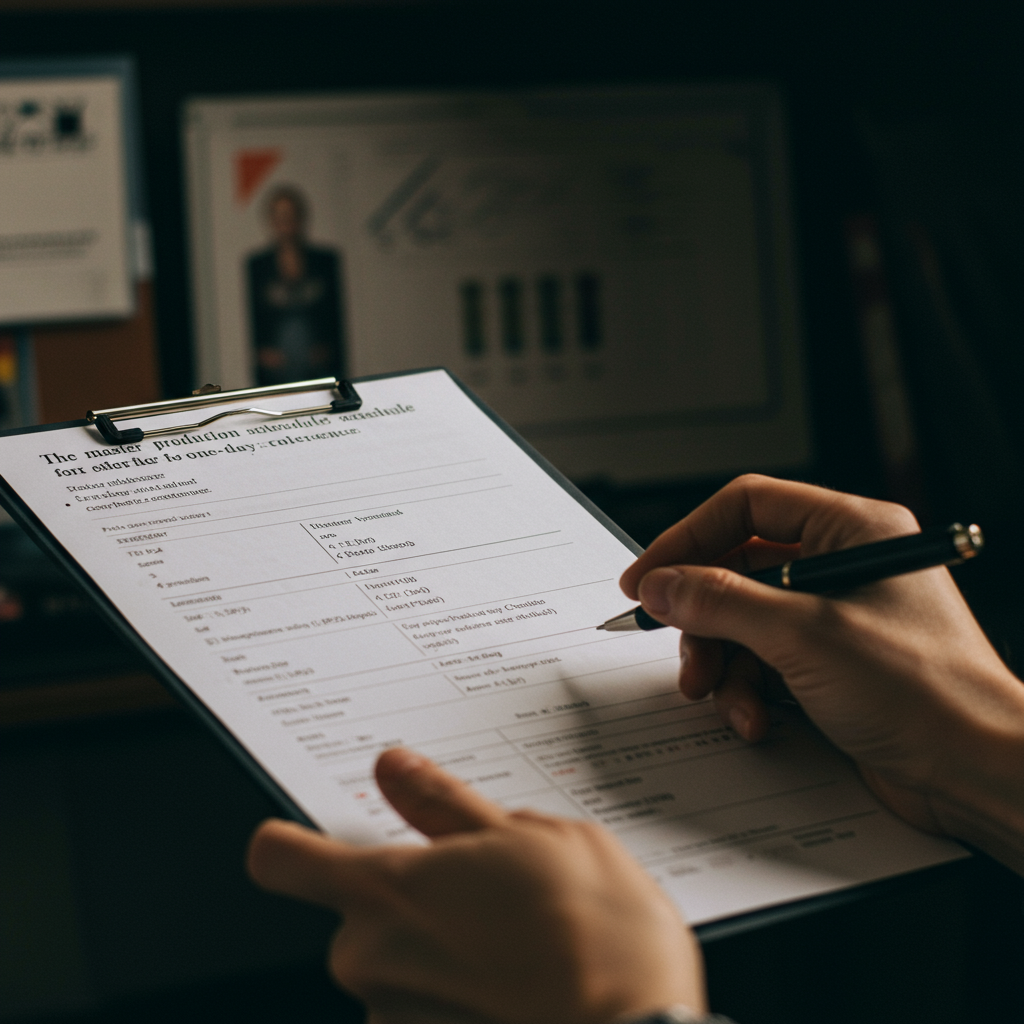
Training and employability
Demand-oriented catalog
For the organizing team, running a conference is an opportunity for intensive professional development. We offer in-house training modules to equip staff in critical areas, ensuring that each team member not only performs tasks but also understands their impact on the overall success of the event.
Module 1: Master Production Schedule Fundamentals for Events. Understanding the structure, dependencies, and software tools for managing it (e.g., Asana, Trello, Smartsheet).
Module 2: Supplier Management and Contract Negotiation. Techniques for obtaining the best terms without sacrificing quality. Creating Measurable SLAs.
Module 3: Protocol and Crisis Management on the Day of the Event. Simulation of crisis scenarios (technical failure, medical emergency, absent speaker) and response protocols.
Module 4: Digital Marketing for Events. SEO, SEM, email marketing, and social media strategies applied to attendee acquisition.
Module 5: Post-Event Data Analysis. How to collect, analyze, and present performance KPIs to stakeholders.
Methodology
The training is based on a practical methodology (“learning by doing”). Each team member has clear responsibilities within the actual production plan. Evaluation is carried out using rubrics that measure competence in managing assigned tasks, problem-solving skills, and contribution to the team. The experience gained in organizing high-level conferences is highly valued in the job market, opening doors to roles of greater responsibility in the events and marketing industry. The expected result is a team not only capable of executing the current plan, but also of proposing improvements for future events, creating a cycle of continuous improvement.
Operational Processes and Quality Standards
From Request to Execution
A standardized workflow is essential to guarantee quality and efficiency. Our process transforms the initial idea of a conference into a flawless reality through well-defined phases with clear acceptance criteria.
-
- Diagnosis (Kick-off): Initial meeting with the client/stakeholder to define the “why” of the event. Deliverable: Scope Document. Acceptance Criteria: SMART objectives defined and signed by the client.Proposal and Budget: Development of a creative concept, a detailed budget (line by line), and a macro timeline. Deliverable: Commercial Proposal and Budget. Acceptance Criteria: Approval and signing of the contract.
Pre-Production (Planning): Creation of the master production schedule for the one-day conference, assignment of roles, contracting of suppliers, and execution of the marketing plan. Deliverable: Detailed Project Plan. Acceptance Criteria: Key milestones (venue, speakers, sponsors) confirmed and within budget.
Execution (Day of the Event): Implementation of the Run-of-Show, management of the live event. Deliverable: The event. Acceptance Criteria: Compliance with experience KPIs (NPS, punctuality).
- Diagnosis (Kick-off): Initial meeting with the client/stakeholder to define the “why” of the event. Deliverable: Scope Document. Acceptance Criteria: SMART objectives defined and signed by the client.Proposal and Budget: Development of a creative concept, a detailed budget (line by line), and a macro timeline. Deliverable: Commercial Proposal and Budget. Acceptance Criteria: Approval and signing of the contract.
Closure and Evaluation: Feedback collection, performance analysis against KPIs, final report, and financial close. Deliverable: Post-Event Report. Acceptance Criteria: Submission of the report within the agreed timeframe (e.g., 2 weeks post-event) and final financial close.
Quality Control
Quality control is an ongoing process, not a final inspection. Control points are implemented at each stage.
Roles: The Event Director is ultimately responsible for quality. Each area leader (AV, Content, Marketing) is responsible for quality in their domain.
Escalation: A clear communication chain is established for escalating issues, from the volunteer on the ground to the Event Director.
Acceptance Indicators: Each major deliverable has measurable criteria. For example, the event website must have a load time of less than 2 seconds and be 100% responsive.
SLAs with Suppliers: Contracts with suppliers include Service Level Agreements. For example, the catering team must ensure that coffee breaks are replenished within 10 minutes if supplies run out.
| Phase | Deliverables | Control Indicators | Risks and Mitigation |
|---|---|---|---|
| Planning | Detailed Budget, Supplier Contracts | Budget deviation < 2% in the planning phase, 100% of contracts with clear SLAs | Risk: Underestimation of costs. Mitigation: Obtain 3 quotes per service, including a 10% contingency. |
| Pre-Production | Registration Rate, Social Media Engagement | Achieve 50% registration 6 weeks prior, Engagement Rate > 2% | Risk: Low ticket sales. Mitigation: Multichannel marketing plan, referral program, flash sales. |
| Execution | Session Ontime, AV Performance | <5 minutes of cumulative program delay, 0 critical technical failures | Risk: Main projector failure. Mitigation: Backup projector and dedicated on-site AV technician. |
| Post-Event | Survey Response Rate, Final Report | >30% response rate, Report delivered within 15 business days | Risk: Survey fatigue and low feedback. Mitigation: Incentivize response (raffle), short and direct survey. |
Application Cases and Scenarios
Case 1: “Innovatech 2023” Annual Technology Conference
Scope: One-day conference for 500 technology professionals (developers, CTOs, product managers). Three simultaneous tracks, an exhibition area with 20 sponsors, and live streaming of the main track.
Challenge: The main challenge lay in the technical coordination of the three tracks, managing a robust Wi-Fi network for 500 simultaneous users, and the need to offer a high-value experience for both in-person and virtual attendees. The master production plan had to meticulously detail bandwidth requirements, streaming production workflows, and transitions between speakers.
Plan Execution: A Technical Coordinator was appointed who worked directly with the AV provider and the venue starting 16 weeks prior. The master production schedule included a detailed technical sub-plan with network load testing two days prior and a full dress rehearsal the day before. An event app was used for Q&A, voting, and networking, reducing the need for mobile microphones and encouraging interaction.
Results (KPIs):
- Attendance: 485 in-person attendees (97% of target) and 1,200 unique viewers on the live stream.
- Satisfaction: NPS of +52 (exceeding the target of +40). Technical and content quality were the highest-rated aspects.
- Budget: Final deviation of +3.5% (below the 5% limit), due to the last-minute need to contract additional bandwidth.
- Sponsor ROI: Sponsors reported an average of 50 qualified leads per booth. The estimated average ROI was 4:1.
- Timing: 95% of sessions started on time. The slight delay was due to a Q&A session that ran longer due to its popularity.
Case 2: “LeadHerShip” Women’s Leadership Summit
Scope: One-day event for 150 female executives and entrepreneurs. Format featuring keynote speeches, panel discussions, and facilitated speed networking sessions.
Challenge: The main objective was not only to inspire but also to create real and lasting connections. The challenge for the production plan was to design the logistics to maximize quality networking opportunities within a limited timeframe. The feeling of a massive, impersonal event had to be avoided.
Plan Execution: The master production schedule for this one-day conference prioritized the attendee experience. Specific and structured time blocks were dedicated to networking. The event app allowed attendees to schedule 15-minute one-on-one meetings in a designated area. Lunch tables were pre-assigned by areas of interest to encourage relevant conversations. Professional facilitators were hired to energize the speed networking sessions.
Plan Execution:
Results (KPIs):
- Networking: Over 300 one-on-one meetings were scheduled through the app. 85% of attendees rated the networking opportunities as “excellent” or “very good”.
- Satisfaction: NPS of +65. The intimate atmosphere and the quality of the connections were the most praised aspects.Community Building: A post-event LinkedIn group was created, reaching 140 members in the first week, demonstrating a desire to continue the conversation.
Budget: The event was closed 2% below budget, thanks to a favorable negotiation with the catering service.
Case 3: Internal Training Day for the Global Sales Team
Scope: A one-day event for 70 members of a pharmaceutical company’s sales team. The event was hybrid, with 40 attendees at the Madrid headquarters and 30 connecting from Latin America.Challenge: The main challenge was ensuring that remote participants had an experience as enriching and interactive as those attending in person. The time difference also added complexity to the scheduling. The content was dense and technical, so engagement had to be maintained for eight hours.
Plan Execution: The production plan was designed with a “hybrid-first” approach. An investment was made in a high-end virtual event platform that allowed for hybrid breakout rooms (both in-person and virtual within the same group). A dedicated moderator was hired for the online audience, whose sole function was to manage their questions and comments and integrate them into the real-time discussion. To combat fatigue, the program alternated 25-minute theoretical sessions with hands-on workshops and active breaks.
Results (KPIs):
- Hybrid Engagement: Remote attendees participated only 15% less than in-person attendees, a great success for events of this type.
- Learning Assessment: A knowledge test conducted before and after the event showed an average improvement of 35% in results.
- Satisfaction: The NPS for remote attendees was +38 and for in-person attendees +45. La valoración de la plataforma virtual fue de 4,5/5.
- Coste por Asistente: El formato híbrido permitió un ahorro del 40% en costes de viaje y alojamiento en comparación con un evento totalmente presencial, resultando en un coste por asistente de 280 €.
Guías paso a paso y plantillas
Guía 1: Cómo Construir un Cronograma Inverso (Backward Planning)
El cronograma inverso es la técnica más eficaz para planificar una conferencia. Se parte de la fecha del evento y se trabaja hacia atrás para establecer hitos y plazos.
- Paso 1: Definir la Fecha Cero. La fecha del evento es el Día D (Semana 0). Todos los plazos se calcularán en relación a esta fecha.
- Paso 2: Listar los Entregables del Día del Evento. ¿Qué debe estar 100% listo el día antes? (Ej: material impreso, acreditaciones, presentaciones de ponentes, montaje finalizado). Esto marca la meta de la Semana -1.
- Paso 3: Hitos de Pre-Producción Críticos. Identifica las decisiones que tienen mayores dependencias.
- Semana -24: Definir Objetivos y Presupuesto.
- Semana -20: Reservar el Recinto (el hito más crítico).
- Semana -18: Confirmar Ponentes Principales (necesarios para el marketing).
- Semana -16: Lanzar la web del evento y la venta de entradas “Super Early Bird”.
- Semana -8: Cerrar el programa definitivo.
- Semana -4: Enviar el briefing final a todos los proveedores.
- Semana -2: Cerrar inscripciones online.
- Semana -1: Ensayo general y montaje.
- Paso 4: Desglosar Hitos en Tareas. Para cada hito, lista las tareas necesarias. Por ejemplo, para “Reservar el Recinto”, las tareas son: investigar opciones, solicitar cotizaciones, realizar visitas técnicas, negociar contrato, firmar.
- Paso 5: Asignar Responsables y Plazos a cada Tarea. Cada tarea debe tener un único propietario y una fecha de entrega clara. Utiliza una herramienta de gestión de proyectos para visualizarlo (diagrama de Gantt).
Checklist Final: ¿Cada tarea tiene un responsable? ¿Se han considerado las dependencias entre tareas? ¿El cronograma incluye un colchón de tiempo para imprevistos?
Guía 2: Selección y Briefing de Proveedores Audiovisuales
El proveedor de AV puede hacer que tu evento brille o fracase. Una selección y comunicación adecuadas son vitales.
- Paso 1: Definir Requisitos Técnicos. No pidas “un proyector y un micro”. Sé específico: ¿Cuántas pantallas? ¿De qué tamaño? ¿Necesitas monitores de referencia para los ponentes? ¿Micrófonos de diadema, de mano o de solapa? ¿Streaming? ¿Grabación?
- Paso 2: Solicitar Cotizaciones Detalladas. Envía tu lista de requisitos a al menos tres proveedores reputados. Pide que desglosen los costes por equipo, personal (técnicos, operadores), transporte y montaje.
- Paso 3: Evaluar Propuestas. No te guíes solo por el precio. Valora la calidad del equipo que proponen, la experiencia del personal y las referencias de eventos similares. Pregunta por sus planes de contingencia.
- Paso 4: Realizar una Visita Técnica Conjunta. Visita el recinto con el proveedor finalista. Revisad juntos las tomas de corriente, los puntos de anclaje, la acústica de la sala y los posibles obstáculos.
- Paso 5: Crear un Briefing Técnico Exhaustivo. El documento debe incluir:
- El Run-of-Show detallado con las necesidades AV de cada sesión (ej: 10:00-10:45, Charla de [Ponente], necesita 1 micro de diadema, pasar vídeo con audio).
- Los logotipos de los patrocinadores en el formato y resolución correctos.
- Las presentaciones de los ponentes (recopiladas con antelación).
- Un plano de la sala con la ubicación de pantallas, altavoces y mesa de control.
- Paso 6: Planificar Ensayo. Agenda un tiempo el día antes o la mañana del evento para que los ponentes clave prueben sus micrófonos y pasen sus diapositivas.
Guía 3: Plantilla de Comunicación con Ponentes
Una comunicación clara y proactiva con los ponentes es clave para un programa fluido y de alta calidad.
- Email 1: Invitación Formal (Semana -20). Incluye el tema del evento, el público objetivo, la fecha, el lugar y el formato de la sesión propuesta (charla, panel, etc.).
- Email 2: Confirmación y Siguientes Pasos (Tras aceptación). Agradece su participación. Solicita una biografía, una foto profesional y el título de su charla. Informa sobre la política de gastos de viaje y honorarios, si aplica.
- Email 3: Información Logística (Semana -6). Envía detalles sobre el hotel, transporte, y un borrador del programa. Pide que envíen su presentación antes de una fecha límite (p. ej., Semana -2).
- Email 4: Briefing Técnico y del Programa (Semana -2). Envía el Run-of-Show final. Informa sobre el formato de las diapositivas (16:9), el equipo disponible en el escenario (monitor de referencia, pasador de diapositivas) y la duración exacta de su sesión, incluyendo Q&A.
- Email 5: Recordatorio Final (Semana -1). Un último recordatorio con la hora y lugar de su charla, el contacto del responsable de ponentes el día del evento y los mejores deseos.
- Email 6: Agradecimiento y Feedback (Día +2). Agradece su contribución. Comparte algún feedback positivo recibido y envía el enlace a la encuesta de ponentes. Informa de cuándo estarán disponibles las grabaciones.
Recursos internos y externos (sin enlaces)
Recursos internos
- Plantilla de Master Production Schedule (formato hoja de cálculo)
- Checklist de visita técnica a recintos
- Plantilla de presupuesto para conferencias
- Modelo de contrato estándar para proveedores
- Guía de estilo y plantillas para presentaciones de ponentes
- Protocolo de gestión de crisis para el día del evento
Recursos externos de referencia
-
- Norma ISO 20121: Sistemas de gestión de la sostenibilidad de eventos
- Guías de buenas prácticas del Events Industry Council (EIC)
* Libro: “Event Design Handbook: Systematically Design Innovative Meetings and Events” por Roel Frissen, Ruud Janssen, y Dennis Luijer
- Reglamento General de Protección de Datos (RGPD) para la gestión de datos de asistentes
- Publicaciones y estudios de mercado de PCMA (Professional Convention Management Association)
Preguntas frecuentes
¿Con cuánta antelación debo empezar a planificar una conferencia de un día?
Para una conferencia de 100-200 personas, se recomienda un mínimo de 6 a 9 meses. Para eventos más grandes (+500 personas) o con mayor complejidad (ponentes internacionales, múltiples tracks), lo ideal es empezar la planificación con 12 a 18 meses de antelación. El factor más limitante suele ser la disponibilidad de los recintos y los ponentes más demandados.
¿Cuál es el mayor error que se comete al crear un plan de producción?
El error más común es crear un cronograma demasiado optimista que no incluye tiempo de “colchón” o contingencia. Un plan de producción eficaz debe ser realista y prever posibles retrasos. No planificar las transiciones (el tiempo que tarda un ponente en subir al escenario y el anterior en bajar, por ejemplo) puede desfasar todo el programa del día.
¿Cómo se gestionan los cambios de última hora en el plan?
La clave es tener un protocolo de gestión de cambios. Debe haber una única persona (normalmente el Director del Evento) que autorice los cambios en el plan maestro. La comunicación del cambio debe ser inmediata a todas las partes afectadas a través de un canal predefinido (p. ej., un grupo de WhatsApp para el staff o radios el día del evento). El plan debe ser flexible, no rígido.
¿Qué software recomiendan para gestionar el master production schedule?
Para la planificación general y seguimiento de tareas, herramientas como Asana, Trello, Monday.com o Smartsheet son excelentes. Permiten crear dependencias, asignar responsables y visualizar el progreso. Para el cronograma detallado del día del evento (Run-of-Show), una hoja de cálculo bien estructurada (Google Sheets, Excel) sigue siendo la herramienta más flexible y universalmente accesible para todo el equipo.
¿Cómo puedo asegurar un alto ROI para mis patrocinadores?
El ROI del patrocinador va más allá de poner un logo en la web. Debes entender sus objetivos: ¿buscan notoriedad de marca, generación de leads o posicionarse como expertos? Ofrece paquetes que se alineen con esos objetivos. Facilita la generación de leads con tecnología (lectores de QR en las acreditaciones), ofrece oportunidades de ponencias o modera paneles, y entrega un informe post-evento detallado con métricas claras (asistentes al stand, clics en su perfil de la app, etc.).
Conclusión y llamada a la acción
La excelencia en la organización de una conferencia de un día no es fruto de la casualidad, sino el resultado de una planificación meticulosa, estructurada y proactiva. El master production schedule para una conferencia de un día es la columna vertebral que soporta toda la operación, transformando una visión ambiciosa en una experiencia memorable y sin fisuras. Al integrar estrategia, logística, marketing y control de calidad en un único documento vivo, los organizadores pueden anticipar desafíos, optimizar recursos y, lo más importante, centrarse en ofrecer valor a sus asistentes y stakeholders. La implementación de KPIs rigurosos como un NPS superior a 40 o una desviación presupuestaria inferior al 5% no son meras métricas, sino la prueba tangible de una ejecución exitosa.
Si estás listo para elevar el estándar de tus eventos y pasar de la gestión reactiva a la dirección estratégica, es el momento de implementar un plan maestro de producción robusto. Comienza hoy mismo utilizando las guías y plantillas de este artículo. Define tus objetivos, construye tu cronograma inverso y gestiona tu próximo evento con la confianza que proporciona un plan a prueba de fallos.
Glosario
- Master Production Schedule (MPS)
- En el contexto de eventos, es el plan maestro y centralizado que detalla todas las tareas, recursos, plazos y responsables necesarios para llevar a cabo el evento desde su concepción hasta el análisis final.
- Run-of-Show
- Un cronograma detallado, minuto a minuto, de todo lo que ocurre el día del evento. Incluye indicaciones técnicas, entradas y salidas de ponentes, y cues para el personal de producción.
- KPI (Key Performance Indicator)
- Indicador Clave de Rendimiento. Métrica cuantificable utilizada para evaluar el éxito de un evento en relación con sus objetivos. Ejemplos: NPS, ROI, tasa de asistencia.
- NPS (Net Promoter Score)
- Métrica que mide la lealtad y satisfacción de los asistentes preguntando, en una escala de 0 a 10, qué probabilidad hay de que recomienden el evento. Se calcula restando el porcentaje de Detractores (0-6) al de Promotores (9-10).
- SLA (Service Level Agreement)
- Acuerdo de Nivel de Servicio. Parte de un contrato con un proveedor que define los estándares medibles del servicio que se va a prestar, incluyendo métricas de calidad, disponibilidad y responsabilidades.
- AV (Audiovisual)
- Término que engloba todo el equipamiento técnico de sonido, vídeo e iluminación necesario para un evento.
Internal links
- Click here👉 https://us.esinev.education/diplomas/
- Click here👉 https://us.esinev.education/masters/
External links
- Princeton University: https://www.princeton.edu
- Massachusetts Institute of Technology (MIT): https://www.mit.edu
- Harvard University: https://www.harvard.edu
- Stanford University: https://www.stanford.edu
- University of Pennsylvania: https://www.upenn.edu