
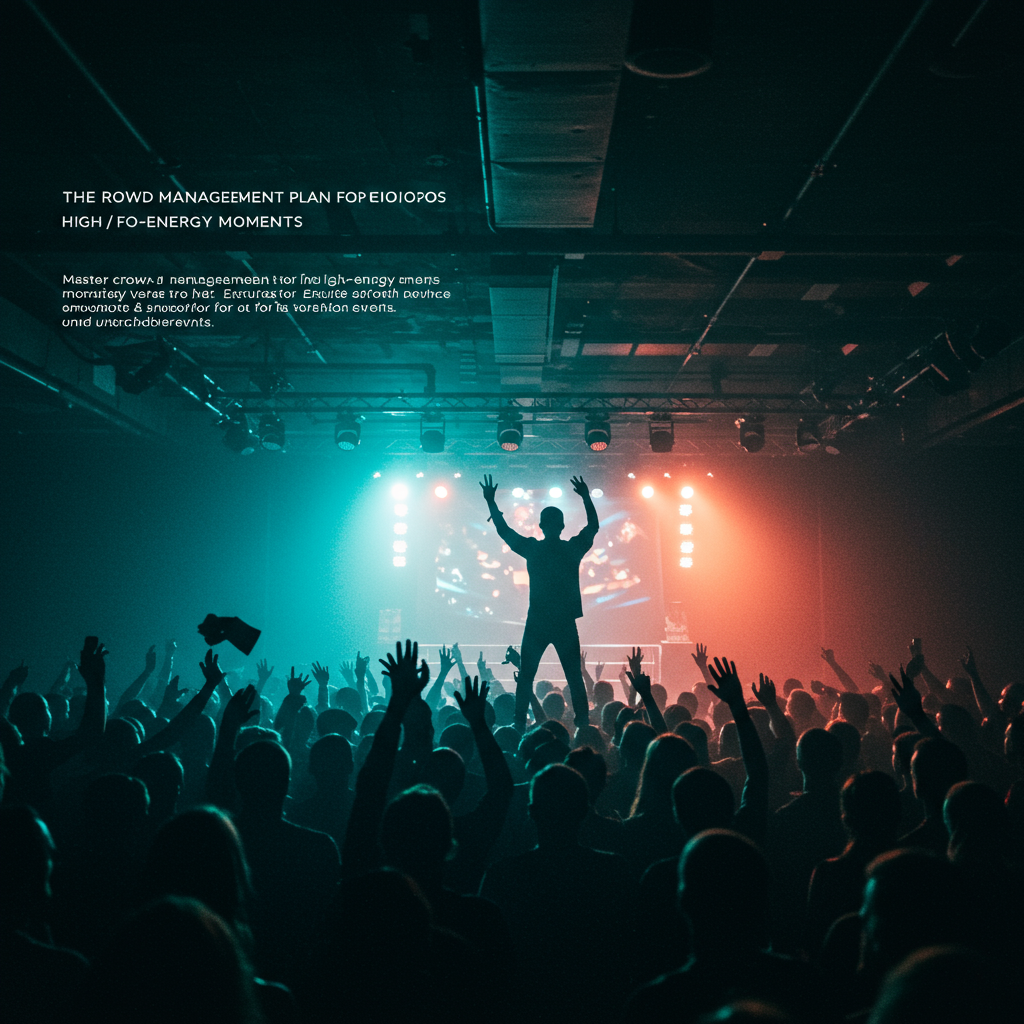
This article provides a comprehensive framework for developing and implementing a successful crowd management plan for high-energy events. It is designed for event organizers, venue managers, and security professionals tasked with ensuring public safety during moments of peak excitement, such as concerts, festivals, and major sporting events. We delve into risk assessment methodologies, strategic planning, technology integration, and staff training protocols. The core proposal is a proactive, data-driven approach that moves beyond simple security to actively shape crowd behavior for safer outcomes. Key performance indicators (KPIs) discussed include Incident Rate (IR), Attendee Satisfaction (NPS), Egress Time, and staff-to-guest ratios, providing measurable benchmarks for success. By following this guide, you will learn to anticipate challenges, mitigate risks, and execute flawless operations that protect attendees, staff, and brand reputation.
Introduction
High-energy moments are the peak of any live event—the headliner taking the stage, the winning goal, the midnight countdown. These moments create unforgettable memories, but they also present the greatest risk. A surge of emotion can translate into a physical surge of people, transforming a jubilant crowd into a dangerous situation in seconds. A successful event hinges on an effective crowd management plan high energy moments demand; one that is not merely reactive but deeply integrated into the event’s design. This plan must anticipate crowd psychology, manage density, and ensure clear communication channels when they are needed most. Without a robust strategy, organizers risk incidents ranging from minor injuries to catastrophic failures, leading to reputational damage, legal liability, and, most importantly, harm to their attendees.
This document outlines a holistic methodology for creating and executing such a plan. It combines proven principles of risk assessment, like the DIM-ICE model (Design, Information, Management – Ingress, Circulation, Egress), with modern technological solutions and rigorous staff training. Success will be measured against clear Key Performance Indicators (KPIs), including a target incident rate of less than 0.1% for major medical cases, an average egress time reduction of 15% compared to industry benchmarks, a Net Promoter Score (NPS) above 50 for safety and security, and maintaining crowd densities below 4 persons per square meter in critical zones. By adopting this strategic framework, event organizers can transform crowd management from a necessary expense into a value-added component that enhances the attendee experience and safeguards the event’s legacy.
Vision, values and proposal
Focus on results and measurement
Our vision is to set a new global standard for event safety, where crowd management is a proactive, intelligence-led discipline, not a reactive security function. We prioritize a preventative approach based on the 80/20 principle: 80% of potential incidents can be mitigated by addressing 20% of the core risks identified during the planning phase. Our mission is to empower event organizers with the tools, knowledge, and strategies to create environments where high-energy moments can be celebrated safely. Our core values are Safety First (non-negotiable protection of all individuals), Attendee Experience (seamless and secure enjoyment), Operational Excellence (efficient, compliant, and data-driven execution), and Proactive Partnership (collaborating with clients and authorities from concept to completion).
- Value Proposition: We offer a scalable, end-to-end crowd management solution that integrates risk assessment, strategic planning, technology, and expert training to minimize liability and maximize attendee safety and satisfaction.
- Quality Criteria: All plans are developed in accordance with leading international standards such as the UK’s “Purple Guide” and the USA’s NFPA 101 Life Safety Code. We commit to a maximum 5% deviation from budgeted security costs and a target of zero major preventable incidents.
- Decision Matrix: We help clients prioritize investments based on a risk matrix that scores potential threats by likelihood and impact. High-risk, high-impact scenarios (e.g., stage emergence, emergency evacuation) receive the most comprehensive planning and resource allocation.
- Technical Standards: We mandate the use of interoperable communication systems (e.g., TETRA radios), audited barrier systems compliant with structural load requirements, and CCTV coverage with a minimum resolution of 1080p in all critical zones.
Services, profiles and performance
Portfolio and professional profiles
Our services provide a comprehensive suite of solutions for creating and implementing a world-class crowd management plan high energy events require. This portfolio is designed to be modular, allowing clients to select individual services or an integrated, turn-key solution.
- Threat and Risk Assessment (TRA): In-depth analysis of the venue, event type, audience demographic, and potential threats to generate a detailed risk register.
- Crowd Management Plan Development: Authoring of a comprehensive plan covering ingress, circulation, egress, emergency procedures, communication strategies, and command structure.
- Staffing and Training: Provision of highly trained personnel, from licensed security officers and stewards to specialized roles. This includes custom training modules based on the specific event’s risk profile.
- Technology Integration: Deployment and management of CCTV systems with crowd density analytics, drone oversight for real-time monitoring, access control systems, and centralized communication platforms.
- Command & Control Operations: Setting up and running an on-site Event Control Room (ECC) with a Gold, Silver, Bronze command structure to manage the event in real-time.
- Post-Event Analysis: A detailed report including incident logs, KPI performance, and actionable recommendations for future events.
Key professional profiles include the Crowd Safety Manager (overall strategic lead), Sector Supervisors (tactical command of specific venue areas), Communication Officers (managing all radio and digital traffic), and Specialist Response Teams (trained for medical emergencies or rapid interventions).
Operational process
- Phase 1: Discovery & Scoping (1-2 weeks): Initial consultation to understand client objectives, event parameters, and budget. KPI: Proposal delivery within 5 business days of the initial meeting.
- Phase 2: Risk Assessment & Plan Design (2-4 weeks): Conduct site visits, stakeholder interviews, and develop the initial draft of the crowd management plan. KPI: Completion of risk register with 95% of foreseeable risks identified.
- Phase 3: Stakeholder Review & Refinement (1 week): Submission of the draft plan to the client, venue management, and local emergency services for feedback. KPI: All statutory feedback incorporated within 3 business days of receipt.
- Phase 4: Operational Readiness (1-3 weeks prior to event): Finalize staffing, deploy technology, and conduct tabletop exercises and staff briefings. KPI: 100% of staff complete event-specific training 48 hours before the event starts.
- Phase 5: Live Execution & Monitoring (Event duration): Active management from the Event Control Room, with real-time adjustments based on crowd dynamics. KPI: Medical response time under 4 minutes; critical communications acknowledged within 30 seconds.
- Phase 6: Post-Event Debrief & Reporting (1 week post-event): Collate all data, conduct a hot debrief with key staff, and deliver a final performance report to the client. KPI: Final report delivered within 7 business days.
Tables and examples
| Objective | Indicators | Actions | Expected result |
|---|---|---|---|
| Prevent crowd crush at the main stage barrier | Crowd density (persons/m²); crowd pressure readings from smart barriers; number of first aid requests for fainting/distress. | Implement a ‘pit’ system with dedicated security; use video analytics to trigger alerts when density exceeds 3.5 p/m²; pre-recorded audio messages asking crowds to ‘step back’. | Maintain average density below 4 p/m²; zero crush-related injuries; reduction in barrier-related first aid requests by 50% compared to previous events. |
| Ensure smooth and rapid egress post-event | Total egress time; attendee flow rate at key exits (persons/minute); number of congestion points. | Use phased lighting and audio cues to guide attendees; deploy ‘wayfinding’ staff at decision points; open supplementary exits post-show. | Achieve full venue egress within 20 minutes for a 10,000-capacity venue; maintain a flow rate above 50 p/min at all main exits; NPS score for ‘ease of exit’ > 60. |
| Maintain clear emergency access lanes | Percentage of lane obstruction; response time for emergency vehicles. | Clearly mark lanes with high-visibility materials; constant monitoring via CCTV and foot patrols; strict tow-away policy for unauthorized vehicles. | Zero obstruction for more than 2 minutes at any time; emergency vehicle access from perimeter to incident point in under 3 minutes. |
Representation, campaigns and/or production
Professional development and management
Effective crowd management is intrinsically linked to the overall event production schedule and requires meticulous coordination. This phase translates the written plan into operational reality. It involves securing all necessary permits and licenses from local authorities, which often requires submitting the crowd management plan for approval weeks or months in advance. We manage this entire process, ensuring all documentation is compliant and submitted on time. Coordination with external agencies is critical; We establish formal communication protocols with local police, fire departments, and emergency medical services. This includes joint planning meetings, defining roles and responsibilities within a unified command structure, and agreeing on escalation triggers for agency intervention. Vendor management is another key aspect, from sourcing certified barrier suppliers to ensuring catering staff understand emergency procedures. A master execution calendar is created, integrating security milestones with the overall production timeline, from load-in to load-out.
- Documentation Checklist: Public liability insurance certificate (minimum $10M coverage), approved event permit, signed contracts with all security vendors, staff accreditation list, and a finalized and signed-off version of the crowd management plan.
- Contingency Planning: Develop pre-approved plans for at least critical five scenarios: severe weather (e.g., lightning), power failure, artist cancellation/delay, major medical incident, and security threat (e.g., bomb threat). Each plan details triggers, actions, and responsible personnel.
- Supply Chain Alternatives: Identify backup suppliers for critical equipment such as radios, barriers, and first aid supplies, with pre-agreed standby rates to ensure availability in case of primary supplier failure.
- Communication Redundancy: Ensure primary radio channels have a designated backup. Implement a secondary communication method, such as a dedicated messaging app group for supervisors, in case of radio network failure.
- Staff Welfare: A detailed plan for security staff, including shift rotations (no longer than 8 hours in high-pressure roles), designated break areas, and provision of water and food to maintain alertness and performance.
Content and/or media that converts
Messages, formats and conversions
In crowd management, “content” refers to the information disseminated to attendees to guide their behavior and ensure safety. This is a critical, proactive tool. The right message, delivered through the right format at the right time, can prevent dangerous situations from developing. Our communication strategy focuses on clarity, consistency, and authority. “Hooks” are simple, memorable phrases like “Look Out For Each Other” or “Know Your Exits.” Calls to Action (CTAs) are direct and unambiguous, such as “Move back from the stage” or “Exit to your left.” We use A/B testing on digital signage to determine the most effective wording for non-emergency messages (e.g., “Zone B is nearing capacity, try Zone C for a better view” vs. “Zone B is full”). Key conversion metrics in this context are not sales, but behavioral changes: a measurable decrease in density in a specific area after a message is displayed, or an increase in the use of secondary exits. A well-designed informational content strategy is a cornerstone of a modern crowd management plan for high energy situations, turning a passive audience into an informed and cooperative one.
- Content Strategy Development: Identify all key decision points for an attendee (arrival, entry, finding amenities, choosing a viewing spot, exiting). Map out the information they will need at each point.
- Message Crafting: Write clear, concise, and positive messages for both standard and emergency situations. All messages are pre-approved by the event’s legal and communications teams. For example, instead of “Don’t rush the gates,” use “Please have your tickets ready for a smooth entry.”
- Format Selection: Assign messages to appropriate formats: large LED screens for mass viewing, directional physical signage, audible public address (PA) systems, and push notifications via the event’s mobile app.
- Asset Production: Create all visual and audio assets. Audio messages are professionally recorded in multiple languages if necessary. Visuals are designed with high contrast and large fonts for legibility from a distance.
- Deployment & Scheduling: A content schedule is created for the Event Control Room. Pre-scheduled messages (e.g., “The show ends in 15 minutes, please note your nearest exit”) are automated, while a library of pre-approved emergency messages is ready for instant deployment.
- Performance Analysis: Post-event, we analyze the impact of our communications. We correlate message deployment times with CCTV data on crowd movement and review social media sentiment regarding clarity and helpfulness of information.
Training and employability
Demand-oriented catalogue
Our training programs are designed to create a highly competent and confident workforce, capable of implementing the crowd management plan effectively. Each module is tailored to the specific roles and risks of an event.
- Module 1: Crowd Safety and Dynamics (Level 1): A mandatory course for all event staff, covering basic crowd psychology, density observation, and personal safety.
- Module 2: Advanced Crowd Management (Level 2): For supervisors and security personnel. Covers risk assessment, conflict de-escalation techniques, and managing entry and exit points.
- Module 3: Emergency Procedures and Evacuation: Practical, scenario-based training on responding to fires, medical emergencies, and security threats, including techniques for guiding large numbers of people to safety.
- Module 4: Communication and Radio Etiquette: Teaches clear and concise communication protocols, ensuring the command structure receives accurate information quickly.
- Module 5: Pit and Barrier Operations: Specialized training for staff working in high-pressure areas in front of the stage, focusing on spotting signs of distress and safe extraction techniques.
- Module 6: Command & Control Simulation: A tabletop exercise for the senior management team to test the crowd management plan against a series of simulated major incidents.
Methodology
Our training methodology is based on a “learn, practice, perform” model. Theoretical knowledge is delivered through interactive workshops, followed by practical, hands-on drills and simulations in the actual event environment where possible. Performance is evaluated using detailed rubrics that assess decision-making, communication, and adherence to protocol. For example, a staff member’s ability to de-escalate a conflict is scored on a 1-5 scale across criteria like tone of voice, body language, and problem-solving. Successful completion of advanced modules can lead to certification and placement in our pool of elite event professionals, creating a clear pathway for career progression and enhancing employability within the events industry. We aim for a pass rate of 90% on all critical competence checks, ensuring a consistently high standard of performance across the entire team.
Operational processes and quality standards
From request to execution
-
- Initial Client Request & Needs Analysis: Receive inquiry, conduct a detailed needs analysis call to understand the event’s scope, audience profile, and specific concerns. Deliverable: Scoping Document. Acceptance: Client signs off on the scope.
- Proposal & Contract: Develop a tailored proposal with service options, clear pricing (cost per hour per guard, project management fee), and a draft contract. Deliverable: Detailed Proposal. Acceptance: Signed contract and initial deposit received.
- Pre-Production & Planning: Assemble the project team, begin the formal risk assessment, and start drafting the crowd management plan. This includes initial meetings with local authorities. Deliverable: Draft Crowd Management Plan. Acceptance: Internal quality review passed.
e
- Execution & Live Operations: Deploy staff and technology. The Event Control Room becomes the hub for all operations, monitoring the event against the plan and making real-time adjustments. Deliverable: Safe and successful event execution. Acceptance: Achievement of pre-defined KPIs.
- Post-Event Closure & Reporting: Conduct a “hot debrief” immediately after the event, followed by a full analysis. Compile the final report detailing performance, incidents, and recommendations. Deliverable: Final Post-Event Report. Acceptance: Client accepts the report and settles the final invoice.
Quality control
- Roles & Responsibilities: A clear RACI (Responsible, Accountable, Consult, Informed) chart is established for all aspects of the plan. The Gold (Strategic), Silver (Tactical), and Bronze (Operational) command structure ensures clear lines of authority.
- Escalation Procedures: Pre-defined triggers for escalating issues from Bronze to Silver, and Silver to Gold. For example, any incident requiring external emergency services automatically triggers a Silver-level response.
- Service Level Agreements (SLAs): We operate under strict SLAs, such as: medical team response time to any location within the venue to be under 4 minutes; 98% of radio calls to be acknowledged within 15 seconds; all CCTV cameras to have 99.9% uptime.
- Audits and Drills: The plan is audited internally at least once before the event. A “tabletop” drill is conducted with the client and key stakeholders to test decision-making in a simulated crisis.
| Phase | Deliverables | Control indicators | Risks and mitigation |
|---|---|---|---|
| Planning | Risk Assessment, Crowd Management Plan v1.0 | Plan submitted to authorities 30 days before deadline; Risk register covers >95% of identified hazards. | Risk: Client provides incomplete information. Mitigation: Use a detailed onboarding questionnaire and hold a mandatory 2-hour scoping workshop. |
| Preparation | Staffing roster, training records, deployment map | 100% of staff are licensed and have completed event-specific training; All equipment (radios, etc.) tested 24 hours prior. | Risk: Staff absenteeism. Mitigation: Maintain a 10% standby staff list; cross-train staff in multiple roles. |
| Execution | Live incident log, command center dashboard | Adherence to staff-to-guest ratio with <5% variance; 100% of incidents logged within 5 minutes of occurrence. | Risk: Unforeseen crowd behavior (e.g., flash mob). Mitigation: Use mobile response teams and pre-planned dispersal routes. Monitor social media for intelligence. |
| Closing | Post-Event Report, KPI analysis | Report delivered within 7 business days; Attendee satisfaction survey (safety) achieves target NPS. | Risk: Inaccurate data collection. Mitigation: Use digital logging systems; cross-reference data from multiple sources (CCTV, staff reports, ticketing). |
Cases and application scenarios
Case 1: “Main Stage Meltdown” – Music Festival Headliner
Scenario: A 50,000-capacity electronic music festival. The final headliner, a world-famous DJ, is about to take the stage. The area in front of the main stage, designed for 15,000 people, is already at 95% capacity. The crowd is energetic, and social media indicates high anticipation. The primary risk is a crowd crush at the front barrier due to a forward surge when the artist appears.
Plan & Execution: Our crowd management plan for this high energy moment included a pre-emptive strategy.
- Design: The front area was divided into four quadrants using T-barriers, with a sterile central corridor for medical access. This broke up one large crowd mass into four smaller, more manageable ones. Smart barriers with pressure sensors were installed at the very front.
- Information: Thirty minutes before the set, large screens displayed messages: “The front is full. For a great view and more space, use the viewing platforms on the left.” The festival app sent a push notification with the same message.
- Management: Entry to the front area was closed 15 minutes before the set. A dedicated ‘Pit Team’ of 20 trained staff was deployed inside the barrier, actively watching for signs of distress. The Silver Commander in the control room monitored live CCTV feeds and the pressure sensor data. When the artist appeared, a minor surge was detected. The sensors alerted the commander, who immediately instructed the sound engineer to broadcast a pre-recorded message from the artist: “Hey everyone, it’s amazing to be here! For your safety, please take one step back and give each other room.” The message, combined with the physical quadrant barriers, effectively dissipated the pressure.
Results: The set was completed with zero crush-related injuries. First aid requests from the front area were 60% lower than the previous year. The average crowd density was maintained at 3.8 persons/m², below the critical 4.0 p/m² threshold. Post-event NPS for safety was 72.
Case 2: “The Final Whistle” – Championship Football Match
Scenario: The final match of a national football league. The home team scores in the last minute to win the championship. The 60,000-strong crowd is ecstatic. The primary risk is a mass pitch invasion, which poses a danger to players and fans, and carries heavy goals for the club.
Plan & Execution:
- Design: A secondary line of stewards was deployed along the touchline during the final 10 minutes of the match, creating a visible human barrier. All exit gates onto the pitch were physically secured and manned.
- Information: The stadium announcer was briefed. As soon as the final whistle blew, they began a pre-scripted announcement congratulating the team and reminding fans that the trophy presentation would happen on the pitch: “Please stay in your seats to celebrate with the team! The trophy lift is coming up live on the big screens!” This gave fans a reason to stay put.
- Management: A ‘pitch protection team’ of 50 security officers was on standby in the tunnel. When a small number of fans attempted to breach the cordon, they were quickly and professionally intercepted by the steward line, with the protection team moving to reinforce that specific section. This decisive but non-aggressive action determined others. The focus was on containment, not confrontation.
Results: Fewer than 30 individuals made it onto the pitch, all of whom were removed within 90 seconds. There was no mass invasion. The trophy ceremony proceeded as planned. The club avoided a major fine, and player safety was guaranteed. The operation was praised by the league for its effectiveness.
Case 3: “Urban Countdown” – New Year’s Eve Celebration
Scenario: A free-to-attend public New Year’s Eve event in a city square, expecting 100,000 attendees. The focal point is the countdown to midnight, followed by a fireworks display. Risks include overcrowding at key vantage points, uncontrolled ingress from multiple streets, and potential for public disorder fueled by alcohol.
Plan & Execution:
- Design: The square was divided into zones using crowd control barriers. Each zone had a specific capacity and its own dedicated entry/exit points. This prevented the entire space from becoming one unmanageable mass. Viewing screens were placed in peripheral zones to distribute the crowd.
- Information: A real-time capacity management system was used. As zones filled up, digital signs at the entry points to the event perimeter were updated: “Central Square Zone A: FULL. Please use Zone C entrance on Main Street.” This information was also shared live on the event’s social media channels.
- Management: Ingress was managed through ‘pulsing and holding’. As crowds arrived, they were held in designated areas and then ‘pulsed’ into the zones in managed waves to avoid crushing at the entry points. Police and stewards enforced a strict no-alcohol policy in the event footprint. Following the fireworks, a popular local band was scheduled to play for an additional hour. This staggered the egress, preventing a mass exodus of 100,000 people at once.
Results: All zones were filled to a maximum of 85% of their calculated safe capacity. The egress was completed over 75 minutes with no incidents of crushing or panic. Arrests for public disorder were 40% lower than the previous year’s event. The city’s emergency services praised the zoned approach for maintaining access for their personnel throughout the night.
Case 4: “Tech Launch Frenzy” – Celebrity Appearance
Scenario: A major tech company is launching a new smartphone at its flagship store. A globally recognized celebrity brand ambassador will make an appearance. Several hundred enthusiastic fans and a large contingent of aggressive paparazzi are expected in a relatively small public space in front of the store. Risks include crushing against the store’s glass facade, conflicts between fans and paparazzi, and obstructed public access.
Plan & Execution:
- Design: A “red carpet” arrival lane was created using weighted, high-sided barriers to provide a secure path for the celebrities from their vehicle to the store entrance. A separate, clearly demarcated pen was established for accredited media/paparazzi. A third, larger “fan zone” was created opposite the entrance. This segregation was key.
- Information: The event PR team communicated the specific arrangements for media and fans well in advance. On the day, large signs clearly indicated the different zones. Staff used bullhorns to give clear, simple directions.
- Management: A team of close protection officers managed the celebrity’s arrival and departure. A separate security team managed the media pen, ensuring they did not spill out into other areas. A third team managed the fan zone, monitoring for signs of distress and communicating with the crowd. The entire arrival sequence was timed to last less than 90 seconds to minimize the period of peak excitement. Once the celebrity was inside, the focus shifted to safely dispersing the crowds from the area.
Results: The celebrity’s arrival was executed without incident. No injuries were reported. The store facade remained secure. The public sidewalk was kept partially open throughout the event, minimizing disruption to the public. The client’s brand was protected from negative press associated with chaotic events.
Step-by-step guides and templates
Guía 1: How to Conduct a Pre-Event Venue Risk Assessment
- Step 1: Gather Documentation. Obtain venue floor plans, capacity certificates, fire safety certificates, and previous event incident reports.
- Step 2: Conduct a Physical Walk-through. Walk the entire attendee journey, from arrival points (public transport, parking) to the venue entrance, through the event space, to the exits.
- Step 3: Identify Hazards. Look for potential hazards in three categories:
- Environmental: Poor lighting, uneven surfaces, temporary structures, weather exposure.
- Structural: Narrow corridors (bottlenecks), dead ends, weak points in barriers or fencing, obstructed exits.
- Operational: Proximity of alcohol sales to high-density areas, conflicting crowd flows (e.g., people going to toilets crossing the path of people entering).
- Step 4: Assess the Risks. For each hazard, assess the risk using a 5×5 matrix (Likelihood vs. Impact). A trip hazard might be ‘Likely’ but have ‘Minor’ impact, while a blocked fire exit is ‘Unlikely’ but has ‘Catastrophic’ impact.
- Step 5: Determine Control Measures. For each identified risk, propose a control measure. Use the hierarchy of controls:
- Elimination: Can the hazard be removed completely (e.g., remove a temporary structure from a main thoroughfare)?
- Substitution: Can you replace the hazard (e.g., use plastic cups instead of glass)?
- Engineering Controls: Can you add physical controls (e.g., install extra lighting, add temporary barriers to create a one-way system)?
- Administrative Controls: Can you change how people work (e.g., implement a new procedure, add more signage, increase staff patrols)?
- Personal Protective Equipment (PPE): This is the last resort (e.g., safety boots for staff).
- Step 6: Create the Risk Register. Document everything in a formal risk register table with columns for: Hazard ID, Hazard Description, Risk Score (before controls), Control Measures, and Residual Risk Score (after controls).
- Step 7: Review and Sign-off. The risk register should be reviewed by the event safety officer and the client. It is a living document and should be updated if the event plan changes.
Guía 2: Developing an Effective Communication Matrix
- Identify all Stakeholder Groups: List every group you need to communicate with (e.g., Event Control, Sector Supervisors, Medical Team, Police, Senior Management, Attendees).
- Determine Communication Channels: For each group, list the available channels (e.g., Digital Radio, Mobile Phone, Messaging App, PA System, LED Screens, Social Media).
- Define Incident Types: Create a list of potential incidents, from minor (e.g., lost child) to major (e.g., stage collapse).
- Create the Matrix (Table):
- Column 1: Incident Type. (e.g., “Medical Emergency – Major Trauma”).
- Column 2: Who Reports it? (e.g., “Any staff member”).
- Column 3: To Whom? (e.g., “Event Control”).
- Column 4: Primary Channel? (e.g., “Radio Channel 1 – using pro-word ‘Code Red'”).
- Column 5: Key Information to Relay? (e.g., “Location, number of casualties, nature of injuries”).
- Column 6: Who is Informed by Control? (e.g., “Medical Team, Sector Supervisor, Silver Command”).
- Column 7: Follow-up Actions? (e.g., “Control dispatches medical team, clears access route”).
- Drill the Matrix: Use the communication matrix as the basis for tabletop exercises to ensure everyone understands their role.
Guía 3: Post-Event Debrief Checklist
- Gather Data: Collect all relevant information before the meeting: incident logs, medical reports, staffing attendance sheets, CCTV footage of key moments, attendee feedback/complaints, and KPI performance data.
- Structure the Meeting: Follow a chronological order: Ingress, Event Duration, Egress. For each phase, ask the following questions.
- Ingress Review:
- Did the gates open on time? If not, why?
- How did the ticket scanning and search process perform against targets?
- Were there any unexpected queues or congestion points?
- Event Duration Review:
- What was the most significant incident and how was it handled?
- Did the communication plan work effectively? Were there any blackspots?
- How was the performance of staff? Were welfare and rotation plans adequate?
- Did any part of the venue layout cause unforeseen problems?
- Egress Review:
- How did the actual egress time compare to the planned time?
- Were the lighting and signage effective in guiding people out?
- Were there any issues with public transport or parking coordination?
- Identify Successes and Failures: For each phase, explicitly ask “What went well?” and “What could be improved?”.
- Assign Action Items: For every identified improvement, create a specific, measurable, achievable, relevant, and time-bound (SMART) action item. Assign it to an individual. Example: “John Smith to source quotes for a new digital radio system with 100% site coverage by [Date]”.
- Document and Distribute: Write up the minutes of the debrief and distribute them to all attendees and key stakeholders within 48 hours. This document becomes the starting point for planning the next event.
Internal and external resources (without links)
Internal resources
- Crowd Management Plan Template (CMP-TPL-001)
- Venue Risk Assessment Checklist (VRA-CHK-004)
- Event Staff Training Manual (EST-MAN-002)
- Incident Report Form (IRF-009)
- Tabletop Exercise Scenario Guide (TES-GUI-003)
- Standard Operating Procedure: Emergency Evacuation (SOP-EVAC-001)
External reference resources
- The Purple Guide to Health, Safety and Welfare at Music and Other Events (Health and Safety Executive, UK)
- NFPA 101: Life Safety Code (National Fire Protection Association, USA)
- Event Safety Guide (The “Green Guide”) – Guide to Safety at Sports Grounds (Sports Grounds Safety Authority, UK)
- ISO 31000:2018 – Risk management — Guidelines
- Managing Crowds Safely (Australian Institute for Public Safety)
Frequently asked questions
What is the ideal staff-to-attendee ratio for a high-energy event?
There is no single “ideal” ratio. The correct number is determined by a thorough risk assessment. A low-risk event in a simple, modern venue might require a 1:250 ratio, while a high-risk event in a complex environment could need a ratio as dense as 1:50 in critical areas like the stage pit. Factors influencing the ratio include audience demographics, venue complexity, alcohol sales, and the type of performance.
How does technology improve a crowd management plan for high energy events?
Technology is a force multiplier. CCTV with AI-powered video analytics can automatically detect dangerous crowd densities, counter-flow, or slip-and-fall incidents, alerting operators faster than the human eye. Drones provide invaluable aerial oversight of large areas. Digital ticketing systems can manage ingress flow rates in real-time. Modern communication apps provide redundancy and allow for the sharing of rich media (photos, maps) between teams, dramatically improving situational awareness.
What is the single biggest mistake in crowd management?
The biggest mistake is inadequate planning, rooted in a failure to anticipate “what if.” This often manifests as understaffing, a lack of robust contingency plans, or assuming that crowds will behave rationally. A successful plan is not just about having security guards; it’s about proactively designing and managing the environment and information to guide crowd behavior from the very start.
How do you manage crowd psychology?
Crowd psychology is managed indirectly. You cannot control how every individual thinks, but you can influence the collective behavior. This is achieved through clear and constant communication (telling people where to go and why), intelligent venue design (intuitive layouts, no dead ends), and the visible presence of calm, professional, and helpful staff. A well-trained steward who provides information with a smile can de-escalate anxiety and build trust, which is crucial in a tense situation.
What is the “DIM-ICE” model?
DIM-ICE is a foundational model for event safety planning. “DIM” stands for Design, Information, and Management. “ICE” stands for Ingress, Circulation, and Egress. The model forces you to consider all three aspects (DIM) for all three phases of an event (ICE). For example, for Ingress (entry), you must consider the Design (layout of gates), the Information (signage, ticket instructions), and the Management (staffing levels, search procedures).
Conclusion and call to action
The successful management of high-energy moments is not a matter of luck; it is the direct result of meticulous planning, rigorous training, and flawless execution. As we have demonstrated, a proactive and integrated approach that combines intelligent design, clear communication, and robust management is essential to ensuring attendee safety and event success. By focusing on data-driven KPIs and leveraging modern technology, we can move beyond reactive security measures to create environments where the energy of a crowd is a source of celebration, not a cause for concern. An effective crowd management plan high energy events deserve is the ultimate investment in your attendees’ experience and your brand’s reputation.
Do not leave the safety of your next event to chance. Contact our specialists today to develop a bespoke crowd management plan tailored to your specific needs. Let us help you master the momentum and deliver a safe, secure, and unforgettable experience.
Glossary
- Crowd Density
- The number of people per unit of area, typically measured in persons per square meter (p/m²). It is a critical metric for assessing crowd safety.
- Crowd Dynamics
- The study of how crowds behave and move, including concepts like flow rates, density, and the potential for shockwaves or progressive collapse.
- Egress
- The process of a crowd exiting a venue or event space. A planned and managed egress is crucial to safety.
- Ingress
- The process of a crowd entering a venue or event space. This phase includes ticketing, security screening, and directing attendees.
- Silver Command
- The tactical level of command in a three-tiered (Gold, Silver, Bronze) command structure. Silver Command is typically located in the Event Control Room and manages the overall operational response.
- Tabletop Exercise
- A discussion-based session where team members meet in an informal setting to discuss their roles during an emergency and their responses to a particular emergency situation. A facilitator presents a scenario and asks questions to test the viability of the crowd management plan.
Internal links
- Click here👉 https://us.esinev.education/diplomas/
- Click here👉 https://us.esinev.education/masters/
External links
- Princeton University: https://www.princeton.edu
- Massachusetts Institute of Technology (MIT): https://www.mit.edu
- Harvard University: https://www.harvard.edu
- Stanford University: https://www.stanford.edu
- University of Pennsylvania: https://www.upenn.edu