
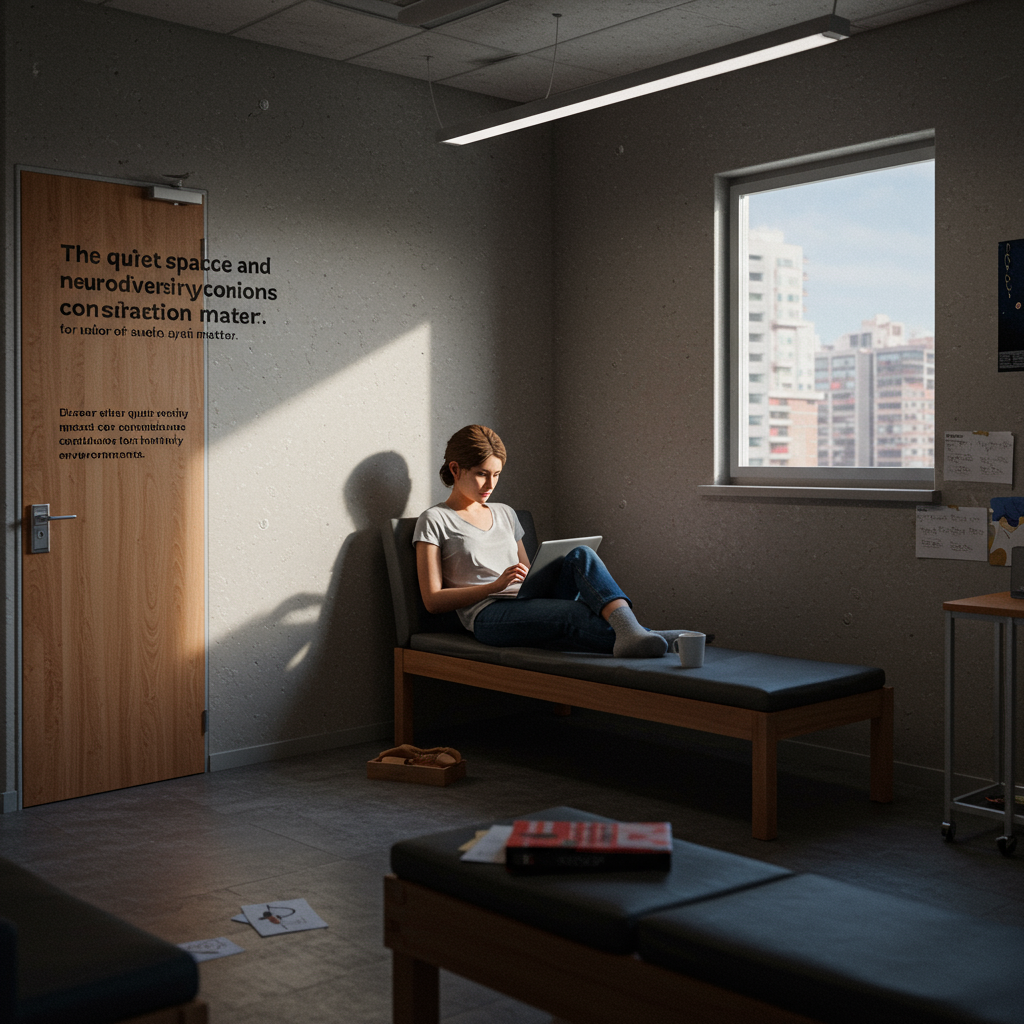
This article provides a definitive framework for understanding and implementing spaces that cater to neurodivergent individuals. It delves into the core principles of sensory-friendly design, focusing on acoustic, lighting, and spatial elements. We address the strategic importance of these environments, linking them to tangible business outcomes such as improved productivity (+15-20%), higher employee retention, and increased user satisfaction (NPS > 50). The content is structured for architects, facility managers, HR professionals, and organizational leaders, offering a step-by-step methodology from initial audit to post-occupancy evaluation. By focusing on key performance indicators like decibel reduction, lux level control, and user feedback, this guide transforms the abstract concept of inclusion into an actionable, measurable, and high-impact strategy. The core of our approach is based on a deep understanding of neurodiversity and quiet space considerations.
Introduction
In the modern world, our environments are often a cacophony of sensory inputs. Open-plan offices, bustling public transportation, and brightly lit retail spaces are designed for a “neurotypical” majority, inadvertently creating barriers for a significant portion of the population. Neurodiversity, the concept that variations in the human brain regarding learning, mood, attention, and other mental functions are normal, is gaining long-overdue recognition. Approximately 15-20% of the population is considered neurodivergent, including individuals with autism spectrum disorder (ASD), attention-deficit/hyperactivity disorder (ADHD), dyslexia, and sensory processing disorders. For these individuals, a standard environment can be overwhelming, leading to stress, anxiety, and an inability to focus. This is where a strategic focus on neurodiversity quiet space considerations becomes not just a benefit, but a fundamental requirement for true inclusivity and equity.
This guide outlines a comprehensive methodology for designing, implementing, and managing quiet spaces that effectively support neurodivergent individuals. Our approach is data-driven and human-centric, moving beyond simple “quiet rooms” to create nuanced, multi-sensory environments that can be adapted to individual needs. We will measure success through a combination of environmental metrics (e.g., ambient noise levels in decibels, lighting quality in lux and CRI), user-centric KPIs (e.g., user satisfaction scores, reported reduction in sensory overload incidents), and business-oriented outcomes (e.g., productivity gains, reduction in absenteeism). By codifying the process, from initial sensory audit to post-installation feedback loops, we provide a replicable model for creating spaces where all minds can thrive.
Vision, values and proposal
Focus on results and measurement
Our vision is a world where physical environments are built with the cognitive and sensory well-being of all people in mind. We operate on the principle that inclusive design is not an add-on but a core component of excellence in architecture and management. Our values are rooted in empathy, data-driven decision-making, and sustainable impact. We apply the 80/20 rule by prioritizing interventions that yield the greatest sensory relief for the widest range of users with the most efficient use of resources. This often means focusing first on acoustic control and lighting, which have a disproportionately large impact on sensory experience. Our technical standards are aligned with guidelines from WELL Building Standard, LEED, and accessibility regulations like the Americans with Disabilities Act (ADA), but we go further by integrating principles from occupational therapy and environmental psychology.
- Main Value Proposition: We transform spaces into strategic assets that enhance well-being, boost productivity, and foster a genuine culture of inclusion, delivering a measurable ROI through talent retention and improved performance.
- Quality Criteria: Every project must meet specific, pre-defined metrics for acoustic performance (e.g., Noise Reduction Coefficient – NRC > 0.8 for panels), lighting quality (CRI > 90, flicker-free), and air quality (low VOC materials). User feedback is a non-negotiable stage gate for project completion.
- Decision Matrix for Interventions:
- Impact (Y axis): High (addresses a primary sensory irritant like noise) vs. Low (addresses a secondary preference).
- Effort (X Axis): Low (e.g., changing light bulbs, providing headphones) vs. High (e.g., structural acoustic modifications, installing a dedicated pod).
- Priority: We focus on the High-Impact, Low-Effort quadrant first to deliver immediate value and build momentum.
Services, profiles and performance
Portfolio and professional profiles
Our services are designed to guide organizations through every stage of creating neuro-inclusive environments. We understand that effective implementation requires a multidisciplinary approach, blending technical expertise with a deep understanding of human sensory experience. Our core offerings are based on the most critical neurodiversity quiet space considerations.
- Sensory Environment Audit: A comprehensive assessment of an existing space. Our team, including an Acoustic Engineer and an Occupational Therapist, uses specialized equipment to measure light levels (lux), sound pressure (dB), sound frequency, and air quality. We combine this quantitative data with qualitative user interviews and observational studies. The deliverable is a detailed report with a “sensory heat map” and prioritized recommendations.
- Inclusive Design Consulting: We partner with architects, interior designers, and facility managers during the planning phase of new builds or renovations. Our experts provide evidence-based design principles to ensure neuro-inclusivity is baked in from the start, saving costly retrofits later. This includes material selection, spatial layout, and HVAC design.
- Quiet Space Design & Build: A turnkey solution for creating dedicated quiet spaces, sensory rooms, or low-stimulus zones. This service covers everything from design mockups and material sourcing to construction and installation. The project team typically includes a Project Manager, an Interior Designer specialized in sensory design, and certified contractors.
- Policy & Etiquette Development: A space is only as effective as the culture around it. We help organizations develop clear usage policies, communication plans, and training materials to ensure the quiet space is used respectfully and effectively by all employees.
Operational process
- Phase 1: Discovery and Audit (2 weeks): Initial consultation, stakeholder interviews, and on-site sensory audit. KPI: Completion of audit report with a deviation of less than 5% on key measurements.
- Phase 2: Design and Proposal (2-3 weeks): Development of design concepts, material palettes, and a detailed project plan with budget. KPI: Proposal submission with at least two viable design options (e.g., a “good, better, best” model).
- Phase 3: Implementation and Management (4-8 weeks, depending on scope): Procurement of materials, contractor management, and installation. KPI: Project completion within 10% of the initial timeline and budget. Weekly progress reports.
- Phase 4: Evaluation and Optimization (4 weeks post-occupancy): Collection of user feedback through surveys (target NPS > 50), re-measurement of environmental metrics to confirm goals are met. KPI: Documented achievement of target metrics (e.g., ambient noise reduction of at least 15 dB).
Tables and Examples
Improve visual comfort and reduce eye strain- Light level (lux)
– Color Rendering Index (CRI)
– Flicker rate- Replace fluorescent lights with LEDs (CRI > 90, flicker-free)
– Install dimmer controls and blinds
– Provide individual task lighting- Adjustable light levels between 300-500 lux
– 25% reduction in complaints of headaches or eye strainIncrease the use of the relaxation space by 50%- Space occupancy rate (sensors or records)
– Net Promoter Score (NPS) of the space- Clearly communicate the purpose and rules of use
– Incorporate biophilic design elements
– Offer different types of seating- Average occupancy of 20% during peak hours
– Space NPS greater than 50…Representation, Campaigns, and/or ProductionProfessional Development and ManagementThe successful implementation of a tranquil space goes beyond design; it requires meticulous project management, similar to a production. The logistics of coordinating suppliers, ensuring materials meet the correct specifications (e.g., acoustic panels with a specific NRC, flicker-free LED lighting), and managing construction timelines are critical. We obtain all necessary building permits and guarantee compliance with local safety and accessibility codes. Our supplier management process includes rigorous selection based on their experience with sensitive environments and their ability to work with minimal disruption in a busy office environment.
- Critical Documentation Checklist:
- Final and Approved Design Drawings.
- Technical Specifications for all Materials (Data Sheets).
- Detailed Budget and Project Schedule (Gantt Chart).
- Relevant Building Permits and Licenses.
- Service Level Agreements (SLAs) with all contractors.
- Supply Chain Management: We maintain an inventory of alternative suppliers for key materials (e.g., acoustic fabrics, lighting systems) to mitigate the risk of delays due to stockouts.
- Plans for Contingency: 10-15% of the budget is allocated to contingencies. Phased work plans are established to minimize disruption, including the possibility of carrying out noisy work outside of working hours. A project follow-up meeting is held weekly to address any deviations from the plan.
A well-structured production workflow, with quality controls at each stage, minimizes the risks of cost overruns and delays, ensuring that the final result meets the exact sensory specifications.
| Objective | Indicators | Actions | Expected Result |
|---|---|---|---|
| Reduce auditory overload by 30% | – Ambient noise level (dB) – User satisfaction surveys (scale 1-10) |
– Install acoustic panels (NRC 0.9) – Implement a “headphones in concentration area” policy – Designate a quiet zone |
– Average noise level reduced from 65 dB to <50 dB – Satisfaction score Acoustics > 8.0/10 |
Content and/or media that convert
Messages, formats, and conversions
Creating a quiet space is a significant investment. To maximize its adoption and demonstrate its value, it is crucial to develop an internal communication strategy. The goal is to turn awareness into usage and usage into advocacy. The initial hook is typically a message focused on universal well-being and productivity: “A space for everyone to focus and recharge.” Clear calls to action (CTAs), such as “Visit the new Focus Zone on the third floor” or “Check out the user guide on the intranet,” are essential. We conduct A/B tests on the ad emails (e.g., one focused on productivity versus one focused on well-being) to see which generates more clicks to the resources page. Conversion metrics include the open rate of the ad emails, visits to the intranet page, and, most importantly, usage rates of the space itself. A key aspect is framing the initiative around neurodiversity quiet space considerations to educate and foster empathy.
- Phase 1: Planning (Responsible: Communications Specialist): Define the audience (entire company, managers), the key messages, and the communication schedule. Task: Create a one-page communication plan.
- Phase 2: Content Creation (Responsible: Content Creator): Produce the assets: an intranet article explaining the “why,” a short video tutorial showcasing the space and its features, posters with etiquette guidelines, and a frequently asked questions guide. Task: Draft all assets for review.Phase 3: Distribution (Responsible: Communications Specialist): Launch the campaign across multiple channels: company-wide email, Slack/Teams posts, presentations at general meetings. Task: Execute the distribution plan.
Phase 4: Measurement and Feedback (Responsible: Data Analyst/HR): Collect usage data and conduct follow-up surveys to measure satisfaction and gather suggestions. Task: Submit an impact report within 30 days.
Training and employability
Demand-driven catalog
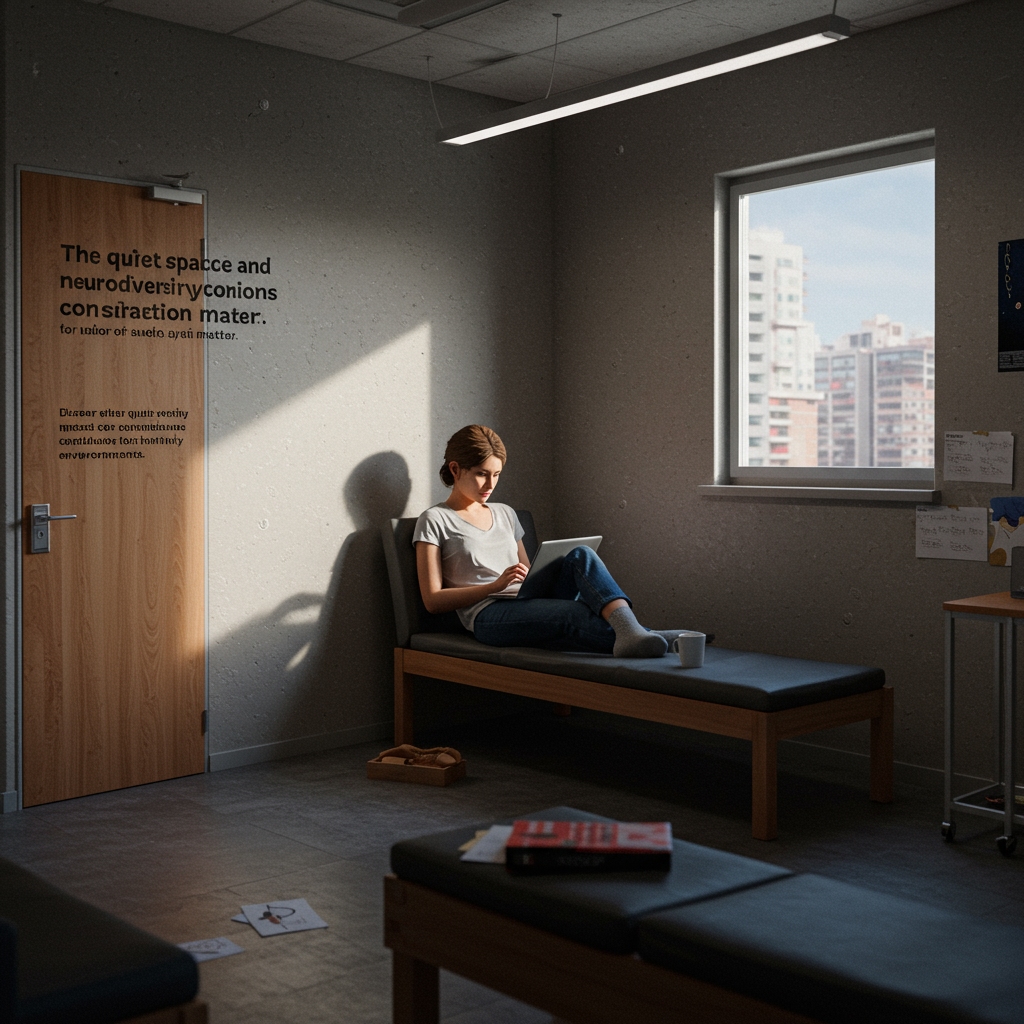
To ensure quiet spaces are successfully integrated into the company culture and actively support employability and the performance of neurodivergent employees, we offer specific training modules. These programs are designed to be practical and scenario-based.
- Module 1: Neurodiversity in the Workplace (for all employees): A 60-minute introduction to neurodiversity concepts, demystifying stereotypes and fostering a culture of empathy and understanding.
- Module 2: Inclusive Leadership and Managing Neurodiverse Teams (for managers): A 3-hour workshop focused on practical strategies for adapting communication styles, task allocation, and performance reviews to support neurodivergent team members.
- Module 3: Effective Use of Adaptive Workspaces (for all employees): A 30-minute guide on how to use the new quiet space and other flexible work areas to optimize focus, collaboration, and personal rest, including etiquette and best practices.
- Module 4: Universal Design for Learning in Corporate Training (for L&D teams): An advanced course on how to apply inclusive design principles to your company’s own training materials (e.g., providing transcripts, using dyslexia-friendly fonts, avoiding information overload).
Methodology
Our training methodology is blended, combining self-paced e-learning modules with live, interactive workshops (virtual or in-person). Assessment is based on clear rubrics, focusing on the practical application of knowledge. For example, in the course for managers, a practical exercise involves rewriting a feedback request to make it clearer and more direct. We offer “inclusive leadership certificates” for those who complete the training, which can be linked to professional development goals. The expected results are a measurable increase in managers’ confidence in managing diverse teams (measured through pre- and post-training surveys) and a reduction in misunderstandings or conflicts related to work styles. This, in turn, contributes to creating a more equitable internal talent pool and improving retention rates for neurodivergent talent.
Operational Processes and Quality Standards
From Request to Execution
-
- Diagnosis (Phase 1): The client submits a request. We hold an initial meeting to understand the objectives, scope, and budget. The deliverable is a preliminary Service Level Agreement (SLA) and an audit proposal. Acceptance Criteria: Signature of the audit proposal.Proposal (Phase 2): Following the sensory audit, we present a detailed design proposal. This includes design concepts, a cost breakdown, a timeline, and projected KPIs. The deliverable is the complete proposal document. Acceptance Criteria: Client approval of the design and budget.
Pre-production (Phase 3): All technical drawings are finalized, long-lead materials are ordered, and contractors are selected. The deliverable is a complete construction package and a confirmed project schedule. Acceptance Criteria: All key materials confirmed and contractors contracted.
Execution (Phase 4): On-site management of construction and installation. Weekly quality checks are performed. The deliverable is weekly progress reports. Acceptance Criteria: Completion of construction according to specifications.
Closure and Evaluation (Phase 5): Final inspection, handover to the client, and the start of the 30-day post-occupancy evaluation period. The deliverable is the final project report and the user evaluation report. Acceptance Criteria: The space meets all environmental KPIs, and the client signs off on project completion.
Quality Control
Roles: The Project Manager is the main point of contact and responsible for overall quality. The Lead Designer ensures adherence to the design concept. The Acoustics/Lighting Specialist performs the technical measurements.
Scaling: Issues are recorded in an issue log. Issues that cannot be resolved by the Project Manager within 48 hours are escalated to an Account Director.
- Acceptance Indicators: Each phase has a quality checklist. For example, in the execution phase, one indicator is that construction noise levels do not exceed an agreed-upon threshold during working hours. The final SLA stipulates a 12-month warranty on workmanship.
- Diagnosis (Phase 1): The client submits a request. We hold an initial meeting to understand the objectives, scope, and budget. The deliverable is a preliminary Service Level Agreement (SLA) and an audit proposal. Acceptance Criteria: Signature of the audit proposal.Proposal (Phase 2): Following the sensory audit, we present a detailed design proposal. This includes design concepts, a cost breakdown, a timeline, and projected KPIs. The deliverable is the complete proposal document. Acceptance Criteria: Client approval of the design and budget.
ProposalDesign Package and BudgetThe budget meets the client’s expectations (±10%). The design addresses the 3 main problems identified in the audit.Risk: The design is too expensive. Mitigation: Present tiered options (Good/Better/Optimal) with a clear breakdown of costs and benefits.The user satisfaction score is > 8/10.Risk: Low user adoption. Mitigation: Implement the communication and training campaign (Sections 5 and 6) before the space opens.
| Phase | Deliverables | Control Indicators | Risks and Mitigation |
|---|---|---|---|
| Diagnosis | Sensory Audit Report | Accuracy of dB and lux measurements (±5%). Comprehensiveness of user feedback. | Risk: The data does not reflect actual usage. Mitigation: Take measurements at different times of day and combine them with surveys and interviews. |
| Execution | Complete physical installation | Adherence to schedule (delay < 1 week). Completed work passes the defect checklist. | Risk: Supply chain delays. Mitigation: Order key materials in advance and have pre-approved backup suppliers. |
| Closure | Post-Occupancy Assessment Report | Environmental KPIs meet or exceed targets. |
Application Cases and Scenarios
Case 1: Renovation of a Corporate Technology Office
A 500-employee technology company with an open-plan office layout was experiencing low concentration and noise complaints. The goal was to create “focus zones” without isolating teams. Following an audit that revealed noise peaks of 70 dB, a multi-zone strategy was implemented. Four “focus pods” for one or two people with 35 dB sound insulation were installed. In addition, a 100 m² area was designated as a “work library,” equipped with suspended acoustic panels, warm, dimmable lighting (2700K, 300 lux), and a strict no-call policy. The key neurodiversity quiet space considerations were the variety of options (enclosed vs. open but quiet space) and the clarity of the rules of use. KPIs: Time tracking showed an 18% increase in uninterrupted “focus time” blocks. A post-implementation survey showed a 40% reduction in noise complaints and an increase in the environment satisfaction score from 5.5 to 8.2 out of 10. The project cost €75,000 and an ROI of 18 months is estimated based on productivity gains.
Case 2: University Library
A university library wanted to better support its growing population of neurodivergent students. The challenge was to create low-stimulus spaces within a busy, public building. Three underutilized group study rooms were converted into “sensory nests.” Each nest was equipped with a different seating option (a beanbag, an ergonomic office chair, and a balance ball seat), individually controlled lighting with adjustable color temperature and brightness, and a panel with different tactile textures. A window film was applied to reduce glare and visual stimulation from the outside. Access was managed through an online booking system to ensure privacy and availability. KPIs: In the first semester, the nests had an occupancy rate of 75%. Use by students registered with the accessibility office increased by 200% compared to their use of the old study rooms. Qualitative feedback was overwhelmingly positive, with students describing it as a “lifesaver during exam season.” The cost was modest, €15,000 for the three rooms.
Case 3: Waiting Room of a Pediatric Clinic
A pediatric clinic sought to reduce anxiety for children and parents in its waiting room, especially for children with sensory sensitivities. A corner of the waiting room was divided with a semicircular bookshelf to create a “calm zone.” Within this zone, the television was removed from the wall. Fluorescent lighting was replaced with indirect LED spotlights in the ceiling. Animal-shaped acoustic wall panels were installed to absorb sound and add visual interest. A sensory box (masses, manipulatives, noise-canceling headphones) was provided. KPIs: Reception staff reported a noticeable reduction in crises and discomfort in the waiting room (approximately 50% fewer recorded incidents). The clinic’s Net Promoter Score (NPS), measured through parent surveys, increased by 25 points in the three months following implementation. This low-cost project (€8,000) significantly improved the patient experience and the clinic’s reputation.
Case 4: Low-Budget Implementation in a Startup
A 30-person startup in a coworking space couldn’t afford a large-scale construction project.
Their goal was to implement neurodiversity quiet space considerations with a budget under €5,000. The solution focused on policies and equipment rather than construction. Ten pairs of high-quality noise-canceling headphones were purchased for shared use. A “Focus Wednesday” policy was instituted, with no internal meetings scheduled and quiet work encouraged. A small corner of the office, away from the kitchen and entrance, was designated as a “quiet zone” using portable screens for visual separation. The light bulbs in this area were replaced with warmer, dimmable ones, and individual desk lamps were provided. KPIs: Despite its simplicity, the initiative was a great success. In an anonymous survey, 85% of employees stated that the changes had “significantly” improved their ability to concentrate. Employee retention improved, with a reduction in voluntary turnover in the following quarter. The project demonstrated that significant impact is possible even with limited resources.
Step-by-step guides and templates
Guide 1: How to conduct a low-cost sensory audit of your workspace
- Step 1: Measure the sound. Download a sound level meter app on a smartphone. Take measurements at different times (morning, midday, afternoon) and in different areas (near the entrance, in the center, in a quiet corner). Note the average and maximum decibel levels. Any value above 60 dB in a concentration work area is problematic.
- Step 2: Evaluate the lighting. Observe the quality of the light. Is there visible flickering (you can check this with your phone’s slow-motion camera)? Is there a lot of glare on the screens? ¿Es la luz demasiado brillante o demasiado tenue? Utilice una aplicación de fotómetro para medir los lux; los niveles para el trabajo de oficina deberían estar entre 300 y 500 lux.
- Paso 3: Identificar los olores y la calidad del aire. Camine por el espacio y anote cualquier olor fuerte (comida de microondas, perfume, productos de limpieza). ¿El aire se siente estancado o fresco? ¿Hay plantas o ventanas que se puedan abrir?
- Paso 4: Analizar el desorden visual. Evalúe la cantidad de “ruido visual”. ¿Las paredes están cubiertas de carteles desordenados? ¿Hay cables por todas partes? ¿Los pasillos están despejados? Un entorno visualmente caótico puede ser tan perturbador como el ruido.
- Paso 5: Realizar una encuesta anónima. Cree una encuesta sencilla (usando Google Forms o similar) y pregunte a sus compañeros: “¿Qué es lo que más le distrae en la oficina (ruido, interrupciones, temperatura, etc.)?”, “¿Hay algún lugar donde le resulte más fácil concentrarse? ¿Por qué?”, “¿Qué cambiaría de nuestro entorno físico si pudiera?”.
- Checklist final:
- [ ] Niveles de sonido documentados (dB).
- [ ] Evaluación de la calidad de la luz (parpadeo, deslumbramiento, lux).
- [ ] Mapa de olores y evaluación de la calidad del aire.
- [ ] Puntuación de desorden visual (escala 1-5).
- [ ] Resultados de la encuesta recopilados y analizados.
- [ ] Lista de los 3 principales problemas sensoriales identificados.
Guía 2: Plantilla para proponer un espacio tranquilo a la dirección
- Título: Propuesta para la creación de una Zona de Enfoque para mejorar la productividad y el bienestar.
- Resumen ejecutivo: Un párrafo que resume el problema (distracciones, estrés), la solución propuesta (un espacio tranquilo de bajo estímulo) y el beneficio esperado (aumento de la productividad, mejor retención del talento).
- Análisis del problema: Presente los datos de su auditoría sensorial (Guía 1). Incluya estadísticas sobre el coste de la pérdida de productividad debido a las interrupciones y los beneficios de apoyar a una plantilla neurodiversa.
- Solución propuesta: Describa el espacio que propone. Incluya su ubicación, tamaño y características clave (p. ej., control acústico, iluminación regulable, asientos cómodos). Mencione explícitamente que estas son neurodiversity quiet space considerations.
- Beneficios y ROI: Cuantifique los beneficios. Por ejemplo: “Un aumento del 5% en la productividad de 20 desarrolladores podría suponer un ahorro de X € al año”. Incluya beneficios intangibles como la mejora de la moral y el posicionamiento como empleador inclusivo.
- Presupuesto y recursos necesarios: Proporcione un desglose de los costes estimados (mobiliario, tratamiento acústico, etc.). Sea realista. Incluya opciones de bajo coste.
- Plan de implementación: Describa los pasos a seguir, un cronograma y cómo se medirá el éxito (p. ej., encuestas de seguimiento, datos de uso).
- Llamada a la acción: “Solicitamos la aprobación de un presupuesto de X € y la formación de un pequeño grupo de trabajo para llevar a cabo este proyecto en el próximo trimestre.”
Guía 3: Borrador de una política de uso y etiqueta de un espacio tranquilo
- Propósito: “Esta sala está diseñada como un espacio de bajo estímulo para el trabajo de concentración y la recarga sensorial. Es un recurso para todos los empleados.”
- Directrices generales:
- Sonido: Este es un espacio completamente silencioso. No se permiten conversaciones, llamadas telefónicas ni sonidos de dispositivos. Ponga todos los dispositivos en silencio. Utilice auriculares si necesita escuchar audio.
- Olores: No se permite comida ni bebidas con olores fuertes. Evite el uso de perfumes o colonias fuertes.
- Uso: El espacio está pensado para un uso temporal (p. ej., bloques de 1-2 horas). No es un puesto de trabajo permanente. Por favor, deje el espacio limpio y ordenado como lo encontró.
- Respeto: Sea consciente de los demás. Entre y salga en silencio. Respete la necesidad de un entorno sin distracciones.
- Características del espacio: “Siéntase libre de ajustar la iluminación de su zona a su gusto. Hay mantas y objetos sensoriales disponibles para su uso; por favor, devuélvalos cuando termine.”
- Feedback: “Si tiene alguna sugerencia para mejorar este espacio, por favor, póngase en contacto con RRHH o utilice el buzón de sugerencias anónimo.”
Recursos internos y externos (sin enlaces)
Recursos internos
- Plantilla de auditoría sensorial
- Catálogo de mobiliario y materiales sensorialmente amigables pre-aprobados
- Guía de comunicación interna para nuevas iniciativas de bienestar
- Estándares internos de diseño para espacios de trabajo inclusivos
Recursos externos de referencia
- Estándares de construcción WELL – Criterios de Mente y Confort
- Directrices de la Red de Diseño Inclusivo (IDN)
- Publicaciones del Centro para el Diseño Universal
- Normativa de la Ley sobre Estadounidenses con Discapacidades (ADA) sobre adaptaciones razonables
- Guías de la British Standards Institution (BSI) sobre el diseño neuroinclusivo (PAS 6463)
Preguntas frecuentes
¿Un espacio tranquilo no es solo para personas introvertidas o con autismo?
No. Si bien estos espacios son cruciales para muchas personas neurodivergentes e introvertidas, benefician a todos. En un lugar de trabajo lleno de distracciones, cualquiera puede necesitar un lugar para concentrarse profundamente o para descomprimirse después de una reunión estresante. El diseño universal significa que crear soluciones para un grupo a menudo mejora la experiencia para todos.
¿Cómo evitamos que unas pocas personas monopolicen el espacio?
Esto se aborda a través de una política de uso clara (ver Guía 3). Establecer límites de tiempo recomendados (p. ej., 90 minutos) y fomentar una cultura de uso compartido es clave. En algunos casos, se puede implementar un sistema de reservas sencillo para franjas horarias de alta demanda, aunque a menudo una buena comunicación es suficiente.
¿No es esto demasiado caro para una pequeña empresa?
No tiene por qué serlo. Como se muestra en el Caso 4, se puede lograr un impacto significativo con un presupuesto muy reducido centrándose en políticas, acuerdos de equipo y compras estratégicas de bajo coste, como auriculares con cancelación de ruido y biombos. Las neurodiversity quiet space considerations son un espectro, no una propuesta de todo o nada.
¿Cómo medimos el retorno de la inversión (ROI) de un espacio tranquilo?
El ROI puede medirse de varias maneras. Cuantitativamente, se puede estimar el aumento de la productividad (p. ej., tiempo ahorrado por la reducción de interrupciones) y la reducción de los costes de rotación (la retención de un solo empleado puede pagar el espacio). Cualitativamente, se mide a través del aumento de las puntuaciones de compromiso y satisfacción de los empleados, que están fuertemente correlacionadas con el rendimiento.
¿No enviará esto el mensaje de que no valoramos la colaboración?
Al contrario. Un entorno de trabajo moderno y eficaz ofrece una variedad de espacios para diferentes tipos de trabajo. Al proporcionar un espacio para el trabajo individual y de concentración, se permite que los espacios colaborativos se utilicen para su verdadero propósito. El mensaje es que la empresa valora tanto el trabajo en equipo como el trabajo individual profundo, y proporciona las herramientas adecuadas para ambos.
Conclusión y llamada a la acción
La creación de espacios tranquilos es mucho más que una tendencia de diseño de oficinas; es un paso fundamental hacia la creación de entornos verdaderamente inclusivos, equitativos y de alto rendimiento. Al aplicar de forma sistemática las neurodiversity quiet space considerations, las organizaciones pueden desbloquear el potencial de toda su plantilla, reducir el estrés y mejorar el bienestar general. Los datos son claros: la inversión en estos espacios se traduce en un ROI medible a través del aumento de la productividad, la mejora de la retención del talento y una mayor satisfacción general. El proceso no tiene por qué ser complejo ni prohibitivo. Comienza con la empatía, continúa con una auditoría sencilla para comprender las necesidades específicas de su entorno y puede escalarse desde soluciones de bajo coste hasta renovaciones completas.
El siguiente paso es actuar. Utilice nuestra guía de auditoría sensorial para evaluar su propio espacio de trabajo esta semana. Hable con sus compañeros sobre sus necesidades sensoriales. Presente una propuesta a la dirección utilizando nuestra plantilla. Empezar a crear un entorno más atento y productivo está a su alcance. Al priorizar las necesidades de la mente, construimos no solo mejores espacios, sino también culturas de trabajo más fuertes y humanas.
Glosario
- Neurodiversidad
- La idea de que las variaciones en el cerebro humano son naturales y normales. Abarca condiciones como el autismo, el TDAH, la dislexia y otras diferencias neurológicas.
- Procesamiento sensorial
- El proceso por el que el sistema nervioso recibe mensajes de los sentidos y los convierte en respuestas. Las personas neurodivergentes pueden experimentar una hipersensibilidad (reacción exagerada) o una hiposensibilidad (reacción insuficiente) a los estímulos.
- Estímulo
- Cualquier entrada del entorno (luz, sonido, olor, tacto) que provoca una reacción sensorial o perceptiva.
- NRC (Noise Reduction Coefficient)
- Coeficiente de Reducción de Ruido. Una medida de la eficacia de un material para absorber el sonido, con una escala de 0 a 1. Los valores más altos indican una mejor absorción.
- Lux
- La unidad de medida de la iluminancia, o la cantidad de luz que incide sobre una superficie. Es una métrica clave para evaluar el confort visual.
- CRI (Color Rendering Index)
- Índice de Reproducción Cromática. Una medida de la capacidad de una fuente de luz para revelar los colores de los objetos de forma fiel en comparación con una fuente de luz natural. Un CRI alto (>90) es preferible para el confort visual.
Internal links
- Click here👉 https://us.esinev.education/diplomas/
- Click here👉 https://us.esinev.education/masters/
External links
- Princeton University: https://www.princeton.edu
- Massachusetts Institute of Technology (MIT): https://www.mit.edu
- Harvard University: https://www.harvard.edu
- Stanford University: https://www.stanford.edu
- University of Pennsylvania: https://www.upenn.edu