This article provides a complete blueprint for establishing and operating a “classroom tech lab” focused on the events industry. It is designed for educators, corporate trainers, and aspiring event professionals who understand that theoretical knowledge is no longer sufficient. The core proposal is to bridge the gap between academic learning and real-world application by providing structured, practical experience. We will explore the vision, operational processes, and curriculum design needed for effective training. Key performance indicators discussed include student proficiency scores (average >90%), post-training employability rates (+25% increase), and project completion times (15% reduction). By focusing on a leading event platform hands-on approach, this guide empowers institutions to produce graduates who are not just knowledgeable, but immediately valuable to employers.
Introduction
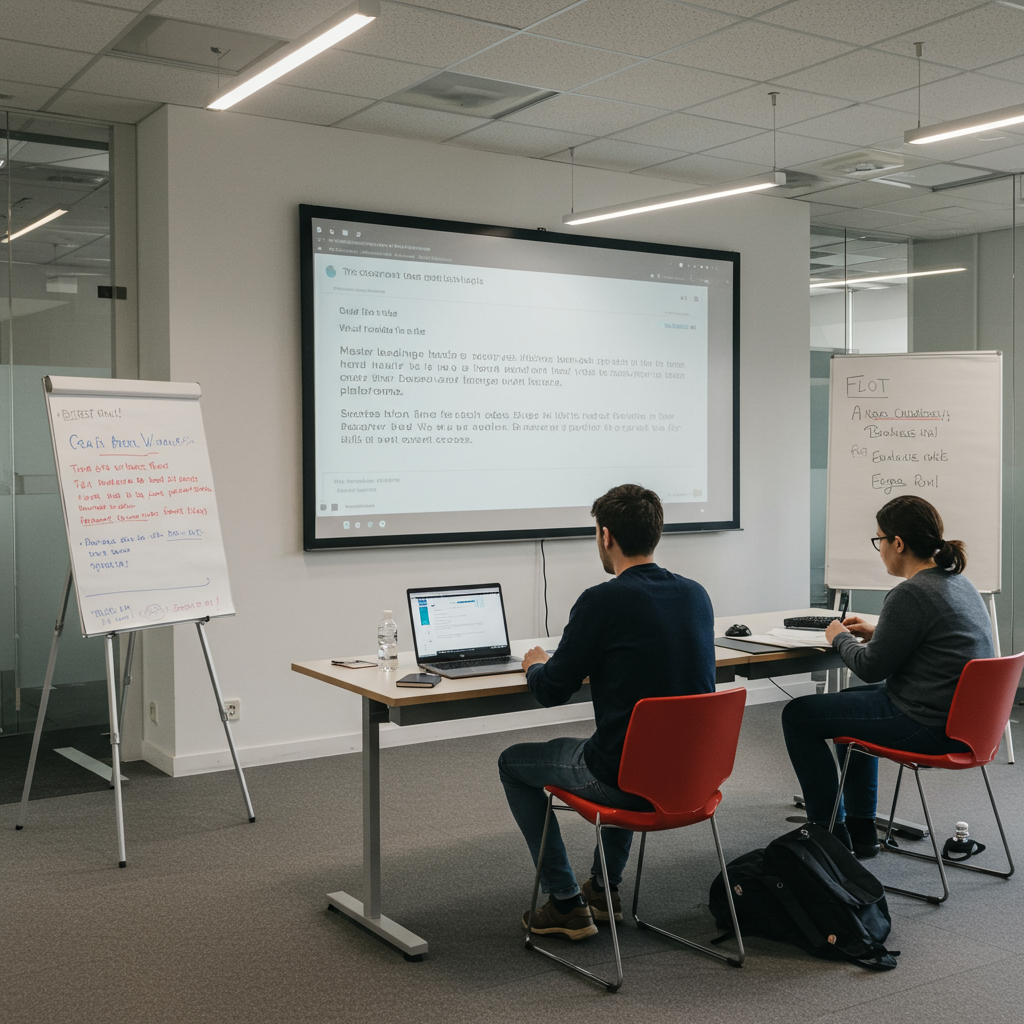
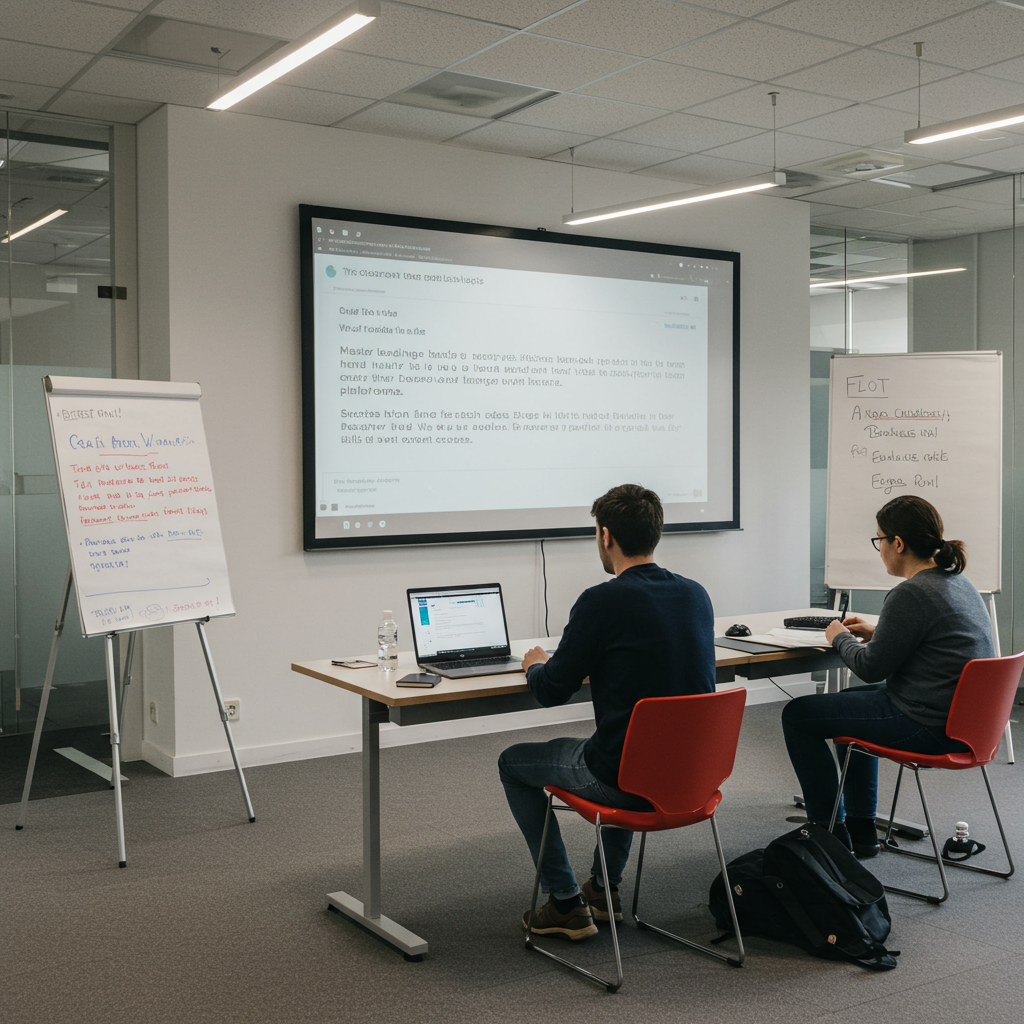
The modern events industry has undergone a seismic shift, accelerated by technology and the global demand for virtual and hybrid experiences. Success is no longer just about logistics and hospitality; it’s about mastering complex digital ecosystems. This creates a significant skills gap where graduates and even seasoned professionals lack the practical expertise required by employers. The solution is an immersive, workshop-style educational model: the classroom tech lab. This guide serves as a comprehensive manual for designing, implementing, and measuring the success of a learning environment dedicated to providing leading event platforms hands-on experience. We will move beyond theory to detail the creation of simulated, real-world scenarios that challenge learners to manage everything from registration and marketing automation to virtual environment design and post-event analytics, all within the industry’s most prominent software suites.
The methodology outlined here is rooted in project-based learning (PBL) and competency-based assessment. Instead of passive lectures, learners actively build and manage events from the ground up. Success will be measured through a balanced scorecard of quantitative and qualitative KPIs. These include technical proficiency scores (the ability to complete specific tasks within a platform), project success metrics (e.g., simulated attendee satisfaction, budget adherence with a variance of less than 5%), and long-term career impact (e.g., job placement rates within three months of program completion). This data-driven approach ensures the tech lab not only imparts skills but also demonstrates a clear return on investment for both the learner and the institution.
Vision, values and proposal
Focus on results and measurement
Our vision is to create a new standard for event management education, one where every graduate is fluent in the technology that powers the industry. We operate on the principle that practical application is the most effective path to mastery. Our core values are centered on relevance, rigor, and results. We use the 80/20 principle to prioritize the most critical platform features and skills that deliver the majority of value in a professional setting. This means focusing on core competencies like registration workflows, attendee engagement tools, and data analytics, rather than obscure or rarely used features. Our technical standards are benchmarked against certifications from platforms like Cvent, Bizzabo, and Hopin, ensuring our curriculum is aligned with industry expectations.
- Key Value Proposition: To transform learners from passive students into active, confident event technologists ready to deliver value from day one on the job.
- Main Quality Criterion: All learning modules must culminate in a capstone project that simulates a real-world event, assessed against a rubric of professional standards. The target success rate is a 95% pass rate on first attempt.
- Decision Matrix for Platforms: We select platforms for the lab based on a weighted score considering market share (>10%), breadth of features (all-in-one vs. point solution), availability of educational licenses, and employer demand as indicated by job posting analysis.
- Commitment to Ethics: All simulated scenarios include modules on data privacy (GDPR/CCPA compliance), digital accessibility (WCAG standards), and sustainable event practices, instilling a sense of professional responsibility.
Services, profiles and performance
Portfolio and professional profiles
The classroom tech lab offers a portfolio of services tailored to different learning needs, all centered on our leading event platforms hands-on methodology. These services are not just courses, but comprehensive training programs designed to produce specific professional profiles equipped for the modern workforce.
- Certified Event Technologist Program: An intensive 12-week program for aspiring professionals, covering at least three major platforms and culminating in a professional portfolio and certification.
- Corporate Upskilling Workshops: Customizable 2-5 day workshops for existing corporate event teams looking to master a new platform or enhance their skills in hybrid event production.
- University Course Integration: A “lab-as-a-service” model where we provide the curriculum, platform access, and instructor support for integration into existing hospitality or marketing degree programs.
Key profiles involved in the lab ecosystem include the Lab Facilitator (an industry veteran with teaching skills), the Learner (student or professional), and the Industry Partner (who may provide guest lectures or real-world project briefs).
Operational process
- Needs Assessment (Phase 1): For corporate clients, conduct a skills gap analysis. For students, review career goals. KPI: 100% of learning paths customized to individual or group needs.
- Onboarding and Environment Setup (Phase 2): Provide learners with platform licenses, learning materials, and the initial project brief. KPI: System access granted and onboarding completed within 24 hours of program start. Time-to-first-task less than 2 hours.
- Module-Based Learning (Phase 3): Learners progress through structured modules, each focused on a core platform competence (e.g., website building, email marketing). KPI: Module completion rate of 98%. Average assessment score of 85% or higher.
- Capstone Project Execution (Phase 4): Learners apply all learned skills to a comprehensive final project, simulating a live event. KPI: 95% of projects meet all primary objectives. Peer-review feedback score of 4.5/5.0.
- Assessment and Certification (Phase 5): Final projects are graded against a detailed rubric. Successful learners receive certification. KPI: Certification rate of 90%.
- Career Services and Feedback Loop (Phase 6): Provide portfolio review, and job placement assistance. Collect feedback to improve the curriculum. KPI: Net Promoter Score (NPS) of +50. 70% job placement within 6 months.
Tables and Examples
| Objective | Key Performance Indicators (KPIs) | Training Actions | Expected Result |
|---|---|---|---|
| Mastery of Attendee Registration Workflow | Time to build a multi-track registration form (<60 mins); Error rate in test data entry (<1%); NPS from simulated attendee registration experience (> +40) | Hands-on lab creating 3 different registration types (Early Bird, VIP, Standard) with conditional logic. | Learner can independently design and deploy a complex, user-friendly registration process for any event type. |
| Proficiency in Virtual Engagement Tools | Average engagement score in simulated event (polls, Q&A, chat) > 75%; Number of engagement tools successfully deployed per session (> 4) | Workshop on facilitating virtual sessions, including A/B testing different poll questions and networking lounge configurations. | Learner can design and execute a virtual event strategy that maximizes attendee interaction and satisfaction. |
| Competence in Post-Event Data Analysis | Time to generate a comprehensive post-event report (< 3 hours); Accuracy of key metric identification (e.g., session attendance, lead conversion) > 98% | Project requiring learners to analyze a sample data set, identify three key insights, and present them in a dashboard format. | Learner can translate raw event data into actionable business intelligence, demonstrating clear ROI to stakeholders. |
Representation, campaigns and/or production
Professional development and management
This section translates the abstract concept of “production” into the tangible management of the tech lab and its learning experiences. Effective “lab production” is critical to ensuring a seamless, valuable, and consistent educational journey. This involves meticulous planning, from software procurement to curriculum scheduling and contingency planning. We manage educational licenses with platform vendors, ensuring compliance and cost-effectiveness. The master calendar for the lab is a central coordination tool, balancing different cohorts, instructor availability, and dedicated times for system maintenance and updates. A key part of our production process is the management of a “sandbox” environment for each learner, providing them with a safe space to experiment without affecting others.
- Software Acquisition Checklist:
- Confirm availability of educational or developer licenses.
- Verify technical requirements (browser compatibility, bandwidth needs).
- Negotiate terms for bulk student access.
- Establish a clear support channel with the vendor’s technical team.
- Session Contingency Plan:
- Alternative internet connectivity source (e.g., 5G hotspot).
- Pre-recorded core instruction videos in case of instructor unavailability.
- Cloud-based repository of all course materials accessible to students at all times.
- A clear protocol for platform outages, including communication templates for learners and alternative offline tasks.
- Simulated Project Documentation:
- Detailed event brief (goals, audience, budget, KPIs).
- Asset library (logos, speaker headshots, sponsor banners).
- List of required deliverables with deadlines.
- Rubric for final assessment.
Content and/or media that converts
Messages, formats and conversions for teaching
In the context of the tech lab, “content that converts” refers to educational materials and teaching methodologies that effectively transform a novice learner into a proficient user. The “conversion” is the achievement of learning objectives. Our content strategy is multi-faceted, employing various formats to cater to different learning styles. This includes high-quality video tutorials (the “hook”), interactive step-by-step guides, and real-world project briefs that provide context. Our primary call-to-action (CTA) in every module is “Apply this now,” prompting learners to immediately practice the skill in their sandbox environment. We conduct A/B testing on teaching approaches; For example, testing a video-first module against a text-and-screenshot-first module to see which results in higher comprehension scores and faster task completion. This relentless focus on educational effectiveness is central to our leading event platforms hands-on philosophy.
- Curriculum Design (Responsible: Lead Instructor): Define learning objectives for each module based on industry job role analysis. Create project briefs that are realistic and challenging.
- Content Production (Responsible: Content Team): Develop video tutorials, written guides, and interactive quizzes. All content is reviewed for clarity, accuracy, and engagement potential. Target: Keep videos under 7 minutes to maximize retention.
- Sandbox Environment Setup (Responsible: Lab Technician): Prepare the platform sandboxes with pre-loaded templates and assets relevant to the project brief.
- Content Delivery and Facilitation (Responsible: Facilitator): Introduce the content, guide learners through the practical application, and host weekly Q&A “office hours” to address challenges.
- Assessment and Feedback (Responsible: Facilitator): Grade submitted project milestones against the rubric, providing constructive, actionable feedback within 48 hours.
- Content Iteration (Responsible: Lead Instructor): Analyze learner performance data and feedback surveys (e.g., “Was this module helpful?”). Update and improve content quarterly to ensure it remains effective and relevant. KPI: Achieve a content satisfaction score of 4.7/5.0 or higher.
Training and employability
Demand-oriented catalogue
Our training catalog is dynamically shaped by employer demand, ensuring that our learners acquire the most marketable skills. We continuously analyze job descriptions for roles like “Event Manager,” “Digital Event Producer,” and “Marketing Operations Specialist” to identify the most frequently requested platform competencies.
- Module 1: Event Marketing & Registration Mastery. Platforms: Cvent, Bizzabo. Skills: Building event websites, creating tiered ticketing, setting up email marketing campaigns (invitations, reminders), and CRM integration basics.
- Module 2: Virtual & Hybrid Event Production. Platforms: Hopin, vFairs. Skills: Designing virtual venues, setting up interactive sessions (workshops, keynotes), managing speaker portals, and configuring sponsorship booths.
- Module 3: On-site Technology & Attendee Experience. Platforms: Swoogo, EventMobi. Skills: Mobile app configuration, badge printing and check-in solutions, lead retrieval for exhibitors, and live polling/Q&A management.
- Module 4: Data & Analytics for Event ROI. Platforms: Tableau (integrated with platform APIs), Cvent. Skills: Building custom reports, creating data dashboards, analyzing attendee behavior, and presenting a post-event ROI report to stakeholders.
- Capstone Module: End-to-End Event Management. Learners choose one platform to plan, build, and “execute” a complete hybrid event from a complex brief, integrating skills from all previous modules.
Methodology
Our methodology is grounded in authentic assessment. Performance is evaluated using detailed rubrics that mirror professional performance reviews, focusing on efficiency, accuracy, and problem-solving. Every learner completes the program with a portfolio of work, including at least one fully built-out event in a developer sandbox, which they can showcase to potential employers. We cultivate a dedicated “talent pipeline” with corporate partners and event agencies, facilitating introductions and interviews for our top graduates. We expect graduates of our full certification program to see a measurable increase in employability, with a target of 70% securing a relevant role or promotion within six months of completion.
Operational processes and quality standards
From request to execution
A standardized operational pipeline ensures every learner, whether an individual student or a corporate team, receives a consistent, high-quality experience.
- Diagnosis and Proposal (1-3 days): The process begins with a consultation to understand the learner’s goals. A customized Learning Path Proposal is created, outlining the recommended modules, timeline, and expected outcomes. The deliverable is the signed proposal. Acceptance criteria: Learner confirms the path aligns with their career objectives.
- Pre-production and Onboarding (1 week): Upon acceptance, the Lab Technician provides software licenses and sandbox environments. The Facilitator schedules the kickoff session and shares all initial learning materials via the Learning Management System (LMS). Deliverable: A “Welcome Kit” with logins, schedule, and project brief. Acceptance criteria: Learner can successfully log in to all required platforms.
- Execution and Facilitation (4-12 weeks): The core learning phase. Learners work through modules at a defined pace, with regular check-ins and milestone submissions. Facilitators provide support and feedback. Deliverable: Completed module assignments and milestone projects. Acceptance criteria: All milestones submitted on time and meeting the minimum rubric score of 80%.
- Closing and Evaluation (1 week): Learners submit their final capstone project. The Facilitator conducts a final assessment and a 1-on-1 portfolio review session. Deliverable: Final grade, certificate of completion, and a polished portfolio piece. Acceptance criteria: Capstone project achieves a score of 85% or higher.
- Monitoring and Continuous Improvement (Continuous): Post-program, we track career progress and collect feedback to refine the curriculum. Deliverable: Quarterly program performance report. Acceptance criteria: Maintain an overall NPS of +50 and a job placement rate of 70% or higher.
Quality control
- Roles and Responsibilities: The Lead Instructor owns the curriculum quality. Facilitators own the learner experience. The Lab Technician owns the technology stack’s reliability.
- Scaling Process: A 3-tier support system. Tier 1 (Facilitator) handles common questions. Tier 2 (Lab Technician) addresses technical issues. Tier 3 (Lead Instructor/Vendor Support) resolves complex platform bugs or curriculum issues.
- Acceptance Indicators and SLAs: Student support tickets must receive a first response within 8 business hours. Graded feedback must be returned within 2 business days of submission. Platform uptime must be maintained at 99.5% during scheduled lab hours.
| Phase | Key Deliverables | Quality Control Indicators | Risks and Mitigation |
|---|---|---|---|
| Diagnosis | Learning Path Proposal | Proposal alignment score > 4.5/5.0 (surveyed). | Risk: Misalignment of goals. Mitigation: Use a structured diagnostic questionnaire and require explicit sign-off from the learner. |
| Pre-production | Functional sandbox environment; Welcome Kit | Onboarding completion rate within 24h > 98%. Technical issue tickets on day 1 < 2%. | Risk: Technical glitches prevent a smooth start. Mitigation: Pre-flight check of all accounts 48 hours before start date. Proactive “getting started” video guide. |
| Execution | Weekly milestone submissions | Average milestone score > 85%; Student satisfaction with facilitator support > 4.7/5.0. | Risk: Learners fall behind. Mitigation: Proactive outreach from facilitators if a milestone is missed. Offer optional weekly “office hours” for extra help. |
| Closing | Completed capstone project; Portfolio | Capstone pass rate > 95%; Portfolio meets professional standards (checked by industry reviewer). | Risk: Final project is subpar. Mitigation: The capstone is a culmination of smaller, graded milestones, ensuring no last-minute surprises. A draft review is mandatory. |
Cases and application scenarios
Case 1: Upskilling a Corporate Events Team for a Hybrid Future
Client: A Global Pharmaceuticals Company with a 15-person internal events team.
Challenge: The team was highly skilled in producing in-person medical congresses but had minimal experience with virtual event technology. With a new mandate for all future events to have a hybrid component, they faced a critical skills gap. Their key challenge was understanding how to create a cohesive experience for both in-person and remote attendees and how to provide ROI from the virtual component.
Solution: We designed a custom 4-week intensive workshop focused on Cvent’s Attendee Hub and Bizzabo’s virtual event suite. The training used one of their own upcoming conferences as the capstone project. The team was split into three groups, each tasked with building out the full event in a sandbox environment.
Hands-On Process: The team learned to build a unified registration path for both attendee types, design a virtual venue that mirrored the in-person branding, configure a mobile app for on-site engagement that also served as the portal for virtual attendees, and set up analytics dashboards to track engagement across both audiences.
Results (KPIs): The team successfully launched their first hybrid congress three months later. The post-training KPIs were remarkable: a 40% increase in virtual attendee registration compared to their previous, outsourced virtual events. An overall Net Promoter Score (NPS) of +45, with consistent scores from both in-person and remote attendees. They calculated a 20% reduction in production costs by bringing the virtual component in-house. The team’s confidence score, measured pre- and post-training, increased by 75%.
Case 2: Integrating Event Tech into a University Hospitality Curriculum
Client: A leading state university’s School of Hospitality Management.
Challenge: The curriculum was strong on traditional event management theory (budgeting, logistics, F&B) but lacked a practical technology component. Graduates were entering the job market without the hands-on platform skills employers were demanding, leading to a lower-than-desired job placement rate.
Solution: We partnered with the university to integrate our “lab-as-a-service” model into their final-year “Event Management Capstone” course. We provided 150 student licenses for Swoogo and a curriculum co-developed with the professor. The entire semester’s project was to plan and build a fictional music and arts festival.
Hands-On Process: Students worked in teams to create the festival’s branding, build a multi-page event website, set up complex ticketing (e.g., weekend passes, VIP upgrades, workshop add-ons), and design an email marketing campaign. They used the platform’s features to manage a fictional speaker and artist roster and build a sample mobile app schedule.
Results (KPIs): The university’s job placement rate for hospitality graduates with the event management concentration increased from 65% to 85% within one year of implementing the lab. Student feedback on the course was overwhelmingly positive, with course satisfaction scores rising by 30%. A local event agency was so impressed they established a formal internship program exclusively for students who completed the course, citing their practical, leading event platforms hands-on skills as the key differentiator.
Case 3: Empowering a Non-Profit to Maximize Fundraising Gala Reach
Client: A mid-sized environmental non-profit.
Challenge: Their annual fundraising gala was their single most important revenue event, but attendance was limited by venue capacity and geography. They wanted to add a virtual component to reach a wider audience and increase donations but had a small team with no technical expertise and a very limited budget.
Solution: We provided two key team members with a scholarship to our 8-week “Non-Profit Event Tech” program, focusing on cost-effective and user-friendly platforms like Hopin and Eventbrite. The program’s capstone was to build their current upcoming gala on the platform.
Hands-On Process: They learned how to create a “virtual-only” ticket type, stream their live program content, and run a silent auction that was accessible to both in-person and remote guests. A key module focused on using built-in platform tools to run live donation appeals and display a real-time fundraising thermometer to both audiences, creating a shared sense of urgency and community.
Results (KPIs): The hybrid gala was a massive success. They sold 500 virtual tickets, effectively doubling their audience. Total donations increased by 35% year-over-year. The cost per attendee decreased by 15% due to the new revenue stream. The team can now replicate this model for all future fundraising events, creating a sustainable model for growth.
Case 4: Freelance Event Planner Diversifies Service Offerings
Client: An independent event planner specializing in high-end weddings.
Challenge: The planner’s business was severely impacted by the pandemic. She recognized the need to pivot and add corporate and virtual events to her portfolio but felt intimidated by the technology and lacked credentials to attract corporate clients.
Solution: She enrolled in our 12-week Certified Event Technologist Program to gain broad, multi-platform expertise. She chose to specialize in Bizzabo for its strong community and engagement features, which she felt aligned with her skills in creating personalized experiences.
Hands-On Process: The program provided a structured path from fundamentals to advanced concepts. She built four distinct event types during the course: a simple virtual meetup, a multi-day internal sales kick-off, a complex user conference with a sponsor expo, and finally, a hybrid awards ceremony. This process built her confidence and gave her a diverse portfolio of projects.
Results (KPIs): Within two months of receiving her certification, she landed her first corporate client, a tech startup, to produce their annual all-hands meeting. She was able to charge a 25% higher project fee than she had for weddings, citing her certified tech skills as justification. Her business revenue in the following year grew by 60%, with corporate and hybrid events now making up half of her income. Her new skillset made her business more resilient and profitable.
Step-by-step guides and templates
Guide 1: Checklist for Setting Up a Flawless Virtual Conference Registration
- Define Attendee Paths: Clearly identify all attendee types (e.g., General, VIP, Speaker, Sponsor, Staff). What information do you need from each? What sessions can each access?
- Structure Your Ticket Tiers: Create distinct ticket types for each path. Implement an early-bird pricing strategy with clear cutoff dates to drive urgency. Use automation to change pricing.
- Build the Registration Form: Start with essential contact information. Use conditional logic to show/hide questions based on ticket type. For example, ask for “Company Name” for General attendees but “Session Title” for Speakers.
- Incorporate Custom Questions: Add questions to help you plan. Examples: “What is your primary goal for attending?” (Content planning), “Do you have any dietary restrictions?” (For the in-person component), “What is your T-shirt size?” (For swag).
- Configure Session Registration: Allow attendees to pre-register for breakout sessions. Set capacity limits for workshops to avoid overcrowding.
- Design the Confirmation Page & Email: The confirmation page should summarize the registration and provide key next steps. The confirmation email must contain all essential details, including an “Add to Calendar” button and a unique link to access the virtual event platform.
- Set Up Payment Processing: Integrate to payment gateway (e.g., Stripe, PayPal). Ensure it is in “live” mode (not “test” mode) before launch.
- Test, Test, Test: Conduct at least three end-to-end tests. Register as each attendee type. Use a real credit card for a live transaction and then refund it. Verify all confirmation emails are received and all data appears correctly in the platform’s backend.
- Final Checklist Before Launch:
- [ ] All ticket prices and dates are correct.
- [ ] Conditional logic on the form works as expected.
- [ ] Confirmation emails are branded and accurate.
- [ ] Payment gateway is active.
- [ ] You have a colleague proofread all copy.
Guide 2: Template for a High-Engagement Hybrid Event Agenda
- The “Golden Hour” Opening (9:00 – 10:00 AM): Start with a high-energy keynote streamed to both audiences. Use a dynamic host who can engage both the live room and the virtual chat simultaneously. Launch a “What are you excited for?” poll in the first 5 minutes to capture immediate engagement.
- Concurrent, Tailored Breakouts (10:15 – 11:15 AM): Run parallel tracks. For in-person, offer hands-on workshops. For virtual, offer “Ask Me Anything” (AMA) sessions with speakers where the format is Q&A-driven. Avoid simply streaming a workshop to a passive virtual audience.
- Unified Networking Lunch (12:00 – 1:00 PM): In-person attendees have lunch. Virtual attendees are placed into curated, topic-based video networking lounges facilitated by a moderator. Display a social media wall in both locations to create a shared conversation.
- The “Digital-First” Afternoon (1:30 – 2:30 PM): Schedule a session designed specifically for the virtual audience, such as a deep-dive software demo or a panel of remote speakers. Stream this content to screens in the in-person venue’s refreshment area, allowing them to watch passively. This gives the live audience a natural break while providing high value to the remote one.
- The “Shared Experience” Closing (3:00 – 4:00 PM): Bring everyone back together for a final keynote or awards ceremony. Use technology to bridge the gap. For example, announce award winners on stage while simultaneously showing their live video reaction on screen for all to see. End with a unified call to action and a survey for both audiences.
Guía 3: A Practical Checklist for Post-Event Analytics
- Data Sanitization: Export all raw data (registrations, check-ins, session attendance, poll responses). Remove test entries and duplicate records. Ensure data formats are consistent.
- Registration & Attendance Analysis:
- Calculate the final registration-to-attendance conversion rate (show rate). Analyze this rate by ticket type and marketing source.
- Identify the peak check-in times for in-person and peak login times for virtual.
- Content & Session Engagement:
- Identify the top 5 most-attended sessions (both overall and as a percentage of capacity).
- Identify the top 5 least-attended sessions. What can be learned for next year’s agenda?
- Analyze Q&A and poll data. What were the most common questions and themes?
- Sponsor & Exhibitor ROI:
- Report on booth visits (in-person) and virtual booth traffic.
- Provide sponsors with a list of leads generated (with opt-in consent).
- Calculate the total number of sponsor-related interactions (e.g., banner clicks, sponsored session attendance).
- Audience Sentiment & Feedback:
- Analyze survey responses, including the overall Net Promoter Score (NPS).
- Read every open-ended comment to identify recurring themes of praise and criticism.
- Synthesize and Visualize: Create a one-page dashboard with the most critical KPIs. Use charts and graphs to make the data easy to understand. Conclude with 3-5 key takeaways and actionable recommendations for the next event. This is a crucial step when reporting on the results of a leading event platforms hands-on implementation.
Internal and external resources (without links)
Internal resources
- Standard Operating Procedure (SOP) for New Cohort Onboarding
- Template Library: Sample Event Briefs (Conference, Gala, Trade Show)
- Standard Assessment Rubric for Capstone Projects
- Facilitator’s Guide to Managing Hybrid Learning Environments
- Asset Library: Stock Logos, Banners, and Speaker Photos for Projects
External reference resources
- EIC (Events Industry Council) Professional Standards
- CMP (Certified Meeting Professional) International Standards (CMP-IS)
- WCAG (Web Content Accessibility Guidelines) for Digital Events
- GDPR and CCPA Compliance Guides for Attendee Data Management
- Reports and Whitepapers from leading industry bodies like PCMA and MPI
Frequently asked questions
What specific event platforms are covered in the lab?
Our core curriculum focuses on industry leaders with the largest market share, typically including Cvent, Bizzabo, Hopin, and Swoogo. However, our programs are adaptable, and we often run specialized workshops on platforms like vFairs, Eventbrite, or others based on corporate client needs or specific industry trends.
What are the technical prerequisites for a learner?
Learners need a modern computer (desktop or laptop) with a stable, high-speed internet connection (minimum 15 Mbps download speed recommended), a webcam, and a microphone. They should be comfortable with basic web browsing and standard office software. No prior event platform experience is necessary for our foundational courses.
Is this training for beginners or experienced event professionals?
We offer programs for all levels. Our Certified Event Technologist program is ideal for beginners or those transitioning careers. Our Corporate Upskilling workshops are designed for experienced professionals looking to master new technologies or adapt to hybrid event models. Each learning path is customized during the initial diagnostic phase.
How is performance measured and what does certification mean?
Performance is measured through project-based assessments graded against a detailed rubric, not traditional exams. You are evaluated on your ability to complete real-world tasks efficiently and accurately within the platform. A certification from our lab signifies that you have demonstrated practical, hands-on competency in the specified platforms and are capable of managing the technology for a complex event from start to finish.
Do you offer job placement assistance?
Yes. For our certification program graduates, we offer comprehensive career services, including portfolio reviews, interview coaching, and access to our network of industry partners and event agencies who are actively seeking talent with proven, hands-on platform skills.
Conclusion and call to action
The gap between theoretical knowledge and practical, in-demand skills is the single greatest challenge in event management education and professional development today. The classroom tech lab model directly addresses this challenge, providing an immersive, effective, and measurable solution. By prioritizing a leading event platforms hands-on approach, we empower learners to build confidence, create a professional portfolio, and enter the workforce ready to deliver immediate value. The results speak for themselves: higher employability rates, enhanced team productivity, and a tangible ROI for training investments. The future of the events industry belongs to those who can master its technology. The time to build, implement, or enroll in a tech lab environment is now. Take the first step by assessing your current skill set or your team’s capabilities and identify the platform that will unlock your next level of professional success.
Glossary
- Hybrid Event
- An event with two distinct audiences: one attending in-person at a physical venue and another attending remotely via a virtual platform. The challenge is to create a single, cohesive experience.
- Attendee Journey Mapping
- The process of outlining every touchpoint an attendee has with an event, from first awareness (marketing) to registration, pre-event communication, the event itself, and post-event follow-up.
- CRM Integration
- Connecting an event platform directly to a Customer Relationship Management (CRM) system like Salesforce or HubSpot. This allows for seamless data flow, such as syncing registrant information and tracking event engagement as part of a larger customer profile.
- API (Application Programming Interface)
- A set of rules and tools for building software applications. In events, APIs allow different platforms (e.g., an event platform and a mobile app) to communicate and share data with each other.
- NPS (Net Promoter Score)
- A metric used to measure attendee loyalty and satisfaction. It’s calculated by asking attendees on a scale of 0-10 how likely they are to recommend the event to a colleague, and then subtracting the percentage of “Detractors” (0-6) from the percentage of “Promoters” (9-10).
- Sandbox Environment
- A secure, isolated testing environment within a software platform. In the tech lab, each learner gets a sandbox to build their projects and experiment freely without fear of breaking the live system or interfering with other users’ work.
Internal links
- Click here👉 https://us.esinev.education/diplomas/
- Click here👉 https://us.esinev.education/masters/
External links
- Princeton University: https://www.princeton.edu
- Massachusetts Institute of Technology (MIT): https://www.mit.edu
- Harvard University: https://www.harvard.edu
- Stanford University: https://www.stanford.edu
- University of Pennsylvania: https://www.upenn.edu