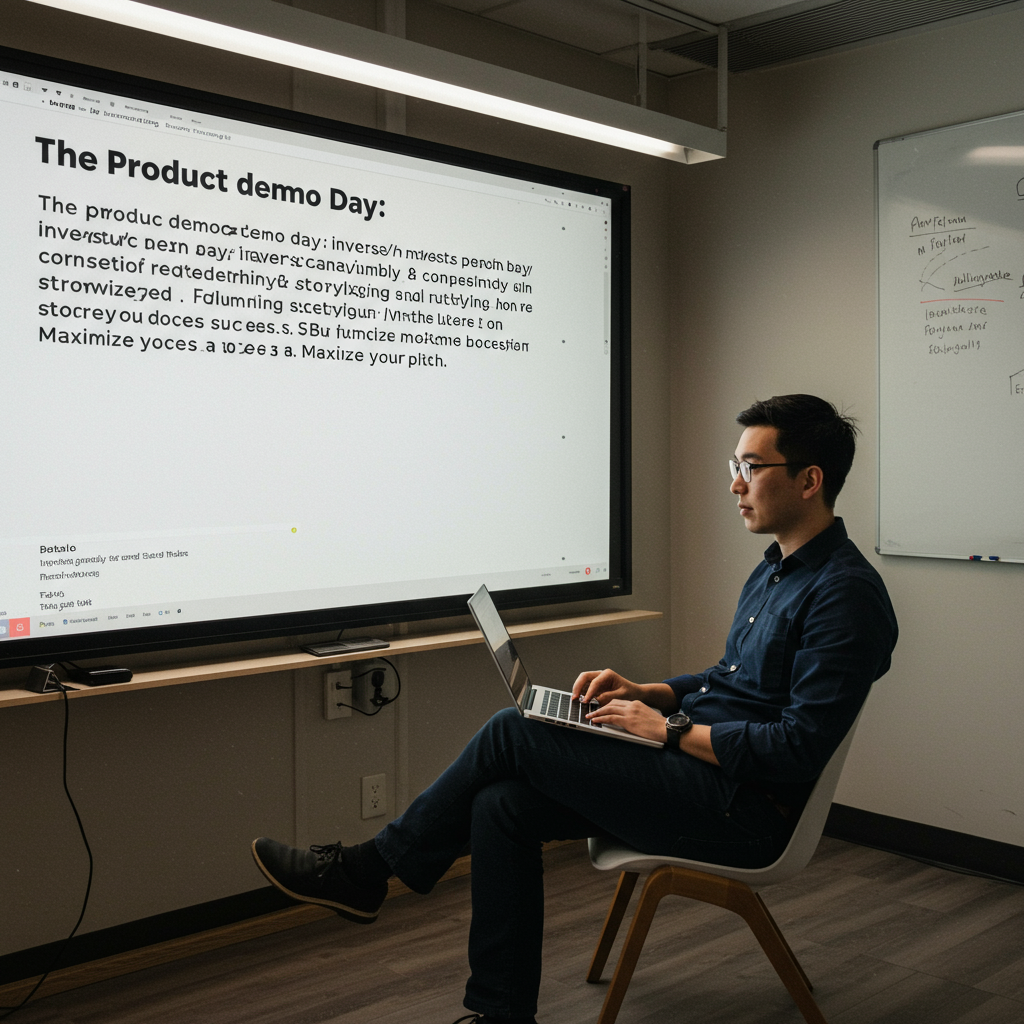
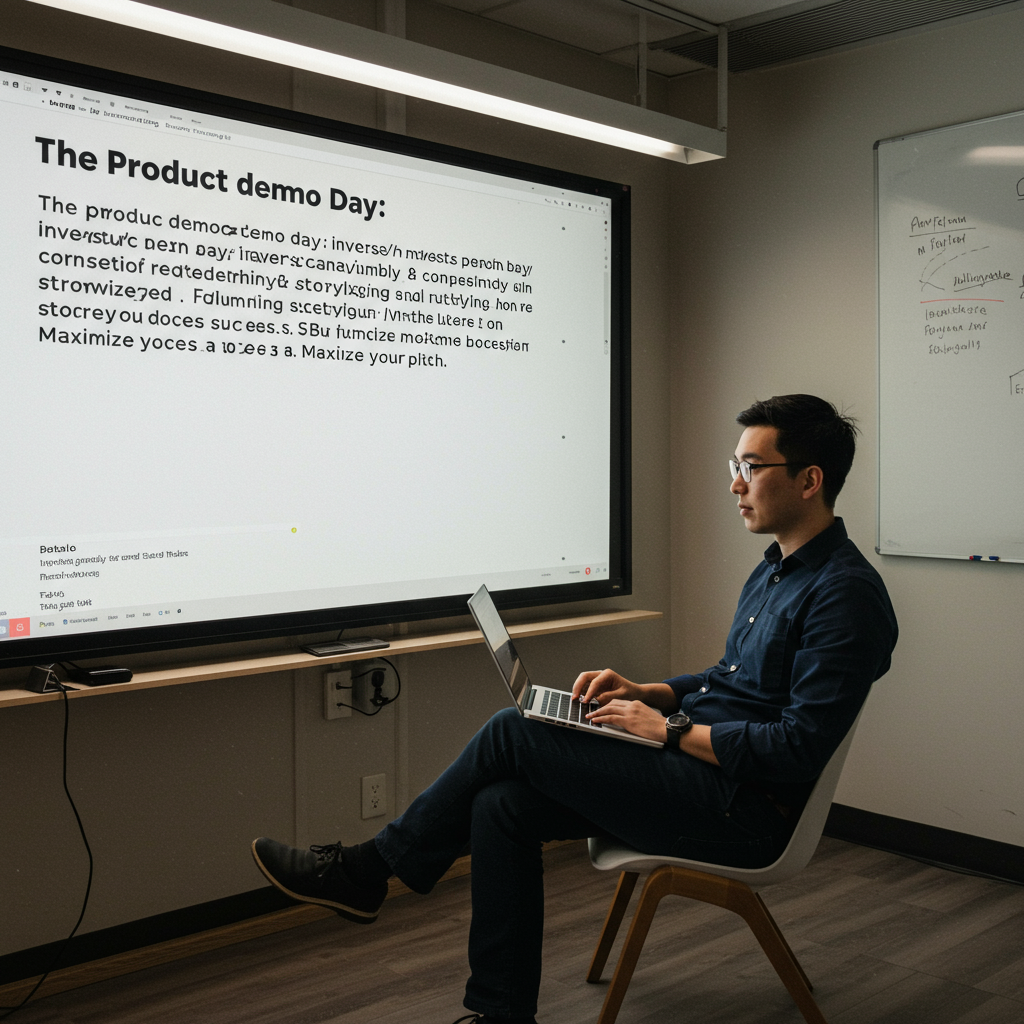
This article provides a detailed framework for founders and startups aiming to succeed at their product demo day. We delve into the critical components of investor readiness, from refining your value proposition to mastering the art of storytelling. The focus is on actionable strategies to create a compelling narrative, build a flawless presentation, and confidently handle investor Q&A. By following our processes, you can expect to improve key performance indicators such as investor meeting follow-up rates (target >30%), reduce preparation time by up to 40%, and significantly increase your chances of securing funding. This guide is designed for early-stage entrepreneurs, accelerator participants, and anyone preparing for a high-stakes pitch, offering a roadmap to transform a product presentation into a powerful investment opportunity.
Introduction
The Product Demo Day is more than a presentation; it’s the culmination of months, or even years, of relentless work, condensed into a few critical minutes. For many startups, it represents the single most important opportunity to secure the capital needed to scale. However, a great product is not enough. The true differentiator is achieving a state of comprehensive product demo day investor readiness. This holistic preparedness combines a polished product, a razor-sharp business case, and, most importantly, a compelling narrative that captivates and convinces. Investors see hundreds of pitches; they invest in stories and teams they believe in. This guide breaks down the science and art behind a successful demo day, transforming it from a daunting order into a strategic advantage.
Our methodology focuses on a structured, repeatable process that de-risks your presentation and maximizes impact. We will explore how to build your narrative arc, design a visually persuasive pitch deck, and rehearse for every contingency. Success will be measured not just by applause, but by tangible outcomes: the number of qualified investor meetings scheduled post-event (aiming for a >30% conversion rate from total VCs in attendance), the efficiency of the fundraising process (reducing the time from demo day to term sheet by an average of 25%), and the overall positive sentiment measured through post-event surveys (Net Promoter Score > 50). We will provide frameworks, checklists, and real-world examples to ensure your team is not just prepared, but truly ready to win.
Vision, values and proposal
Focus on results and measurement
Our core vision is to empower founders to tell their stories with clarity and conviction. We operate on the principle that a successful pitch is 20% product, 80% communication. Our values are rooted in data-driven preparation, radical honesty, and relentless practice. We apply the 80/20 rule (Pareto principle) to demo day prep: we help you identify the 20% of your story, metrics, and demo features that will generate 80% of the investor interest. This means prioritizing a single, powerful “wow” moment in your demo over a feature-exhaustive tour. Our standards are aligned with those of top-tier venture capitalists, focusing on clarity of the problem, scale of the opportunity, defensibility of the solution, and the credibility of the team. We believe in measuring everything, from the clarity of your one-liner to the number of questions you can answer without hesitation.
- Value: Clarity over Complexity. We distill complex business models and technologies into simple, memorable narratives. Our quality criterion is whether a non-expert can understand your business and its potential within the first 60 seconds.
- Value: Facts about Drama. While storytelling is key, every claim must be backed by credible data. We help you select and present traction metrics (e.g., MoM growth, LTV:CAC ratio) that are both impressive and defensible.
- Value: Preparation over Perfection. We champion a philosophy of rigorous practice to build confidence and adaptability. A well-rehearsed pitch can navigate unexpected questions or technical glitches, while an “perfect” but rigid one shatters under pressure.
- Content Decision Matrix: We use a simple matrix to prioritize content for the short time allocated: High Impact/High Credibility (must include), High Impact/Low Credibility (reframe or support better), Low Impact/High Credibility (move to appendix), Low Impact/Low Credibility (remove entirely).
Services, profiles and performance
Portfolio and professional profiles
To achieve comprehensive product demo day investor readiness, we offer a suite of integrated services managed by experienced pitch coaches, designers, and former venture capitalists. Our team provides end-to-end support, ensuring every aspect of your presentation is optimized for maximum impact.
- Narrative & Storytelling Workshop (Phase 1): Our strategists work with the founding team to unearth the core narrative. We define the “why” behind the business, identify the enemy, and craft a compelling story arc. KPI: Achieve a Pitch Clarity Score of >8.5/10 based on blind panel feedback. Term: 1 week.
- Pitch Deck Design & Content (Phase 2): Our design team translates the narrative into a visually stunning and logically sound 10-12 slide deck. We focus on data visualization and minimalist design to support, not distract from, the speaker. KPI: Reduce cognitive load, measured by an average slide comprehension time of <15 seconds. Term: 2 weeks.
- Live Demo Choreography (Phase 3): We help script, streamline, and de-risk the live product demonstration. This involves selecting the highest-impact features and creating a “click-track” to ensure a smooth, repeatable performance. KPI: Complete the demo within the allotted time (e.g., 90 seconds) with <1% deviation across 10 practice runs. Term: 1 week.
- Q&A “Murder Board” Sessions (Phase 4): Our experts simulate a high-pressure investor Q&A, asking the toughest questions about market size, competition, financials, and team dynamics. KPI: Increase the founder’s confidence score from a self-reported baseline and ensure >95% of anticipated questions have a pre-prepared, concise answer. Term: 1 week.
- On-Stage Performance Coaching (Phase 5): We provide public speaking coaching focused on vocal tone, body language, and stage presence to project confidence and authority. KPI: Measurable improvement in audience engagement metrics during practice sessions. Deadline: Ongoing until demo day.
Tables and examples
| Objective | Indicators | Actions | Expected result |
|---|---|---|---|
| Secure Seed Funding of $2M | Number of investor meetings booked post-demo; Conversion rate to term sheet. | Develop a clear “Ask” slide; Target specific investors in the audience; Follow-up within 24 hours. | >15 investor meetings booked; >2 term sheets received within 6 weeks. |
| Build a strong brand presence | Social media mentions; Press coverage post-event. | Prepare a press kit; Engage with media attendees; Have a clear, quotable one-liner. | >50 unique social media mentions on demo day; >3 articles in industry publications. |
| Attract top talent | Number of inbound job applications from high-quality candidates. | Emphasize the company’s mission and culture on the “Team” slide. | >20 high-quality inbound applications for key roles within a month. |
| Achieve a high valuation | Pre-money valuation on term sheet; Investor feedback on market size. | Clearly articulate TAM/SAM/SOM; Showcase strong unit economics and defensible moat. | Achieve a valuation in the top 25th percentile for the accelerator cohort. |
Representation, campaigns and/or production
Professional development and management
The “production” aspect of a demo day, whether virtual or in-person, is a critical component of success that is often overlooked. Meticulous planning and execution of the event logistics can be the difference between a smooth, professional presentation and a memorable failure. We manage the entire production process, treating the demo day like a live broadcast event where every second counts. This includes coordinating with event organizers, managing tech rehearsals, and creating contingency plans for every conceivable issue. Our goal is to create a controlled environment where the founder’s only job is to deliver their pitch.
- Technical Rider & Coordination: We provide event organizers with a detailed technical rider specifying requirements for internet (primary and backup), AV equipment (microphones, projectors, clickers), and lighting. We perform a full tech check at the venue at least 24 hours prior.
- Virtual Event Management: For virtual demo days, we manage the broadcast platform (e.g., Zoom, Hopin), set up custom backgrounds, ensure high-quality audio/video, and have a “hot standby” system ready to take over in case of primary machine failure.
- Contingency Planning: We develop a comprehensive risk matrix. What if the live demo fails? A pre-recorded video is ready. What if the clicker dies? A team member advances slides manually. What if the internet goes down? A 5G hotspot is active. What if the founder gets sick? Another team member is trained to deliver the pitch.
- Scheduling & Time Management: We create a minute-by-minute schedule for the day of the event, including arrival, tech checks, warm-ups, presentation, and post-pitch networking. This eliminates cognitive load and anxiety for the founder.
- Stakeholder Communication: We ensure seamless communication between the founding team, the accelerator staff, and the event’s AV crew to ensure everyone is aligned.
Content and/or media that converts
Messages, formats and conversions
The content of your pitch is the story you tell, and the media is how you tell it. A winning pitch follows a classic narrative arc designed to build tension and deliver a satisfying conclusion (the “Ask”). We focus on crafting content that is emotionally resonant and intellectually convincing. The “hook” in the first 30 seconds is crucial; it must grab the audience’s attention by presenting a relatable, significant problem. From there, the presentation should flow logically, with each slide building on the last. We rigorously A/B test different one-liners, opening stories, and calls to action with sample audiences to optimize for clarity and impact. Our approach to content ensures your story is not just heard, but felt and remembered, which is essential for achieving true product demo day investor readiness.
- Scripting the Narrative Arc:
- 1. The Opening (Hook): Start with a starting statistic, a personal anecdote, or a provocative question related to the problem.
- 2. The Problem:Clearly defines the pain point. Who has it? How bad is it? Why is the current solution inadequate?
- 3. The Solution (Your Product):Introduce your product as the “hero” that solves the problem. This is where the live demo happens, showcasing the “magic moment.”
- 4. The Market:Quantify the opportunity (TAM, SAM, SOM). Show investors the scale of the potential return.
- 5. The Business Model: Explain how you make money in the simplest terms possible.
- 6. The Traction:Show, don’t just tell. Present key metrics: revenue growth, user engagement, key partnerships.
- 7. The Team:Introduce the core team and explain why you are the only people in the world who can solve this problem.
- 8. The Ask:Be specific. How much are you raising? What will you use the money for? What key milestones will you achieve with it?
- Visual Design: The slide deck is a visual aid, not a teleprompter. We adhere to a “one idea per slide” rule. Slides should be highly visual with minimal text. We use high-quality graphics, consistent branding, and clear data visualizations to enhance the spoken narrative.
- The Demo as a Story: The live product demo should not be a feature list. It should be a short story with a user as the protagonist who faces a problem and uses your product to achieve a successful outcome. This makes the value proposition tangible and memorable.
Training and employability
Demand-oriented catalogue
We reframe “employability” as “investability.” Our training modules are designed to equip founders with the specific, high-demand skills required to win over investors and build a successful company. These are not theoretical lectures; they are hands-on workshops that produce tangible assets for the demo day presentation.
- Module 1: Financial Modeling for Storytellers. Learn to build a defensible financial model and, more importantly, how to use the key outputs (e.g., burn rate, runway, unit economics) to tell a compelling story about your company’s future.
- Module 2: The Art of the One-Liner. A workshop dedicated to crafting, testing, and perfecting the single sentence that describes your business. This is the most important part of your pitch.
- Module 3: Public Speaking and Stage Presence. A practical course using video feedback to improve body language, vocal projection, and pacing. Learn techniques to manage anxiety and project unwavering confidence.
- Module 4: Investor Psychology & Objection Handling. Understand what investors are really looking for and how to anticipate and elegantly handle their toughest questions and objections during Q&A.
- Module 5: Technical Demo Best Practices. A technical workshop on how to build a “bulletproof” demo environment, script the flow, and create effective backup plans.
Methodology
Our training methodology is based on the principle of “deliberate practice.” Each session involves instruction, application, and feedback. Founders are evaluated using a detailed rubric that scores them on clarity, confidence, content, and delivery. Practical exercises include mock pitches to real investors, peer feedback sessions, and high-pressure Q&A drills. The final “exam” is a full dress rehearsal under real-world conditions. Successful completion of our program signals a high level of investability, and we leverage our network to connect top-performing founders with relevant investors, effectively creating a “talent pipeline” for venture capital.
Operational processes and quality standards
From request to execution
Our operational process is a structured pipeline designed to systematically build product demo day investor readiness over a 4-6 week period. Each phase has clear deliverables and acceptance criteria, ensuring consistent quality and progress.
- Phase 1: Diagnostic & Kick-off (Week 1).
- Activities: Initial consultation, review of existing materials (deck, business plan), founder interviews, goal setting.
- Deliverables: A detailed “Readiness Audit” report identifying strengths, weaknesses, and a customized project plan.
- Acceptance Criteria: Founder signs off on the audit findings and project plan.
- Phase 2: Narrative & Content Development (Week 1-2).
- Activities: Storytelling workshop, content outlining, first draft of the pitch script and deck.
- Deliverables: V1 of the pitch script and wireframe deck.
- Acceptance Criteria: Narrative arc is logical and compelling; key data points are identified.
- Phase 3: Design & Demo Choreography (Week 3).
- Activities: Visual design of the pitch deck, scripting and technical setup of the live demo.
- Deliverables: V1 of the fully designed deck, a scripted demo flow.
- Acceptance Criteria: Deck design is professional and on-brand; demo can be executed reliably in under 90 seconds.
- Phase 4: Rehearsal & Refinement (Week 4-5).
- Activities: Multiple practice sessions, Q&A “murder board” drills, peer feedback sessions, delivery coaching.
- Deliverables: Video recordings of practice pitches for review, a comprehensive Q&A prep document.
- Acceptance Criteria: Founder can deliver the pitch from memory with <5% variance in timing; can answer 90% of likely questions confidently.
- Phase 5: Execution & Follow-up (Week 6).
- Activities: Final dress rehearsal, on-site/virtual support on demo day, execution of post-pitch investor follow-up strategy.
- Deliverables: A flawless demo day performance, a templated investor follow-up email sequence.
- Acceptance Criteria: Pitch delivered successfully; >30% of target investors engaged for a follow-up meeting.
Quality control
| Phase | Deliverables | Control indicators | Risks and mitigation |
|---|---|---|---|
| Narrative Development | Pitch Script V1 | Clarity Score > 7/10; Story Arc Coherence Check. | Risk: Founder’s story is unclear or unconvincing. Mitigation: Use structured frameworks (e.g., Pitch Canvas); conduct “5 Whys” exercise to find the core motivation. |
| Design | Pitch Deck V1 | Adherence to brand guidelines; “One Idea Per Slide” rule; Average slide comprehension time < 15s. | Risk: Overly cluttered or poorly designed slides distract from the message. Mitigation: Strict design templates; professional designer oversight. |
| Rehearsal | Video of Mock Pitch | Pacing (words per minute); Confidence Score (self-reported and coach-assessed); Q&A response time < 10s. | Risk: Founder appears nervous or robotic. Mitigation: Public speaking coaching; breathing exercises; rehearsing in front of diverse audiences. |
| Live Demo | Demo Execution | Success rate > 99% across 20 trials; Duration within +/- 5 seconds of target. | Risk: Technical failure during the live presentation. Mitigation: Pre-recorded video backup; stable, offline demo environment; dedicated tech support on standby. |
Cases and application scenarios
Case 1: B2B SaaS “DeepTech” Startup
Challenge: A company with a highly complex AI-driven logistics platform needed to pitch to generalist VCs. Their initial pitch was a 20-minute technical lecture that left investors confused and disengaged. Their product demo was a long, feature-by-feature walkthrough of a cluttered dashboard. They had strong technology but zero storytelling, resulting in poor product demo day investor readiness.
Solution: We implemented a radical simplification process. We abandoned the technical jargon and focused on a “day in the life” story of a single user: a logistics manager named “Sarah.” The pitch started with Sarah’s biggest pain point (losing track of a critical shipment). The live demo was streamlined to a single 90-second “magic moment”: Sarah typing in a tracking number and seeing the AI automatically reroute the shipment to avoid a storm, saving the client thousands of dollars. The rest of the technical details were moved to a “Technical Appendix” slide. The “Ask” was directly tied to hiring two enterprise sales reps to land more “Sarahs.”
Results:
- Financing: Raised to $2.5M seed round, 25% over their initial target.
- KPIs: Booked meetings with 12 of the 30 target VCs in the room (40% conversion rate). The average pitch clarity score from a test audience went from 3/10 to 9/10.
- Term: From engagement to term sheet in 7 weeks.
Case 2: Direct-to-Consumer (DTC) Sustainable Goods Brand
Challenge: A DTC brand selling eco-friendly home goods was struggling to differentiate itself in a crowded market. Investors perceived them as a “niche lifestyle brand” with limited scalability. Their pitch was heavy on mission and light on metrics, failing to convince VCs of the financial opportunity.
Solution: We reframed their story from “saving the planet” to “building a highly profitable business by capitalizing on the largest consumer shift in a generation.” The pitch deck was rebuilt to lead with powerful data on the growth of the sustainable goods market (TAM). We prominently featured their strong unit economics, showcasing a 4.5:1 LTV:CAC ratio and 60% gross margins. The “traction” slide became the centerpiece, displaying 25% month-over-month revenue growth for the past 6 months. Customer testimonials were used as powerful social proof, focusing on repeat purchase behavior, not just positive sentiment.
Results:
- Financing: Closed to $1.8M seed round from a consumer-focused VC firm.
- KPIs: Secured a lead investor who was in the audience on demo day. Post-pitch investor NPS was 65. The company’s valuation increased by an estimated 35% compared to initial conversations.
- Impact: The focus on metrics gave them the credibility to be seen as a serious, scalable venture rather than a passion project.
Case 3: HealthTech Wearable Device
Challenge: A startup had developed a prototype for a medical-grade wearable for remote patient monitoring. The challenges were immense: it was capital-intensive (hardware), had a long regulatory path (FDA), and a complex sales cycle (hospitals). Their pitch tried to address everything at once, overwhelming the audience.
Solution: We adopted a “milestone-based” narrative. The presentation was structured as a journey, showing what they had already de-risked and what the next funding milestone would unlock. The live demo was not of the software, but a physical demonstration of the wearable on the founder, showing its ease of use and non-invasive design. A key slide featured logos of their world-class medical advisory board to build credibility. The “Ask” was not a vague request for capital, but a precise $3M to achieve two specific, value-inflecting milestones: completing pilot studies with two partner hospitals and submitting their FDA 510(k) application.
Results:
- Financing: Oversubscribed their round, closing at $3.5M.
- KPIs: In addition to funding, they secured a strategic partnership with a major hospital system whose innovation lead was in the audience. The focused “Ask” reduced due diligence time by an estimated 40% as the use of funds was exceptionally clear.
- ROI: The funding directly led to the achievement of the stated milestones within 12 months, setting them up for a successful Series A round.
Step-by-step guides and templates
Guide 1: The Bulletproof 10-Slide Investor Deck
This is the universally accepted structure for a demo day pitch deck. Stick to it. Be clear, be concise.
- Slide 1: Title. Company Name, Logo, and a compelling One-Liner (e.g., “We are the Shopify for independent farmers”).
- Slide 2: Problem. Describe the pain you are solving. Use relatable language and powerful imagery. Quantify the problem if possible (e.g., “$50 billion is lost each year due to…”).
- Slide 3: Solution. State your solution clearly and simply. How do you alleviate the pain? This is where you introduce your product.
- Slide 4: Product/Demo. Show, don’t tell. This slide can be a title card for your live demo or show a few key screenshots. Focus on the core value proposition.
- Slide 5: Market Size. Show the total addressable market (TAM), serviceable available market (SAM), and serviceable obtainable market (SOM). Use credible sources. This tells investors how big the opportunity can be.
- Slide 6: Business Model. How do you make money? Is it SaaS subscription, transaction fees, hardware sales? Be explicit and simple (e.g., “$199/month per user”).
- Slide 7: Traction. This is your proof. Show a graph of your most important metric (revenue, users) going “up and to the right.” Includes logos of key customers or partners.
- Slide 8: Competition. Acknowledge your competitors. Show how you are different and better with a 2×2 matrix or a feature comparison table. Your axes should represent your key differentiators.
- Slide 9: Team. Who are you? Showcase your core team members with photos and highlight relevant experience. Why is your team uniquely qualified to win this market?
- Slide 10: The Ask. How much are you raising? What’s the allocation of funds (e.g., 40% product, 40% sales, 20% ops)? What key milestones will this funding unlock over the next 18 months? Add your contact info.
Final Checklist:
- Is every slide title a clear statement?
- Is there more than 30 words on any slide? (If so, cut it).
- Is the font size readable from the back of the room?
- Does the deck tell a coherent story from start to finish?
- Have you had at least three people who know nothing about your business review it for clarity?
Guide 2: Pre-Demo Day Final Checklist (The Last 24 Hours)
- Technical Prep:
- Charge all devices (laptop, phone, backup phone, clicker).
- Download the final presentation deck locally to your desktop in multiple formats (PPT, PDF).
- Upload the final deck to a cloud service (Google Drive, Dropbox) accessible from your phone.
- Email the final deck to yourself and a trusted colleague.
- Test your mobile hotspot and know the password.
- If virtual, test your camera, microphone, lighting, and internet connection one last time.
- Content Prep:
- Do a full, out-loud run-through of the pitch at least three times. Time yourself.
- Review your Q&A prep document. Read through the top 20 most likely questions and your answers.
- Read your one-liner and the first 30 seconds of your script 10 times. Nailing the opening is key to confidence.
- Personal Prep:
- Lay out your outfit. It should be comfortable, professional, and make you feel confident.
- Get at least 7-8 hours of sleep. This is more important than last-minute cramming.
- Eat a healthy meal, but avoid heavy foods. Stay hydrated.
- Do 10 minutes of light exercise or stretching in the morning to release nervous energy.
- Perform vocal warm-ups before you head to the venue.
Guide 3: Crafting a Compelling Founder Story
- Identify the “Origin Moment”: When did you first encounter the problem your company solves? Was it a personal struggle, a professional frustration, or a sudden insight? This is the emotional core of your story.
- Connect Personal to Universal: Frame your personal origin moment in a way that makes it relatable to a larger audience. Show that your unique experience is representative of a much bigger problem in the world.
- Show, Don’t Tell “Founder-Market Fit”: Instead of saying “I have 10 years of experience in this industry,” tell a brief story that demonstrates your expertise. “For 10 years, I was a logistics manager, and every single day I dealt with the nightmare of…”
- Weave it into the Pitch: Your founder story shouldn’t be a separate section. It should be the thread that ties the pitch together. Use it in the opening to set up the problem, or on the “Team” slide to explain your “why.”
- Keep it Concise: The full story might be long, but the version in the pitch should be 30-60 seconds at most. It’s a teaser that builds credibility and emotional connection, inviting investors to ask for more later.
Internal and external resources (without links)
Internal resources
- Investor Pitch Deck Template (10-slide structure)
- One-Pager Executive Summary Template
- Financial Model Template for SaaS Startups
- Investor CRM Tracking Sheet
- Q&A Preparation Document with 100+ Common Questions
- Demo Day Technical Checklist
External reference resources
-
- “The Lean Startup” by Eric Ries – Methodology for iterative development and validating ideas.
- “Venture Deals” by Brad Feld and Jason Mendelson – A guide to understanding term sheets and venture financing.
“Made to Stick” by Chip and Dan Heath – Principles for making unforgettable ideas.
- Y Combinator’s Library of Resources for Startups – Essays and guides on all aspects of company building.
- Sequoia Capital’s Pitch Deck Template – A well-regarded alternative structure for storytelling.
Frequently asked questions
How long should a demo day pitch be?
The standard is between 3 to 5 minutes. You must be ruthless in editing your content to fit this timeframe. A 3-minute pitch is often the most powerful, as it forces extreme clarity. Always confirm the specific time limit set by the event organizer and practice to be at least 15 seconds under.
What is the single biggest mistake founders make on demo day?
Trying to say too much. Founders often try to cram every feature and detail into their short pitch. This results in a rushed, confusing presentation. The goal is not to tell investors everything, but to tell them just enough to get them excited for a follow-up meeting. Focus on the core problem, your unique solution, and your traction.
How should I handle a technical glitch during my live demo?
First, stay calm and acknowledge it briefly and with a touch of humor: “Of course, the demo gods are not with us today.” Second, immediately switch to your backup plan. This is why you must have a pre-recorded video of the demo or screenshots embedded in your deck. A smooth recovery from a technical problem can actually impress investors, as it shows you are prepared and can handle pressure.
Should I mention my valuation or the terms of the deal in the pitch?
Generally, no. The demo day pitch is a top-of-funnel activity. Your goal is to generate interest. Detailed discussions about valuation and terms are best saved for one-on-one follow-up meetings. Your “Ask” slide should state the amount you are raising and how you will use it, but typically not the valuation cap or discount.
How do I stand out when dozens of other companies are presenting?
Through the clarity and conviction of your story. A memorable opening, a crisp explanation of the problem, a “wow” moment in your demo, and undeniable traction are the key differentiators. Most importantly, your passion and energy will make you memorable. Investors invest in people, and your authentic enthusiasm for what you are building is your greatest asset.
Conclusion and call to action
A successful product demo day is not an accident; it is the result of a deliberate, strategic process. It requires moving beyond a simple product showcase to a masterclass in storytelling, data-driven persuasion, and meticulous preparation. By focusing on a clear narrative, de-risking the technical components, and practicing relentlessly, any founding team can achieve a high level of product demo day investor readiness. The frameworks and guides presented here provide a clear path to transform your presentation from a nerve-wracking obligation into your company’s most powerful fundraising asset. The ultimate goal is not just to survive demo day, but to command the stage, inspire confidence, and catalyze the investor conversations that will fuel your company’s future growth. Start your preparation now; the journey to a successful fundraise begins with the first draft of your story.
Glossary
- ARR (Annual Recurring Revenue)
- A key metric for subscription-based businesses, representing the total revenue that is expected to be recurring on an annual basis.
- CAC (Customer Acquisition Cost)
- The total cost of sales and marketing efforts required to acquire a new customer.
- LTV (Lifetime Value)
- A prediction of the net profit attributed to the entire future relationship with a customer. A healthy business model typically has an LTV:CAC ratio of 3:1 or higher.
- TAM/SAM/SOM
- Total Addressable Market (the total market demand), Serviceable Available Market (the segment of the TAM targeted by your products), and Serviceable Obtainable Market (the portion of SAM you can realistically capture).
- Term Sheet
- A non-binding agreement outlining the basic terms and conditions under which an investment will be made. It serves as a template for the definitive legal documents.
- Due Diligence
- The process of investigation and verification that an investor undertakes before committing to an investment. This includes reviewing financials, legal documents, technology, and customer contracts.
Internal links
- Click here👉 https://us.esinev.education/diplomas/
- Click here👉 https://us.esinev.education/masters/
External links
- Princeton University: https://www.princeton.edu
- Massachusetts Institute of Technology (MIT): https://www.mit.edu
- Harvard University: https://www.harvard.edu
- Stanford University: https://www.stanford.edu
- University of Pennsylvania: https://www.upenn.edu