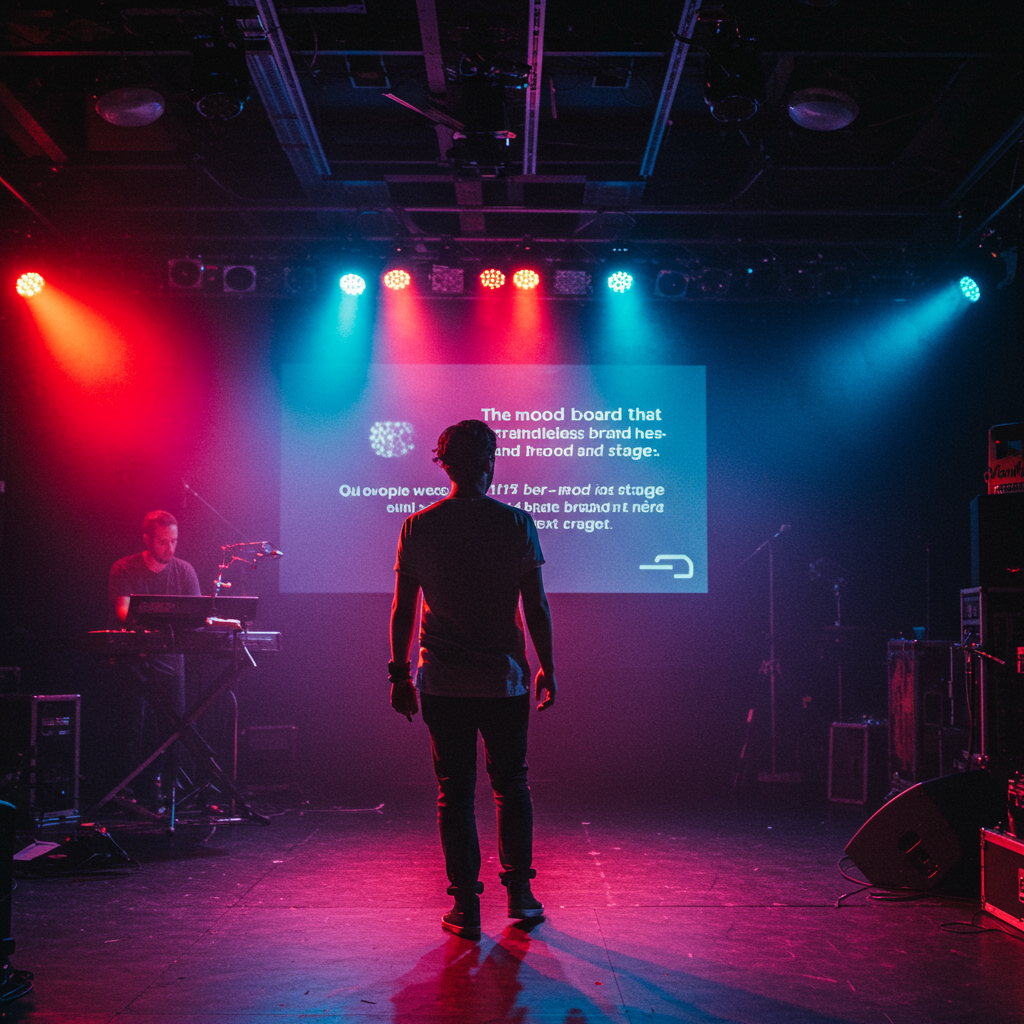
This guide provides a comprehensive framework for translating abstract brand values into tangible, physical, and digital stage experiences. We delve into the methodology of creating and implementing a powerful brand stage mood board, the essential tool for aligning stakeholders, guiding creative teams, and ensuring a cohesive final production. The focus is on a data-driven approach, linking every design choice to specific business objectives and key performance indicators (KPIs), such as a 15% increase in audience engagement, a Net Promoter Score (NPS) above 50, and staying within a 5% budget deviation. This article is intended for event marketers, brand managers, creative directors, and production agencies seeking to elevate their live and hybrid events from mere presentations to unforgettable brand immersions.
Introduction
In the competitive landscape of live events, conferences, and brand activations, the difference between a memorable experience and a forgettable one often lies in the translation of brand identity into a physical environment. Many organizations invest heavily in brand guidelines that dictate logos, fonts, and color palettes but fail to bridge the gap between the 2D document and the 3D, multi-sensory world of a stage. This is where the strategic creation of a comprehensive brand stage mood board becomes not just a creative exercise, but a critical business process. It serves as the foundational blueprint, the single source of truth that aligns marketing, design, and production teams, ensuring that every texture, color, light, and sound reinforces the core brand message and drives specific business outcomes.
Our methodology transforms the mood board from a simple collage of inspirational images into a strategic document. It integrates psychographic data of the target audience, material specifications, technological requirements, and, most importantly, measurable KPIs. We measure success not just by aesthetic appeal, but by tangible results: audience dwell time, social media shareability (measured by hashtag usage and user-generated content volume), lead conversion rates from interactive installations, and post-event brand perception surveys. By codifying the emotional and physical experience, the brand stage mood board minimizes costly revisions during production, reduces ambiguity for vendors, and maximizes the return on investment for the entire event.
Vision, values and proposal
Focus on results and measurement
Our vision is to elevate stage design from a decorative art to a strategic marketing discipline. We operate on a core set of values: strategic creativity, radical collaboration, and measurable impact. We apply the 80/20 principle (Pareto principle) by identifying the 20% of design elements that will deliver 80% of the desired emotional and brand impact. This means prioritizing investments in key focal points, interactive elements, and lighting schemes over less critical background details. Our technical standards are aligned with industry best practices, including compliance with ISO 20121 for sustainable event management, ensuring that material choices are not only aesthetically pleasing but also environmentally responsible. We believe every design decision must be justifiable with data, whether it’s audience research, A/B testing of digital concepts, or ROI projections.
- Key Value Proposition: We de-risk the creative process by transforming subjective ideas into an objective, actionable plan that guarantees brand consistency and measurable results across all physical and digital touchpoints of an event.
- Quality Criteria: A successful project must meet three criteria: Brand Authenticity (does it feel true to the brand’s DNA?), Audience Resonance (does it connect emotionally with the target demographic?), and Production Viability (is it achievable on time, on budget, and safely?).
- Decision Matrix for Design Elements: Each potential element is scored on a 1-5 scale across Impact, Cost, and Feasibility. Only elements scoring a combined total of 12 or higher are prioritized for inclusion in the final design, ensuring an optimal allocation of resources. For example, a custom-fabricated interactive LED wall (Impact: 5, Cost: 2, Feasibility: 4 = 11) might be deprioritized in favor of a dynamic projection mapping solution (Impact: 4, Cost: 4, Feasibility: 5 = 13).
Services, profiles and performance
Portfolio and professional profiles
We offer an end-to-end service for the conceptualization and execution of brand environments, centered around the creation of the brand stage mood board. Our services include: Brand Immersion & Stakeholder Workshops, Audience Psychographic Analysis, Conceptual Design & 3D Visualization, Material & Technology Sourcing, Production Vendor Vetting, and On-Site Creative Direction. Our team comprises hybrid professionals: Creative Strategists who bridge marketing goals with design concepts, Environmental Designers with expertise in architecture and interior design, and Technical Directors who understand the latest in lighting, AV, and interactive technology. This multidisciplinary approach ensures our designs are not only beautiful but also functional and impactful.
Operational process
- Phase 1: Discovery & Strategy (1-2 weeks): Deep-dive into brand guidelines, event objectives, and audience profiles. KPI: Alignment document signed off by all key stakeholders with a 95% satisfaction rate.
- Phase 2: Conceptualization & Mood Board Creation (2 weeks): Development of 2-3 distinct creative concepts, each with its own mood board. The client selects one path. KPI: Concept selection with less than one major revision round.
- Phase 3: Design Development & Pre-visualization (3-4 weeks): The chosen mood board is translated into detailed 2D layouts and 3D renderings. KPI: Final design approved with a budget deviation of less than 5% from the initial estimate.
- Phase 4: Production & Execution (4-8 weeks): Vendor management, manufacturing, and on-site build. KPI: 100% of milestones met on the production timeline; zero safety incidents.
- Phase 5: Measurement & Reporting (1 week post-event): Analysis of event KPIs, audience feedback, and ROI calculation. KPI: Delivery of a comprehensive performance report within 5 business days of the event’s conclusion.
Tables and Examples
Communicating Brand InnovationPost-event survey scores on “brand is innovative”; Media mentions highlighting technology usage.Using innovative materials (e.g., recycled plastics, smart textiles) and technologies such as holographic projection or kinetic projection mapping.Score of 4.5/5 in the innovation perception survey; at least 10 mentions in media specializing in technology and events.Design a “solutions station” where the physical environment guides attendees through a digital questionnaire to identify their needs.Generate 500 MQLs with a 20% SQL conversion rate within 30 days of the event.
| Objective | Indicators | Actions | Expected Result |
|---|---|---|---|
| Increase Audience Engagement | Dwell time in activation zones; Number of interactions with digital displays; Social media mentions with event hashtag. | Integrate an interactive photo booth area whose design is directly derived from the brand stage mood board; use textures and colors on the stage that are highly “Instagrammable”. | 25% increase in the use of the event hashtag compared to the previous year; Average dwell time of 7 minutes in activation zones. |
| Qualified Lead Generation | Number of credential scans at interactive stations; Lead Quality (MQLs) based on post-event follow-up. |
Representation, campaigns and/or production
Professional development and management
Translating the mood board into reality is a complex logistical operation. Our production management process begins with a detailed technical breakdown of every element on the mood board. We create a master production schedule with dependencies mapped out, from material procurement and manufacturing to shipping, on-site assembly, and dismantling. We manage all necessary permits, including structural engineering approvals for complex builds and fire safety compliance. Our supplier coordination involves a rigorous vetting process; Potential vendors for lighting, sound, fabrication, and digital content are scored based on past performance, technical capability, and financial stability. We maintain a pre-approved list of partners to ensure quality and reliability.
Critical Documentation Checklist:
Detailed technical drawings (CAD) with all specifications.
Insurance certificates from all suppliers.
Material specification sheets and fire retardant certificates.
Risk management plan with detailed contingency plans.
Venue-approved assembly and disassembly (R&D) schedule.
Supply Chain Contingency Plan: For each key material specified in the mood board (e.g., a specific type of reclaimed wood or LED fabric), we identify at least two alternative suppliers in different geographic regions. If the primary supplier fails, the mitigation plan is activated immediately to prevent schedule delays.
- Technology Contingency: For critical technology elements such as main LED displays or interactive servers, a 25% redundancy requirement (e.g., spare LED modules on-site, a hot-swappable backup server) is specified in the supplier contract.
Content and/or media that convert
Messages, formats and conversions
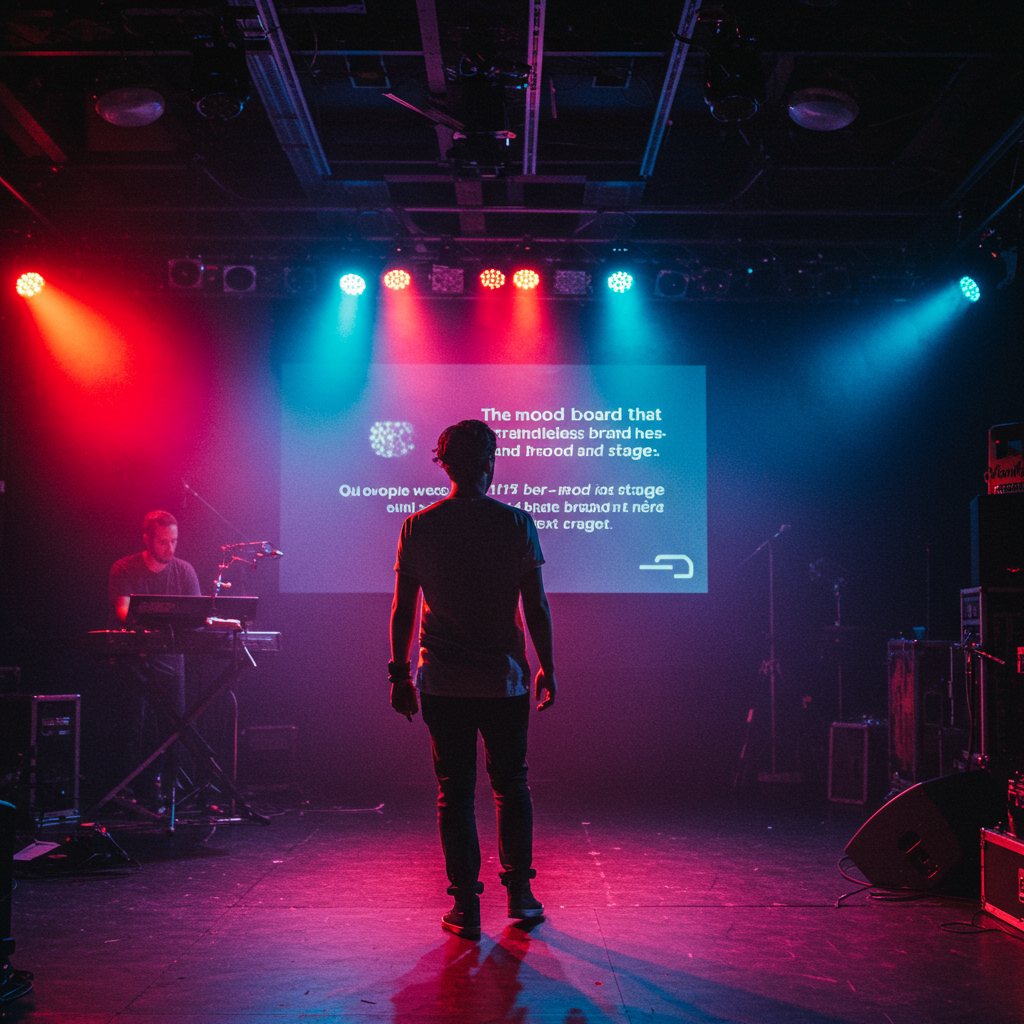
The stage is not just a backdrop; it is an active participant in content delivery. The brand stage mood board dictates the visual language for all on-screen content, ensuring a seamless aesthetic. For example, if the mood board specifies an “organic, natural, and grounded” theme with wood textures and warm lighting, the on-screen graphics will use soft animations, earthy color palettes, and typography that complements this feeling. We design content with clear conversion goals. A “hook” might be an impressive opening animation that captures attention, followed by a clear Call to Action (CTA) on screen, such as “Scan the QR code to download the whitepaper.” We conduct A/B testing on digital content elements, such as the color of a CTA button on the main screen, to optimize for audience interaction, measuring click-through rates in real-time during rehearsals.
- Step 1: Message Mapping (Responsible: Content Strategist): Each segment of the event agenda is mapped to a communication objective and a visual treatment derived from the mood board.
- Step 2: Storyboard Creation (Responsible: Motion Designer): Storyboards are created for all animations, transitions, and backgrounds, which are reviewed and approved by the client.
- Step 3: Asset Production (Responsible: Design Team): The design team creates all visual assets, including videos, graphics, and presentation templates.
- Step 4: Technical Integration (Responsible: Technical Director): The assets are loaded into the event’s playback system (e.g., Watchout, Resolume) and scheduled.
- Step 5: Rehearsal and Optimization (Responsible: Entire Team): Full rehearsals are conducted to ensure the content is perfectly synchronized with the speakers and lighting, making adjustments in real time.
Training and Employability
Demand-Driven Catalogue
To empower internal marketing and events teams, we offer specialized training programs focused on the nexus between brand strategy and experience design. These workshops are not theoretical; they are hands-on sessions designed to enhance internal capabilities and foster better collaboration with agencies and suppliers.
- Module 1: “The Strategic Mood Board”: How to build a mood board that is a strategic document and not just a collage. It includes modules on audience research, the psychology of color and space, and how to link design choices to KPIs.
- Module 2: “Briefing for Impact”: Training on how to write inspiring and precise creative briefs for design and production agencies. It covers how to communicate the essence of the brand in a way that creatives can translate into a physical space.
- Module 3: “Material & Tech Literacy for Marketers”: An introduction to sustainable materials, the latest AV technology, and interactive possibilities. The goal is to enable brand managers to have more informed and productive conversations with technical directors.
- Module 4: “Measuring Experiential ROI”: An in-depth dive into methodologies for measuring the success of an event beyond attendance figures. It covers social media sentiment analysis, brand perception surveys, and lead attribution tracking.Methodology
Our training methodology is practical and based on real-world cases. Participants work in groups to develop a brand stage mood board for a hypothetical brand scenario. Assessment is conducted using clear rubrics that evaluate strategic alignment, creative feasibility, and concept clarity. We offer internships within our live projects for top-performing participants and connect graduates with our network of partner agencies and companies. The expected outcome is that participants will be able to return to their organizations and lead the conceptual event design process with 20% greater efficiency, reducing revision cycles and improving the quality of the final result.
Operational Processes and Quality Standards
From Request to Execution
- Diagnosis (Phase 0): Initial Request for Proposal (RFP) received. We conducted a 30-minute qualification call to assess the fit, budget, and timelines. Deliverable: Call summary and proceed/no-proceed decision.
- Proposal (Phase 1): In-depth workshop with the client. We developed a detailed proposal that includes the scope, timeline, budget, and initial KPIs. Deliverable: Signed proposal and contract.
- Pre-production (Phase 2): Creation of the strategic mood board, 3D renderings, and technical drawings. Selection and contracting of suppliers. Deliverable: Approved final design package and master production schedule.
- Execution (Phase 3): Supervision of manufacturing, management of on-site assembly, and creative direction during the event. Deliverable: Stage and experience delivered according to specifications.
- Closure (Phase 4): Supervision of dismantling, post-event report analyzing performance against KPIs, and feedback session with the client. Deliverable: Final ROI report and recommendations for future events.
Quality Control
- Clear Roles: A Creative Director is the guardian of the mood board vision. A Technical Director ensures feasibility and safety. A Project Manager is responsible for the schedule and budget.Escalation: Problems are classified by severity level (1-3). Level 1 issues (those affecting the schedule or budget by more than 10%) are immediately escalated to project leadership.
- Acceptance Indicators: Each deliverable (e.g., 3D renderings) has an acceptance criteria checklist that must be signed by the client before moving to the next phase.
- SLAs (Service Level Agreements): We guarantee a 4-hour response time to client inquiries during business hours and maintain a client NPS score of +70 throughout the project lifecycle.
Phase Deliverables Control Indicators Risks and Mitigation Pre-production Brand Stage Mood Board, 3D Renderings, Technical Drawings. Client approval in a maximum of 2 review rounds; design budget deviation < 5% of target budget. Risk: Creative misalignment. Mitigation: Initial immersion workshops and weekly approval checkpoints. Production Manufactured elements, rented AV equipment. Quality inspections at the manufacturer’s workshop; equipment testing completed 48 hours prior to loading. Risk: Supply chain delays. Mitigation: Materials ordered in advance, backup suppliers identified. Execution (Setup) Stage built, systems tested. Daily safety walkthroughs; setup completed 12 hours before the start of the technical rehearsal. Risk: On-site problems (e.g., power, rigging). Mitigation: Detailed site visit in advance, power contingency plan. Live Event Flawless execution of the show. System downtime < 0.1%; Technical response time < 5 minutes. Risk: Equipment failure. Mitigation: Redundant systems (backup), technicians on standby. Application Cases and Scenarios
Case 1: Launching a Technology Product – “Future Forward”
The Challenge: An AI startup needed to launch its flagship product at a major technology fair. The brand was unknown and needed to create a memorable impact that communicated innovation, precision, and trust. The budget was €250,000 for a 10m x 15m space, with a 12-week timeframe. The main KPI was to generate 1,000 qualified leads and secure 15 articles in the specialized press.
The Challenge:
The Mood Board Process: We created a brand stage mood board titled “Organic Intelligence.” It focused on the fusion of nature and technology. Key elements included: a color palette of crisp whites, charcoal grays, and electric emerald green; textures that contrasted smooth, polished surfaces with preserved moss and dark wood; and lighting that mimicked the patterns of neural networks.The Execution: We built a curved central structure reminiscent of a seed pod, with a skin of LED panels displaying fluid data visualizations. Inside the “pod,” product demonstrations took place at minimalist workstations. The floor was made of polished concrete inlaid with LED strips that guided visitors. The scent of the space was custom-designed to smell of ozone and damp earth, reinforcing the theme.
The Results: 1,850 leads were generated (85% above target). The booth was featured in 22 technology publications, including a lead article in TechCrunch as “the most innovative booth design at the show.” The post-event survey score for “brand innovation perception” was 4.8 out of 5. The final cost was €245,000, 2% below budget.
Case 2: Boutique Music Festival – “Echoes of the Earth”
The Challenge: An independent music festival wanted to redesign its main stage to better reflect its values of sustainability, community, and authenticity. The goal was to create a space that fostered connection and was highly photogenic for social media, increasing organic mentions by 50%. The budget was limited to €80,000, and recycled or locally sourced materials had to be used whenever possible.
The Mood Board Process: The mood board was called “Earthly Sanctuary.” It was based on natural and found materials. The color palette was warm and earthy: terracotta, ochre, and sage green. Textures were key: reclaimed wood from local barns, hand-dyed hemp fabrics, and bamboo structures. The lighting was designed to be warm and intimate, using low-wattage lanterns and projections of leaf-inspired patterns.
The Execution: The stage was built around a large existing tree. Giant “dreamcatcher”-like woven structures were created with recycled ribbons that moved in the wind. The stage backdrop was a mosaic of reclaimed wooden pallets, backlit to create depth. The performers were encouraged to interact with the design.
The Results: Instagram mentions of the festival hashtag increased by 120% compared to the previous year, with over 5,000 images of the stage shared by attendees. An on-site survey revealed an NPS of +65, with 80% of respondents citing the “atmosphere” and “stage design” as key factors in their enjoyment. The project was completed for €78,000, using 75% recycled or locally sourced materials.
Case 3: Hybrid Financial Conference – “The Trust Nexus”
The Challenge: A global financial services firm was organizing its first hybrid conference. They needed a stage design that conveyed stability, confidence, and a forward-looking vision, both for the 500 in-person audience and the 5,000 virtual attendees. The design had to work well on camera and allow for seamless integration of remote speakers.
The Mood Board Process: The brand stage mood board was titled “Architectural Clarity.” It drew inspiration from modern architecture and data design. The color palette was sophisticated: deep navy, bronze, and stone gray. The materials were premium: marble, brushed metal, and frosted glass. The lines were clean and geometric. The centerpiece was a large, high-resolution LED screen framed to resemble a window into the future.
The Execution: The physical stage featured a marble speaker desk and a backdrop of backlit, dark wood slat panels. The main LED screen displayed the presentation graphics and could also show a life-size remote speaker, creating the illusion that they were on stage. Two smaller side screens were used for audience interaction (Q&A, polls). The lighting was of television studio quality, designed to eliminate shadows and ensure the speakers looked their best on broadcast.
The Results: The post-event survey showed that 95% of virtual attendees rated the production quality as “excellent.” Virtual audience engagement, measured by participation in polls and questions, was 30% higher than the industry standard for hybrid events. The brand received praise for its professionalism, and the €400,000 production cost was considered an investment that generated an estimated 3:1 ROI in terms of strengthening customer relationships and new business opportunities.
Step-by-step guides and templates
Guide 1: How to Create a Strategic Brand Stage Mood Board in 10 Steps
- Define the “Why”: Interview key stakeholders. What is the number one business objective of this event? What unique emotion do we want the audience to feel?
- Research the Audience: Go beyond demographics. What brands do they follow on Instagram? What kind of architecture do they like? What are their values? Create 2-3 audience personas.
- Establish Experience Keywords: Distill the research into 3-5 adjectives that will describe the experience. Examples: “Bold, Connected, Playful” or “Serene, Premium, Insightful”.
- Visual Gathering – Broad Phase: Using platforms like Pinterest, Behance, or design archives, gather a large number of images (more than 100) related to the keywords. Don’t limit yourself to event design; Look to architecture, fashion, nature, and art.
- Collecting Materials and Textures: Look for images of specific textures: the grain of wood, the shine of metal, the softness of velvet, the rawness of concrete.
- Defining the Color Palette: Extract a palette of 5-7 colors from the most striking images. Define the primary, secondary, and accent colors.
- Selecting Typography: Choose 2-3 typefaces that match the mood. Is it a clean and modern sans-serif or a classic and authoritative serif?
- Curating and Editing – Focusing Phase: Group the images by theme. Ruthlessly remove anything that doesn’t perfectly align with the keywords. El objetivo es reducir a 20-30 imágenes y elementos que cuenten una historia cohesiva.
- Componer el Mood Board: Organizar los elementos finales en un diseño limpio. Añadir anotaciones que expliquen por qué se eligió cada elemento y cómo se relaciona con los objetivos del evento.
- Presentar y Validar: Presentar el mood board a los stakeholders, contando la historia de la experiencia que se creará. Recoger feedback y realizar una última ronda de ajustes.
Guía 2: Checklist para Evaluar a los Proveedores de Producción Basado en un Mood Board
- Comprensión del Portfolio: ¿Han ejecutado proyectos con una estética similar a la de tu mood board? Pide ver ejemplos específicos.
- Capacidad de Muestreo de Materiales: ¿Pueden proporcionar muestras físicas de los materiales clave (tejidos, metales, maderas) especificados en el mood board para su aprobación?
- Experiencia Técnica: Si el mood board incluye tecnología compleja (ej. LEDs cinéticos, hologramas), ¿qué experiencia específica tienen en esa área? Pide estudios de caso.
- Capacidad de Fabricación Interna vs. Subcontratación: ¿Qué elementos fabrican ellos mismos y cuáles subcontratan? Esto afecta al control de calidad y a los plazos.
- Proceso de Colaboración: ¿Cómo proponen trabajar con tu equipo creativo para traducir el mood board en planos técnicos? ¿Quién sería tu punto de contacto diario?
- Enfoque de la Sostenibilidad: Si la sostenibilidad es parte de tu mood board, ¿cómo la abordan en sus procesos? Pide su política medioambiental.
- Planificación de Contingencias: Pregúntales por un momento en el que un proyecto salió mal y cómo lo solucionaron. Esto revela su capacidad para resolver problemas.
- Transparencia en los Precios: Pide un desglose detallado de los costes. ¿Hay cargos ocultos por gestión de proyectos o transporte?
Guía 3: Medición del ROI del Diseño de tu Escenario
- Establecer KPIs claros de antemano: Antes de diseñar nada, define qué vas a medir (ej. engagement en redes sociales, generación de leads, percepción de la marca).
- Medir el Engagement Social: Utiliza herramientas de escucha social para rastrear el uso del hashtag del evento y el análisis de sentimientos. Compara el volumen de fotos del escenario compartidas con eventos anteriores.
- Realizar Encuestas Pre y Post Evento: Mide la percepción de la marca antes y después del evento con preguntas como “¿Cómo de innovadora consideras la marca X en una escala de 1 a 5?”.
- Seguimiento de Leads desde el Entorno: Si tienes estaciones interactivas, utiliza códigos QR o escáneres de credenciales únicos para rastrear qué leads se originaron en qué parte del entorno físico.
- Analizar el Dwell Time: Utiliza sensores de ocupación o análisis de vídeo para medir cuánto tiempo pasa la gente en diferentes zonas de tu stand o activación. Un mayor tiempo de permanencia se correlaciona con un mayor engagement.
- Calcular el Valor Mediático Ganado (EMV): Cuantifica el valor de la cobertura de prensa y de las publicaciones en redes sociales que destacan el diseño de tu escenario.
- Atribuir el Impacto en el Negocio: Trabaja con tu equipo de ventas para rastrear el viaje de los leads generados en el evento. ¿Cuántos se convirtieron en clientes y cuál es su valor de vida (LTV)?
- Calcular el ROI: Utiliza la fórmula: (Ganancia Financiera Atribuible – Coste de la Inversión en el Escenario) / Coste de la Inversión en el Escenario. Incluso si la ganancia no es directa, puedes asignar un valor a los resultados como el brand lift.
Recursos internos y externos (sin enlaces)
Recursos internos
- Plantilla de Briefing Creativo para Diseño de Escenarios
- Catálogo de Materiales Sostenibles Pre-aprobados
- Checklist de Estándares de Calidad para Producción
- Plantilla de Informe Post-Evento y Análisis de KPIs
- Guía de Estilo para Contenido en Pantalla
Recursos externos de referencia
- Norma ISO 20121: Sistemas de gestión de la sostenibilidad de eventos
- Guías de seguridad y salud de la Event Safety Alliance
- Publicaciones de la industria como Event Marketer y BizBash
- Libros sobre diseño de experiencias como “The Power of Moments” de Chip y Dan Heath
- Libros de teoría del color como “Interaction of Color” de Josef Albers
Preguntas frecuentes
¿Cuál es la diferencia entre un mood board y un brand style guide?
Un brand style guide (guía de estilo de marca) es un documento normativo que dicta las reglas del uso de los elementos de la marca (logo, tipografía, colores). Es prescriptivo. Un brand stage mood board, en cambio, es un documento inspirador y direccional. Traduce las reglas del style guide en una aplicación emocional y sensorial para un entorno específico. Define el “sentimiento” y la atmósfera, no solo las reglas.
¿Cuánto cuesta desarrollar un brand stage mood board profesional?
El coste varía según la complejidad del evento y el alcance de la investigación. Puede oscilar entre 5.000 € para una consulta y un mood board básicos, hasta más de 50.000 € para un proyecto a gran escala que incluya una investigación exhaustiva de la audiencia, múltiples conceptos y renderizaciones 3D preliminares. El coste debe verse como una inversión que ahorra dinero a largo plazo al evitar costosas revisiones y desalineaciones en la producción.
¿Cómo puedo convencer a mi dirección de la necesidad de invertir en esto?
Enfoca la conversación en el riesgo y el ROI. Sin un mood board estratégico, se corre el riesgo de un mensaje de marca incoherente, una experiencia de audiencia mediocre y un gasto ineficiente en producción. Enmarca el mood board como una herramienta de mitigación de riesgos que alinea a todos y garantiza que la inversión multimillonaria en el evento se gaste de la manera más eficaz posible para alcanzar los objetivos de negocio.
¿Puede un mood board ser demasiado restrictivo para los diseñadores?
Al contrario. Un buen mood board no dicta la ejecución exacta, sino que establece los límites creativos y la dirección estratégica. Proporciona un “campo de juego” claro. Libera al equipo de producción de la incertidumbre sobre la intención del cliente, permitiéndoles centrarse en la innovación y la excelencia en la ejecución dentro de esa visión acordada. Es una brújula, no un mapa de carreteras detallado.
¿Funciona este proceso también para eventos virtuales o híbridos?
Absolutamente. Para los eventos virtuales, el mood board informa sobre el diseño de los entornos virtuales, los fondos de los ponentes, los gráficos en movimiento, el diseño de la interfaz de usuario de la plataforma y la experiencia de audio. Para los eventos híbridos, es aún más crucial, ya que garantiza una experiencia de marca cohesiva y consistente para las audiencias presenciales y remotas, asegurando que ambos sientan que están participando en el mismo evento de marca.
Conclusión y llamada a la acción
En resumen, el brand stage mood board es la herramienta estratégica indispensable que cierra la brecha entre la identidad de marca abstracta y la realidad tangible de una experiencia de evento. No es un mero ejercicio estético, sino un proceso riguroso que, cuando se ejecuta correctamente, alinea a los equipos, optimiza los presupuestos y maximiza el impacto medible. Al anclar cada decisión de diseño en objetivos de negocio claros y KPIs cuantificables, transforma los escenarios de simples plataformas a potentes motores de engagement, conversión y lealtad a la marca. La adopción de este enfoque disciplinado garantiza que cada euro invertido en la producción de un evento trabaje para construir el valor de la marca y ofrecer un retorno demostrable.
Si estás listo para dejar de crear escenarios y empezar a construir mundos de marca inmersivos, el primer paso es formalizar tu proceso de visión creativa. Te invitamos a utilizar las guías y checklists de este artículo para desarrollar tu próximo brand stage mood board. Ponte en contacto con nuestro equipo para una consulta sobre cómo podemos ayudarte a traducir la esencia de tu marca en una experiencia que tu audiencia nunca olvidará.
Glosario
- Brand Activation
- Un evento o campaña de marketing experiencial que busca crear una conexión emocional entre los consumidores y una marca a través de una interacción en vivo o inmersiva.
- Dwell Time
- El tiempo medio que un asistente pasa en un área específica, como un stand de feria o una zona de activación. Es un indicador clave del nivel de interés y compromiso.
- KPI (Key Performance Indicator)
- Un indicador clave de rendimiento. Una métrica cuantificable utilizada para evaluar el éxito en el logro de los objetivos de negocio. Para los eventos, los KPIs pueden incluir la generación de leads, el engagement en redes sociales o las puntuaciones de satisfacción de los asistentes.
- NPS (Net Promoter Score)
- Una métrica de lealtad del cliente que se mide con una sola pregunta: “¿Qué probabilidad hay de que recomiendes [marca/evento] a un amigo o colega?”. Las puntuaciones van de -100 a +100.
- ROI (Return on Investment)
- Retorno de la inversión. Una medida de rendimiento utilizada para evaluar la eficiencia o rentabilidad de una inversión. Se calcula como (Ganancia de la Inversión – Coste de la Inversión) / Coste de la Inversión.
- Rigging
- El proceso y el equipo utilizado para suspender de forma segura la iluminación, el sonido y otros elementos escénicos de la estructura de un recinto.
Internal links
- Click here👉 https://us.esinev.education/diplomas/
- Click here👉 https://us.esinev.education/masters/
External links
- Princeton University: https://www.princeton.edu
- Massachusetts Institute of Technology (MIT): https://www.mit.edu
- Harvard University: https://www.harvard.edu
- Stanford University: https://www.stanford.edu
- University of Pennsylvania: https://www.upenn.edu