
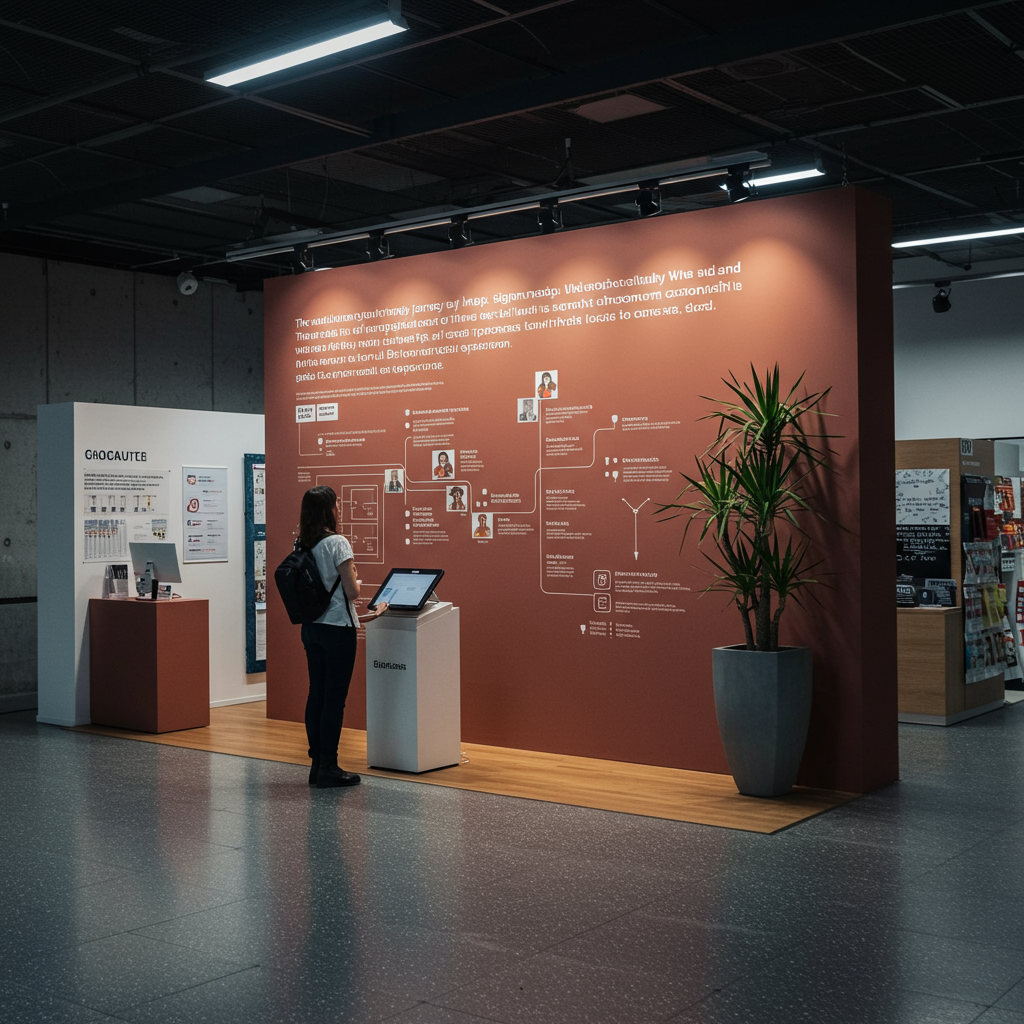
This article provides a comprehensive framework for creating and implementing an effective audience journey map, focusing on the often-overlooked physical touchpoints that define an experience. We dissect the critical audience journey map elements—strategic signage, empowered staff, and impactful micro-moments—that transform a standard event into a seamless and memorable one. By applying our data-driven methodology, organizations can achieve significant improvements in key performance indicators (KPIs) such as Net Promoter Score (NPS), attendee satisfaction, and overall return on investment (ROI). This guide is designed for event managers, venue operators, retail experience designers, and marketing professionals seeking to bridge the gap between their brand promise and the reality of the audience’s experience. We offer actionable strategies, detailed checklists, and real-world case studies to illustrate how a focus on these core components drives measurable business results, increases engagement, and builds lasting loyalty.
Introduction
In today’s experience-driven economy, the success of any event, venue, or retail space is determined by the quality of the audience’s journey. While digital touchpoints are frequently optimized, the physical experience often remains an afterthought. Understanding and meticulously designing the essential audience journey map elements is no longer a luxury but a strategic necessity for creating memorable and effective interactions. This process involves visualizing every step an individual takes, from their first point of contact to their final departure, and analyzing their needs, emotions, and potential pain points along the way. The three pillars of this physical journey—intuitive signage, proactive staff, and curated micro-moments—are the tangible components that shape perception, drive behavior, and ultimately define success.
Our methodology combines qualitative observation (ethnographic studies, “walk-the-path” audits) with quantitative data (attendee flow analysis, heat mapping, real-time surveys) to build a holistic and actionable journey map. Success is not abstract; it is measured through concrete KPIs. We aim for a minimum 15-point increase in Net Promoter Score (NPS), a reduction in navigation-related guest complaints by over 40%, and an increase in dwell time at key monetization or engagement zones by at least 20%. By focusing on the tangible elements of the experience, we transform venues from passive spaces into active, engaging environments that deliver on their brand promise and achieve measurable business objectives. This comprehensive guide will provide the tools and frameworks to master these critical components.
Vision, values and proposal
Focus on results and measurement
Our vision is to elevate every physical interaction into a seamless, positive, and brand-aligned experience. We operate on a foundation of data-driven decision-making, rejecting assumptions in favor of empirical evidence. Our core values prioritize measurable impact, clarity, and empathy for the end-user. We apply the Pareto Principle (80/20 rule) to our analysis, focusing intensive resources on the 20% of touchpoints that generate 80% of the emotional impact and business value. This ensures efficient allocation of budgets and efforts. All our strategic recommendations adhere to best-practice standards, including principles from ISO 20121 for sustainable event management and ADA (Americans with Disabilities Act) guidelines for universal accessibility, ensuring that the designed journey is inclusive and responsible.
- Data-Driven Insights: We replace guesswork with analytics, using tools like foot traffic analysis, A/B testing for signage, and sentiment analysis to inform every recommendation.
- Holistic Experience Design: Our approach integrates physical wayfinding, human interaction, digital overlays, and environmental atmospheres into one cohesive journey.
- Measurable ROI: Every intervention is tied to a business goal, whether it’s increasing sales, boosting loyalty, or improving operational efficiency. We provide clear post-implementation reports showing the financial and experiential return.
- Human-Centred Focus: The foundation of our work is a deep understanding of audience psychology and behavior. We build empathy maps for key personas to ensure the journey feels intuitive and supportive to them.
Services, profiles and performance
Portfolio and professional profiles
We offer a suite of specialized services designed to audit, design, and implement a world-class audience journey. Our team consists of experienced strategists, environmental designers, data analysts, and training specialists who collaborate to deliver comprehensive solutions. Our primary services include:
- Audience Journey Mapping & Audit: A full diagnosis of your current experience, identifying pain points and opportunities through on-site observation, stakeholder interviews, and data analysis.
- Signage & Wayfinding Strategy: Design and implementation of clear, brand-aligned, and accessible navigation systems, from static signs to dynamic digital displays.
- Staff Experience Training Programmes: Customized workshops that transform frontline staff into proactive brand ambassadors, equipped to manage key touchpoints and create positive micro-moments.
- Micro-Moment Design & Curation: Identifying and scripting small, high-impact interactions that surprise, delight, and deepen the audience’s connection with the brand.
Operational process
- Phase 1: Discovery & Goal Alignment.We conduct workshops with key stakeholders to define project goals, audience personas, and success metrics. KPI: 100% agreement on project charter and measurable objectives.
- Phase 2: Data Collection & Touchpoint Identification. Our team performs on-site audits, “mystery shopper” experiences, and deploys data collection tools (e.g., surveys, traffic counters). KPI: Identification of at least 95% of all critical audience touchpoints.
- Phase 3: Journey Map Creation & Analysis. We synthesise all data into a detailed visual journey map, highlighting emotional highs and lows, pain points, and “moments of truth.” KPI: Map validated with a customer satisfaction score of ≥ 9/10.
- Phase 4: Strategic Recommendations & Implementation Plan. We deliver an actionable report detailing specific interventions for signage, staff, and micro-moments, complete with a phased implementation timeline and budget. KPI: Proposed budget deviation less than 5% from final implementation cost.
- Phase 5: Implementation & Training. We oversee the production and installation of physical elements and deliver our bespoke staff training programs. KPI: All staff must pass a final assessment with a score of ≥ 90%.
- Phase 6: Measurement & Iteration. Post-implementation, we measure performance against the initial KPIs and provide a report on ROI and learnings, suggesting areas for continuous improvement. KPI: Achieve or exceed at least 80% of the defined success metrics.
Tables and examples
| Objective | Indicators | Actions | Expected result |
|---|---|---|---|
| Reduce guest anxiety at arrival | NPS on “Arrival Experience” > +50; Queries for directions at entrance down by 60% | Implement 3-tiered signage (long-distance, directional, local); Position “Ambassador” staff at key decision points. | A seamless, welcoming arrival that sets a positive tone for the entire experience. |
| Increase F&B concession sales | Average Transaction Value (ATV) up 15%; Dwell time near concessions up 25% | Redesign menus for clarity (A/B testing); Train staff on upselling; Create “Happy Hour” micro-moments promoted via digital screens. | Higher per-capita spend and improved profitability of on-site services. |
| Improve session attendance at a conference | Transition time between sessions < 7 minutes; Session room capacity > 85% full | Colour-coded wayfinding for different tracks; App push notifications 10 minutes before session start; Staff equipped with tablets to provide real-time directions. | Attendees feel informed and can easily navigate the venue, maximizing their learning opportunities. |
Representation, campaigns and/or production
Professional development and management
Transforming a journey map from a diagram into a physical reality requires meticulous production and management. Our team handles the end-to-end logistics to ensure flawless execution. For signage, this includes material specification based on durability and visibility requirements (e.g., anti-glare finishes, appropriate luminance levels), vendor selection and management, and ensuring all installations comply with local building codes and accessibility standards. For staff, our role extends beyond training to advising on recruitment profiles, optimal staff-to-guest ratios, and the design of functional, brand-aligned uniforms. We develop a comprehensive execution calendar that synchronizes all production and deployment activities, ensuring every element is in place and every staff member is briefed and ready before the doors open.
- Pre-Production Checklist:
-
- Finalized signage designs approved by all stakeholders.
- Material samples vetted for quality and durability.
– Installation permits and venue permissions secured.
-
- Accessibility audit of all proposed placements completed.
- Vendor contracts and service-level agreements (SLAs) signed.
- Staffing & Deployment Plan:
-
- Role descriptions and hiring criteria defined.
– Shift schedules and deployment zones mapped.
-
- Communication protocols (e.g., radio channels) established.
- Contingency plan for staff absences (standby team).
- Contingency Planning:
-
- Backup power sources for digital signage identified.
– Alternative suppliers for critical materials on standby.
-
- Pre-scripted responses for common and unexpected guest issues.
- Emergency wayfinding protocol established with venue security.
Content and/or media that converts
Messages, formats and conversions
The “content” of a physical journey map consists of the information and interactions that guide and influence audience behavior. For signage, the message must be instantly comprehensible. We use the “5-second rule”: if a user can’t understand a directional sign in five seconds, it has failed. This involves rigorous testing of font choices, color contrast (adhering to WCAG AA standards even for physical media), and iconography. For staff, the content is their script—not rigid lines, but a framework of key messages, empowering phrases, and a consistent brand voice. A simple switch from “I don’t know” to “Let me find that out for you” can completely change a guest’s perception. Micro-moments are powered by content, whether it’s a compelling call-to-action on a screen, a QR code leading to exclusive content, or a staff member empowered to offer a complimentary coffee to a frustrated guest. Optimizing these **audience journey map elements** directly impacts conversion goals, such as directing traffic to a merchandise booth or encouraging sign-ups for a loyalty program.
- Content Strategy Development: Define the key message for each primary touchpoint based on the journey map’s emotional goals (e.g., Reassurance at entry, Excitement at the main stage, Gratitude at exit).
- Copywriting & Design: Develop concise, action-oriented copy for all signage. Design visual layouts that prioritize clarity and brand consistency. For staff, develop a “Voice and Tone Guide.”
- A/B Testing: Where possible (e.g., with digital signage or printed signs in a controlled area), test different versions of content. Measure performance based on behavioral metrics (e.g., which sign leads to a 10% higher usage of the correct pathway).
- Content Deployment & Training: Ensure all final content is installed correctly. Train staff not just on what to say, but on the “why” behind the messaging, linking it back to the overall guest experience.
- Performance Review: Analyze post-event data to see which messages resonated most, using feedback surveys and observational data to refine the content strategy for future events.
Training and employability
Demand-oriented catalogue
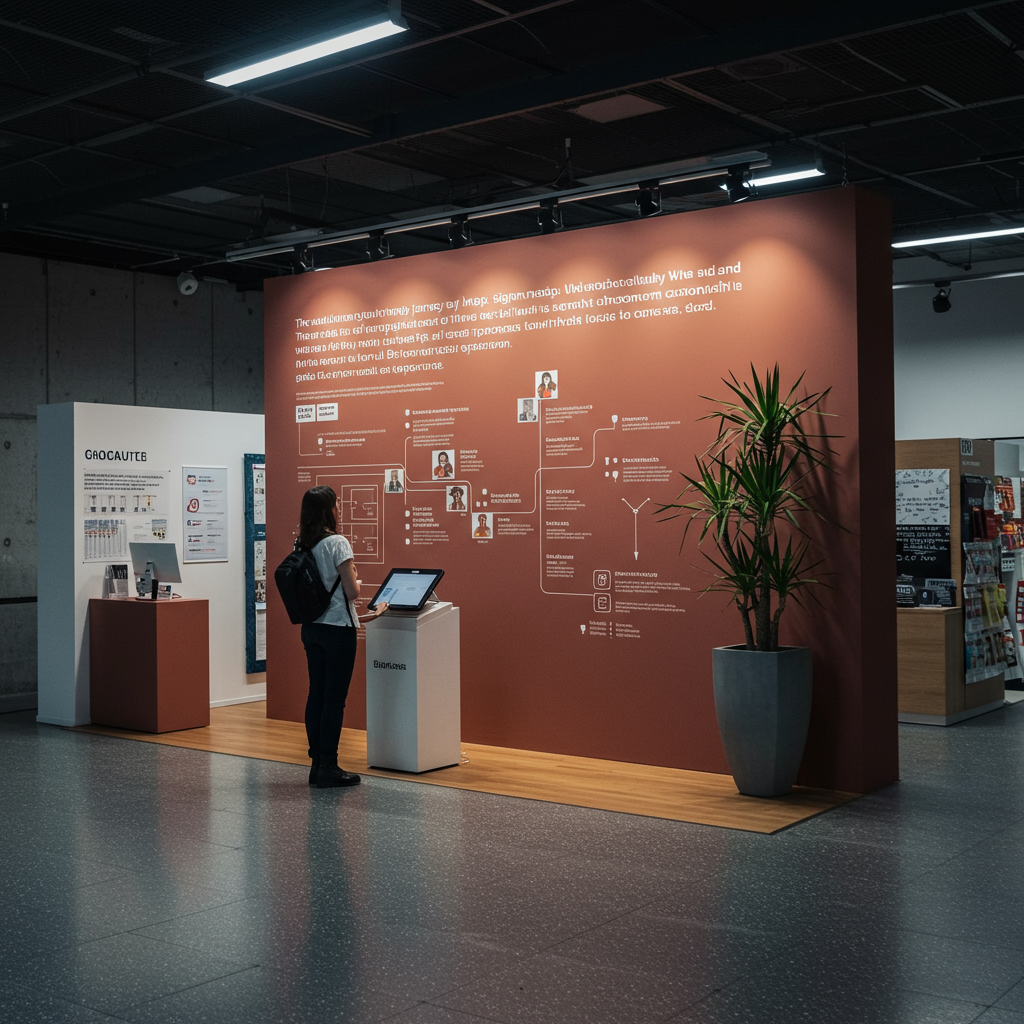
Our training philosophy is built on empowerment, not just instruction. We equip frontline staff with the skills, knowledge, and confidence to be proactive problem-solvers and brand champions. Our modules are practical, interactive, and tailored to the specific challenges and opportunities identified in the audience journey map.
- Module 1: The Psychology of the Guest Experience. Understanding audience needs, managing expectations, and reading non-verbal cues.
- Module 2: Mastering Critical Touchpoints. In-depth training on handling key moments like first entry, information requests, queue management, and final exit.
- Module 3: Brand Ambassadorship in Action. Translating brand values into tangible behaviors, tone of voice, and appearance.
- Module 4: Proactive Problem-Solving & Service Recovery. A framework for identifying potential issues before they escalate and techniques for turning a negative situation into a positive one.
- Module 5: Creating Memorable Micro-Moments. Training on how to spot opportunities for small, personalized gestures that create a lasting emotional impact.
- Module 6: Technology as an Enabler. Using tools like tablets, apps, and communication devices to provide faster and more accurate service.
Methodology
Our training methodology is highly experiential. We use a “Learn, Practice, Apply” model. Sessions are dominated by role-playing real-world scenarios, group problem-solving exercises, and on-site walkthroughs. Performance is evaluated using a detailed behavioral rubric, assessing skills like active listening, empathy, and clarity of communication. Graduates of our advanced programs receive a certification and are eligible for inclusion in our curated talent pool, which we connect with premier venues and event organizers seeking top-tier guest experience professionals. We expect our training to result in a measurable increase in positive staff mentions in post-event surveys by at least 30% and a decrease in incident resolution time by 25%.
Operational processes and quality standards
From request to execution
- Initial Request & Scoping: Client submits a request. We schedule a deep-dive call to understand their audience, objectives, and known pain points. Deliverable: A tailored project proposal with clear scope, timeline, and pricing.
- Diagnostic & Proposal: Upon approval, we conduct the on-site audit and data collection. Deliverable: A comprehensive Diagnostic Report and the first draft of the Audience Journey Map, presented to the client for feedback. Acceptance criteria: Client confirms the map accurately reflects their operational reality.
- Pre-Production & Planning: We develop the detailed implementation plan, including final designs for signage, vendor briefs, and staff training curriculum. Deliverable: A complete Production Binder with all specifications. Acceptance criteria: Client sign-off on all creative and logistical elements.
- Execution & Deployment: Our team manages all vendors, oversees installation, and delivers the staff training. Deliverable: A fully deployed experience, ready for the audience. Acceptance criteria: A final pre-event walkthrough with the client to confirm all elements are in place and meet quality standards.
- Live Monitoring & Support: During the event, our team can be on-site to provide real-time support, troubleshoot issues, and gather live feedback. Deliverable: Daily summary reports.
- Closure & Post-Mortem Analysis: We collect all performance data, analyze it against the initial KPIs, and present the final results. Deliverable: A comprehensive ROI Report with actionable recommendations for future improvement. Acceptance criteria: Final report delivered within 14 days of the event’s conclusion.
Quality control
- Roles: Each project has a dedicated Project Lead as the single point of contact. A separate Quality Assurance (QA) Manager, not involved in the day-to-day execution, conducts independent audits at key milestones.
- Escalation: A clear three-tier escalation path is defined for any issues: On-site Team Lead -> Project Lead -> Account Director, with pre-defined response times for each level.
- Indicators of Acceptance: No signage can be installed with typographical errors. All digital displays must have a 99.9% uptime SLA. All trained staff must achieve a minimum score on the final role-play assessment.
- SLAs: Critical wayfinding signage must be installed and verified 48 hours before the event starts. All staff-related queries must be acknowledged within 15 minutes and resolved within one hour.
| Phase | Deliverables | Control indicators | Risks and mitigation |
|---|---|---|---|
| Diagnostic | Journey Map Draft | Client validation survey (score > 8/10); >95% of touchpoints identified. | Risk: Misinterpreting audience needs. Mitigation: Triangulate data from surveys, interviews, and direct observation. |
| Pre-Production | Final Signage Designs; Training Manual | Zero critical errors in proofs; Training content approved by client’s HR/Ops team. | Risk: Supplier delays. Mitigation: Build buffer time into the schedule; have pre-vetted backup suppliers. |
| Execution | Installed signage; Trained staff | 100% of elements installed per plan; 100% of staff complete training. QA audit score > 98%. | Risk: On-site installation issues (e.g., access). Mitigation: Conduct detailed site surveys; have an on-site ‘fix-it’ kit. |
| Closure | Final ROI Report | Data accuracy verified; Report delivered on time. | Risk: Inconclusive data. Mitigation: Set up data collection methods from the start to ensure statistical significance. |
Cases and application scenarios
Case 1: Reimagining the Fan Journey at a 60,000-Capacity Music Festival
A major multi-day music festival faced declining fan satisfaction scores, primarily linked to extreme congestion, long queue times for services, and a general sense of chaotic navigation. Their NPS was hovering at a low +10. We were brought in to overhaul the entire audience journey. Our audit identified critical pain points at the entrance security check, restroom facilities, and main bar areas. Our solution was multi-faceted. We designed a clear, colour-coded wayfinding system that divided the festival grounds into distinct zones, with large-scale landmarks visible from afar. We worked with operations to redesign the entrance queuing system into a serpentine layout with pre-screening, which increased throughput by 35%. For the staff, we created a specialized “Ranger” team—highly mobile, trained in de-escalation, and equipped with tablets showing real-time queue lengths at all key services. A key micro-moment we introduced was the “Hydration Station” team, who proactively offered water to people in queues on hot days. After a six-month implementation period, the results were transformative. Average queue time for beverages was reduced from 25 minutes to under 8 minutes. Navigation-related negative social media mentions dropped by 70%. Most importantly, the festival’s NPS for the following year jumped to +45, and attendance retention increased by 18%, representing a significant ROI.
Case 2: Enhancing the Attendee Experience at a Global Tech Conference
A B2B technology conference with 15,000 attendees struggled with engagement and flow. Attendees reported feeling overwhelmed by the schedule, had difficulty finding the correct breakout rooms, and networking felt forced and unproductive. The goal was to create a journey that felt personalized and fostered genuine connection. We mapped several key attendee personas, including “The Networker,” “The Learner,” and “The Buyer.” For “The Learner,” we used the conference app to create personalized schedules and push notifications for session starts, supported by dynamic digital signage outside each room displaying the current and next session. For “The Networker,” we transformed generic empty spaces into themed “Collaboration Pods” with comfortable seating, charging stations, and ice-breaker questions on the tables. The most crucial staff intervention was training “Session Concierges.” Instead of just scanning badges, they were trained to greet attendees, briefly explain the session’s value proposition, and facilitate introductions between attendees with similar interests post-session. This focus on human-centric **audience journey map elements** led to a 30% increase in breakout session attendance and a 50% increase in positive mentions of “networking opportunities” in feedback forms. The conference’s lead generation per sponsor also increased by 22%.
Case 3: Launching a Luxury Retail Flagship Store
A high-end fashion brand was opening a new flagship store and wanted to ensure the physical experience was as premium as its products. The objective was to increase dwell time, encourage exploration across all floors, and create a memorable, shareable experience. Our journey map focused on the “Journey of Discovery.” We designed subtle, elegant signage using premium materials that complemented the store’s aesthetic rather than cluttering it. The staff were trained not as salespeople, but as “Brand Stylists.” Their training focused on storytelling, the craftsmanship behind the products, and offering personalized styling advice without pressure to buy. We identified several micro-moments: a complimentary espresso upon arrival, personalized recommendations loaded onto interactive mirrors in the changing rooms, and a beautifully packaged small gift (e.g., a silk cleaning cloth) with every purchase. The checkout process was redesigned to be a seated, relaxed consultation. The results exceeded expectations. The average dwell time in the store was 45 minutes, 20 minutes longer than their other locations. The average transaction value was 25% higher. The store generated over $150,000 in earned media value in its first month from customers sharing photos of the experience on social media.
Case 4: Improving Visitor Flow and Engagement in a Science Museum
A popular science museum was a victim of its own success, suffering from severe visitor congestion in its main hall, while many upper-floor exhibits were under-utilized. Visitor feedback indicated frustration and a feeling of having “missed things.” Our audit, using observational tracking and temporary heat maps, confirmed that over 70% of visitors never made it to the third floor. The journey map we developed was called the “Path of Curiosity.” We completely redesigned the entrance hall signage, replacing a list of exhibits with a “Choose Your Adventure” theme, guiding visitors to different starting points based on their interests (e.g., “Explore Space,” “Discover the Deep Sea”). This immediately dispersed the crowds. Staff, previously static guards, were retrained as “Science Explainers” and positioned at key transition points to engage visitors with intriguing questions about the upcoming exhibit. We introduced micro-moments like interactive floor projections that guided children along paths and “discovery drawers” in quiet corners with hands-on artifacts. The impact was immediate. Our post-implementation analysis showed a much more even distribution of visitors across all floors, with the third floor seeing a 150% increase in traffic. The average visitor satisfaction score for “ease of navigation” rose from 6.2/10 to 9.1/10.
Step-by-step guides and templates
Guide 1: How to Conduct a “Walk-the-Path” Touchpoint Audit
- Define Your Personas: Create 2-3 detailed personas representing your typical audience members. Give them names, goals, and potential frustrations (e.g., “Anna, a first-time festival-goer, is anxious about finding her friends”).
- Establish the Journey Stages: Break the experience down into logical phases. A typical model is: Pre-Arrival, Arrival, On-Site Experience, Departure, and Post-Experience.
- Prepare Your Audit Kit: You’ll need a smartphone for photos/videos, a notepad or tablet for notes, a watch for timing activities (e.g., queue time), and a copy of your persona profiles.
- Embody the Persona: Choose one persona and physically walk the entire journey from their perspective. Start from where they would (e.g., the car park or public transport stop).
- Document Every Single Touchpoint: A touchpoint is any point of interaction. This includes every sign, every staff member you see, every queue, every door, every digital screen. Take photos of everything.
- Analyze Each Touchpoint: For each touchpoint, ask: What is the user’s goal here? Is the information clear? How does this make me feel (confused, confident, frustrated, delighted)? What could go wrong here?
- Time Critical Processes: Measure how long it takes to park, get through security, wait for food, or find a restroom.
- Synthesise Your Findings: Group your notes by journey stage. Use sticky notes on a wall to create a visual map. Use one color for positive touchpoints, another for negative (pain points), and a third for neutral ones.
- Identify Moments of Truth: Pinpoint the 3-5 touchpoints that have the biggest emotional impact and are most critical to the journey’s success. These are your priorities for improvement.
- Repeat for Other People: A parent with a stroller will have a very different journey than a VIP guest. Repeat the audit for each key person to uncover different pain points.
Guide 2: A 10-Point Checklist for High-Impact Event Signage
- Hierarchy: Is there a clear visual hierarchy? Use size, color, and placement to distinguish between primary directional signs (e.g., “Main Stage”), secondary signs (e.g., “Restrooms”), and tertiary signs (e.g., individual booth numbers).
- Placement at Decision Points: Are signs located *before* a person has to make a turn or decision, not after? Walk the path and check every intersection.
- Legibility: Can the sign be read from a realistic distance? Use a high-contrast, sans-serif font. The rule of thumb is 1 inch of letter height for every 30-40 feet of viewing distance.
- Clarity over Clutter: Does the sign communicate one clear message, or is it crowded with competing information? Avoid “sign-salad.” Use universally understood icons alongside text.
- Brand Consistency: Does the signage use the event’s fonts, colors, and logo consistently, reinforcing brand identity and creating a cohesive feel?
- Accessibility: Does the signage meet accessibility standards? This includes appropriate mounting height for wheelchair users and using non-glare materials. Consider adding Braille where appropriate.
- Durability and Weatherproofing: If outdoors, is the material durable enough to withstand wind and rain for the event’s duration?
- Illumination: For evening events, is the signage adequately lit, either internally or by external spotlights, without creating glare?
- Removal of Obsolete Information: In a multi-day event, is there a process for covering or removing signs that are no longer relevant (e.g., for a session that has ended)?
- The Exit Path: Is the path to all exits as clearly marked as the path to the main attractions? A smooth, stress-free exit is crucial for a positive final impression.
Guide 3: Template for a 5-Minute Pre-Shift Staff Huddle
- The “Big Picture” (1 min): “Welcome team! Today’s goal is to ensure a smooth final day for the conference. Our focus is on making departure seamless. We want everyone to leave feeling positive and already excited for next year.”
- Know Our Guests (1 min): “Today, we’ll see a lot of attendees with luggage. They’ll be anxious about catching flights. Be extra proactive in asking if they need help with transport information or luggage storage.”
- Today’s “Moments of Truth” (1 min): “The two critical touchpoints are the keynote session this morning and the main exit from 3 PM onwards. At the keynote, let’s manage entry efficiently. At the exit, let’s be visible, smile, and thank everyone personally for coming.”
- Micro-Moment Mission (1 min): “Our mission today is ‘Proactive Farewell.’ Instead of waiting to be asked, if you see someone looking at their watch, ask them, ‘Do you need help checking transport times?’ A small gesture can make a huge difference to their travel stress.”
- One Team, One Goal (1 min): “Any questions? Remember, communicate on channel 3. Let’s work together to give our guests an amazing final day. Let’s go!”
Internal and external resources (without links)
Internal resources
- Audience Persona Development Template
- Touchpoint Audit & Scoring Checklist
- Standardised Staff Training Manual for Guest Experience
- KPI Reporting Framework & Dashboard Template
- Signage Design & Placement Best Practices Guide
- Service Recovery Protocol (LAST Model: Listen, Apologise, Solve, Thank)
External reference resources
- The Americans with Disabilities Act (ADA) Standards for Accessible Design
- ISO 20121: Event sustainability management systems
- Nielsen Norman Group’s Articles on Usability and User Experience
- “The Design of Everyday Things” by Don Norman
- “Uncommon Service: How to Win by Putting Customers at the Core of Your Business” by Frances Frei and Anne Morriss
- Bain & Company resources on Net Promoter Score (NPS) methodology
Frequently asked questions
What is the difference between a Customer Journey Map and an Audience Journey Map?
While the principles are nearly identical, the terms are often used in different contexts. A “Customer Journey Map” typically focuses on a commercial path involving evaluation, purchase, and post-sale support. An “Audience Journey Map” is more commonly applied to events, performances, or exhibits, where the primary goal might be engagement, entertainment, or learning rather than a direct sale. However, both are tools to understand and improve an individual’s experience across multiple touchpoints.
How much does a professional audience journey mapping process cost?
The cost varies significantly based on the scale and complexity of the venue or event. A simple audit and report for a small, one-day event might cost a few thousand dollars. A comprehensive, multi-month project for a large-scale venue like an airport or stadium, involving extensive data collection, strategy, and implementation oversight, can run into six figures. The key is to view it as an investment, as the ROI from increased satisfaction, loyalty, and sales often far exceeds the initial cost.
Can my organisation create an audience journey map ourselves?
Yes, a basic journey map can be a very valuable internal exercise using our “Walk-the-Path” guide. It’s a great way to build empathy and identify obvious pain points. However, a professional service adds value through objectivity (avoiding internal biases), specialised data collection tools (like heat mapping or advanced survey software), industry benchmarks, and deep expertise in translating insights into actionable design and operational solutions.
How do you measure the ROI of a better “micro-moment”?
Measuring the direct ROI of a single micro-moment is challenging, so we use a combination of direct and proxy metrics. We can measure direct impact through A/B testing (e.g., does a proactive greeting increase the likelihood of a purchase?). More often, we measure the collective impact. We correlate an increase in positive micro-moments with higher-level business outcomes like overall NPS scores, higher customer lifetime value, increased positive social media mentions (earned media), and a greater “likelihood to recommend,” all of which have a proven link to long-term revenue growth.
What are the most commonly overlooked audience journey map elements?
The two most overlooked areas are the “digital-to-physical handoff” and the “exit experience.” The handoff includes things like whether the parking information on the website matches the actual signage on-site. The exit experience is crucial because it’s the final impression. A long wait to exit a car park or a lack of clear directions to public transport can sour an otherwise wonderful experience. A great journey map pays as much attention to how people leave as to how they arrive.
Conclusion and call to action
An audience journey map is more than just a diagram; it is a strategic blueprint for operational excellence and emotional connection. By shifting focus to the tangible, physical aspects of an experience, organisations can create environments that are not only efficient but also deeply engaging. The deliberate and data-informed design of the core audience journey map elements—clear and intuitive signage, well-trained and empowered staff, and thoughtfully curated micro-moments—is the most reliable path to exceeding audience expectations. As demonstrated in our cases, this approach delivers substantial, measurable results: NPS scores can increase by over 30 points, operational bottlenecks can be eased by over 50%, and engagement can climb by double-digit percentages. The path to transforming your venue begins with a single step. We encourage you to take the first one: conduct a simple “walk-the-path” audit of one critical journey in your own environment. Observe, listen, and see your space through your audience’s eyes. That simple act of empathy is the foundation of every great experience.
Glossary
- Touchpoint
- Any point of interaction or contact between an individual and a brand, venue, or event during their journey. This can be physical (a sign), human (a staff member), or digital (an app notification).
- Micro-moment
- A brief, high-impact interaction at a touchpoint that is designed to be particularly helpful, engaging, or emotionally resonant. It’s an opportunity to exceed expectations in a small but memorable way.
- Wayfinding
- The system of informational and design cues (including signage, maps, colour-coding, and architectural features) that helps people navigate a physical environment from point to point.
- Net Promoter Score (NPS)
- A widely used metric for measuring customer or audience loyalty and satisfaction. It is calculated based on the answer to a single question: “On a scale of 0-10, how likely are you to recommend this event/venue to a friend or colleague?”
- Persona
- A semi-fictional character created to represent a key audience segment. Personas are based on research and are used to help designers and strategists empathise with the needs, goals, and pain points of the end-users.
- Heat Mapping
- A data visualisation technique that uses colour to show where people spend the most time or where activity is concentrated in a physical space. Red indicates high activity, while blue or green indicates low activity.
Internal links
- Click here👉 https://us.esinev.education/diplomas/
- Click here👉 https://us.esinev.education/masters/
External links
- Princeton University: https://www.princeton.edu
- Massachusetts Institute of Technology (MIT): https://www.mit.edu
- Harvard University: https://www.harvard.edu
- Stanford University: https://www.stanford.edu
- University of Pennsylvania: https://www.upenn.edu