Diploma in Event Streaming and Live Broadcasting
The Diploma in Event Streaming and Live Broadcasting is a 100% online specialized diploma (450 hours, 36 weeks) for anyone who wants to build a career in event streaming and live broadcasting. You learn through practical modules and real case studies, guided by tutors with industry experience, and finish with a final project.
New intake every two months · Interest-free payment plans · ESINEV certificate of completion (non-degree).
Overview
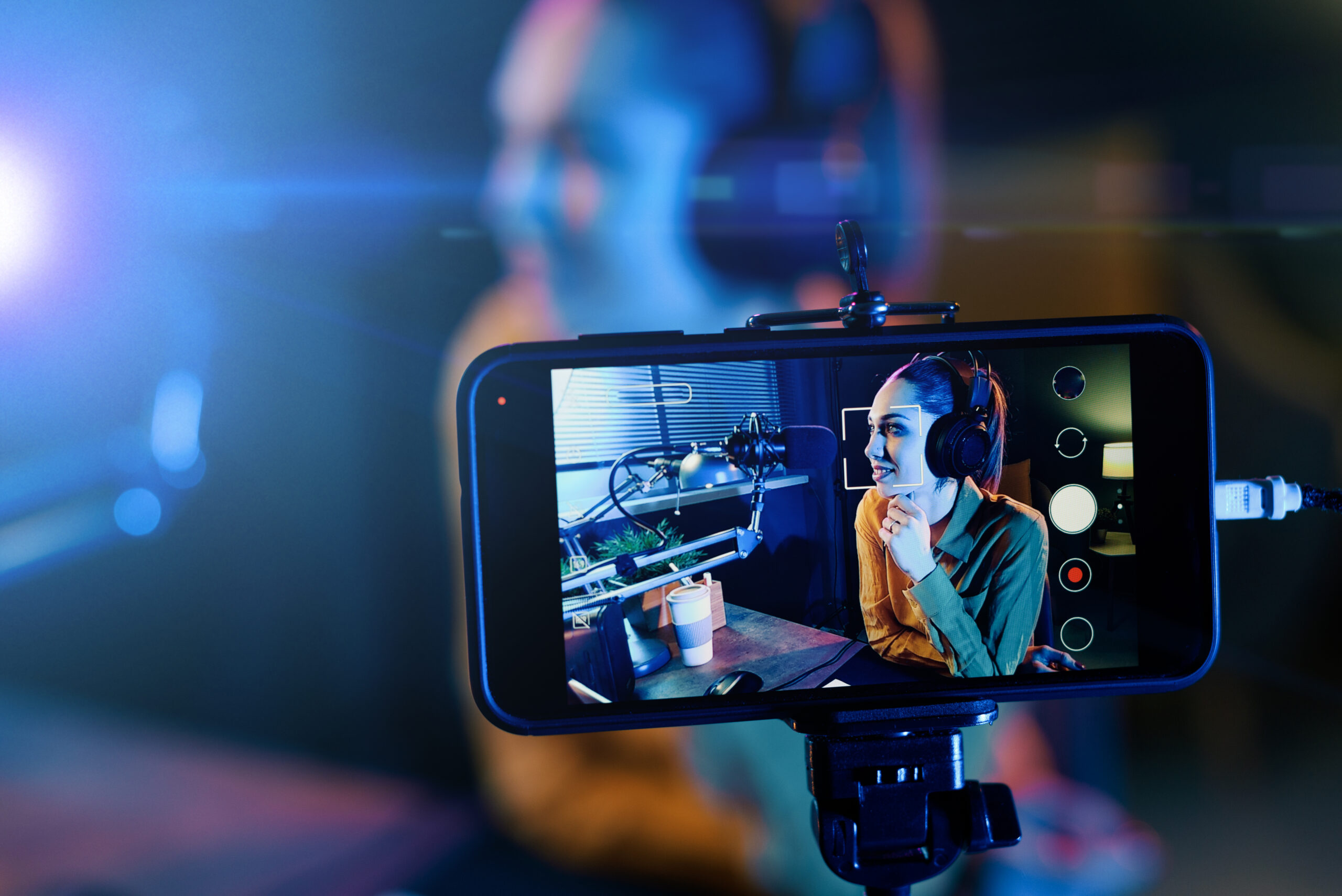
Our Diploma in Streaming and Live Broadcasting of Events is a specialized educational program that will provide you with the essential skills to carry out real-time broadcasts of online events. This diploma focuses on giving you a deep understanding of the technologies and techniques necessary to broadcast live events to a global audience, whether conferences, concerts, press conferences or special ceremonies.
Your learning path
Curriculum
A 450-hour program in 8 modules that equips you to plan, produce and broadcast live streams of in-person, hybrid and virtual events.
Submodule 1.1. Live streaming in the event strategy
Define the role of the broadcast in in-person, hybrid and virtual events.
Submodule 1.2. The technical chain of a broadcast
Follow capture, production, encoding, distribution and playback.
Submodule 1.3. Digital video concepts
Understand resolution, frames per second, codecs and bitrate.
Submodule 1.4. Streaming protocols
Compare RTMP, SRT, HLS and WebRTC by latency and reliability.
Submodule 1.5. Types of broadcast event
Distinguish webinars, hybrid conferences, concerts and online launches.
Submodule 1.6. Streaming crew roles
Understand the roles of producer, director, streaming engineer and moderator.
Submodule 1.7. Technical broadcast brief
Capture the client's objectives, audience, platforms and requirements.
Submodule 2.1. Cameras for live production
Choose camcorders, PTZ cameras or mirrorless cameras for the type of event.
Submodule 2.2. Planning camera positions
Position cameras to cover the stage, speakers and audience.
Submodule 2.3. Lighting for broadcast
Light speakers and the studio set at camera-friendly levels.
Submodule 2.4. Audio for streaming
Get a clean, independent mix for the broadcast.
Submodule 2.5. Capturing presentations and sources
Integrate laptops, slides and pre-recorded videos into the feed.
Submodule 2.6. Virtual sets and green screen
Build virtual sets with green screen and compositing software.
Submodule 2.7. Connecting remote speakers
Bring in remote guests with good quality and low latency.
Submodule 3.1. Hardware and software switchers
Operate switchers such as ATEM, vMix or OBS in real productions.
Submodule 3.2. Broadcast run sheet
Prepare the minute-by-minute run sheet with sources, captions and videos.
Submodule 3.3. Live graphics and captions
Design and insert captions, scoreboards and animated graphics.
Submodule 3.4. Multi-camera directing
Select shots and pacing according to the content.
Submodule 3.5. Video playback and stingers
Roll pre-recorded pieces, countdowns and branded transitions.
Submodule 3.6. Internal crew communication
Coordinate the technical crew with intercom and cue protocols.
Submodule 3.7. Remote and cloud production
Produce live shows with distributed teams and cloud switchers.
Submodule 4.1. Hardware and software encoders
Configure encoders and output profiles for each platform.
Submodule 4.2. Internet connection requirements
Calculate bandwidth and check the venue network.
Submodule 4.3. Redundancy and backup connections
Implement bonding, 4G/5G and alternative streaming routes.
Submodule 4.4. Public streaming platforms
Stream to YouTube, LinkedIn, Facebook and Twitch, taking their specifics into account.
Submodule 4.5. Virtual event platforms
Set up platforms with registration, rooms, networking and access control.
Submodule 4.6. Content delivery networks
Understand the role of CDNs for large audiences.
Submodule 4.7. Simulcasting
Stream to several destinations at once without losing quality.
Submodule 5.1. Designing the viewer experience
Plan duration, pacing and formats designed for the remote audience.
Submodule 5.2. Live interaction
Manage questions, polls and chat to increase participation.
Submodule 5.3. Presenting on camera
Prepare presenters and speakers to speak on camera.
Submodule 5.4. Accessibility in broadcasts
Include captions, interpretation and accessible design.
Submodule 5.5. Multilingual broadcasts
Integrate simultaneous interpretation channels into the stream.
Submodule 5.6. Well-balanced hybrid events
Connect in-person and remote audiences with equivalent experiences.
Submodule 5.7. On-demand content after the live event
Edit and publish the recorded event for later viewing.
Submodule 6.1. Pre-show technical tests
Run connection, streaming and source rehearsals before going live.
Submodule 6.2. Broadcast monitoring
Monitor video quality, audio and stability during the live stream.
Submodule 6.3. Handling live incidents
Apply protocols for signal, audio or connection drops.
Submodule 6.4. Cybersecurity for online events
Protect access, links and platforms against intrusions.
Submodule 6.5. Broadcast and music rights
Manage permissions for content, music and images in the broadcast.
Submodule 6.6. Data protection for online attendees
Comply with regulations on registrations, recordings and user analytics.
Submodule 6.7. Streaming operational checklists
Prepare checklists for setup, broadcast and close.
Submodule 7.1. Broadcast budget
Cost equipment, crew, connectivity and the streaming platform.
Submodule 7.2. Contracting streaming suppliers
Select technical suppliers and platforms to fit your needs.
Submodule 7.3. Audience and engagement metrics
Analyze unique viewers, watch time and audience peaks.
Submodule 7.4. Reports for clients and sponsors
Present broadcast results with clear data and conclusions.
Submodule 7.5. Monetization models
Assess pay-per-view, sponsorship, subscription and virtual tickets.
Submodule 7.6. Integrating sponsors into the live stream
Feature brands and sponsors naturally within the broadcast.
Submodule 7.7. Environmental impact of online events
Compare carbon footprints and apply good digital practices.
Submodule 8.1. Defining the event and its audience
Set the project's objectives, audience and platforms.
Submodule 8.2. Technical design of the broadcast
Specify cameras, audio, switcher, encoder and connectivity.
Submodule 8.3. Project run sheet and graphics
Prepare the full run sheet and the broadcast's graphic style.
Submodule 8.4. Contingency plan
Anticipate technical failures and define responses and backups.
Submodule 8.5. Interaction and accessibility plan
Design participation activities and accessibility measures.
Submodule 8.6. Budget and target metrics
Finalize costs and set the broadcast's success indicators.
Submodule 8.7. Simulation and project defense
Run a test broadcast and defend the decisions made.
Plan and simulate the live broadcast of a hybrid event, including the technical design, run sheet, contingency plan, budget and target metrics.
How you learn
Virtual campus available 24/7 on any device.
Personal follow-up and feedback on your work.
Flexible schedule that fits around your job.
Apply what you learn to a real events case.
Nearby You will get the support of our highly trained teachers, who will expedite your academic development, as well as the guidance of a backup mentor to assist you in achieving your goals.
Practical Our academic virtual space will be your main educational platform, where you will find all the programs you will take. In addition, you will have access to the electronic library, an online society to interact with other trainees and support accessible at all times.
Career paths
• Media and communication companies
• Corporate event organizers
• Educational institutions
• Start your own live streaming business
Admissions
- Request information
Leave your details and an adviser will contact you.
- Guidance call
We review your profile and career goals.
- Enrolment and access
Secure your place and get access to the campus.
Fees & payment
Indicative instalment. Please confirm payment terms with the admissions team.
At Esinev Education in collaboration with ISEIE Innovation School, we are dedicated to ensuring your future by offering you a wide range of scholarships and financial aid so that you can receive the best education without obstacles. Our scholarships and grants are available to everyone, regardless of your profile, as we have various options to adapt to your personal circumstances. Explore all the information about our scholarships and aid, and choose the one that best suits your needs to ensure your academic training.
Academic excellence The scholarship for Students with an outstanding academic record is awarded to those students who have demonstrated outstanding performance in their studies. This scholarship recognizes and rewards the effort, dedication and academic achievements of outstanding students.
Scholarship for people over 45 The scholarship for People over 45 is a unique opportunity designed specifically for people who want to resume their higher studies after having passed a certain stage of their life. This scholarship is aimed at those individuals who, despite not having had the opportunity to obtain a university education at the time, wish to acquire new knowledge and skills to advance their career or explore new professional horizons.
Scholarship for those under 25 The scholarship for young people under 25 is designed to support this specific age group in their pursuit of higher education. This scholarship provides opportunities and financial resources to help young people overcome economic barriers and access quality education. We value the potential and commitment of young people in their academic and professional development, which is why this scholarship is awarded to those who demonstrate outstanding academic performance, as well as strong motivation and dedication to achieve their educational goals. We are committed to supporting talented young people and providing them with the necessary tools so they can make the most of their potential and achieve a successful future.
Woman Leader Scholarship The “Women and Leadership” scholarship is designed to support and empower women who demonstrate strong leadership potential in their fields of study. This scholarship offers the opportunity to receive a quality education and develop leadership skills to help women excel in their careers and challenge gender stereotypes.
Entrepreneurship Scholarships The scholarship is aimed at those people who are working on projects or ventures that seek to generate a positive impact on the world. It is designed to support those individuals committed to making the world a better place through their initiatives.
Large Family The scholarship is specially designed for those students who belong to a large family, recognizing and supporting the special circumstances they face in terms of financial resources and family responsibilities.
Self-Employed Scholarship The “Self-Employed Scholarship” is financial aid designed to support entrepreneurs and self-employed workers in their professional development and business growth. This scholarship offers financial support to cover expenses related to the training, advice and resources necessary to strengthen your business skills and competencies.
Job integration scholarship (for unemployed) The job integration scholarship is specifically designed to help unemployed people reintegrate into the labor market. This scholarship provides additional financial support and resources to ease the transition to new employment.
Frequently asked questions
Is this an official degree?
On completion you receive an ESINEV certificate. It is not an official degree; recognition can be assessed depending on the programme you complete and local regulations.
How long is it and how many hours?
Duration: 36 weeks. Study load: 450 hours, designed to fit around your work.
Is it taught online?
Yes. It is 100% online, with a virtual campus, downloadable materials and tutoring from industry professionals.
Can I pay in instalments?
Yes. Payment: 5 months. The admissions team will confirm the terms.
When can I start?
New intakes open every two months. Request information to secure a place in the next one.
Shall we talk about your future in events?
Leave your details and an adviser will walk you through the programme, dates and payment options.
WhatsApp