
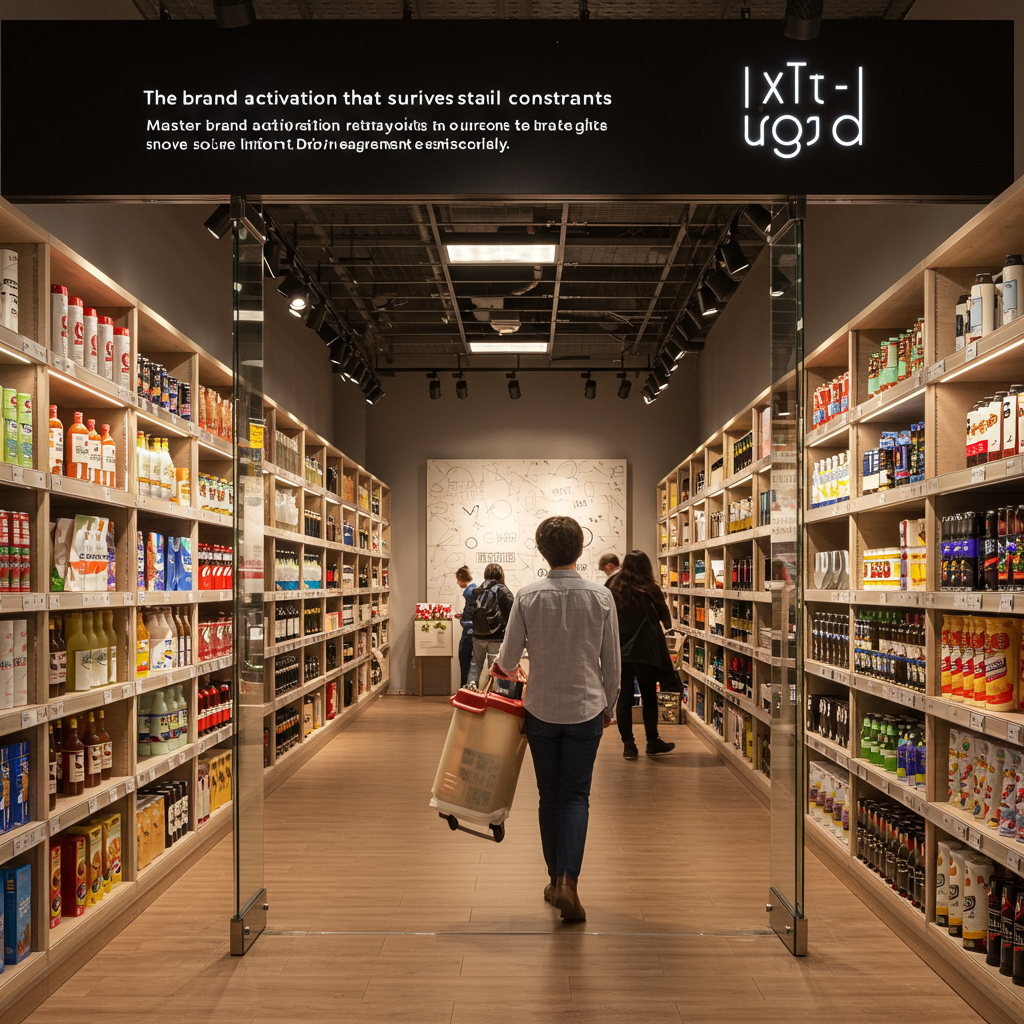
In the high-pressure world of modern retail, brands face a trifecta of constraints: limited floor space, shrinking marketing budgets, and complex logistical hurdles. This article provides a comprehensive framework for developing and executing brand activation retail strategies that not only survive but thrive under these pressures. We will explore how to transform limitations into opportunities for creativity and efficiency. By focusing on measurable outcomes such as a >15% sales uplift, a Net Promoter Score (NPS) increase of 10 points, and a customer engagement time exceeding 90 seconds, this guide is designed for marketing managers, brand strategists, and agency partners. Our core proposition is that the most effective activations are not the biggest or most expensive, but the smartest—leveraging phygital integration, modular design, and data-driven insights to create memorable experiences that deliver a clear return on investment (ROI).
Introduction
The contemporary retail landscape is a battlefield of constraints. Escalating real estate costs mean less floor space for experiential marketing, while fierce competition and economic uncertainty put immense pressure on budgets. In this environment, traditional, large-scale brand activations often prove impractical or financially unviable. This is where a new paradigm of agile, intelligent, and highly measurable brand activation retail strategies becomes essential. These strategies are not about doing more with less, but about doing things differently: leveraging technology, modularity, and human interaction to create impactful moments in limited spaces and with constrained resources. The opportunity lies in turning these limitations into a creative catalyst, forcing a focus on what truly matters: a genuine, memorable connection with the consumer that translates directly into business results.
Our methodology is built on a “measure-what-matters” principle. We move beyond vanity metrics to focus on tangible Key Performance Indicators (KPIs) that align with core business objectives. Success is quantified through a balanced scorecard approach, including: footfall conversion (percentage of store visitors who engage with the activation), dwell time (average duration of interaction), lead generation (qualified contacts captured), sales uplift (direct increase in product sales during and after the campaign), and customer sentiment (measured via Net Promoter Score or post-interaction surveys). This data-centric approach ensures that every element of the activation is justifiable, optimizeable, and contributes to a demonstrable return on investment, proving that even the most constrained activation can deliver outsized results.
Vision, values and proposal
Focus on results and measurement
Our vision is to empower brands to create meaningful connections with their customers in any retail environment, regardless of physical or financial limitations. We operate on a foundation of three core values: pragmatic creativity, radical efficiency, and empirical validation. We apply the 80/20 principle (Pareto principle) to every project: identifying the 20% of activation elements that will generate 80% of the desired impact. This forces a ruthless prioritization, cutting extraneous “nice-to-have” features in favor of high-impact, customer-centric interactions. Our technical standards are rigorous, ensuring that all physical builds comply with retail safety regulations (e.g., ADA compliance in the US, relevant fire safety codes) and digital components meet data privacy standards like GDPR. Our proposal is not just to build an activation, but to deliver a fully accountable marketing asset.
- Value 1: Pragmatic Creativity. We believe constraints are the mother of invention. Our solutions are innovative but always feasible within the client’s budget, timeline, and spatial limitations. Decision criteria are based on a matrix scoring ideas against impact, cost, and ease of execution.
- Value 2: Radical Efficiency. We obsess over optimizing logistics, materials, and staffing. We champion modular, reusable kits that reduce waste, transportation costs, and setup times. A typical goal is to reduce setup/teardown time by 30% compared to traditional builds.
- Value 3: Empirical Validation. Every activation is a hypothesis to be tested. We build in measurement from day one, using a mix of technology (people counters, QR code tracking) and human feedback (surveys, observational analysis) to provide a clear, data-backed report on performance. Success is defined by pre-agreed KPIs, not subjective feelings.
Services, profiles and performance
Portfolio and professional profiles
We offer an end-to-end suite of services designed specifically for executing successful brand activation retail strategies within constrained environments. Our portfolio is built on agility and specialization, ensuring that every project is staffed with the right expertise to maximize impact and efficiency.
- Micro-Experiential Design: Creating high-impact activations for footprints under 5 m². This involves vertical design, multi-sensory elements (scent, soundscapes via headphones), and smart tech integration. Key Profile: Experiential Designer with expertise in industrial design and retail psychology.
- Modular Pop-Up Kits: Designing and manufacturing reusable, reconfigurable activation kits that can be adapted for different store layouts and campaign goals. This drastically reduces per-activation costs. Key Profile: Manufacturing Specialist, Logistics Coordinator.
- Phygital Integration: Seamlessly blending physical and digital experiences. This includes AR try-ons, QR code-driven content, and NFC tap points for data capture, bridging the gap between in-store engagement and online conversion. Key Profile: CX/UX Designer, Integration Developer.
- Hyper-Targeted Staffing & Training: Recruiting, training, and managing brand ambassadors who are experts in engaging customers quickly and effectively in high-traffic, low-dwell-time environments. Key Profile: Talent Manager, Corporate Trainer.
- Rapid Prototyping and Testing: Creating low-cost mockups (both physical and virtual) to test concepts and user flow before committing to full production, mitigating risk and optimizing the final design. Key Profile: Prototyping Technician.
Operational process
- Phase 1: Discovery & Strategy (1 week): Deep dive into brand objectives, target audience, budget, and retail partner constraints. KPI: Strategy document signed off with clear, measurable goals (e.g., “Achieve 500 qualified leads per week”).
- Phase 2: Concept & Design (2 weeks): Develop 2-3 creative concepts with detailed budgets and mockups. KPI: Client approval of final concept with a budget deviation of less than 5%.
- Phase 3: Production & Logistics (3-4 weeks): Fabrication of physical components, software development, and logistical planning, including shipping and scheduling. KPI: All components ready for deployment 48 hours before the first activation day.
- Phase 4: Deployment & Execution (Campaign Duration): On-site setup, staff briefing, and live campaign management. KPI: 99% operational uptime for all activation elements.
- Phase 5: Measurement & Reporting (1 week post-campaign): Data analysis, reporting against KPIs, and strategic recommendations for future activations. KPI: Final report delivered within 5 business days of campaign conclusion, detailing ROI.
Tables and examples
| Objective | Indicators (KPIs) | Actions | Expected result |
|---|---|---|---|
| Increase product trial for a new beverage | Samples distributed; Coupon redemption rate; Sales uplift | A compact, mobile sampling cart with a trained brand ambassador and a digital coupon delivered via QR code. | 4,000+ samples distributed over 2 weeks; 15% redemption rate; 20% sales uplift in the specific SKU. |
| Generate qualified leads for a high-value service | Number of qualified leads (GDPR compliant); Cost Per Lead (CPL) | An interactive tablet-based quiz that pre-qualifies customers, placed at a high-traffic point-of-sale. | 250 qualified leads per location; CPL below €30. |
| Educate consumers on a complex product feature | Average dwell time; Post-interaction survey score on comprehension | An Augmented Reality experience triggered by product packaging, demonstrating the feature on the user’s phone. | Average dwell time of 120 seconds; Comprehension score of 4.5/5.0. |
| Boost social media engagement and User-Generated Content (UGC) | # of posts using campaign hashtag; Social reach and impressions | A small, highly “Instagrammable” photo booth with branded digital props and an easy sharing mechanism. | 500+ unique UGC posts; 250,000+ impressions. |
Representation, campaigns and/or production
Professional development and management
The success of any retail activation hinges on flawless execution. Our production and management process is designed to be a well-oiled machine, navigating the complexities of the retail environment with precision and foresight. This begins with rigorous logistical planning, mapping out every step from warehouse to retail floor. We manage all supplier relationships, ensuring materials are sourced for durability and cost-effectiveness. A critical component is navigating the web of retail permits and compliance. We proactively handle submissions for floor plans, electrical requirements, and health and safety documentation to the retail property management, preventing last-minute delays that can derail a campaign. Our execution calendars are meticulously detailed, with clear milestones, dependencies, and owners for every task, all managed through a central project management platform.
- Pre-Release Critical Checklist:
- Documentation: Public liability insurance certificate submitted? Risk Assessment Method Statement (RAMS) approved by store management? Electrical PAT testing certificates for all equipment?
- Logistics: Delivery window confirmed with store receiving dock? On-site storage for packaging materials secured? Specific entry/exit paths for setup crew identified?
- Stock: Is there a clear plan for daily replenishment of samples or products? Is there a backup plan if the primary product SKU goes out of stock in-store?
- Contingency: Backup plan for Wi-Fi failure (e.g., offline-capable software, 4G dongle)? Spare parts kit for key components (e.g., extra tablet, light bulbs)? On-call technician’s contact information readily available to on-site staff?
- Staff: Staff schedules confirmed and shared? Uniforms and briefing packs distributed? Emergency contact tree for the on-site team established?
Content and/or media that converts
Messages, formats and conversions
In a crowded retail space, content must be sharp, instantly understandable, and designed for action. The average shopper’s attention is measured in seconds, so our content strategy prioritizes clarity and a compelling hook. We develop messaging hierarchies that communicate the core value proposition in under five seconds. Calls-to-action (CTAs) are direct and benefit-driven (e.g., “Tap to See Your Style,” not “Learn More”). For digital screens, we conduct rigorous A/B testing on headlines, imagery, and CTA button colors to optimize engagement rates, often seeing a 5–10% uplift in interaction from minor tweaks. The key is to create a frictionless journey from curiosity to conversion. This focus on performance is a hallmark of our brand activation retail strategies, ensuring that content isn’t just creative, but that it actively works to achieve campaign goals.
- Content Production Workflow:
- Creative Briefing (Responsible: Brand Strategist): Define the key message, target audience, and desired action based on the campaign KPIs.
- Writing and Script (Responsible: Copywriter): Draft concise, high-impact copy for all touchpoints (digital screens, signage, brand ambassador scripts). All copy is reviewed for clarity and brevity.
- Visual Design and Storyboarding (Responsible: Designer): Create visual mockups and, for video/interactive content, a storyboard that maps the user journey.
- Asset Production (Responsible: Production Team): Develop all final assets – graphics, videos, AR filters, interactive software – based on the approved designs.
- User Testing (Responsible: CX Specialist): Test the interactive content with a small user group to identify any points of friction or confusion before deployment.
- Delivery and Integration (Responsible: Technical Lead): Deliver final assets in the correct formats and integrate them with the on-site hardware for final testing.
Training and employability
Demand-oriented catalogue
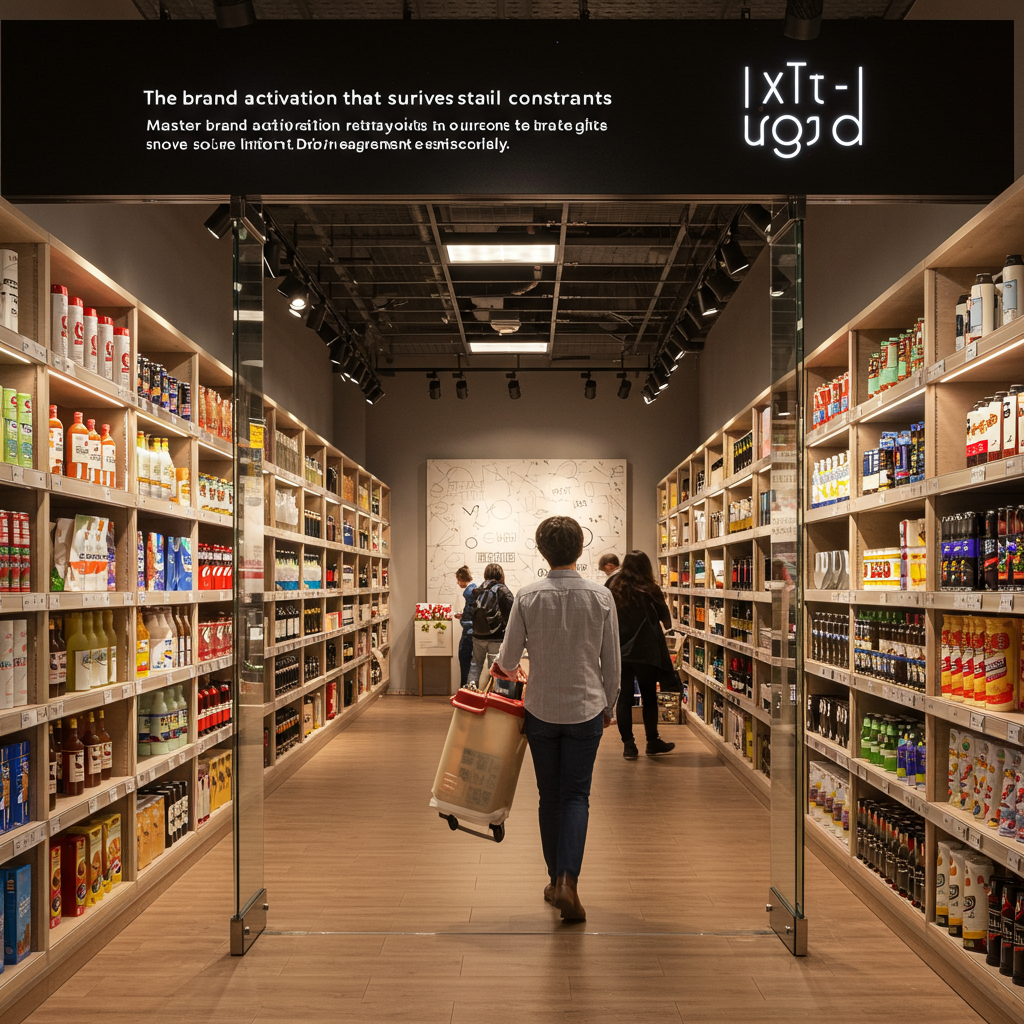
The human element is often the most critical component of a retail activation, yet it is frequently underdeveloped. Our training programs are designed to transform brand ambassadors from passive spokespeople into proactive engagement specialists. We create a pipeline of talent equipped with the specific skills needed to succeed in high-pressure retail environments.
Module 1: The Art of Polite Interruption. Techniques for approaching busy shoppers respectfully and effectively, capturing their attention in less than 10 seconds.
Module 2: Brand Storytelling in 30 Seconds. How to distill the brand’s key message into a concise and persuasive pitch that sparks curiosity.
Module 3: High-Impact Product Demonstration. Methodologies for conducting demonstrations that focus on customer benefits and handle products with confidence and professionalism.
Module 4: Overcoming Objections and Closing. Role-playing common scenarios to manage skepticism and guide the customer. guiding the consumer toward the desired action (purchase, registration, etc.).
Module 5: Technology at the Point of Sale. Hands-on training in the use of activation software, data capture devices, and troubleshooting basic technical issues to maximize uptime.
Module 6: Compliance and Best Practices. Training on retailer regulations, data protection (GDPR/CCPA), and health and safety protocols.
Methodology
Our training methodology is eminently practical (“learning by doing”). Sessions combine short theoretical modules with extensive role-playing exercises that simulate the real store environment. Evaluation is conducted using a detailed rubric that scores candidates in areas such as clarity of communication, confidence, message accuracy, and the ability to interact with technology. Candidates who pass the assessment with a score above 85% are added to our pool of certified ambassadors. The expected result is a field team that not only represents the brand but also actively improves campaign KPIs, with an interaction-to-sale or lead conversion rate 25% higher than that of non-specialized staff.
Operational Processes and Quality Standards
From Request to Execution
- Phase 1: Diagnosis and Briefing (Client → Agency): The client submits the initial request. We conduct a diagnostic session to define objectives (SMART), KPIs, budget, and constraints. Deliverable: Detailed and signed project briefing. Acceptance Criteria: Full alignment with measurable objectives.Phase 2: Strategic Proposal (Agency → Client): We develop a proposal that includes the creative concept, execution plan, detailed budget, and timeline. Deliverable: Proposal document. Acceptance Criteria: Client approval of the concept and budget.
Phase 3: Pre-production and Planning (Agency): The team is assigned, production of materials begins, spaces and staff are booked, and a risk management plan is developed. Deliverable: Complete project plan (Gantt chart), final designs. Acceptance Criteria: Approval of the final designs and prototypes.
Phase 4: Execution and Live Management (Agency): Deployment at the point of sale, staff management, real-time monitoring of KPIs, and incident resolution. Deliverable: Activation and operation, daily performance reports. Acceptance criterion: 98% compliance with the operational plan.
Phase 5: Closure and Analysis (Agency → Client): Decommissioning, data analysis, post-campaign report with ROI and recommendations. Deliverable: Final report and debriefing session. Acceptance Criteria: A report that clearly demonstrates performance against the initial KPIs.
Quality Control
Roles: Each project has a Project Manager (single point of contact), a Creative Lead, and an Operations Coordinator.
Escalation: A clear protocol is established for escalating issues, from field staff to project management, with defined response times (SLA of <1 hour for critical issues).
Acceptance Indicators: Each deliverable has clear acceptance criteria. A physical booth, for example, must pass a 15-point inspection (stability, graphic quality, electrical functionality) before opening to the public.
- SLAs: We guarantee 99% uptime for technological components and 100% of planned staff presence.
- ProposalStrategic proposal, budgetThe budget has a 10% contingency; the concept is executable within the constraints.Risk: The concept exceeds the budget. Mitigation: Modular design with add/drop options to adjust the cost.Pre-productionFinal designs, prototype, logistics planPrototype approval by the client; written confirmation of retailer permissions.Risk: Production delays. Mitigation: Dual suppliers for critical components; Weekly production milestones.Mitigation: Establish reliable tracking methods (e.g., unique discount codes) from the outset.
Phase Key Deliverables Quality Control Indicators Risks and Mitigation Diagnosis Project Briefing KPIs are SMART; the budget is realistic; constraints are documented. Risk: Unclear objectives. Mitigation: Use of a structured briefing checklist and client signature. Execution Live activation, daily reports Surprise quality audits; real-time monitoring of KPIs (e.g., interactions per hour). Risk: Technical failure. Mitigation: On-site spare parts kit; staff trained in basic troubleshooting. Closure Final performance and ROI report Report data correlates with raw data; ROI is clearly calculated. Risk: Inconclusive data.
Application Cases and Scenarios
Case 1: Launching a Luxury Fragrance in a 2 m² Space
A high-end perfume brand needed to launch a new fragrance in a luxury department store, but only had a 2×1 meter space available in a high-traffic area. The constraint was space and the need to convey exclusivity without a large display. Our solution was a “Sensory Capsule.” We designed an elegant and minimalist pod that invited one customer at a time. Inside, ambient noise was eliminated using acoustic panels and headphones that played a sound narrative about the fragrance’s inspiration. A nebulization system atomized the fragrance in a controlled manner while evocative visuals were projected on a small screen. The main KPI was the quality of the interaction, not the quantity. We measured an average experience duration of 180 seconds (200% longer than traditional sampling). 70% of participants requested a personalized sample upon leaving. The result was a 40% increase in sales of the new fragrance in that store during the activation month, at a cost 60% lower than that of a larger, traditional pop-up. The ROI was calculated at 3:1 in the first month.
Case 2: Activation of a Sustainable Food Brand with a Budget of <€8,000</h3
A new organic snack brand wanted to conduct a tasting campaign in a supermarket chain with a total budget of €8,000 for 10 stores over a weekend. The constraints were an extremely tight budget and a ban on promotional structures that would block aisles. The strategy focused on efficiency and the human element. Instead of a booth, we designed an “Interactive Apron” for the brand ambassadors. The apron had pockets for samples, a tablet holder that displayed the origin of the ingredients, and a large QR code on the back. We intensively trained the ambassadors to passionately tell the brand story and offer a digital discount coupon via the QR code. The investment was focused on staff quality and narrative development, not hardware. The KPIs were the tasting-to-purchase conversion rate and the cost per interaction. We achieved a 25% conversion rate (compared to the industry average of 10%) and a cost per interaction of just €0.75. Product sales in those 10 stores tripled during the campaign weekend and remained 50% above baseline in the following weeks.
Case 3: Demonstration of a Tech Gadget to Combat Showrooming
An electronics brand was facing the problem of showrooming: customers would try out their new smart home device in-store, but then buy it online at a lower price. The constraint wasn’t space, but consumer behavior. The goal was to facilitate immediate purchase or attribute the online sale to the in-store interaction. We created a “Phygital Bridge.” The demonstration station allowed customers to interact with the physical product. Next to it, a touchscreen offered advanced tutorials and use cases. The final step of the demonstration guided the user to scan a unique QR code on the screen. This code did two things: 1) It added the product directly to their shopping cart on the brand’s website. 2) A small, exclusive discount (e.g., an extra 5%) was applied as an incentive for trying the product in-store. The KPIs were the QR code scanning rate and the conversion rate of that discount code. 40% of the customers who completed the demo scanned the code. Of those, 60% completed the purchase within 24 hours. This allowed the brand to directly attribute more than 200 online sales to the in-store experience in the first month, justifying the investment in the physical space and strengthening its relationship with the retailer.
Case 4: Awareness Campaign for an NGO in a Shopping Mall
A non-profit organization dedicated to reforestation wanted to attract recurring donors in a shopping mall, with a restriction of “not aggressively soliciting money.” The space was a common, high-traffic area. The solution was an interactive art installation. We built a “Digital Tree” with LED screens as leaves. For every person who signed up for the NGO’s newsletter via tablet (a micro-conversion), a “leaf” on the tree lit up. The goal was to “light up the entire tree” by the end of the day. Gamification and the shared visual objective motivated participation. The ambassadors didn’t ask for money, but rather invited people to “help grow our forest.” The KPIs were the number of sign-ups and the subsequent conversion rate to donors through email marketing. More than 1,500 emails were collected in a single weekend. The subsequent email funnel converted 8% of those leads into recurring donors within the next three months, a result far exceeding their traditional digital fundraising campaigns. This is one of our brand activation retail strategies focused on storytelling and engagement rather than direct transaction.
Step-by-step guides and templates
Guide 1: Planning a Retail Activation on a Budget
- Define a Single Primary Objective (SPO): Is it lead generation, increasing sales of a SKU, or education? Don’t try to do everything. Choose one goal and optimize everything for it.
- Audit Existing Assets: What can the retailer provide? Tables, power outlets, support staff? What marketing materials does the brand have that can be reused?Prioritize Spending on Interaction: Invest more in the quality of your staff or a key interactive element than in the physical structure. A great ambassador with a good product is better than an expensive, empty booth.
Think Modular and Reusable: Design components that can be reused in future activations. Use fabric-printed graphics that can be changed instead of single-use vinyl panels.
Leverage Low-Cost Technology: A simple QR code can link to a rich online experience (videos, AR, tutorials) without the need for expensive in-store hardware. Use consumer tablets instead of commercial displays.
- Negotiate with the Retailer: Propose an activation that also benefits the store (e.g., driving traffic to a quiet section) in exchange for a reduction in space costs.
- Measure Simply but Effectively: Use manual counters, unique discount codes, or short paper surveys if tracking technology is not in the budget. Lo importante es tener datos, aunque sean básicos.
- Checklist Final:
- ¿Está el UOP claramente definido?
- ¿El 70% del presupuesto está destinado a elementos que interactúan directamente con el cliente?
- ¿Al menos el 50% de los componentes físicos son reutilizables?
- ¿Se ha establecido al menos un KPI medible?
Guía 2: Medir el ROI de una Experiencia en Tienda
- Paso 1: Definir los Costes Totales. Suma todo: coste del espacio, producción, tecnología, personal, logística, y gestión. Esto es tu “Inversión” (I).
- Paso 2: Medir el Retorno Directo. Es el más fácil de calcular. Usa códigos de barras específicos de la campaña, cupones o sistemas de TPV para rastrear el aumento de ventas directas del producto promocionado. Esto es el “Beneficio Bruto Directo”.
- Paso 3: Medir el Retorno Indirecto y Atribuido. Usa códigos QR o promocionales únicos para rastrear las ventas online que se originaron en la tienda. Encuesta a los clientes para preguntar sobre su intención de compra futura.
- Paso 4: Valorar los Beneficios Intangibles. Asigna un valor monetario a los leads (basado en tu tasa de conversión de lead a cliente), a las impresiones en redes sociales (basado en el coste de publicidad equivalente) y a la data recopilada.
- Paso 5: Calcular el ROI. La fórmula es: ROI (%) = [(Beneficio Bruto Total – Inversión) / Inversión] x 100. Un ROI positivo significa que la campaña se pagó a sí misma.
Guía 3: Diseñar para un Espacio Pequeño (Menos de 5 m²)
- Piensa en Vertical: Usa la altura. Elementos colgantes, gráficos altos y estanterías delgadas maximizan el impacto visual sin ocupar espacio en el suelo.
- Diseño Modular: Crea un kit de partes que se pueda montar en diferentes configuraciones para adaptarse a espacios ligeramente distintos.
- Todo debe tener una Función Doble: Un mostrador puede albergar almacenamiento. Un panel gráfico puede tener un soporte para una tablet. No hay espacio para elementos puramente decorativos.
- Usa la Luz y los Espejos: Una iluminación inteligente puede hacer que un espacio parezca más grande y atractivo. Los espejos pueden crear una sensación de profundidad y amplitud.
- Digitalizar lo Físico: En lugar de folletos, usa un código QR. En lugar de múltiples productos en exhibición, muestra uno y usa una pantalla para enseñar las variaciones.
- Mantén el Desorden a Cero: Diseña soluciones de almacenamiento ocultas para cajas, abrigos del personal y material de reposición. Un espacio pequeño y desordenado parece aún más pequeño.
Recursos internos y externos (sin enlaces)
Recursos internos
- Plantilla de Briefing de Activación de Marca
- Checklist de Viabilidad Técnica y Logística
- Manual de Formación para Embajadores de Marca
- Plantilla de Informe de Rendimiento Post-Campaña
- Catálogo de Diseños Modulares Pre-aprobados
Recursos externos de referencia
- Normas de la POPAI (Point of Purchase Advertising International) sobre marketing en el punto de venta
- Guías de accesibilidad (como la ADA – Americans with Disabilities Act) para el diseño de espacios públicos
- Reglamento General de Protección de Datos (GDPR) para la captura de datos de clientes en Europa
- Estudios de caso y mejores prácticas de publicaciones como Adweek, Event Marketer y Retail Dive
Preguntas frecuentes
¿Cuál es el plazo típico para una activación de retail?
Depende de la complejidad, pero un plazo saludable es de 6 a 8 semanas desde el briefing inicial hasta el día del lanzamiento. Esto permite una planificación, producción y logística adecuadas sin prisas. Las activaciones más sencillas que utilizan kits existentes pueden desplegarse en 3-4 semanas.
¿Cómo se mide el éxito más allá de las ventas?
Medimos el éxito a través de un enfoque de cuadro de mando integral. Esto incluye métricas de compromiso (tiempo de permanencia, tasa de interacción), métricas de marca (recuerdo de marca, sentimiento medido en encuestas) y métricas de captación (leads cualificados, suscripciones a la newsletter). Estos datos proporcionan una visión holística del valor de la activación.
¿Cuál es el mayor error que cometen las marcas con las activaciones en tienda?
El mayor error es diseñar la experiencia en un vacío, sin considerar el contexto del entorno de retail. Esto lleva a activaciones que son demasiado grandes, demasiado ruidosas, que requieren demasiado tiempo del comprador o que no están integradas con las operaciones de la tienda, lo que genera una mala experiencia tanto para los clientes como para el personal del retailer.
¿Cómo se asegura la consistencia de la marca en múltiples ubicaciones?
La consistencia se logra a través de tres pilares: 1) El uso de kits de activación modulares y estandarizados. 2) Un manual de marca y de ejecución muy detallado. 3) Una formación centralizada y rigurosa para todo el personal, independientemente de su ubicación, asegurando que el mensaje y la calidad de la interacción sean idénticos en todas partes.
¿Qué tan importante es la tecnología en las activaciones con restricciones?
La tecnología es crucial, pero debe ser un habilitador, no el centro de atención. En entornos con restricciones, la mejor tecnología es a menudo la que es invisible y eficiente. Los códigos QR, la tecnología NFC y el software de análisis de datos son más importantes que las grandes pantallas o los robots. Se trata de usar la tecnología para hacer la experiencia más fluida, medible y personal, no necesariamente más espectacular.
Conclusión y llamada a la acción
En el competitivo ecosistema del retail, las limitaciones de espacio, presupuesto y logística no son barreras, sino catalizadores para la innovación. Las activaciones de marca más exitosas han dejado de ser las más grandes para convertirse en las más inteligentes, ágiles y medibles. Al adoptar un enfoque estratégico que prioriza la interacción humana, integra de forma inteligente la tecnología y se obsesiona con la eficiencia operativa, es posible crear experiencias memorables y rentables. La clave del éxito reside en aplicar brand activation retail strategies que conviertan cada restricción en una ventaja creativa. Con un plan bien ejecutado, es posible alcanzar KPIs impresionantes, como un aumento del 25% en la conversión en tienda y un ROI superior a 2:1, demostrando que el verdadero impacto no se mide en metros cuadrados, sino en la calidad de la conexión establecida con el consumidor. Si está listo para transformar sus desafíos de retail en oportunidades de crecimiento, es el momento de repensar su enfoque de activación.
Glosario
- Activación de Marca
- Proceso de dar vida a una marca a través de experiencias e interacciones directas con los consumidores.
- Phygital
- Experiencias que combinan el mundo físico (“physical”) y el digital para crear un viaje de cliente unificado.
- Dwell Time (Tiempo de Permanencia)
- La cantidad de tiempo que un consumidor pasa interactuando con una activación o en un área específica de la tienda.
- KPI (Key Performance Indicator)
- Un indicador clave de rendimiento; una métrica cuantificable utilizada para evaluar el éxito en el logro de los objetivos.
- NPS (Net Promoter Score)
- Una métrica de lealtad del cliente que mide la probabilidad de que un cliente recomiende una marca, producto o servicio.
- ROI (Return on Investment)
- Una métrica de rentabilidad que calcula el beneficio obtenido en relación con el coste de la inversión.
Internal links
- Click here👉 https://us.esinev.education/diplomas/
- Click here👉 https://us.esinev.education/masters/
External links
- Princeton University: https://www.princeton.edu
- Massachusetts Institute of Technology (MIT): https://www.mit.edu
- Harvard University: https://www.harvard.edu
- Stanford University: https://www.stanford.edu
- University of Pennsylvania: https://www.upenn.edu