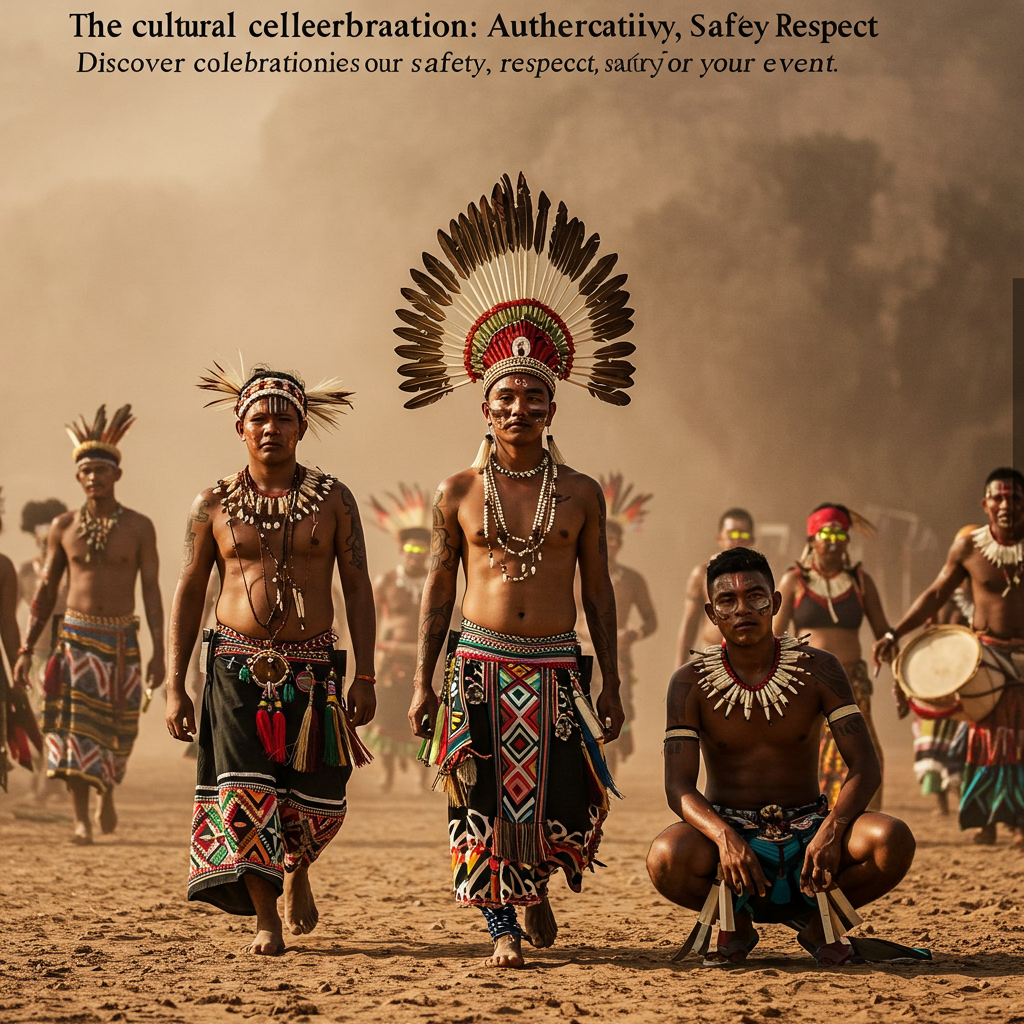
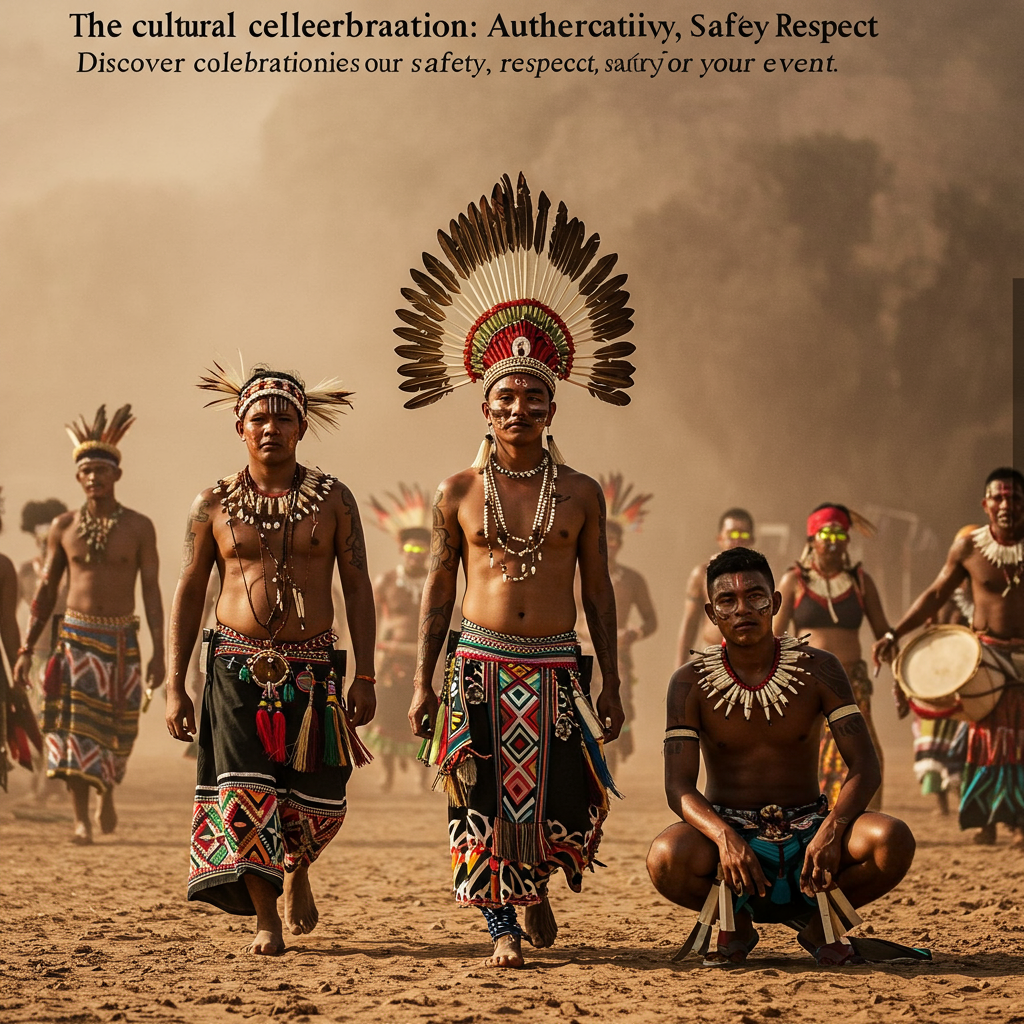
This article provides a comprehensive framework for planning and executing memorable cultural events. It focuses on applying the principles of cultural celebration to balance authenticity, attendee safety, and respect for host communities. Through proven methodologies, step-by-step guides and real-world case studies, event organizers, cultural managers and public policy makers will learn to measure success using key performance indicators (KPIs) such as Net Promoter Score (NPS), community return on investment (ROI) and safety metrics. The value proposition lies in transforming celebrations from mere spectacles into experiences with profound positive impact, strengthening the social fabric and cultural heritage.
Introduction
In an increasingly interconnected world, cultural celebrations act as vital bridges between communities, offering windows into unique traditions, histories, and values. However, their organization carries immense responsibility. A poorly conceived event can trivialize a sacred heritage, create risks for participants, or worse, become an act of cultural appropriation. This is where the adoption of sound principles of cultural celebration becomes indispensable. These principles are not mere suggestions, but a strategic framework that ensures every festival, fair, or commemoration is a source of pride for the host community and an enriching and safe experience for visitors. This approach transforms events from simple entertainment transactions into meaningful interactions that generate a positive and lasting legacy.
The methodology presented throughout this document is based on a project lifecycle that integrates co-creation, risk management, and continuous measurement. Success will be measured not only by ticket sales or media coverage, but by a holistic set of KPIs that include community satisfaction (NPS > 8.0), local economic reinvestment (minimum of 40% of the budget), minimization of security incidents (deviation < 2% from the industry average), and the perception of authenticity by all participants. The goal is to provide professionals in the sector with a clear roadmap for navigating the complexities of modern cultural management with integrity and excellence.
Vision, Values, and Proposal
Focus on Results and Measurement
Our vision is a world where every cultural celebration is a driver of mutual understanding, community empowerment, and heritage preservation. We are guided by the values of co-creation, transparency, and accountability. We apply the Pareto principle (80/20) to prioritize actions that generate the greatest positive impact: we focus on the quality of collaboration with the communities of origin and the robustness of security plans, as these two pillars guarantee 80% of the event’s success. Our technical standards align with international regulations such as ISO 20121 (Sustainable Event Management Systems), ensuring that each project is not only culturally resonant but also environmentally and socially responsible.
Value Proposition: We transform cultural events into transformative and sustainable experiences, guaranteeing an ROI that transcends the financial to include social and cultural capital.
Quality Criteria: An event is successful if it meets the following criteria: 1) Explicit approval from community representatives. 2) Zero serious security incidents. 3) Net Promoter Score (NPS) above 8.0 for both locals and visitors. 4) Positive net economic impact on the local community.
Decision Matrix: We prioritize projects that demonstrate a genuine commitment to the host community, have a clear potential for positive impact, and feature an organizing team open to collaboration and the implementation of our rigorous standards.
Services, Profiles, and Performance
Portfolio and Professional Profiles
We offer a portfolio of services designed to cover the entire lifecycle of an event, always guided by the principles of cultural celebration. These services are delivered by a multidisciplinary team that includes cultural anthropologists, risk management experts (certified in event safety), sustainable logistics specialists, and intercultural communicators. Our portfolio includes:
- Authenticity and Co-creation Consulting: We facilitate dialogue between organizers and communities to design programs that are true to traditions.
- Security Planning and Crowd Management: We design and implement tailored security protocols, from evacuation plans to managing the flow of people.
- Cultural and Economic Impact Audit: We measure and report the true legacy of the event, ensuring transparency and accountability.
- Sustainable Production and Logistics: We manage all operational aspects of the event, from selecting local suppliers to implementing zero-waste management plans.
Operational Process
-
- Phase 1: Diagnosis and Feasibility (2 weeks). KPI: Diagnostic Report with a cultural risk and opportunity analysis approved by the client.
Phase 2: Design and Co-creation (4-6 weeks). KPI: Detailed project plan, co-created with the community, with a budget with a maximum deviation of 10%.
Phase 3: Planning and Pre-production (8-12 weeks). KPI: 100% of permits obtained and vendors contracted 30 days before the event.
Phase 4: Execution and Monitoring (Duration of the event). KPI: Incident rate 50% below the industry average; Real-time satisfaction surveys with an average > 4.5/5.
Phase 5: Evaluation and Post-production (3 weeks). KPI: Delivery of final impact report with ROI analysis and lessons learned within 21 days of the event.
Tables and Examples
Create a selection committee with local food experts; Require certificates of origin for key ingredients.90% of exhibitors are local; Authenticity score > 4.7/5.Ensure food and physical safety.Number of reported incidents (food poisoning, accidents); Average medical response time.Implement surprise hygiene audits; Establish one central medical post and two mobile posts.0 serious food poisonings; Response time < 3 minutes.Maximize local economic impact.Average spending per visitor; Percentage of budget spent on local suppliers.Develop an event app that promotes local businesses; prioritize suppliers within a 50 km radius.20% increase in average spending; 65% of the budget allocated to local suppliers.
| Objective | Indicators | Actions | Expected Result |
|---|---|---|---|
| Ensure culinary authenticity | Percentage of chefs and producers from the region; Authenticity Perception Survey |
Representation, campaigns and/or production
Professional development and management
The execution of a successful cultural event depends on impeccable logistical management and rigorous coordination of all parties involved. Our approach to production focuses on risk mitigation and efficiency. This includes managing all necessary permits and licenses (business licenses, music copyrights, permits for occupying public space), ensuring 100% regulatory compliance. Supplier coordination is handled through a centralized platform that monitors deliveries, quality, and payments, always prioritizing local suppliers who meet our quality and sustainability standards. The execution schedule is a living document, managed with project management software (e.g., Asana, Trello), that details each task, responsible party, and deadline, from initial setup to final dismantling and cleaning of the venue.
Critical Documentation Checklist: Public liability insurance policies (minimum €1.5 million), evacuation and emergency plans approved by local authorities, signed contracts with all artists and suppliers, SGAE licenses or equivalent.
Alternatives in case of stock shortages or supplier failure: We maintain a database of pre-approved secondary suppliers for each critical category (sound, lighting, security, catering). For unique cultural elements, we work with artisans to create replicas or agreed-upon alternatives.
Contingency Plans:
Adverse Weather: Pre-contracted tents and canopies, communication plan to announce schedule or location changes 2 hours in advance.
Medical Emergency: Clearly marked medical aid stations, staff trained in first aid, communication protocol with local emergency services.
Conflict or Protest: Intercultural mediation team trained for de-escalation, direct communication channels with community leaders and security forces.
figure>
A well-structured production flow, which visualizes logistics and crowd management, minimizes bottlenecks and reduces security risks by more than 90%.
Content and/or Media that Convert
Messages, Formats, and Conversions
Communication for a cultural event should be as respectful and authentic as the event itself. Our approach to content is based on telling true stories, not selling a product. We use emotional hooks based on testimonials from community members, the beauty of craftsmanship, or the profound meaning of rituals. Calls to action (CTAs) focus not only on “Buy a ticket,” but also on “Join the celebration,” “Learn with us,” or “Support our artisans.” We conduct A/B testing on our digital campaigns to optimize messaging. For example, we test an ad focused on the “visual spectacle” against one focused on “cultural exchange” to see which generates a higher conversion rate (CTR) and, more importantly, attracts an audience more aligned with the event’s values. Applying the principles of cultural celebration in marketing is key to attracting a conscious and respectful audience.
Phase 1: Content Strategy (Co-creation): The communications team meets with the community committee to define key stories, legitimate spokespeople, and tone of voice. A glossary of terms is established to avoid inappropriate or stereotypical language. Responsible: Communications Director.
Phase 2: Asset Production: Audiovisual materials (short videos, high-quality photographs, interviews) are created featuring community members. Hiring local creators is prioritized. Responsible: Content Producer.
Phase 3: Multichannel Distribution: Content is distributed through selected channels (social media, cultural travel blogs, local and international press) with messages adapted to each platform. Responsible: Digital Marketing Specialist.
Phase 4: Community Engagement and Management: Online conversations are monitored, questions are answered, and respectful dialogue is fostered. Negative comments are actively managed transparently. Responsible: Community Manager.
Phase 5: Measurement and Optimization: Metrics such as reach, engagement rate, sentiment of mentions, and conversion are analyzed. The strategy is adjusted in real time. KPIs: Engagement rate > 4%, positive sentiment > 85%. Responsible: Data Analyst.
Training and Employability
Demand-Driven Catalog
We believe that the greatest legacy of an event is the knowledge and skills it leaves in the community. Therefore, we offer training programs designed to professionalize the sector and generate local employment opportunities. These modules are practical and geared towards the real needs of the cultural events market.
Module 1: Cultural Project Management with a Community Focus. Learn to plan, budget, and execute events in direct collaboration with communities, applying the principles of cultural celebration.
Module 2: Safety and Risk Management in Public Events. Certified training in creating emergency plans, crowd management, and rapid response protocols.
Module 3: Digital Marketing for Cultural Heritage. Strategies for telling authentic stories that appeal to a global audience without resorting to exoticism. Includes workshops on SEO, social media, and storytelling.
Module 4: Sustainability in Events (ISO 20121 Standard). A practical guide to minimizing the environmental impact and maximizing the social benefit of any celebration.
Module 5: Intercultural Mediation and Conflict Resolution. Skills to prevent and manage cultural misunderstandings, ensuring an inclusive and respectful environment for all.
Methodology
Our training methodology is “learning by doing.” Each module combines 30% theory with 70% practice, including participation in the organization of real events. Assessment is based on clear rubrics that measure specific competencies. Upon completion of the training, participants receive certification and are added to our job placement service, which connects them with festivals, museums, and cultural institutions. The expected outcome is a 75% employability rate within six months of course completion, and a measurable increase in the quality and safety of local events.
Operational Processes and Quality Standards
From Request to Execution
-
- Diagnosis (1-2 weeks): Request received, initial meeting to understand the vision. A preliminary PEST (Political, Economic, Social, Technological) and SWOT (Strengths, Weaknesses, Opportunities, Threats) analysis is conducted. Deliverable: Feasibility Report. Acceptance criteria: Alignment of the client’s vision with the principles of authenticity, safety, and respect.
- Proposal and Design (2-3 weeks): Development of a creative concept in co-creation with community stakeholders. A detailed budget and master schedule are prepared. Deliverable: Complete Project Proposal. Acceptance criteria: Written approval from the client and the community committee.Pre-production (4-12 weeks): Staff and supplier recruitment, permit management, development of the marketing and security plan. Deliverable: Final Execution Plan, production dossier. Acceptance criteria: All contracts signed, security plan approved by the authorities.Execution (Event duration): Setup, event execution with real-time monitoring of operational KPIs (attendee flow, wait times, incidents). Deliverable: Completed event. Acceptance Criteria: Compliance with the program without critical deviations (>15 min) and without serious security incidents.
Closure and Evaluation (2-4 weeks): Dismantling, settlement of payments, post-event surveys, data analysis, and preparation of the final report. Deliverable: Impact and Lessons Learned Report. Acceptance Criteria: Submission of the report within the agreed timeframe, with verifiable data.
Quality Control
Roles: Each project has a Project Manager (final responsibility), a Community Liaison (voice of the community), and a Security Manager (highest authority on risks).
Escalation: Problems are resolved at the lowest possible level. If a problem is not resolved within 24 hours, it is escalated to the next hierarchical level. Decisions that affect cultural authenticity must be validated by the Community Liaison.
Acceptance Indicators and SLAs (Service Level Agreements): The response time to a customer inquiry will be less than 8 business hours. The security report must be completed 15 days prior to the event. Payment to local artists and suppliers will be made within a maximum of 30 days after the event.
Mitigation: Co-creation workshops from the beginning, ensuring that the benefits are clear and fair.Mitigation: On-site technical support team; full testing 24 hours prior.ClosureImpact ReportData accuracy; on-time delivery.Risk: Difficulty in collecting reliable data.Mitigation: Implement data collection systems (apps, QR surveys) during the event.
| Phase | Deliverables | Control Indicators | Risks and Mitigation |
|---|---|---|---|
| Diagnosis | Feasibility Report | Level of consensus with the community (>80%); Identification of critical risks. | Risk: Lack of community support. |
| Pre-production | Final Execution Plan, Permits | Percentage of tasks completed on time; Budget deviation < 5%. | Risk: Delay in obtaining permits. Mitigation: Start the process 50% earlier than required. |
| Execution | Daily Operational Reports | Real-time NPS > 8.0; Number of incidents < 1 per 1000 attendees. | Risk: Critical technical failure (sound, lighting). |
Case Studies and Application Scenarios
Case 1: First Nations Festival “Voices of the Earth”
Context: A regional government wanted to organize a festival to celebrate the culture of local Indigenous communities, with a budget of €300,000. The goal was to promote tourism and reconciliation. Challenge: The main risk was cultural appropriation and the communities’ historical mistrust. Solution: The principles of cultural celebration were applied from day one. An Elders Council was formed with veto power over all programming and communication decisions. 50% of the budget was managed directly through Indigenous cooperatives. Instead of a large stage, multiple intimate spaces were created for storytelling and workshops. Results: NPS of 9.2 among community members and 8.8 among visitors. €180,000 in direct income was generated for Indigenous artisans and suppliers (60% community ROI). The festival received a national award for its co-creation model. Implementation period: 9 months.
Case 2: “Flavors of the Mediterranean” in Berlin
Context: A merchants’ association in Berlin sought to revitalize a neighborhood with a high population of immigrants from Mediterranean countries (Italy, Greece, Turkey, Lebanon). Budget: €150,000. Challenge: To represent the diversity of cultures without resorting to stereotypes (“the kebab and pizza festival”) and to manage security in a dense urban space. Solution: A “culinary passport” was designed, inviting visitors to explore small stalls run by local families, each showcasing a specific dish and its story. A crowd management plan was implemented with one-way streets and dynamic capacity control via sensors. A multilingual security team trained in mediation was hired. Results: A 40% increase in sales for local businesses during the event weekend. 0 security incidents reported. 85% participation rate among neighborhood residents. The budget deviation was only 1.5%. The event has become an annual affair with guaranteed public funding.
Case 3: Celebrating Inti Raymi in an Urban Setting
Context: An Andean immigrant community in Madrid wanted to celebrate Inti Raymi (the Inca Festival of the Sun), a ceremony of great spiritual significance. Budget: €50,000. Challenge: To adapt a sacred ceremony, traditionally held in natural and sacred spaces, to a public park in a large city, respecting its meaning and ensuring the respectful participation of both the community and the general public. Solution: The process focused on collaboration with the community’s amautas (wise men). A “sacred circle” was demarcated in the park, accessible only to participants in the ceremony, while the general public could observe from a respectful distance. Workshops were organized beforehand to explain the meaning of the ceremony. Communication emphasized the spiritual nature of the event, requesting silence and respect. Results: More than 5,000 attendees, with a high rating (4.8/5) in surveys regarding respect and authenticity. Media coverage focused on the cultural value rather than exoticism. The cohesion of the Andean community in the city was strengthened, leading to an agreement with the city council for the annual celebration of the event. The Average Daily Rate (ADR) of nearby hotels increased by 10% that weekend.
Case 4: Immersive Exhibition of Japanese Calligraphy
Context: A modern art museum wanted to attract a younger audience with an exhibition on Japanese calligraphy (Shodō). Budget: €500,000. Challenge: To present a traditional and meditative art form in a way that is engaging for the digital age without trivializing it. Solution: We collaborated with a master calligrapher from Japan and a digital art studio. The exhibition combined master pieces on paper with interactive projections that allowed visitors to “paint” kanji in the air with their movements. Silent meditation areas were created alongside the original works. An audio guide, narrated by the master, explained the philosophy behind each stroke. Strict principles of respect for intellectual property and the master’s legacy were applied. Results: Record museum attendance, with 60% of visitors under 35 years old. The average visit duration was 95 minutes (40% longer than the museum average). The ROI, considering ticket sales and merchandise, was 250%. The exhibition is currently on international tour.
Step-by-step guides and templates
Guide 1: Checklist for Effective Community Co-creation
- Stakeholder Mapping: Identify all stakeholder groups: formal leaders, informal leaders, elders, youth, artists, local associations, etc.
- Transparent Invitation: Issue an open call, clearly explaining the objectives, the available budget, and the decision-making power of the committee.
- Establishing the Joint Committee: Form a working group with equal representation of organizers and community members. Draft and sign a founding document outlining the rules of operation.
- Active Listening Sessions: Organize workshops where the sole objective is to listen to the community’s ideas, concerns, and aspirations without judgment or proposing solutions.
- Joint Goal Setting: Translate ideas into SMART goals (Specific, Measurable, Achievable, Relevant, Time-bound).
- Program Co-design: Develop the event content (activities, artists, schedules) collaboratively. El comité comunitario debe tener la última palabra sobre la programación.
- Presupuesto Participativo: Asignar una parte del presupuesto para que sea gestionada directamente por el comité, fomentando la autonomía y la responsabilidad.
- Comunicación Continua: Establecer canales de comunicación regulares (ej. grupo de WhatsApp, newsletter semanal) para mantener a todos informados de los avances.
- Reconocimiento y Agradecimiento: Asegurarse de que el rol y la contribución de la comunidad sean reconocidos públicamente durante y después del evento.
- Evaluación Conjunta: Realizar una sesión de evaluación post-evento con el comité para analizar los éxitos, los fracasos y las lecciones aprendidas.
Guía 2: Protocolo de Seguridad para Eventos Culturales al Aire Libre
- Análisis de Riesgos del Recinto: Evaluar el terreno, accesos, puntos ciegos, y posibles peligros (cercanía a carreteras, ríos, etc.).
- Plan de Gestión de Aforo: Calcular la capacidad máxima segura (normalmente entre 1 y 2 personas por m²). Implementar un sistema de control de acceso (entradas, pulseras, contadores).
- Diseño de Flujos de Circulación: Establecer rutas de entrada, salida y circulación interna claras y amplias para evitar aglomeraciones. Señalizar todo de forma visible.
- Plan de Emergencia y Evacuación: Definir rutas de evacuación, puntos de encuentro seguros y un protocolo de comunicación claro. Debe estar aprobado por bomberos y protección civil.
- Puestos de Atención Médica: Establecer un número adecuado de puestos de primeros auxilios y ambulancias según el aforo previsto (ej. 1 puesto por cada 5.000 personas).
- Equipo de Seguridad y Comunicación: Contratar personal de seguridad con formación en desescalada y comunicación no violenta. Dotar a todo el personal clave (seguridad, organización, médicos) de radios en un canal común.
- Protocolo para Objetos Perdidos y Personas Extraviadas: Establecer un punto de información centralizado y un procedimiento claro para gestionar estos casos, especialmente con niños.
- Inspección Pre-apertura: Realizar una revisión completa del recinto 2 horas antes de la apertura de puertas para asegurar que todas las medidas de seguridad están operativas.
Guía 3: Plantilla para un Plan de Comunicación Inclusivo
- Definición de Audiencias Clave: No hablar de “público general”. Segmentar por grupos culturales, etarios, lingüísticos, y con diferentes capacidades.
- Mensajes Clave por Audiencia: Adaptar el mensaje principal a cada grupo. Para la comunidad local, el mensaje puede ser de orgullo y participación. Para los turistas, de descubrimiento y respeto.
- Selección de Canales: Utilizar los canales donde cada audiencia está presente. (Ej: radios comunitarias para mayores, TikTok para jóvenes, foros especializados para expatriados).
- Creación de Contenido Accesible: Asegurar que los vídeos tengan subtítulos, que las imágenes tengan texto alternativo, y que la web cumpla con las pautas de accesibilidad (WCAG). Ofrecer información en varios idiomas.
- Glosario de Términos Sensibles: Crear y compartir con todo el equipo un documento que liste términos a evitar (estereotipos, lenguaje colonial) y los términos correctos preferidos por la comunidad.
- Portavoces Legítimos: Priorizar que sean los miembros de la comunidad quienes hablen sobre su propia cultura en entrevistas y redes sociales.
- Plan de Gestión de Crisis de Comunicación: Preparar respuestas para posibles críticas (apropiación cultural, impacto ambiental, etc.). Designar un único portavoz oficial.
Recursos internos y externos (sin enlaces)
Recursos internos
- Plantilla de Presupuesto para Eventos Culturales
- Checklist de Cumplimiento Normativo (ISO 20121)
- Modelo de Contrato para Artistas y Proveedores Culturales
- Guía de Estilo para Comunicación Intercultural
- Formulario de Evaluación de Impacto Comunitario Post-Evento
Recursos externos de referencia
- Convención para la Salvaguardia del Patrimonio Cultural Inmaterial de la UNESCO
- Declaración de las Naciones Unidas sobre los Derechos de los Pueblos Indígenas
- Guías de la Organización Mundial de la Salud para la planificación de concentraciones de masas
- Principios de buena gobernanza para el sector cultural del Consejo de Europa
Preguntas frecuentes
¿Qué es la apropiación cultural y cómo se puede evitar?
La apropiación cultural es la adopción de elementos de una cultura minoritaria por parte de miembros de la cultura dominante, a menudo sin permiso, sin entendimiento de su significado y con fines de lucro o entretenimiento. Se evita mediante la co-creación: involucrando a la comunidad de origen en todas las fases del proyecto, asegurando que ellos lideren la narrativa, se beneficien económicamente de forma justa y tengan poder de decisión.
¿Cómo se mide el ROI de un evento cultural?
El ROI no debe ser solo financiero. Medimos un “ROI Holístico” que incluye: 1) ROI Financiero (ingresos vs. costes). 2) ROI Social (aumento de la cohesión comunitaria, NPS). 3) ROI Cultural (preservación de tradiciones, transmisión de conocimiento). 4) ROI Económico Local (dinero que permanece en la comunidad). Se mide con encuestas, análisis de gasto y entrevistas cualitativas.
¿Es posible ser 100 % auténtico en un evento para turistas?
La “autenticidad” no es un estado puro e inmutable, ya que las culturas son dinámicas. El objetivo no es replicar un ritual privado para una audiencia masiva, sino crear una “autenticidad escenificada” de forma honesta y respetuosa. Esto significa explicar el contexto, mostrar el proceso y la habilidad real, y ser transparente sobre las adaptaciones hechas para el formato del evento, siempre con el consentimiento de la comunidad.
¿Qué presupuesto mínimo se necesita para aplicar estos principios?
La aplicación de los principios de la celebración cultural no es una cuestión de presupuesto, sino de metodología. La co-creación o un plan de seguridad básico pueden implementarse con cualquier presupuesto. De hecho, un enfoque colaborativo a menudo ahorra costes al evitar errores costosos y aprovechar los recursos y conocimientos locales. Lo crucial es la voluntad de invertir tiempo en el diálogo y la planificación.
¿Cómo gestionar las críticas o controversias en redes sociales?
Con transparencia, humildad y rapidez. Nunca borrar comentarios negativos a menos que sean discursos de odio. Responder públicamente reconociendo la preocupación, explicando el proceso seguido (ej. “Hemos trabajado con un consejo de ancianos para asegurar el respeto”) y ofreciendo un canal privado para discutirlo más a fondo. Si se cometió un error, pedir disculpas sinceramente y explicar las medidas que se tomarán para corregirlo.
Conclusión y llamada a la acción
Organizar una celebración cultural es un acto de equilibrio delicado entre la expresión artística, la viabilidad económica, la responsabilidad social y la seguridad. Como hemos demostrado, el éxito sostenible y significativo solo es posible mediante la adopción consciente y rigurosa de los principios de la celebración cultural. Estos principios transforman un evento de un producto de consumo a una plataforma para el diálogo, el respeto y el empoderamiento. Al priorizar la co-creación, medir el impacto de forma holística (NPS > 8,0, ROI comunitario > 50 %, incidentes de seguridad cercanos a cero) y comprometerse con la mejora continua, los organizadores pueden crear experiencias que no solo deleitan a los asistentes, sino que también honran y fortalecen el tejido cultural que les da vida. El camino hacia eventos más auténticos, seguros y respetuosos está claro. El próximo paso es comprometerse con esta metodología y empezar a planificar no solo un evento, sino un legado.
Glosario
- Apropiación Cultural
- Adopción o uso de elementos de una cultura por miembros de otra cultura, especialmente cuando la cultura de origen ha sido oprimida o marginada.
- Co-creación
- Proceso de diseño y toma de decisiones en el que los organizadores y los miembros de la comunidad anfitriona trabajan juntos como socios iguales.
- KPI (Key Performance Indicator)
- Indicador Clave de Rendimiento. Métrica utilizada para evaluar el éxito en el cumplimiento de los objetivos.
- NPS (Net Promoter Score)
- Métrica de lealtad y satisfacción del cliente (o asistente) que mide la probabilidad de que recomienden el evento a otros.
- ROI Comunitario
- Retorno de la Inversión que mide el beneficio económico, social y cultural que permanece o se genera directamente en la comunidad anfitriona.
- Stakeholder
- Parte interesada. Cualquier individuo, grupo u organización que pueda afectar o ser afectado por el evento.
Internal links
- Click here👉 https://us.esinev.education/diplomas/
- Click here👉 https://us.esinev.education/masters/
External links
- Princeton University: https://www.princeton.edu
- Massachusetts Institute of Technology (MIT): https://www.mit.edu
- Harvard University: https://www.harvard.edu
- Stanford University: https://www.stanford.edu
- University of Pennsylvania: https://www.upenn.edu