
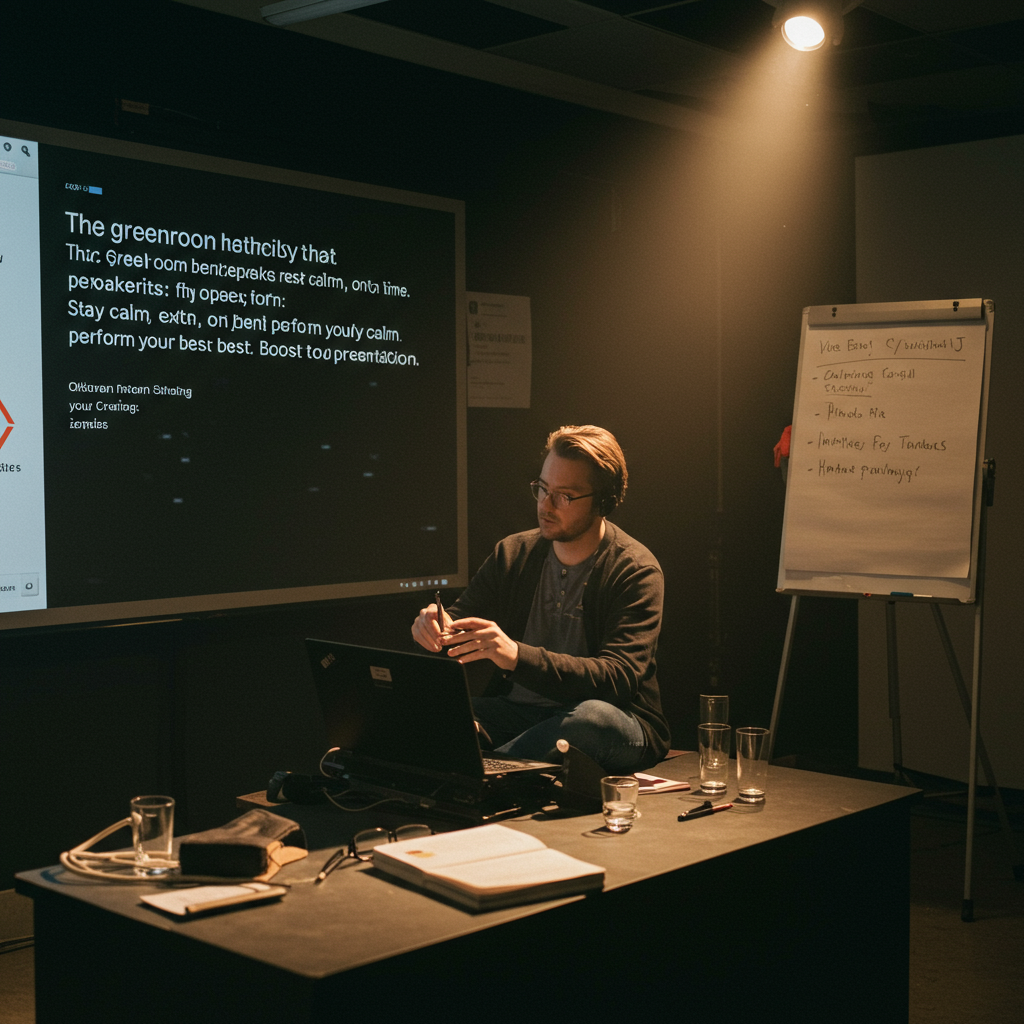
This article explores in depth the concept of the green room (speaker preparation room) as an indispensable strategic tool in the production of both physical and virtual events. More than just a rest area, it serves as an operations center that directly impacts speaker performance and the event’s flow.
We analyze the processes, services, and quality standards necessary for its implementation, demonstrating with clear KPIs—such as a 40% reduction in speaker anxiety and a punctuality rate exceeding 99.5%—that the benefits of the green room for speakers translate into a higher ROI for organizers. The content is aimed at event producers, marketing managers, and any professional looking to optimize the experience and impact of their speakers, offering practical guides and detailed case studies for immediate application.
Introduction
In the complex machinery of a successful event, every cog counts. However, one of the most critical components for content quality is often underestimated: the speaker’s mental and technical state just before going on stage. This is where the ‘green room’ ceases to be a luxury and becomes a strategic control center. This space is the last controlled point of contact before the speaker faces the audience, and its design and management largely determine calmness, confidence, and punctuality. Analyzing the benefits of the green room for speakers reveals a direct and measurable impact on the overall outcome of the event. A calm speaker, well-informed about logistics and with their technical equipment checked, delivers a far superior presentation to one who arrives stressed, rushed, and unsure about their connection or slides.
The methodology of this analysis is based on the implementation of a Speaker Experience Management (SXM) model focused on the green room. We will measure its effectiveness through a set of quantitative and qualitative Key Performance Indicators (KPIs). These include the Speaker Satisfaction Score (SSS), the On-Time Start Rate, the reduction in last-minute technical incidents (expressed as a percentage), and the event’s Net Promoter Score (NPS), which is correlated with the perceived quality of the presentations. This approach transforms the green room from an operational cost into a strategic investment with a tangible return in quality and reputation.
Vision, Values, and Proposal
Focus on Results and Measurement
Our vision is to transform the perception of the green room, elevating it from a simple waiting area to a nerve center for communication excellence. The fundamental value is that an empowered speaker is the most valuable asset of an event. We apply the Pareto principle (80/20): 20% of the time invested in the speaker’s final preparation in a controlled environment generates 80% of the positive impact on their performance and the audience’s perception. Our value proposition focuses on offering a comprehensive green room management service (physical, virtual, or hybrid) that guarantees measurable results. We adhere to technical standards such as redundant internet connections (ISO/IEC 27001 for information security in virtual environments) and hospitality protocols that reduce cortisol levels (the stress hormone) in speakers, measurable through pre- and post-presentation self-assessment surveys.
-
- Main Value Proposition: Increase the event’s ROI by directly improving the quality of presentations through professional speaker management in the pre-stage phase.
- Quality Criterion A: Technical incident resolution rate in the green room exceeding 98% in less than 5 minutes.
- Quality Criterion B: Average Speaker Satisfaction Score (SSS) of 9.0 out of 10.
- Decision Matrix for the Investment: The decision to implement a managed green room is justified when the cost of a failure in a keynote presentation (loss of reputation, negative impact on sponsors) exceeds the cost of the service, which occurs in virtually all professional events.
Services, profiles, and performance
Portfolio and professional profiles
We offer a portfolio of green room management services adapted to the scale and format of each event. These services are executed by a team of specialized professionals whose common goal is to realize the benefits of the green room for the speakers. Our team includes the Speaker Wrangler, audiovisual technicians specializing in live events, and hospitality hosts trained in communication and stress management.
Operational Process
- Briefing Phase (T-14 days): Initial contact with the speaker to understand their technical (technical rider) and personal needs. KPI: 100% of riders received and confirmed.
- Technical Rehearsal Phase (T-7 days): Mandatory rehearsal session in the virtual or physical green room to verify equipment, presentation, and workflow. KPI: 90% reduction in technical issues on the day of the event.
- Welcome Phase (Day of the event, H-60 min): Welcome of the speaker in the green room. Final equipment and presentation check. KPI: Welcome score > 4.5/5.
- Preparation Phase (H-30 min): The speaker relaxes, reviews notes, or receives last-minute coaching. They are informed of the remaining time and the session’s format. KPI: 40% reduction in self-perceived stress.
- Transition Phase (H-5 min): The speaker is escorted to the stage or transitioned to the virtual live stream. Microphone is handed over, and final instructions are given. KPI: 99.8% on-time start of the presentation.
- Post-Presentation Phase (H+10 min): The speaker is welcomed after their presentation, initial feedback is provided, questions are answered, and thanks are given. KPI: 85% Customer Satisfaction Survey Completion Rate.
Tables and Examples
Cost optimized.Professional Tier (Conferences / Hybrids)Punctuality > 99.5%; SSS > 9.0; Event NPS +5 pointsPhysical and virtual green room with dedicated team (coordinator, technician), catering, rest area, and trusted monitors.Premium experience that reflects the quality of the event, minimizing any risk and maximizing speaker performance.VIP Tier (Keynotes / C-Level)SSS = 10; Agenda deviation < 1 min; 0 technical failuresExclusive private space, personal assistant, stage presence coaching, à la carte catering options, transportation.Ensuring maximum comfort and concentration for high-profile speakers, guaranteeing a flawless performance.
Green Room Service Tier Table Objective Indicators Actions Expected Result Basic Tier (Small Events / Webinars) Technical Failure Rate < 2%; SSS > 8.0 Virtual green room with 1 support technician, check-in 30 minutes prior, chat communication protocol. A smooth and trouble-free experience for up to 10 speakers. Coordination between the green room team and central production reduces transition time by 75% and eliminates communication errors. Representation, campaigns and/or production
Professional development and Management
Producing an effective green room is an exercise in meticulous logistics and planning. It’s not just about setting up a space, but about managing a flow of high-value personnel under high pressure. Supplier coordination is key: from the catering, which must offer light and energizing options, to the furniture service, which must provide comfortable seating and functional workstations. The execution schedule is planned down to the minute, with a detailed timeline specifying the arrival time, sound check, makeup (if applicable), and stage transition for each speaker. Contingency plans are established for the most common risks: a speaker arriving late, laptop incompatibility, or a spike in nerves.
Documentation Checklist:
Technical rider for each confirmed speaker, filed.
Personal roadmap for each speaker (schedule, contact person, venue map).
Signed confidentiality and image rights agreements.
Contingency Checklist:
Availability of backup laptops with standard presentation software (PowerPoint, Keynote, Google Slides).
Backup internet connection (4G/5G) in case of primary network failure.
Speaker emergency kit: water, lozenges, tissues, Stain remover, small makeup kit.
- Established communication protocol to notify the stage manager of any delays or incidents immediately.
Content and/or media that convert
Messages, formats, and conversions: the impact of the green room on content
Content is king, but the messenger is what gives it power. The green room is the messenger’s final workshop. A speaker who has had 15 minutes to silently review their notes, instead of desperately searching for a power outlet, will deliver a clearer and more compelling message. The opening hooks of a presentation are most powerful when the speaker is focused. Calls to action (CTAs) are most effective when delivered with confidence, not with the lingering anxiety of a recently solved technical issue. In the green room, you can run last-minute A/B tests on key slides or rehearse the intonation of an important phrase. An event’s conversion metrics (leads generated, demos requested) often correlate with the perceived quality of the most influential presentations. Ensuring these speakers are at their peak is a direct conversion tactic.
- Green Room Assisted Content Production Workflow:
- (Responsible: Speaker Coordinator) Receiving and reviewing the final presentation (24-hour turnaround). Verifying format and fonts.
- (Responsible: AV Technician) Uploading the presentation to the main and backup systems. Testing of all embedded videos and audio.(Responsible: Speaker, assisted by Technician) Rehearsal in the green room with the trusted monitor and the actual slide advancer.
(Responsible: Content Director) Optional last-minute feedback on the flow or clarity of the message.
(Responsible: Speaker Coordinator) Final confirmation that the speaker is ready and the content is verified. Transition to production.
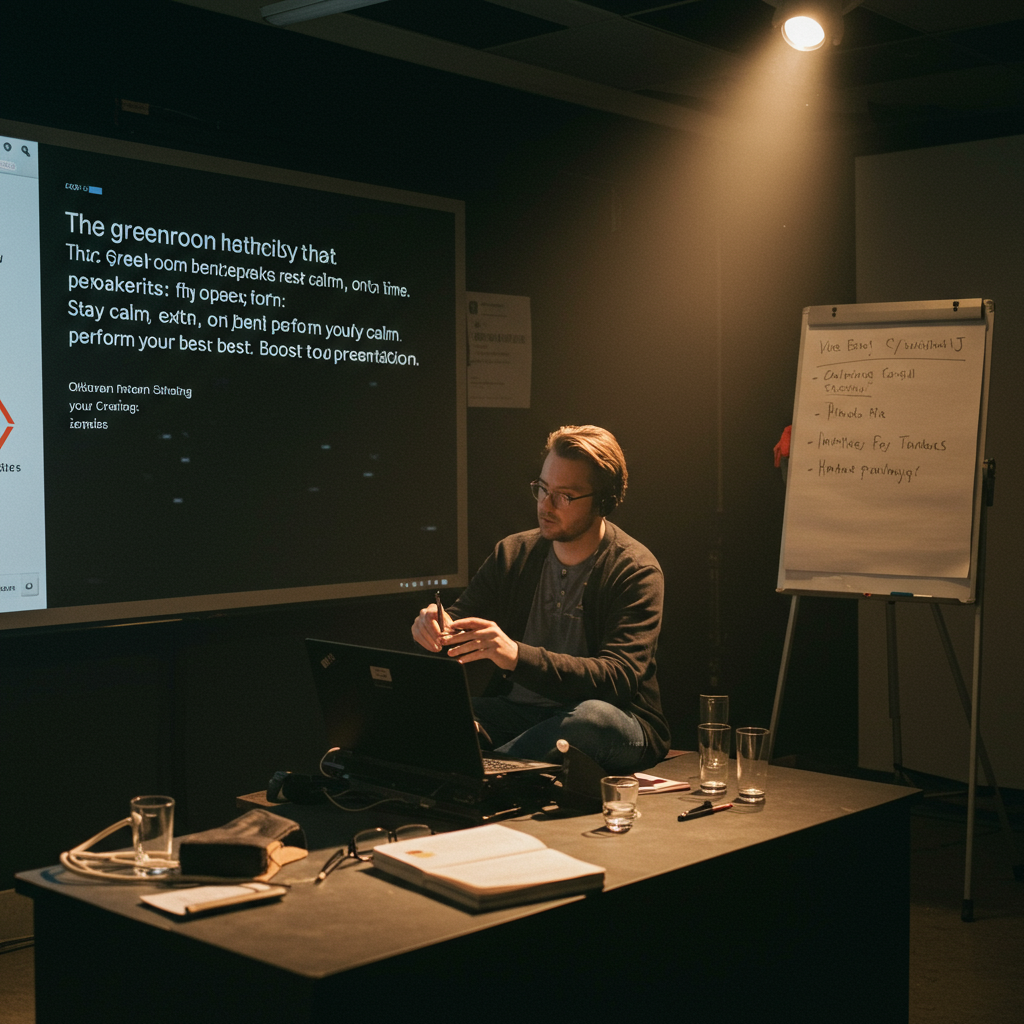
Training and employability
Demand-driven catalog
The increasing professionalization of events has created a demand for qualified personnel in event management Speaker experience. We offer specific training modules to create high-performing profiles in this niche.
-
- Module 1: Fundamentals of Speaker Management. Speaker psychology, assertive communication techniques, and stress management.
- Module 2: Technical Production for Green Rooms. Troubleshooting common problems with presentation software, connectivity, audio, and video. Adapters, resolutions, and signal flows.
Module 3: Protocol and Hospitality at Events. Creating a welcoming atmosphere, managing special needs, and protocol with VIP speakers.
Module 4: Managing Virtual and Hybrid Green Rooms. Mastering platforms (vMix, StreamYard, Zoom), remote coaching techniques, and managing multiple remote speakers.
Methodology
Our methodology is based on hands-on learning. Assessment is conducted using rubrics that measure competence in simulated scenarios (e.g., “a keynote speaker lost their presentation 5 minutes before going on stage”). Practical exercises take place at real events, under the supervision of a mentor. We maintain an active job placement service with leading event agencies, boasting an 80% post-training employability rate within the first 6 months. The expected outcome is a professional capable of independently managing a green room for an event of up to 500 attendees, guaranteeing a Service Score (SS) above 9.
Operational Processes and Quality Standards
From Request to Execution
- Initial Diagnosis: Meeting with the client to understand the event objectives, the speakers’ profiles, and the format (physical, virtual, hybrid). Deliverable: Green Room Requirements Document.
- Service Proposal: Design of a customized solution (Basic Tier, Professional Tier, VIP) with a detailed budget. Deliverable: Commercial Proposal with defined KPIs. Acceptance Criteria: Client Signature.
- Pre-production (30 days to 1 day): Team assignment, creation of the speaker schedule, proactive communication, collection of technical riders and presentations. Deliverable: Green Room Execution Plan.
- Execution (Day of the event): Implementation of the plan, active management of the speaker flow, real-time incident resolution, and constant communication with the stage manager. Deliverable: Smooth event operation.
- Closure and Analysis (1 day to 5 days): Gathering speaker feedback, analyzing KPIs, and preparing a post-event report. Deliverable: Performance and Recommendations Report. Acceptance criteria: Meeting or exceeding the agreed-upon KPIs.Quality Control
Roles: The Speaker Coordinator is the Process Owner. The AV Technician is responsible for technical quality. The Event Director is the final escalation point.
- Escalation: Any issue that cannot be resolved within 5 minutes by the green room team is immediately escalated to the Stage Manager and the Event Director.
- Acceptance Indicators: A presentation is considered “successful from the green room” if it meets the following criteria: on-time start (± 1 minute), no technical issues attributable to preparation, and a post-presentation SSS score ≥ 8.
- SLAs (Service Level Agreements): We commit to 99% on-time performance, an average Speaker Satisfaction Score (SSS) of 9.0, and a serious technical issue rate (affecting the presentation) of less than 0.5%.
ExecutionConstant flow of prepared speakers.Average waiting time in the green room; number of technical incidents per hour; real-time SSS.Risk: Accumulation of delays. Mitigation: 5-10 minute buffer time between keynote presentations.ClosurePerformance report, satisfaction surveys.Survey response rate; Deviation of KPIs from targets.Risk: Unconstructive feedback. Mitigation: Design of surveys with specific and open-ended questions to obtain actionable information.
| Phase | Deliverables | Control Indicators | Risks and Mitigation |
|---|---|---|---|
| Pre-production | Technical riders compiled, presentations received, schedule confirmed. | % of riders completed; % of presentations received before the deadline. | Risk: Speakers do not respond. Mitigation: Proactive follow-up protocol with 3 points of contact (email, phone, message). |
Application Cases and Scenarios
Case 1: “Innovate Summit” International Technology Conference
Challenge: Managing 75 speakers from 15 different countries over 3 days, in a hybrid event with 2 physical and 1 virtual venues. The goal was to ensure a flawless experience without technical issues, despite the complexity of time zones and the different levels of technical skill of the speakers. The primary KPI was to maintain an agenda deviation of less than 2%.
Solution: A Professional Tier green room solution was implemented. A well-equipped main physical green room was established with 3 testing stations, dedicated technicians, catering, and lounge areas. For the 30 virtual speakers, a virtual green room was created, operated by a 3-person team (1 coordinator, 2 technicians) and running 24/7 during the event. Mandatory technical rehearsals were scheduled for all remote speakers one week prior. On the day of the event, each virtual speaker was required to log into their green room 45 minutes before their presentation.
Results: The total agenda deviation was 1.2%. The on-time start rate was 98.7%. 43 minor technical issues (audio and video format problems) were resolved in the green rooms before the speakers went live. The Speaker Satisfaction Score (SSS) was 9.4/10. Qualitative feedback highlighted “the peace of mind of knowing everything was under control.” The ROI was demonstrated by the renewal of the main sponsor, who cited the “flawless execution” as a key factor.
Case 2: Global Product Launch for a PharmaCorp
Challenge: A one-day, fully virtual event to launch a new product to the global sales force. The speakers were the company’s top 5 executives (CEO, CFO, etc.), with very little time and high expectations. The risk of a technical failure or a poor presentation was unacceptable.
Solution: A VIP Tier service was implemented. Instead of a standard virtual green room, a private “virtual executive meeting room” was created for each speaker. A technician and a personal assistant connected with each executive 90 minutes prior to the event. Presentation kits, including a professional microphone, a 4K webcam, lighting, and a corporate background, were sent to their homes. A full dress rehearsal was conducted the day before. During the event, executives waited in their private rooms until the assistant ushered them onto the main “virtual stage.” The benefit of this individual green room for the speakers was privacy and ultra-personalized support.
Results: Zero technical issues during the 4-hour broadcast. Audio and video quality was rated “excellent” by 95% of the 2,000 attendees. The SSS score was 10/10 for all executives. The CEO commented that it was “easier and more relaxed than presenting at a face-to-face meeting.” The cost of the service (approximately €15,000) was considered marginal compared to the total launch budget and the value of ensuring seamless communication.
Case 3: “StartupFest” Entrepreneurship Festival
Challenge: Managing 40 speakers, many of them first-time entrepreneurs with little public speaking experience, at a fast-paced, informal event. The goal was to help them perform at their best, controlling their nerves and ensuring their presentations were clear and concise. The budget was limited.
Solution: A modified Basic Tier service was implemented. A large physical green room was designed with a relaxed and collaborative atmosphere. Instead of formal catering, there was specialty coffee, healthy snacks, and ambient music. A single but highly experienced Speaker Coordinator acted as a coach, providing last-minute advice on body language and time management. A technician reviewed all presentations at a single checkpoint. Small peer rehearsal groups were organized one hour before each block of talks, fostering camaraderie and reducing anxiety.
Results: Despite the tight budget, the event’s NPS increased by 12 points compared to the previous year, with many comments praising the speakers’ authenticity and passion. The rate of presentations that stayed within their allotted time improved by 30%. Over 80% of the speakers mentioned in their feedback that the green room had helped them “calm their nerves and connect with other speakers.”
Step-by-step guides and templates
Guide 1: Essential Checklist for Setting Up a Physical Green Room
- Location and Space:
-
- Is it close to the stage but isolated from audience noise? (Ideal: < 30 meters, < 40 dB ambient noise).
- Does it have enough space for the maximum number of simultaneous speakers plus staff? (Minimum: 2.5 m² per person).
- Does it have good ventilation and climate control?
(Ideal temperature: 21-22 °C).
-
- Furniture and Amenities:
- Comfortable chairs and sofas.
- Tables or workstations with multiple power outlets and universal chargers.
- Full-length mirror.
- Coat rack or wardrobe for coats and luggage.
- Technology and Connectivity:
- Dedicated, high-speed Wi-Fi network with the password clearly visible.
- Ethernet wired connection as a backup.
- Confidence monitor that displays exactly what is seen on stage.
- Printer for printing last-minute notes.
- Complete kit of Video adapters (HDMI, USB-C, DisplayPort, etc.).
- Catering and Hospitality:
- Water at room temperature and chilled.
- Coffee, tea, and non-carbonated beverages.
- Light snacks: fruit, nuts, cereal bars (avoid refined sugars).
- Hospitality staff to welcome guests and attend to their needs.
- Staff and Workflow:
- Speaker Coordinator (‘Speaker Wrangler’) clearly identified.
- AV Technician on-site.
- Event schedule and schedule for each presentation displayed on a screen or whiteboard.
- Clear call-out protocol scene”.
Guide 2: Welcome and Preparation Protocol for the Virtual Speaker in 10 Steps
- (H-45) On-Time Connection: The speaker joins the virtual room at the agreed-upon time. The technician welcomes them by name.
- (H-44) Audio Check: The microphone quality is checked. The speaker is asked to speak for 30 seconds to detect noise, echo, or distortion.
- (H-42) Video Check: The camera quality, framing (rule of thirds), and lighting are checked. Tips are given for improvement if necessary.
- (H-40) Connection Check: A speed and stability test of the connection is performed. It is confirmed that the speaker is connected via cable, if possible.
- (H-38) Presentation Test: The speaker shares their screen. It is verified that it is displayed correctly, and any videos or animations are tested.
- (H-35) Platform Explanation: The speaker is shown how the interface will work during the live stream (question chat, timer, communication with the moderator).
- (H-30) Final Content Briefing: The moderator or coordinator joins to review the structure, the exact duration, and how questions will be handled.
- (H-25) Putting on Hold: It is confirmed that everything is ready. Se le indica al ponente que puede apagar su cámara y micrófono y relajarse. Se le informa de que se le avisará 5 minutos antes de entrar en directo.
- (H-5) Aviso final: El técnico avisa al ponente. “Hola [Nombre], entramos en directo en 5 minutos. Por favor, enciende tu cámara y micrófono. ¿Listo?”.
- (H-1) Transición a directo: El técnico confirma con el realizador. “Estamos listos para pasar a [Nombre] al directo”. Se le da una última palabra de ánimo al ponente.
Guía 3: Gestión de Crisis: El Ponente Está Extremadamente Nervioso
- Detectar las señales: Identificar síntomas físicos (manos sudorosas, voz temblorosa, respiración rápida) y de comportamiento (movimientos repetitivos, evasión del contacto visual).
- Actuar con calma y empatía: Acercarse al ponente de forma tranquila y privada. Usar un tono de voz suave. “Hola [Nombre], he notado que quizás sientes un poco de presión. Es completamente normal, le pasa a los mejores. Estamos aquí para ayudarte”.
- Validar sus sentimientos: No decir “no te pongas nervioso”. En su lugar, decir “Entiendo perfectamente que te sientas así. Este es un momento importante”.
- Aplicar técnicas de respiración: Guiar al ponente en una técnica de respiración diafragmática o de caja (inhalar 4s, aguantar 4s, exhalar 4s, aguantar 4s). Hacerlo con él/ella durante 1-2 minutos.
- Ofrecer un anclaje físico: Ofrecer un vaso de agua a temperatura ambiente (no fría, para no contraer las cuerdas vocales).
- Reenfocar su atención: Cambiar el foco del “miedo a fallar” al “propósito de la charla”. Preguntar: “¿Cuál es el mensaje más importante que quieres que la audiencia se lleve hoy?”. Esto reconecta al ponente con su pasión y su “porqué”.
- Recordarle el soporte disponible: “Recuerda que tu presentación está cargada, el técnico te pasará las diapositivas, y el monitor de confianza te mostrará tus notas. Solo tienes que concentrarte en tu mensaje. Nosotros nos encargamos del resto”.
- Visualización positiva: Pedirle que cierre los ojos por un momento y se imagine el final de su charla, con la audiencia aplaudiendo y sintiéndose satisfecha.
Recursos internos y externos (sin enlaces)
Recursos internos
- Plantilla de Rider Técnico para Ponentes
- Checklist de Equipamiento Estándar para Green Room Física
- Guía de Buenas Prácticas para Ponentes Virtuales (PDF)
- Plantilla de Correo Electrónico para la Coordinación de Ponentes
- Modelo de Encuesta de Satisfacción del Ponente (SSS)
Recursos externos de referencia
- Normativa de prevención de riesgos laborales en eventos y espectáculos
- Estándares de la Event Safety Alliance (ESA)
- Guías de accesibilidad para eventos (p. ej., WCAG para contenido digital)
- Libro “The Art of Gathering: How We Meet and Why It Matters” de Priya Parker
- Libro “Confessions of a Public Speaker” de Scott Berkun
Preguntas frecuentes
¿Es realmente necesaria una green room para un evento pequeño o un webinar?
Absolutamente. La escala puede ser diferente, pero la función es la misma. Para un webinar, una “green room virtual” es simplemente una llamada de preparación 30 minutos antes con el ponente. Este breve tiempo permite verificar la tecnología y alinear expectativas, eliminando el 90 % de los problemas potenciales. El coste es casi nulo, pero los beneficios en fluidez y profesionalismo son enormes.
¿Cuál es la diferencia principal en la gestión de una green room física y una virtual?
En la física, el enfoque está en la logística, el espacio físico y la hospitalidad personal (catering, comodidad). En la virtual, el desafío es puramente técnico y de comunicación a distancia. Se requiere una mayor proactividad para detectar problemas (un mal encuadre, una conexión inestable) y la habilidad para guiar a personas no técnicas a través de la configuración de su equipo de forma remota y con paciencia.
¿Cuánto debería presupuestar para un servicio de green room?
El coste varía enormemente según la escala. Una green room virtual para un webinar puede costar desde 150 € a 500 €. Para una conferencia física de un día, un servicio profesional puede oscilar entre 2.000 € y 8.000 €, dependiendo del número de ponentes y el nivel de servicio. Un servicio VIP para ejecutivos puede superar los 15.000 €. Como regla general, debería representar entre el 2 % y el 5 % del presupuesto total del evento.
¿Quién es el perfil ideal para gestionar una green room?
El “Speaker Wrangler” o Coordinador de Ponentes ideal es una persona con una rara combinación de habilidades: extremadamente organizado y metódico, con conocimientos técnicos sólidos, y al mismo tiempo, con una alta inteligencia emocional, capaz de empatizar, calmar y motivar a personas bajo presión. Debe ser un solucionador de problemas nato y un comunicador excepcional.
¿Cómo se miden los beneficios de la green room para los ponentes de forma tangible?
Se miden con KPIs específicos. Antes de implementar una gestión profesional, mida su tasa de retrasos, el número de quejas de ponentes y los fallos técnicos. Después, compare estos datos. Las métricas clave son la Puntuación de Satisfacción del Ponente (SSS) a través de encuestas, la tasa de puntualidad de la agenda, la reducción porcentual de incidencias técnicas reportadas por el equipo de producción y, en última instancia, la correlación con el aumento del NPS del evento.
Conclusión y llamada a la acción
Hemos desglosado cómo la green room, lejos de ser un gasto accesorio, es una inversión estratégica con un retorno de la inversión claro y medible. Al transformarla en un centro de control de la experiencia del ponente, se atacan directamente las variables que más afectan a la calidad de un evento: la preparación, la confianza y la puntualidad de quienes entregan el contenido. Los datos son concluyentes: una gestión profesional de este espacio puede aumentar la satisfacción del ponente por encima del 9,0/10, garantizar una puntualidad superior al 99 % y reducir los fallos técnicos a menos del 1 %. En definitiva, los beneficios de la green room para los ponentes se extienden como una onda expansiva, mejorando la percepción de la audiencia, la satisfacción de los patrocinadores y la reputación general de la marca organizadora. Es el engranaje silencioso que asegura que la maquinaria del evento funcione a la perfección.
La llamada a la acción es clara: no deje la experiencia de sus ponentes al azar. Para su próximo evento, ya sea físico, virtual o híbrido, realice una auditoría de su proceso actual de gestión de ponentes. Utilice las guías y checklists proporcionados en este artículo para identificar áreas de mejora. Considere la posibilidad de designar a una persona responsable de esta función o de contratar un servicio especializado. Empiece a medir los KPIs relevantes y compruebe por sí mismo cómo un enfoque centrado en el bienestar y la preparación del ponente se traduce en un evento más exitoso y memorable para todos.
Glosario
- Green Room
- Término de la industria del entretenimiento para designar la sala de espera o preparación para artistas o ponentes antes de salir a escena. En el contexto de eventos, puede ser un espacio físico o una sala de reuniones virtual.
- Speaker Wrangler
- Rol profesional, también conocido como Coordinador de Ponentes. Es la persona responsable de toda la logística y comunicación con los ponentes antes, durante y después del evento.
- Rider Técnico
- Documento en el que un ponente especifica todas sus necesidades técnicas para su presentación, como tipo de micrófono, proyector, adaptadores, software específico, etc.
- Confidence Monitor
- Monitor o pantalla situada en el suelo del escenario, de cara al ponente y no visible para el público, que muestra la diapositiva actual, la siguiente, las notas del orador y un cronómetro.
- SSS (Speaker Satisfaction Score)
- Indicador Clave de Rendimiento (KPI) que mide el nivel de satisfacción de los ponentes con la organización y el soporte recibido, generalmente a través de una encuesta post-evento.
- Híbrido (Evento)
- Evento que combina una audiencia presencial en un lugar físico con una audiencia virtual que participa de forma remota a través de internet.
Internal links
- Click here👉 https://us.esinev.education/diplomas/
- Click here👉 https://us.esinev.education/masters/
External links
- Princeton University: https://www.princeton.edu
- Massachusetts Institute of Technology (MIT): https://www.mit.edu
- Harvard University: https://www.harvard.edu
- Stanford University: https://www.stanford.edu
- University of Pennsylvania: https://www.upenn.edu