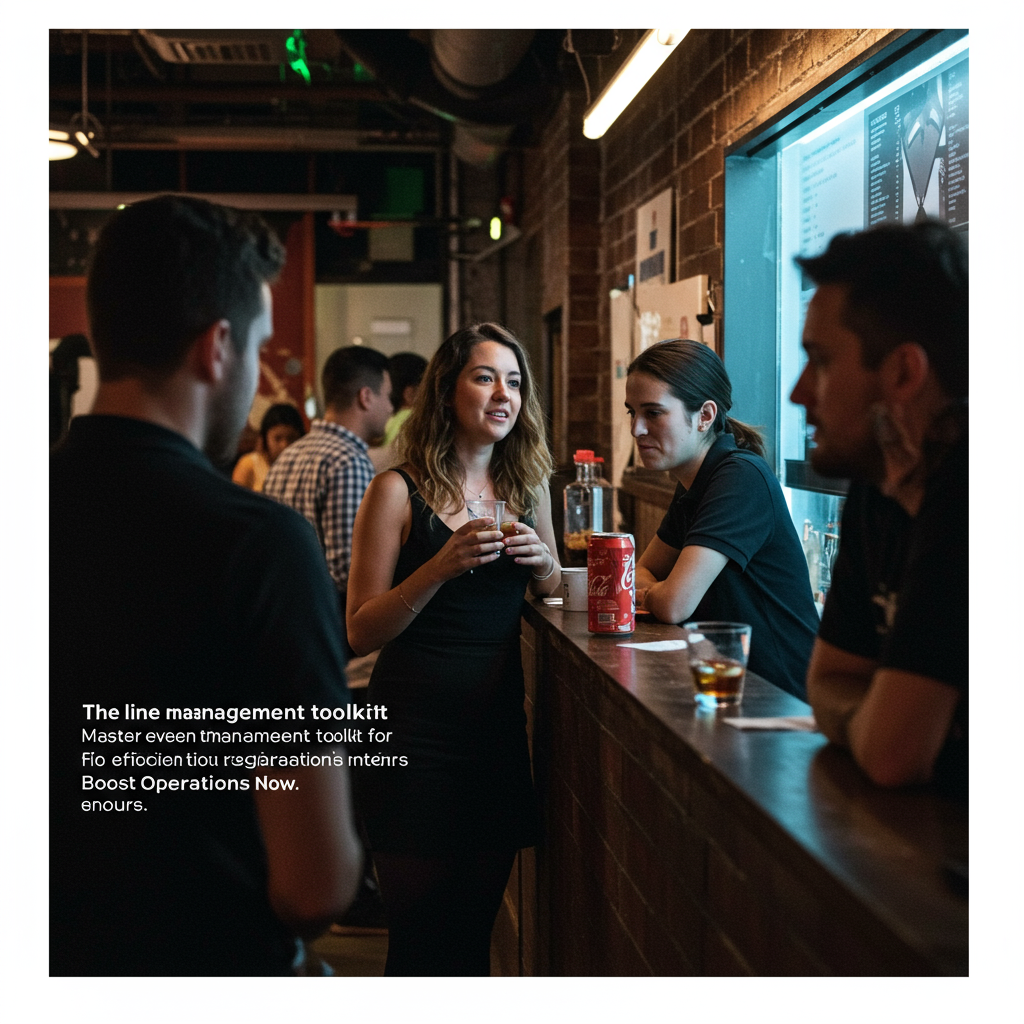
Long queues are a primary source of guest frustration, directly impacting an event’s success, revenue, and reputation. This article presents a complete event line management toolkit designed specifically for high-traffic areas like registration desks and bars. We will explore a strategic framework that combines physical layout design, digital technology, staff training, and data-driven analysis to transform queues from a problem into a streamlined, positive experience. The benefits are measurable: reduction in average wait times by up to 40%, an increase in bar sales per hour by 15-25%, and a significant improvement in Net Promoter Score (NPS). This guide is for event planners, venue managers, and operations directors seeking a proven methodology to enhance operational efficiency and elevate the attendee journey from the very first point of contact.
Introduction
In the world of live events, the attendee experience is paramount. Yet, one of the most persistent and damaging friction points remains the simple act of waiting in line. Whether it’s the initial excitement at the registration desk or the desire for a drink at a bustling bar, long and disorganized queues can quickly sour the mood, lead to lost revenue, and tarnish an otherwise perfectly executed event. This is where a strategic approach to crowd flow becomes critical. Implementing a comprehensive event line management toolkit is no longer a luxury for large-scale festivals; it is a fundamental requirement for any event aiming for operational excellence and superior guest satisfaction. This guide moves beyond simply putting up barriers; it presents an integrated system of tools, processes, and strategies to proactively manage attendee flow, optimize resource allocation, and turn potential bottlenecks into efficient service points.
Our methodology is built on a four-pillar framework: Physical Environment Design, Technology Integration, Human Resource Optimization, and Data-Driven Improvement. We will measure success not just by anecdotal feedback but through hard key performance indicators (KPIs). These include Average Wait Time (AWT), Attendee Throughput per Hour (ATPH), Transaction Speed, and Net Promoter Score (NPS) specifically related to queuing experiences. By systematically applying the principles outlined here, event organizers can expect to see a significant reduction in congestion, a measurable increase in F&B sales, and a vastly improved overall perception of their event. The goal is to make the process of waiting so seamless and efficient that it becomes virtually invisible to the guest.
Vision, Values, and Proposition
Focus on Results and Measurement
Our vision is to eliminate queues as a source of friction in the event lifecycle. We believe that effective line management is a science, not an afterthought. Our approach is guided by the Pareto principle (80/20 rule): we focus the majority of our effort on the 20% of choke points—typically registration, bars, and restrooms—that cause 80% of attendee frustration. Our core values are efficiency, guest-centricity, and continuous improvement. We adhere to industry standards for crowd safety and density, such as those outlined in the UK’s “The Purple Guide” for event safety, ensuring that all our solutions are not only efficient but also fully compliant and secure. We propose a proactive, data-informed system rather than a reactive, problem-solving one. The value proposition is simple: invest in a structured line management system to unlock higher revenue, better reviews, and a more loyal attendee base.
- Guest-Centricity: Every decision is weighed against its impact on the attendee experience. The goal is a feeling of effortlessness and respect for their time.
- Data-Driven Decisions: We replace guesswork with metrics. Real-time and post-event data on queue lengths, wait times, and throughput inform all strategic adjustments.
- Scalability: Our toolkit is modular, designed to be effective for a 300-person gala as well as a 50,000-person festival.
- Quality Criteria Matrix: A solution is only considered successful if it meets predefined criteria across four domains:
- Efficiency: Reduces average wait time below the target threshold (e.g., <5 minutes for registration, <3 minutes for bar service).
- Safety: Maintains safe crowd densities and clear emergency egress routes at all times.
- Guest Satisfaction: Achieves an NPS score of +50 or higher for queuing and registration processes.
- ROI: Demonstrates a positive return on investment through increased sales, reduced staffing costs, or improved attendee retention.
Services, Profiles, and Performance
Portfolio and Professional Profiles
Our service offering constitutes a complete event line management toolkit, broken down into distinct but integrated modules. These can be deployed individually or as a complete package. The services are delivered by a team of experienced professionals, including Operations Planners, Crowd Flow Analysts, and On-site Implementation Specialists. The planner designs the system, the analyst models predicted flow and identifies potential bottlenecks using simulation software, and the specialist manages the on-the-ground setup and execution.
Operational Process
- Phase 1: Discovery and Analysis (Pre-Event): We conduct a thorough analysis of the event plan, venue layout, and historical data. KPIs for this phase include completing the flow analysis with a <10% margin of error on predicted peak traffic.
- Phase 2: System Design and Simulation: We design a custom line management plan, including physical layouts, technology recommendations, and staffing plans. This is stress-tested using crowd simulation software. KPI: A design that models a reduction in AWT by at least 30% compared to baseline.
- Phase 3: Implementation and Training (On-site): Our team oversees the physical setup of barriers, signage, and technology. We conduct hands-on training for all event staff. KPI: Staff training completion rate of 100% with a proficiency score of >90% on a post-training quiz.
- Phase 4: Live Monitoring and Optimization (During Event): We use sensors and on-site observers to monitor queue performance in real-time, making adjustments as needed (e.g., re-routing flow, deploying additional staff). KPI: Real-time response to queue length alerts within 5 minutes.
- Phase 5: Post-Event Reporting and Debrief: We provide a comprehensive report detailing performance against KPIs, including data visualizations of attendee flow and key learnings. KPI: Delivery of final report within 72 hours of event conclusion.
Dashboards and Examples
| Objective | Key Performance Indicators (KPIs) | Actions | Expected Result |
|---|---|---|---|
| Reduce Registration Wait Times | Average Wait Time (AWT) in minutes; Max Wait Time; Attendee Throughput Per Hour (ATPH) | Implement staggered entry times; deploy mobile check-in staff; use a multi-station ‘serpentine’ queue. | AWT below 5 minutes; Max Wait Time below 15 minutes; ATPH increased by 25%. |
| Increase Bar Sales and Efficiency | Transactions Per Hour (TPH) per bartender; Average Service Time; Order accuracy rate. | Create separate lines for simple orders (beer/wine) and complex cocktails; implement pre-order app functionality; use contactless POS. | TPH increased by 20%; Average Service Time under 90 seconds; Order accuracy >99%. |
| Improve Overall Guest Satisfaction | Net Promoter Score (NPS); Social media sentiment analysis; Post-event survey feedback on queues. | Clear and frequent signage; queue entertainment (music, screens); friendly and efficient staff. | NPS score for “entry experience” and “bar service” above +50. |
Representation, Campaigns, and/or Production
Professional Development and Management
The physical production and implementation of the line management system is a logistical exercise requiring meticulous planning. This involves coordinating with venue management, security teams, and technology providers. A detailed execution schedule is created, mapping out key milestones from equipment delivery to on-site setup and teardown. We handle all necessary permits, especially those related to public assembly and temporary structures, ensuring full compliance with local ordinances. Supplier coordination is key; this includes renting stanchions, barriers, digital signage, and POS systems, and ensuring their timely arrival and correct placement according to the pre-approved floor plan.
- Pre-Deployment Checklist:
-
- Finalized and signed-off floor plan showing all queue layouts, entry/exit points, and signage locations.
- Confirmation of all equipment rental orders (quantity, delivery time, pickup time).
- Verification of power and data port availability for all tech hardware (POS terminals, scanners, digital screens).
* Staffing plan confirmed, with roles and responsibilities clearly assigned (e.g., Queue Monitors, Tech Support, Team Leads).
-
- Contingency plans documented for key scenarios: power failure, POS system outage, unexpected attendance arise, staff shortage.
- Contingency Planning:For every critical component, we have a Plan B. If the digital check-in system fails, staff are trained on manual check-in with pre-printed lists as a backup. If a bar runs out of a popular item, a runner system is in place to restock from a central depot, minimizing service interruption.
- Communication Plan: A clear communication hierarchy is established, often using two-way radios or a dedicated app channel. This allows for rapid escalation of issues from an on-the-ground staff member to an operations lead for immediate resolution.
Content and/or Media That Converts
Messaging, Formats, and Conversions
Effective line management begins before the attendee even arrives. Strategic communication and content can manage expectations, guide behavior, and reduce on-site friction. The “hook” is convenience: “Skip the line! Pre-register now and use our Express Entry lane.” Calls to Action (CTAs) should be clear and benefit-driven, integrated into emails, social media, and the event app. For on-site content, digital signage is paramount. Instead of static signs, we use dynamic displays showing real-time wait times for different bars or registration desks, allowing attendees to make informed choices. This simple provision of information converts a feeling of helpless waiting into a sense of control. An advanced event line management toolkit uses this content to actively direct traffic, for example by pushing a notification through the event app: “Bar B has no queue! Grab a drink there and get a 10% discount on your first order.”
- Content Planning: Identify all attendee communication touchpoints (pre-event emails, website FAQ, app notifications, on-site signage).
- Message Crafting: For each touchpoint, create clear, concise messages. Pre-event: Focus on actions that save time (e.g., “Have your QR code ready”). On-site: Focus on navigation and real-time information (e.g., “Registration Zone A: 5-minute wait. Registration Zone B: 1-minute wait”).
- Format Selection: Use a mix of text, icons, and maps. Wayfinding signage should be language-agnostic where possible, using universally understood symbols. Digital screens are used for dynamic content like wait times.
- Distribution: Schedule pre-event communications to build anticipation and provide instructions. On-site content is deployed via the event app and strategically placed digital and physical signs.
- Performance Measurement: Track the conversion rates of pre-event CTAs (e.g., percentage of attendees who pre-register or download the app). On-site, use short surveys or app feedback to gauge the clarity and usefulness of wayfinding and queue information. A/B test different sign placements or message wordings to see what drives behave most effectively.
Training and Employability
Demand-Oriented Catalogue
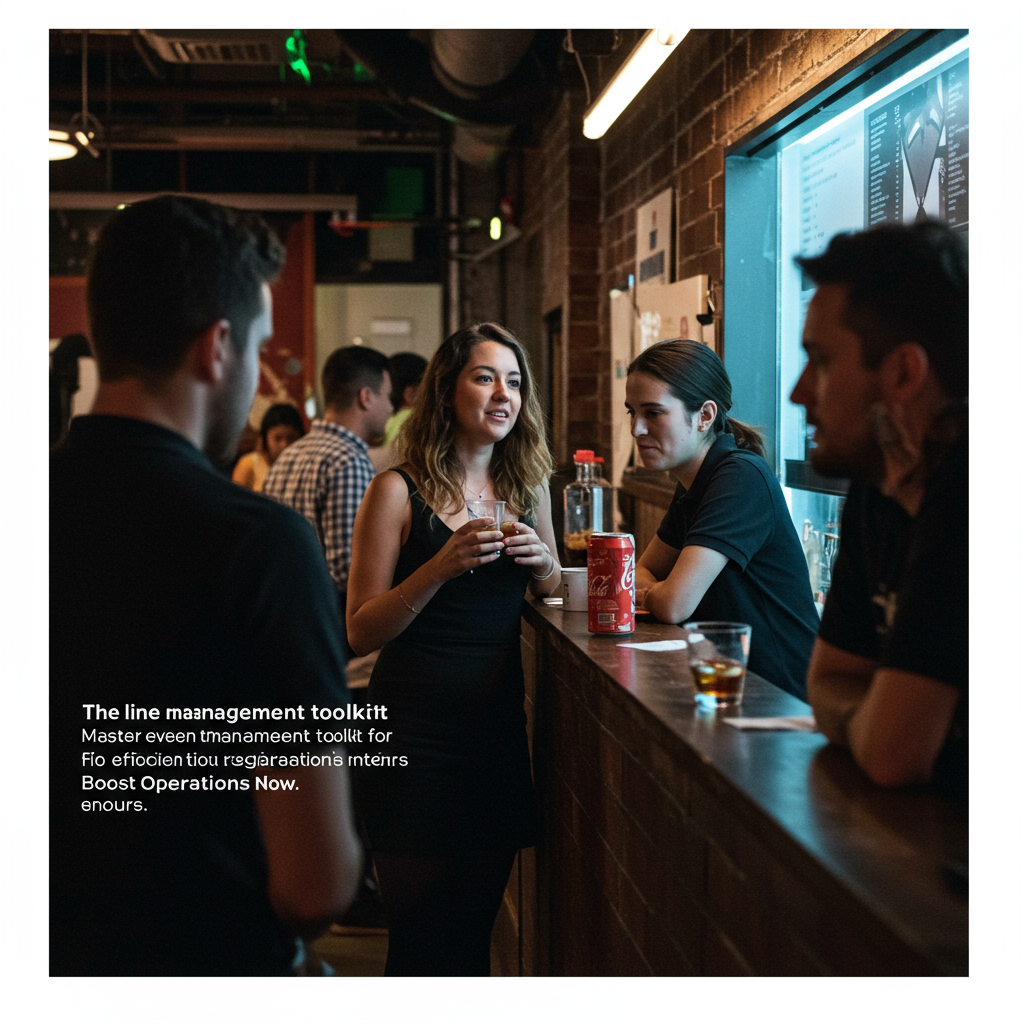
Staff are the most critical, and often most overlooked, component of any line management system. A well-trained, confident, and empowered team can de-escalate issues, improve flow, and create a positive atmosphere. Our training program is designed to equip event staff with the specific skills needed to execute the queue management plan effectively.
- Module 1: The Psychology of Queuing: Understanding why queues are frustrating and how to mitigate that frustration through communication and perceived fairness. (Concepts: First-In-First-Out (FIFO) integrity, managing expectations).
- Module 2: System & Layout Training: A detailed walkthrough of the event’s specific queue plan, including the purpose of each barrier, sign, and staff position. (Role-playing different scenarios).
- Module 3: Technology & Tools: Hands-on training with any hardware and software being used, such as ticket scanners, POS systems, and communication devices. (KPI: 95% transaction accuracy during simulations).
- Module 4: Communication & De-escalation: Techniques for communicating clearly and calmly with attendees, especially in frustrating situations. How to handle complaints and escalate issues effectively.
- Module 5: Role-Specific Drills: Breakout sessions for different roles. “Greeters” practice directing attendees, “Queue Monitors” practice identifying and resolving bottlenecks, and “Bartenders” practice efficient order-taking and payment processing.
Methodology
Our training methodology is based on practical application, not just theory. We use a “See One, Do One, Teach One” approach. Trainees first observe an experienced lead, then perform the tasks themselves under supervision, and finally are asked to explain the process to a peer. Performance is evaluated using a detailed rubric that scores individuals on speed, accuracy, communication clarity, and problem-solving initiative. Successful completion of the program leads to a “Queue Management Certified” status, which can be a valuable addition to an event professional’s resume. For larger event companies, we can establish a “train the trainer” program and a pool of certified staff, creating a reliable and skilled workforce for future events.
Operational Processes and Quality Standards
From Request to Execution
A standardized operational pipeline ensures consistency, quality, and accountability from the initial client request to the final post-event report. This process is transparent and collaborative, with clear deliverables and acceptance criteria at each stage.
- Phase 1: Diagnostic & Scoping:
- Activities: Initial client consultation, review of event schematics and goals, analysis of historical data (if available).
- Deliverable: A Diagnostic Report outlining key challenges, opportunities, and a proposed scope of work with initial KPI targets.
- Acceptance Criteria: Client agrees that the report accurately reflects their challenges and goals.
- Phase 2: Proposal & System Design:
- Activities: Develop a detailed crowd flow plan, technology stack recommendation, staffing model, and budget.
- Deliverable: A formal Proposal including visual mockups, a project timeline, and a full cost breakdown.
- Acceptance Criteria: Client signs off on the proposal, budget, and design.
- Phase 3: Pre-Production & Logistics:
- Activities: Procure all necessary equipment, finalize staffing, develop training materials, coordinate with all third-party vendors and the venue.
- Deliverable: A final, detailed Operations Manual for the event.
- Acceptance Criteria: All equipment confirmed, staff scheduled, and the Operations Manual approved by the client.
- Phase 4: Execution & Live Management:
- Activities: On-site setup, staff briefing and training, live monitoring of queues, real-time adjustments.
- Deliverable: A fully operational and managed line management system.
- Acceptance Criteria: System is deployed as per the plan; real-time performance metrics are meeting or exceeding targets.
- Phase 5: Closing & Analysis:
- Activities: System teardown, collection and analysis of all performance data, client debrief session.
- Deliverable: A comprehensive Post-Event Performance Report with data, insights, and recommendations for future events.
- Acceptance Criteria: Client receives the report and confirms all project objectives have been met.
Quality Control
- Roles: A dedicated Quality Control (QC) Lead is assigned to each project, responsible for auditing each phase against the agreed-upon standards.
- Escalation: A three-tiered escalation path is defined: Level 1 (On-site staff), Level 2 (Team Lead), Level 3 (Operations Manager). Any issue not resolved within a predefined timeframe (e.g., 15 minutes) is automatically escalated.
- Service Level Agreements (SLAs): We commit to specific performance levels, such as “95% of attendees will wait less than 10 minutes for registration” and “Bar technology uptime will be 99.9%”.
| Phase | Key Deliverables | Quality Control Indicators | Risks and Mitigation |
|---|---|---|---|
| Design | Crowd Flow Floor Plan; Tech Spec Sheet | Plan reviewed and approved by venue safety officer; simulated AWT meets KPI target; tech compatibility verified. | Risk: Inaccurate attendee arrival pattern. Mitigation: Use historical data and create models for early, on-time, and late arrival scenarios. |
| Pre-Production | Operations Manual; Trained Staff Roster | Manual is clear and comprehensive; 100% of staff pass the training proficiency test. | Risk: Equipment supplier fails to deliver on time. Mitigation: Confirm orders 2 weeks prior; have a backup supplier on standby. |
| Execution | Live Queue Monitoring Dashboard | Real-time AWT < target; staff deployment matches guest flow; no safety breaches. | Risk: Unexpected arises in a specific area. Mitigation: Have a “flex team” of cross-trained staff on standby to be deployed to bottlenecks within minutes. |
| Closing | Post-Event Performance Report | Data is accurate and clearly presented; insights are actionable; report delivered within SLA (e.g., 72 hours). | Risk: Corrupted data from scanners or POS. Mitigation: Implement redundant data backups and manual spot-checks during the event. |
Case Studies and Application Scenarios
Case Study 1: “FlowFest” – A 40,000-Person Music Festival
Challenge: FlowFest experienced major negative social media feedback in the previous year due to chaotic entry queues (up to 2-hour waits) and dangerously overcrowded bar areas. The primary goal was to drastically improve the arrival experience and increase bar throughput and safety.
Solution: We deployed a multi-faceted event line management toolkit. For registration, we implemented a wide, 20-lane entry system with a serpentine pre-queue area to keep the crowd organized. We heavily promoted pre-event ticket activation, creating “Fast-Pass” lanes for prepared attendees. For the five main bars, we redesigned the layouts from a chaotic “mob at the front” to a structured, multi-line serpentine system feeding into 8-10 distinct POS stations per bar. We also introduced two smaller, “Express” bars serving only beer and wine. Digital signage displayed real-time wait times for each bar.
Results:
- Average entry wait time was reduced from 75 minutes to 12 minutes.
- Peak entry throughput reached 8,000 attendees per hour.
- Total bar revenue increased by 22% year-over-year, despite no price increase.
- The average transaction time at the main bars was reduced by 40 seconds.
- NPS for the “entry experience” improved from -35 to +48.
- Reported security incidents in bar areas decreased by 60%.
Case Study 2: “InnovateCon” – A 2,500-Person Tech Conference
Challenge: The client’s main issue was the morning registration rush, creating a long queue that delayed the start of the opening keynote. A secondary problem was congestion around the single coffee bar during session breaks.
Solution: We replaced the traditional long table registration with 10 individual check-in “pods”. We implemented a self-service check-in option via tablets for attendees who had their QR codes ready. Staff were redeployed from behind the tables to become mobile “concierges” with handheld scanners, actively checking people in while they were in the queue. For the coffee bar, we established two separate queues: one for simple drip coffee and another for more complex espresso drinks. We also worked with the caterer to set up a second, smaller coffee station at the opposite end of the venue.
Results:
- 90% of attendees were checked in within 20 minutes of the doors opening, allowing the keynote to start on time.
- The maximum queue length at registration never exceeded 15 people.
- The average wait for coffee was reduced from 8 minutes to under 3 minutes.
- Post-event survey feedback specifically praised the “fast and efficient” check-in process.
- The client calculated the ROI based on avoiding the cost of a delayed keynote start and the goodwill generated by a smooth start to the day.
Case Study 3: “Winter Charity Gala” – An 800-Person Formal Event
Challenge: This high-end gala faced bottlenecks at two points: the mandatory coat check and the main cocktail bar during the pre-dinner reception. The long waits were perceived as incongruous with the premium ticket price.
Solution: The toolkit here was focused on process refinement. For the coat check, we implemented a numbered, multi-part tagging system that was pre-staged. Instead of one person taking the coat, finding a hanger, and writing a ticket, we created a three-person assembly line: one to greet and take the coat, one to hang and tag, and one to give the guest their claim ticket. This more than doubled the throughput. At the bar, we pre-batched the two most popular cocktails for the reception hour, allowing them to be poured and served instantly. We also had “roaming waiters” taking drink orders from the edges of the crowd and relaying them to the bar, reducing the number of people pressing forward.
Results:
- The coat check processed all arriving guests with a maximum wait time of 2 minutes.
- The bar was able to serve an average of 1.5 drinks per guest during the 60-minute reception, a 40% increase from the previous year.
- Guest complaints related to waiting dropped to zero.
- The streamlined service contributed to a more relaxed and positive atmosphere, which the client believed contributed to a 15% increase in silent auction fundraising.
Step-by-Step Guides and Templates
Guide 1: How to Design an Optimal Serpentine Queue for Registration
- Calculate Your Required Throughput: Determine how many attendees need to be processed per hour during peak arrival. Formula: (Total Attendees * 0.8) / (Peak Arrival Window in Hours). E.g., (2000 attendees * 0.8) / 2 hours = 800 people per hour.
- Determine Service Station Capacity: Time how long it takes an average staff member to process one attendee (e.g., 45 seconds). This means one station can handle 3600 / 45 = 80 people per hour.
- Calculate Number of Stations: Divide required throughput by station capacity. E.g., 800 / 80 = 10 registration stations needed.
- Allocate Physical Space: A standard serpentine queue requires approximately 0.5 square meters per person. If you anticipate a max queue of 100 people, you need at least 50 m² for the waiting area, plus space for the stations themselves.
- Draw the Layout: Use retractable belt stanchions. Create a single-file line that snakes back and forth. This is psychologically better than a long straight line and ensures fairness (first-come, first-served). The line should lead to a “distribution point” where a greeter directs the next person in line to the first available station. This is more efficient than having a separate queue for each station.
- Place Signage: At the entrance to the queue, place a large sign: “Registration Begins Here. Please Have Your QR Code Ready.” Place smaller signs at turns in the serpentine to indicate wait times from that point (e.g., “Approx. 10 Mins From Here”). Clearly number each registration station.
- Final Checklist:
- [ ] Stanchions are stable and belts are functional.
- [ ] The queue path is at least 1.5 meters wide to allow for comfortable flow.
- [ ] An accessible lane for guests with disabilities is clearly marked and available.
- [ ] The start and end of the queue are clearly marked.
- [ ] Staffing positions (Greeter, Station Agents) are marked on the plan.
Guide 2: Implementing a “Fast/Slow” System at an Event Bar
- Analyze Your Menu: Identify your high-volume, low-effort items (e.g., bottled beer, house wine, soft drinks) and your low-volume, high-effort items (e.g., multi-ingredient cocktails, frozen drinks).
- Designate Zones: Physically divide your bar into two sections. Use clear signage. One section is the “Express Lane” for simple orders, and the other is the “Cocktail Bar” for complex orders.
- Staff Accordingly: Staff the Express Lane with bartenders skilled in speed and volume. Staff the Cocktail Bar with your most skilled mixologists who can handle complex recipes accurately. The staff-to-guest ratio may be higher in the Cocktail section.
- Stock Strategically: The Express Lane should have dedicated, under-counter coolers stocked only with its limited items. This prevents staff from having to cross over into the other zone, which would defeat the purpose.
- Create Menus and Signage: Develop two distinct, easy-to-read menus. Post the “Express Menu” prominently at the entrance to its queue. Do the same for the “Cocktail Menu”. A large overhead sign should clearly direct guests to the correct line based on what they want to order.
- Train Your Staff: Brief all bar staff on the new system. The most important role is the “floater” or “host” who stands in front of the bar and helps direct confused guests to the correct line before they join it. This proactive guidance is crucial for the system’s success.
Guide 3: A 5-Minute Pre-Show Staff Briefing Template
- The Goal (30 seconds): “Good evening team. Tonight’s goal is to get all 1,500 guests through the doors in 45 minutes with a maximum wait of 10 minutes. Our bar service goal is a 90-second transaction time. Let’s be fast, friendly, and efficient.”
- The Plan & Key Positions (1 minute): “Here is the floor plan. Sarah, you are the Greeter at the start of the queue. Your job is to keep the line moving and direct people to the next available scanner. Tom and Jane, you are our mobile scanners in the pre-queue area, targeting guests with QR codes ready. Everyone else, you are at your assigned static stations. Remember, if your station is free, call ‘Next please!’ loudly and clearly.”
- The “What Ifs” (2 minutes): “If the scanner doesn’t work, direct the guest to Station 8, our manual check-in and troubleshooting desk. If the queue backs up past the red line on the floor, radio me, [Manager’s Name], immediately. If a guest is frustrated, listen, apologize, and focus on solving their problem quickly. Do not argue. Escalate to me if needed.”
- The Communication (30 seconds): “We are all on Channel 3 on the radios. Use it for operational issues only. Keep chatter to a minimum. Any questions?”
- Final Motivation (30 seconds): “You are the first impression of this event. A smile and a quick, smooth entry makes a huge difference. Let’s have a great show. Doors open in 5 minutes. To your positions!”
Internal and External Resources (No Links)
Internal Resources
- Event Line Management Toolkit – Standard Operating Procedures (SOP) Manual
- Staff Training Deck – Modules 1-5
- Venue Site Visit Checklist – Crowd Flow Edition
- Post-Event Data Analysis Template (Excel)
- Library of Pre-Designed Queue Layouts (for different venue types)
- Master Equipment Checklist (Stanchions, Scanners, POS, Signage)
External Resources of Reference
- The Purple Guide to Health, Safety and Welfare at Music and Other Events (Events Industry Forum, UK)
- NFPA 101: Life Safety Code (National Fire Protection Association, USA) – Sections on crowd density and egress.
- Guidance on crowd management from the UK Health and Safety Executive (HSE).
- Americans with Disabilities Act (ADA) standards for accessible routes and service counters.
- Academic papers on Queuing Theory and Crowd Psychology.
Frequently Asked Questions
What is the biggest mistake events make with line management?
The biggest mistake is being reactive instead of proactive. Many organizers simply wait to see if a long line forms and then try to deal with it. A proper event line management toolkit involves planning and designing the flow based on predicted behaviour, thereby preventing the long line from forming in the first place. Understaffing and poor signage are the two most common tactical errors.
How much does implementing a professional queue management system cost?
The cost is highly variable and depends on the scale of the event and the technology used. A simple system for a small event using rented stanchions and good signage might cost a few hundred pounds/dollars. A complex system for a large festival with digital signage, RFID scanners, and a team of consultants could run into the tens of thousands. However, the ROI is often very clear when you factor in increased sales from efficient bars and higher attendee retention rates for future events.
Is digital technology always better than physical barriers?
Not necessarily. The best solution is often a hybrid one. Physical barriers like stanchions are excellent for creating clear, fair, and orderly serpentine queues. Digital technology, like mobile apps for pre-ordering or real-time wait-time displays, enhances this physical structure. Technology can’t fix a poorly designed physical layout, and a good layout can be made even better with smart technology.
How do you handle VIPs or accessible lanes without making other guests feel cheated?
Transparency and clear communication are key. VIP and accessible lanes should be clearly marked and positioned to one side, not as a way to “cut” the main queue. The purpose of the accessible lane is a legal and ethical requirement, which most people understand. For VIP lanes, the value proposition must be clear from the ticket purchase—it’s a paid-for benefit. The main queue must also be managed efficiently, so the perceived difference in wait time is reasonable, not extreme.
How can we measure the success of our line management efforts?
Success should be measured with a combination of quantitative and qualitative data. Quantitative KPIs include: Average Wait Time (AWT), maximum wait time, throughput per hour, and total transaction volume/value. Qualitative metrics can be gathered through post-event surveys asking guests to rate their experience with check-in and bar service, as well as by monitoring social media sentiment during and after the event. A significant increase in positive mentions and a high NPS score are strong indicators of success.
Conclusion and Call to Action
Queues are not an unavoidable evil of events; they are a manageable operational challenge that, when addressed strategically, can become a competitive advantage. By moving beyond a simple “wait and see” approach and implementing a robust event line management toolkit, organizers can fundamentally transform the attendee experience. The principles and tools outlined in this guide—from meticulous pre-event planning and layout design to technology integration, staff training, and data-driven analysis—provide a clear roadmap to achieving this transformation. The results are tangible and impactful: reduced frustration, increased safety, higher revenue, and a stronger brand reputation. The next step is to stop thinking about lines as a problem to be solved on the day, and start designing them as an integral, streamlined part of your event’s operational master plan. Begin by auditing your next event’s flow, identify the single biggest bottleneck, and apply one of the strategies from this toolkit. The positive impact will be immediate.
Glossary
- AWT (Average Wait Time)
- The average time an attendee spends in a queue from the moment they join it to the moment they receive service.
- ATPH (Attendee Throughput Per Hour)
- The number of attendees that are processed through a specific point (e.g., a registration desk, an entry gate) in one hour.
- FIFO (First-In, First-Out)
- A queuing principle stating that the first person to join the line should be the first person to be served. Serpentine queues help enforce this.
- NPS (Net Promoter Score)
- A metric used to gauge customer loyalty and satisfaction, calculated by asking customers how likely they are to recommend a product or service on a scale of 0-10.
- Serpentine Queue
- A type of queue where a single line snakes back and forth in a confined area, typically guided by barriers or stanchions. It is generally considered the fairest and most efficient way to manage a large crowd waiting for multiple service points.
- Stanchion
- An upright post with a retractable belt or rope, used to create temporary barriers and guide crowd flow.
Internal links
- Click here👉 https://us.esinev.education/diplomas/
- Click here👉 https://us.esinev.education/masters/
External links
- Princeton University: https://www.princeton.edu
- Massachusetts Institute of Technology (MIT): https://www.mit.edu
- Harvard University: https://www.harvard.edu
- Stanford University: https://www.stanford.edu
- University of Pennsylvania: https://www.upenn.edu