
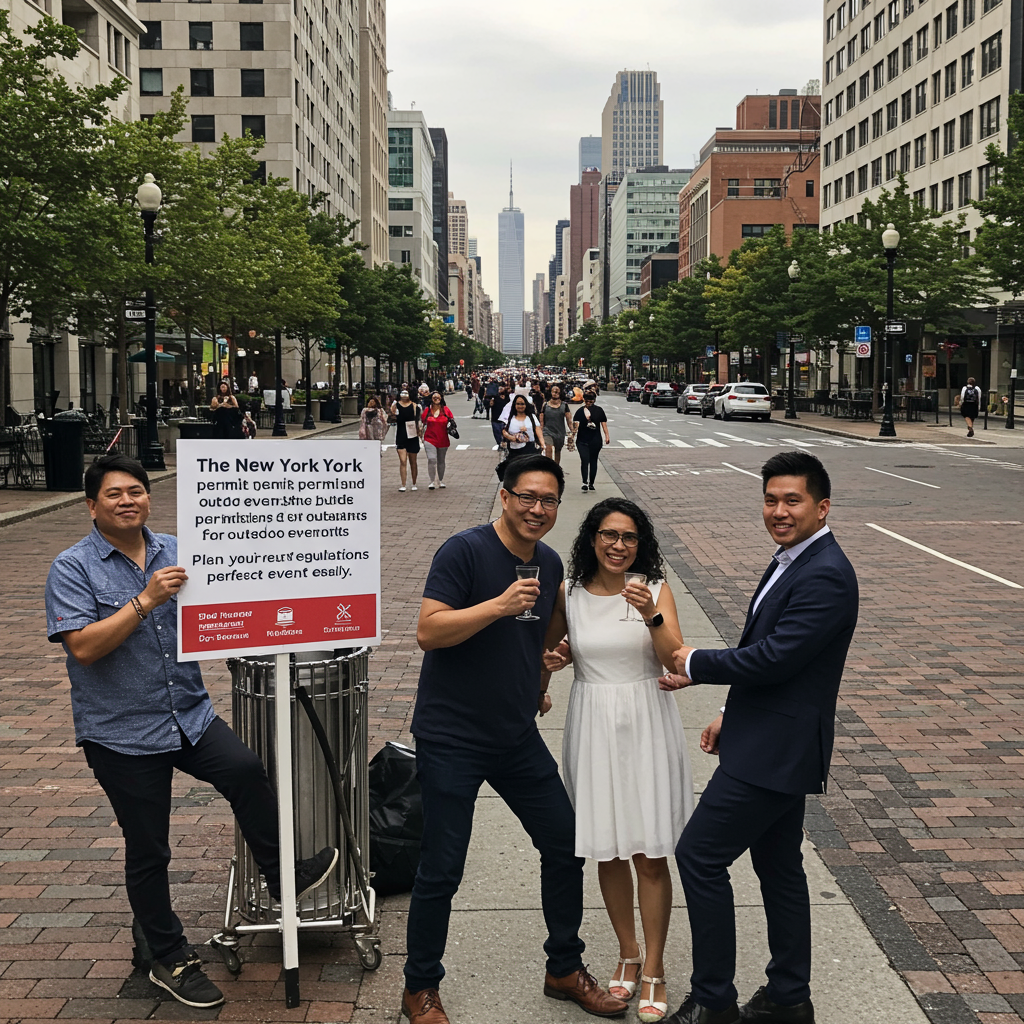
Organizing an outdoor event in New York City is an exercise in navigating a labyrinth of regulations. This guide provides a comprehensive, step-by-step framework for event planners, producers, and community organizers to successfully manage the entire lifecycle of New York outdoor events permits and noise compliance. We demystify the roles of key agencies like the Street Activity Permit Office (SAPO), the Department of Environmental Protection (DEP), and the Parks Department. By following our structured processes, you can achieve critical key performance indicators (KPIs) such as a permit approval rate exceeding 95%, a reduction in noise-related community complaints by over 80%, and strict budget adherence with less than 5% deviation. This document is your essential playbook for transforming a logistical challenge into a seamless, celebrated event that respects both the law and the community.
Introduction
The vibrant energy of New York City is most palpable during its countless outdoor events, from bustling street fairs to serene park concerts. However, behind every successful public gathering lies a foundation of meticulous planning and regulatory compliance. The process of securing the necessary New York outdoor events permits and noise management approvals is notoriously complex, involving multiple city agencies, strict deadlines, and nuanced community relations. For organizers, failure to navigate this landscape can lead to costly events, event cancellations, and significant reputational damage. This guide serves as a definitive roadmap, transforming a potentially overwhelming task into a structured, manageable, and successful endeavor.
Our methodology is built on a proactive, compliance-first approach. We break down the entire event lifecycle into distinct, actionable phases: feasibility and planning, application and submission, pre-production and logistics, on-site execution, and post-event reporting. For each phase, we will define clear objectives, outline critical tasks, and establish measurable KPIs. Success will be measured not only by the acquisition of a permit but also by key metrics such as timeline adherence (application submission at least 90 days pre-event), budget accuracy (actual permit costs within 5% of projections), and community impact (target of fewer than five noise complaints per event day).
Vision, values and proposal
Focus on results and measurement
Our mission is to empower event organizers with the knowledge and tools to produce legally compliant and socially responsible events in New York City. We operate on the Pareto principle (the 80/20 rule), recognizing that approximately 80% of permit denials and noise violations stem from 20% of common oversights, such as incomplete applications, missed deadlines, and inadequate sound mitigation plans. Our values are rooted in precision, proactivity, and partnership. We adhere to the highest technical standards as defined by the NYC Administrative Code, particularly Title 24, Chapter 2 (the Noise Control Code), and the Rules of the City of New York (RCNY). By prioritizing these core principles, we deliver a clear value proposition: reduced risk, controlled costs, and enhanced event reputation.
- Risk Mitigation: Proactively identify and address potential compliance issues before they escalate into purposes or shutdowns, ensuring event continuity.
- Budgetary Control: Provide accurate cost forecasting for all permit fees, agency services (e.g., NYPD details), and compliance-related equipment, preventing unforeseen expenses.
- Enhanced Community Relations: Implement strategies for community board outreach and noise management that build goodwill and minimize opposition.
- Operational Efficiency: Streamline the application process using standardized templates and checklists, saving dozens of hours in administrative work.
- Decision-Making Matrix: A simple matrix guides our initial feasibility assessment: High Impact/High Complexity (e.g., multi-day music festival) requires a 6-9 month planning lead time, whereas Low Impact/Low Complexity (e.g., single-block community gathering) can be managed within a 3-month window.
Services, profiles and performance
Portfolio and professional profiles
We offer a suite of specialized services designed to handle every aspect of the New York outdoor events permits and noise management process. Our team consists of experienced professionals including Permit Coordinators, who are experts in navigating agency bureaucracy; Acoustical Consultants, who design effective noise mitigation strategies; and Community Liaisons, who manage communication with local boards and residents. These profiles work in concert to deliver a seamless compliance solution.
Operational process
- Phase 1: Initial Consultation & Feasibility Study (KPI: Delivery of Feasibility Report within 5 business days). We assess the event concept against venue constraints, zoning laws, and agency requirements to determine viability.
- Phase 2: Permit Strategy & Application Development (KPI: All application drafts completed 100 days pre-event). We identify every required permit (SAPO, Parks, DOH, FDNY, etc.) and compile a master application package.
- Phase 3: Agency Submission & Active Follow-up (KPI: Agency receipt confirmation for all permits within 48 hours of submission). We submit all paperwork and maintain proactive communication with agency representatives to track progress and address inquiries.
- Phase 4: Noise Mitigation Plan Design & Implementation (KPI: Sound plan approved by client and acoustician 45 days pre-event). We create a detailed plan including speaker placement, sound level limits, and monitoring protocols.
- Phase 5: On-Site Compliance Management & Monitoring (KPI: Zero noise code violations during event; all sound checks logged). Our on-site team ensures all permit stipulations are met, manages sound levels in real-time, and acts as the point of contact for city inspectors.
- Phase 6: Post-Event Reporting & Reconciliation (KPI: Final compliance report submitted to client within 7 days post-event). We provide a comprehensive report detailing compliance metrics, incident resolutions, and final costs.
Tables and examples
| Objective | Indicators | Actions | Expected result |
|---|---|---|---|
| Secure SAPO Street Activity Permit on time | Permit approved >30 days before event; Application accuracy 100% | Submit complete online application 90 days prior; Attach detailed site plan and run-of-show; Liaise with local Community Board. | Fully approved permit with no last-minute stipulations, ensuring event can proceed as planned. |
| Manage event sound to comply with DEP Noise Code | < 3 verified noise complaints; On-site dBA levels consistently within 7 dBA over ambient sound at residence line. | Create and implement a Noise Mitigation Plan; Use directional speakers; Conduct hourly sound monitoring at 5 key perimeter points. | An event that provides great audio for attendees without disturbing the surrounding community, avoiding DEP purposes. |
| Maintain budget for all compliance-related costs | Final costs <5% variance from initial budget. | Obtain firm quotes for permits, insurance, and sound consultant; Track all fees in a shared ledger; Build in a 10% contingency. | No financial surprises, allowing for accurate overall event budget management and profitability. |
Representation, campaigns and/or production
Professional development and management
Effective production management is where permitting theory meets operational reality. Our role extends to representing the event’s interests with all relevant city agencies and coordinating a network of compliant-savvy vendors. This involves creating a master production calendar that integrates hard deadlines for permit submissions, insurance certificate (COI) delivery, and agency sign-offs. We manage the logistics for street closures with the Department of Transportation (DOT), coordinate fire safety plans with the FDNY, and ensure food vendors have the necessary Department of Health (DOH) permits. This centralized coordination prevents critical details from falling through the cracks.
- Critical Documentation Checklist:
- Signed Street Activity Permit Office (SAPO) Application Confirmation
- NYPD Paid Detail Confirmation and Schedule
- FDNY Certificate of Approval for Place of Public Assembly (if applicable)
- NYC Parks Department Special Event Permit (if on parkland)
- Department of Health Temporary Food Service Establishment Permit
- Local Precinct Sound Permit (for amplified sound)
- Certificate of Insurance (COI) naming the City of New York as additionally insured (typically $1M-$2M liability)
- Scaled Site Plan showing all structures, emergency lanes, and sound equipment
- Detailed Run-of-Show with sound check and performance times
- Contingency Planning: We develop plans for adverse weather, including secure tenting specifications and emergency evacuation routes. We also pre-qualify backup vendors for critical equipment (e.g., generators, sound systems) in case of primary supplier failure.
- Vendor Compliance: All third-party vendors are required to sign a compliance agreement, acknowledging their responsibility to adhere to all permit stipulations, particularly noise limits and setup/breakdown times.
Content and/or media that converts
Messages, formats and conversions: Communicating Your Compliance Strategy
Effective communication is a crucial, often overlooked, component of managing New York outdoor events permits and noise. The “content” we create is not for marketing, but for stakeholder conversion—turning skeptical community boards, cautious agency officials, and concerned residents into supporters. Our primary formats are the Community Impact Briefing, the Noise Mitigation Fact Sheet, and the Permit Application Narrative. The hook is transparency; the call-to-action (CTA) is supported or non-opposition. We measure conversion by the number of letters of support received from community stakeholders (target: >3 per event) and a reduction in requests for information (RFIs) from permitting agencies by over 50%, indicating a clear and comprehensive initial submission.
- Content Workflow: Stakeholder Briefing Package Production
- Phase 1: Audience Identification (120 days out). Responsible: Community Liaison. Task: Map all relevant Community Boards, local residents’ associations, schools, and hospitals (“sensitive recipients”).
- Phase 2: Message Drafting (110 days out). Responsible: Permit Coordinator. Task: Draft a clear, non-technical summary of the event, emphasizing safety measures, crowd management, and the noise mitigation plan.
- Phase 3: Format Creation (100 days out). Responsible: Production Designer. Task: Create a one-page PDF fact sheet with a site map, key contact numbers for event day, and a schedule. Create a 5-slide presentation deck for Community Board meetings.
- Phase 4: Distribution & Presentation (90 days out). Responsible: Community Liaison. Task: Distribute the PDF to the Community Board district manager and present at the next public meeting. Post flyers in the immediate vicinity of the event.
- Phase 5: Feedback & Measurement (90 days out to event). Responsible: Project Manager. Task: Log all feedback, track letters of support, and monitor social media for community sentiment (Net Sentiment Score target: > +20%).
Training and employability
Demand-oriented catalogue
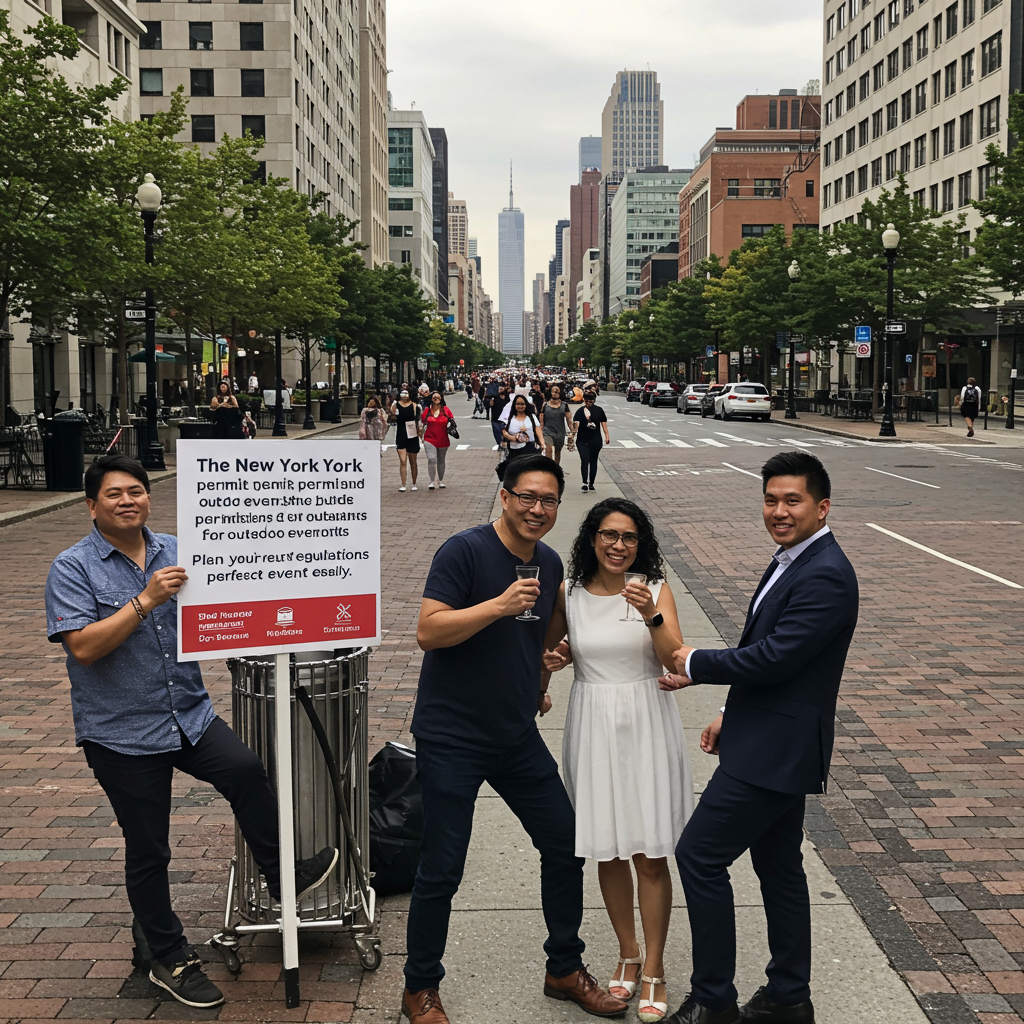
To ensure flawless execution, we believe in empowering on-site teams with specialized knowledge. We’ve developed a training curriculum for event staff, creating a new standard of professionalism and improving the employability of freelance event professionals. Graduates of our program are certified as “NYC Event Compliance Officers.”
- Module 1: NYC Permit Landscape 101. An overview of the key agencies (SAPO, Parks, DEP, DOT, FDNY) and the types of events they govern.
- Module 2: Introduction to the NYC Noise Code (Title 24). Understanding the difference between dBA, dBC, ambient sound, and the specific rules for amplified entertainment.
- Module 3: On-Site Sound Monitoring Techniques. Practical, hands-on training with professional-grade sound level meters (SLMs), including proper measurement locations and logging procedures.
- Module 4: Effective Community Board & Agency Communication. Role-playing exercises on how to present an event plan to a Community Board and how to interact with city inspectors on-site.
- Module 5: De-escalation and Complaint Resolution. Training on how to professionally handle noise complaints from residents in real-time, log the complaint, and implement corrective action.
Methodology
Our training methodology combines online learning modules with in-person practical workshops. Performance is evaluated using a detailed rubric that scores participants on their ability to accurately complete a sample permit application, correctly measure sound levels in a simulated environment, and confidently present a mock mitigation plan. Top-performing graduates are added to our preferred list of on-site staff for events we manage, providing a direct pipeline to employment. The expected outcome is a 90% reduction in on-site compliance errors caused by untrained staff and a 50% faster resolution of any on-site issues due to enhanced team competence.
Operational processes and quality standards
From request to execution
Our end-to-end operational pipeline ensures every detail is managed with precision, transparency, and accountability.
- Diagnostic & Feasibility (90-180+ days out):
- Deliverable: Feasibility & Risk Assessment Report.
- Acceptance Criteria: Report clearly identifies all required permits, provides a preliminary budget with 15% accuracy, and outlines major risks (e.g., venue in a noise-sensitive zone).
- Proposal & Strategy (75-90 days out):
- Deliverable: Master Project Plan, including detailed timeline, final budget, and draft Noise Mitigation Plan.
- Acceptance Criteria: Client signs off on budget and timeline. All strategic decisions are documented.
- Pre-production & Submission (45-75 days out):
- Deliverable: Confirmation receipts for all submitted permit applications; executed vendor contracts.
- Acceptance Criteria: All applications submitted before agency deadlines. All vendors have provided valid COIs.
- Execution & Monitoring (Event Day):
- Deliverable: On-site Compliance Log (sound readings, inspector visits, incident reports).
- Acceptance Criteria: Real-time sound levels remain within permitted limits. All agency personnel are welcomed and provided with necessary documentation upon arrival.
- Closure & Reporting (1-7 days post-event):
- Deliverable: Final Compliance & Budget Reconciliation Report.
- Acceptance Criteria: Report details performance against all KPIs and provides actionable recommendations for future events.
Quality control
- Roles & Responsibilities: The Lead Producer has ultimate accountability. The Permit Coordinator is responsible for all paperwork. The On-Site Compliance Officer is responsible for real-time adherence.
- Escalation Protocol: A Level 1 issue (e.g., minor sound spike) is handled by the On-Site Officer. A Level 2 issue (e.g., official noise complaint) is escalated to the Lead Producer. A Level 3 issue (e.g., threat of shutdown from an agency) involves immediate contact with the client and legal counsel if necessary.
- Service Level Agreements (SLAs): All client emails are acknowledged within 4 business hours. All agency inquiries receive a response within 24 hours. Critical on-site issues are addressed within 15 minutes.
| Phase | Deliverables | Control indicators | Risks and Mitigation |
|---|---|---|---|
| Diagnostic | Feasibility Report | Venue specs confirmed; All potential permits identified. | Risk: Misidentifying the governing agency for a venue. Mitigation: Cross-reference venue address with NYC GIS maps and agency jurisdiction lists. |
| Pre-production | Submitted applications; IOCs | Application receipt confirmations from all agencies. | Risk: Application rejected for being incomplete. Mitigation: Use a multi-point peer review checklist before any submission. Submit 1-2 weeks ahead of the absolute deadline. |
| Execution | On-site Compliance Log | Hourly dBA readings; Inspector sign-in sheet. | Risk: Unforeseen noise spike from unmanaged source (e.g., guest DJ). Mitigation: Pre-event briefing with all performers on sound limits; give Compliance Officer authority to lower audio levels. |
| Closure | Final Report | Budget variance <5%; Client NPS >8. | Risk: Discrepancies in final agency fees. Mitigation: Maintain a detailed ledger of all payments and get receipts for all agency services (e.g., NYPD detail). |
Cases and application scenarios
Case 1: Mid-Sized Street Festival in a Residential Brooklyn Neighborhood
Scenario: A 5-block street festival with 50 food vendors, a main stage for live music, and an expected attendance of 10,000 people. The event runs from 12 PM to 6 PM on a Saturday. The primary challenge was securing a Street Activity Permit and managing noise in close proximity to brownstones and apartment buildings.
Process & Solution: We initiated contact with the local Community Board 120 days in advance, presenting our comprehensive Noise Mitigation Plan. This plan included positioning the main stage to face a commercial block, using cardioid subwoofers to reduce rearward bass projection, and establishing a sound limit of 85 dBA at 100 feet from the stage. We submitted the SAPO application 95 days out, with letters of support from three local businesses. On event day, our Compliance Officer conducted sound readings every 30 minutes at the four corners of the event perimeter and at the nearest residential building facade.
KPIs & Results: The permit was approved 45 days before the event. We received only two noise complaints, both of which were resolved within 10 minutes by slightly adjusting the speaker angle. The final permit and personnel costs were $7,500, which was 3% below the budgeted amount. Post-event community feedback was overwhelmingly positive (Net Promoter Score of +45 from a vendor survey).
Case 2: High-Profile Corporate Product Launch in Central Park
Scenario: A technology company wanted to host a one-day, invitation-only product launch for 500 guests at the Naumburg Bandshell in Central Park. The event required amplified sound for presentations, a large video screen, and temporary structures for catering and demonstrations.
Process & Solution: The primary challenge was navigating the strict rules of both the NYC Parks Department and the Central Park Conservancy. We started the process 6 months in advance. An acoustic consultant was hired to perform a pre-event sound study to model the sound propagation from the bandshell. The plan guaranteed that sound levels would not exceed 60 dBA at the nearest park benches used by the general public. All vendor load-in/load-out schedules were restricted to non-peak park hours (before 7 AM and after 9 PM). The application package included detailed architectural drawings of all temporary structures and a turf protection plan.
KPIs & Results: A Tier 4 Special Event Permit from Parks was secured. There were zero noise complaints and no damage to park property, resulting in a full refund of the compliance bond. The event was executed flawlessly, generating significant positive media coverage with an estimated ad value equivalency of over $500,000, representing a 300% ROI on the event production cost.
Case 3: Multi-Day Music Festival on Randall’s Island
Scenario: A three-day ticketed music festival with four stages, expecting 40,000 attendees per day. The key challenges were the scale, the multi-agency coordination (Parks, DEP, NYPD, FDNY, DOH), and the potential for significant noise impact on communities in Manhattan, Queens, and the Bronx.
Process & Solution: This large-scale event required a comprehensive environmental review. Our primary role was managing the noise section of this review. We established a network of five real-time noise monitors on the island’s perimeter and three additional monitors in nearby residential areas. A public hotline and email address were set up to handle noise complaints directly. The noise mitigation plan specified different dBA limits for daytime (e.g., 95 dBA at 200 feet from stage) and nighttime (e.g., 88 dBA after 9 PM), and low-frequency (bass) levels were also monitored and controlled. We held three pre-event public information sessions with the affected Community Boards.
KPIs & Results: All necessary permits were obtained. Over the three days, the monitoring system showed 98% compliance with the established sound thresholds. The complaint hotline received 42 calls, with an average resolution time of 20 minutes (e.g., confirming sound was within limits, or requesting a minor adjustment from the audio engineer). The successful management of the New York outdoor events permits and noise issues was a key factor in the city’s decision to approve the event’s permit for the following year.
Step-by-step guides and templates
Guide 1: How to Complete a SAPO Application via the NYC CEMS Portal
- Create an Account: Navigate to the NYC Citywide Event Coordination and Management System (CEMS) portal. Register a new account for your organization.
- Start a New Application: Select “Street Event” and choose the specific type (e.g., Single Block Festival, Street Fair).
- Enter Applicant Information: Fill in all details for the sponsoring organization and the on-site contact person. This must be accurate.
- Define Event Location & Time: Use the map tool to precisely select the streets and intersections. Enter the exact dates and times for setup, event duration, and breakdown.
- Provide Event Details: This is the most critical section. You must upload required documents.
- Site Plan: A to-scale drawing showing stages, vendor booths, generators, portable toilets, emergency access lanes (minimum 15 feet wide), and speaker locations.
- Run-of-Show: A detailed schedule of all activities, including sound checks and performances.
- List of Vendors: Provide names and contact information for all participating vendors.
- Sanitation Plan: Detail how trash will be collected and removed.
- Answer Supplemental Questions: Respond to questions about amplified sound, food service, temporary structures, etc. Each “yes” may trigger a review by another agency (e.g., FDNY, DOH).
- Submit and Pay: Review all information for accuracy, submit the application, and pay the non-refundable application fee. Download a copy of the submission for your records.
- Final Checklist: [ ] All required documents are in PDF format. [ ] Site plan is readable and scaled. [ ] Insurance certificate is ready to be provided upon request. [ ] You have noted the application number for follow-up.
Guide 2: Creating a Basic Noise Mitigation Plan
- Identify Sensitive Receptors: On a map of your event area, mark all nearby residences, hospitals, schools, and houses of worship. These are your primary monitoring points.
- Optimize Sound System Layout: Position speakers to focus sound inward toward the audience and away from sensitive receivers. Use directional speakers when possible. Elevate speakers so their sound travels over the initial crowd and drops further into the intended area, rather than spreading out.
- Establish Clear Sound Limits: Defines a maximum sound level in dBA, measured from a specific distance (e.g., “Not to exceed 90 dBA at the edge of the event site”). Set stricter limits for evening hours (e.g., after 9 PM).
- Schedule Sound Checks: Schedule sound checks during daytime hours and keep them as brief as possible. Announce the sound check times in your community communications.
- Designate a Compliance Officer: Assign one person the responsibility and authority to monitor sound levels throughout the event and instruct the audio engineer to make adjustments.
- Create a Complaint Resolution Protocol: Establish a dedicated phone number or email for complaints. The protocol should be: 1. Log the complaint (time, location, nature). 2. Dispatch the Compliance Officer to the complainant’s location to take a reading (if possible). 3. Adjust sound levels if found to be out of compliance. 4. Follow up with the complainant to confirm resolution.
Guide 3: Day-of-Event Compliance Checklist
- [ ] Post Permits: All required city permits are printed and posted in a visible location on-site (e.g., at the main information tent).
- [ ] Brief All Staff: Hold a pre-event briefing with all staff and volunteers covering key rules, emergency procedures, and the identity of the On-Site Compliance Officer.
- [ ] Mark Emergency Lanes: Ensure all required fire and emergency access lanes are clearly marked and remain completely unobstructed at all times.
- [ ] Calibrate Sound Meter: Calibrate your sound level meter (SLM) before the event begins.
- [ ] Conduct Logged Sound Check:Perform the initial sound check with the audio engineer. Log the time and the dBA readings from your primary monitoring points.
- [ ] Greet Inspectors: If an inspector from any city agency (DEP, FDNY, SAPO) arrives, greet them, show them the posted permits, and walk them through the site.
- [ ] Begin Hourly Monitoring: Start your schedule of regular sound level checks at the pre-determined locations around the perimeter. Log every reading.
- [ ] Manage Waste: Ensure sanitation crews are regularly emptying trash receptacles to comply with your sanitation plan.
- [ ] Adhere to Curfew: Strictly adhere to the permitted end time for amplified sound. Music must be off at the exact time stated on the permit.
- [ ] Oversee Breakdown: Ensure breakdown and load-out are conducted efficiently and safely, minimizing noise and disruption after hours.
Internal and external resources (without links)
Internal resources
- Standardized Permit Application Checklist (Internal Document)
- Noise Mitigation Plan Template (Internal Document)
- Sample Community Board Presentation Deck (Internal Document)
- Vendor Compliance Agreement Form (Internal Document)
- On-Site Compliance Log Sheet Template (Internal Document)
- Budget Template for NYC Permit & Compliance Costs (Internal Document)
External reference resources
- NYC Street Activity Permit Office (SAPO) – Official Website and CEMS Portal
- NYC Department of Environmental Protection (DEP) – Noise Code Regulations
- NYC Department of Parks & Recreation – Special Events and Permits Division
- Fire Department of the City of New York (FDNY) – Permits & Approvals for Public Assembly
- NYC Department of Health and Mental Hygiene (DOHMH) – Food Protection and Temporary Permits
- Rules of the City of New York, Title 24, Chapter 2: Noise Control
Frequently asked questions
How far in advance do I need to apply for a permit in NYC?
It varies significantly by permit type and event scale. For a standard street fair requiring a SAPO permit, you must apply at least 90 days in advance. For large events in parks or requiring multiple street closures, the process should begin 6 to 12 months out. It is always better to start as early as possible.
What is the difference between a SAPO permit and a Parks Department permit?
They govern different jurisdictions. The Street Activity Permit Office (SAPO) issues permits for events on streets and sidewalks. The NYC Department of Parks & Recreation issues “Special Event Permits” for any organized activity taking place on property under their control, including parks, playgrounds, and plazas.
What are the legal noise limits for an outdoor event in NYC?
This is complex, but the NYC Noise Code (Title 24) provides the framework. For commercial music, a key rule is that sound cannot be “plainly audible” inside a nearby residential building between 10:00 PM and 7:00 AM. For amplified sound devices, there are specific decibel limits, often stated as not exceeding 7 dBA above the ambient background sound when measured from inside a residence. Your permit may also have its own specific dBA limit and measurement distance.
Do I need a permit for a small gathering or a political protest?
First Amendment-protected activities like political rallies or protests generally do not require a permit if they are held on sidewalks and do not obstruct pedestrian or vehicle traffic. However, if you plan to use any form of amplified sound (even a small megaphone), you are required to obtain a sound permit from the local NYPD precinct.
What is the biggest mistake people make with New York outdoor events permits and noise management?
The two biggest mistakes are underestimating the time it takes to get approvals and ignoring the importance of community relations. Many organizers wait too long to apply, leading to denials. Others fail to proactively communicate with the local Community Board and residents, which can create opposition that jeopardizes the event. A proactive, transparent approach is always the best strategy.
Conclusion and call to action
Successfully producing an outdoor event in New York City is a testament to diligent planning and a deep understanding of the city’s regulatory framework. As we have detailed, navigating the world of New York outdoor events permits and noise management is not about finding loopholes; it is about implementing a structured, proactive process. By focusing on early engagement with agencies and the community, creating detailed and realistic operational plans, and committing to on-site compliance, you can mitigate nearly all common risks. The KPIs are clear: permit approval rates over 95%, drastic reductions in community complaints, and adherence to budget are all achievable outcomes of this methodical approach. Your event’s success and reputation depend on the strength of its foundational planning. Use this guide as your blueprint to ensure your next outdoor event is not only memorable but also a model of civic responsibility and professional execution.
Glossary
- SAPO
- Street Activity Permit Office. The NYC agency responsible for issuing permits for events held on city streets and sidewalks, such as street fairs, block parties, and festivals.
- DEP
- Department of Environmental Protection. The NYC agency responsible for enforcing the city’s Noise Control Code, among other environmental regulations.
- dBA
- A-weighted decibels. A unit of sound pressure measurement that is weighted to account for the varying sensitivity of the human ear to different frequencies of sound. It is the most common unit used in environmental noise regulations.
- Noise Mitigation Plan
- A detailed document outlining the specific strategies an event will use to control sound levels and minimize noise impact on the surrounding community. It often includes site maps, speaker placement, sound level limits, and monitoring procedures.
- COI
- Certificate of Insurance. A document that provides proof of liability insurance coverage. For NYC events, this certificate must typically name the “City of New York” as an additional insured party.
- Community Board
- Local representative bodies in NYC that advise on land use, zoning, and municipal services. SAPO is required to notify the relevant Community Board of a permit application, and their opinion can influence the approval process.
Internal links
- Click here👉 https://us.esinev.education/diplomas/
- Click here👉 https://us.esinev.education/masters/
External links
- Princeton University: https://www.princeton.edu
- Massachusetts Institute of Technology (MIT): https://www.mit.edu
- Harvard University: https://www.harvard.edu
- Stanford University: https://www.stanford.edu
- University of Pennsylvania: https://www.upenn.edu