
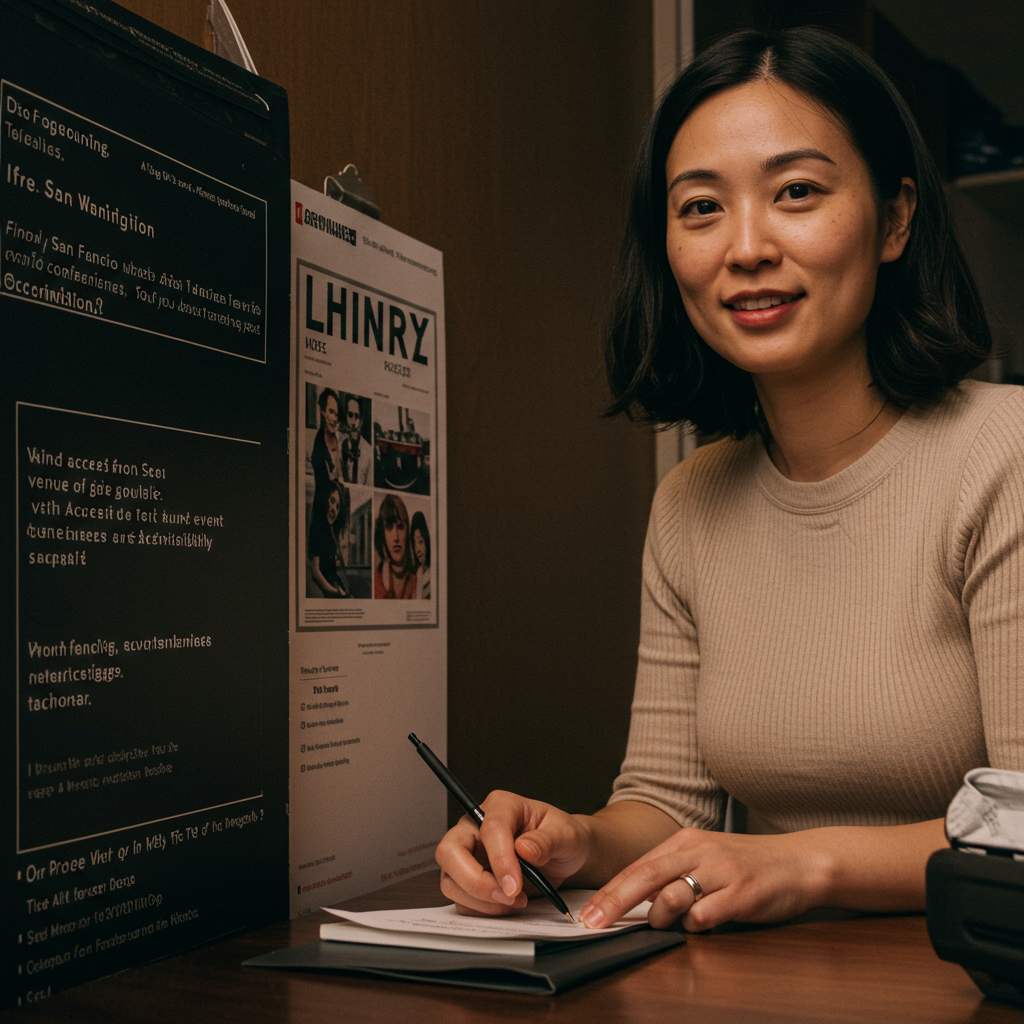
Choosing the right location for a technology event in San Francisco is a critical strategic decision that goes far beyond square footage and catering menus. This guide provides a comprehensive framework for event organizers to select, vet, and manage San Francisco tech event venues with a dual focus on robust technological infrastructure and uncompromising accessibility. We delve into data-driven selection processes, operational checklists, and performance metrics designed for the unique demands of a tech-savvy audience. By following our methodologies, you can significantly enhance attendee experience, measured through KPIs like Net Promoter Score (NPS) and engagement rates, while maximizing event ROI. This guide is tailored for corporate event planners, startup marketing teams, and conference organizers aiming to produce flawless, inclusive, and impactful events in the heart of the tech world.
Introduction
San Francisco stands as the undisputed epicenter of the global technology industry. For event organizers, this presents both a massive opportunity and a unique challenge: attendees are not just participants; they are discerning users, developers, and innovators with sky-high expectations. A dropped Wi-Fi signal, a lack of power outlets, or an inaccessible entrance can tarnish an otherwise brilliant event. The process of selecting from the myriad of San Francisco tech event venues must be rigorous, strategic, and user-centric. This guide moves beyond simple directories to offer a robust framework for evaluating venues on the two pillars of modern events: technical capability and universal accessibility. The goal is to empower organizers to create experiences that are seamless, inclusive, and memorable for all the right reasons.
Our methodology is built around a quantitative Venue Scorecard, which weighs critical factors based on event goals. We will analyze key performance indicators (KPIs) such as cost per attendee, uptime of critical tech services (e.g., Wi-Fi at >99.9% availability), accessibility compliance score (targeting 100% ADA compliance plus additional inclusivity measures), and post-event Net Promoter Score (NPS). By applying this data-driven approach, event planners can justify their choices, negotiate better terms, and mitigate risks effectively, ensuring every dollar and minute invested contributes directly to the event’s success.
Vision, values and proposal
Focus on results and measurement
Our vision is to transform venue selection from a logistical task into a strategic driver of event success. We operate on the principle that a venue is not a container but an active platform for content delivery and community building. Our core values are data-driven decision-making, radical inclusivity, and operational excellence. We apply the 80/20 rule, focusing on the 20% of venue features that deliver 80% of the attendee value—namely, seamless connectivity, accessible design, and flexible content spaces. Our technical standards are uncompromising, aligning with enterprise-level IT requirements and exceeding baseline ADA compliance to embrace universal design principles.
- Data-Driven Decisions: Every potential venue is scored against a customized matrix. Criteria include bandwidth per user, power outlet density, ADA compliance checklist, and cost-benefit analysis. A venue must meet a minimum threshold score of 85/100 to be shortlisted.
- Radical Inclusivity: We look beyond ramps and elevators. Our assessments include sensory considerations (e.g., availability of quiet rooms), digital accessibility (live captioning support, assistive listening systems), and staff sensitivity training.
- Operational Excellence: We prioritize venues with experienced, in-house technical and operations teams, transparent pricing (including union labor costs), and proven contingency plans for power, network, and security.
- Strategic Partnership: The venue is treated as a partner. We seek transparent communication, flexibility in space configuration, and a collaborative approach to problem-solving, measured by a Partner Satisfaction Score post-event.
Services, profiles and performance
Portfolio and professional profiles
We provide end-to-end venue management services tailored for the tech industry. This includes initial needs analysis, market scanning of suitable San Francisco tech event venues, technical and accessibility audits, contract negotiation, and on-site management. Our team consists of seasoned event producers, certified accessibility consultants, and network engineers who understand the unique demands of developer conferences, product launches, and executive summits. We act as an extension of your team, ensuring every logistical detail aligns with your strategic objectives.
Operational process
- Phase 1: Discovery & Strategy (1-2 weeks): Define event goals, audience profile, technical requirements, and accessibility needs. KPI: Finalized Venue Requirements Document with a stakeholder approval rate of 100%.
- Phase 2: Venue Scouting & Auditing (2-3 weeks): Identify and perform initial remote vetting of up to 10 venues. Shortlist 3-5 for in-person site inspections. KPI: Audit reports completed with a standardized scoring matrix for each venue.
- Phase 3: Negotiation & Contracting (1-2 weeks): Submit RFPs, negotiate terms focusing on key clauses (attrition, force majeure, tech guarantees), and finalize the contract. KPI: Achieve a minimum of 10% cost savings against the initial proposal.
- Phase 4: Pre-Production & Integration (4-8 weeks): Liaise with venue staff, A/V providers, and other vendors to plan all logistical aspects. KPI: Technical and operational run-of-show finalized 2 weeks prior to the event.
- Phase 5: On-site Execution & Post-Event Analysis (1 week): Manage all venue-related operations during the event and conduct a post-mortem. KPI: Achieve an attendee NPS of +50 or higher and a technical issue resolution time of under 5 minutes.
Tables and examples
| Objective | Indicators | Actions | Expected result |
|---|---|---|---|
| Ensure 100% Wi-Fi reliability for 1,000 concurrent developer users | Network uptime (%), Latency (<50ms), Bandwidth per user (>5 Mbps), Packet loss (<0.1%) | Contract a venue with dedicated fiber. Hire a third-party network monitoring service. Specify network SLA in the contract. | 99.99% network uptime. Zero official complaints regarding connectivity. NPS score for “Tech Experience” above 8/10. |
| Achieve a fully accessible experience for all attendees | ADA compliance score (100%), Number of accessibility requests met, Attendee feedback on inclusivity (qualitative) | Conduct a third-party accessibility audit. Provide staff training on inclusivity. Offer live captioning and ASL for main stages. | Positive feedback from attendees with disabilities. Event recognized as an industry leader in inclusivity. |
| Optimize venue cost without compromising quality | Cost per attendee, F&B cost vs. budget, Total venue spend vs. budget | Negotiate F&B minimums. Book during shoulder seasons. Leverage multi-year deals. Bundle A/V services. | Achieve a final cost per attendee that is 5-10% below the industry average for a comparable event. Budget variance less than 2%. |
Representation, campaigns and/or production
Professional development and management
Effective event production in San Francisco requires navigating a complex landscape of logistics, regulations, and vendor relationships. Our production management service handles every detail, from securing necessary permits with the City of San Francisco Entertainment Commission to managing union labor contracts (e.g., IATSE for stagehands, Teamsters for freight). We create a master production schedule that serves as the single source of truth for all stakeholders, integrating deadlines for venue deliverables, vendor load-in, tech rehearsals, and content checks. This proactive coordination minimizes costly on-site surprises and ensures a smooth, stress-free execution.
- Permitting & Compliance Checklist: Verification of fire safety permits, special event licenses, and adherence to noise ordinances.
- Vendor Management: Sourcing and managing a roster of pre-vetted, reliable vendors for A/V, staging, lighting, internet services, and catering, ensuring they meet the venue’s requirements.
- Union Labor Coordination: Clear communication and scheduling with union stewards to ensure compliance and avoid unexpected labor costs. We clarify jurisdiction and work rules in advance.
- Contingency Planning: Documented plans for common risks such as power failure (backup generator verification), medical emergencies (on-site EMTs and clear routes), security threats (liaison with venue security and local law enforcement), and speaker cancellations.
- Load-in/Load-out Schedule: A detailed minute-by-minute schedule for all vendors, managed by an on-site logistics lead to prevent dock congestion and delays.
Content and/or media that converts
Optimizing Venues for High-Impact Content Delivery
The venue is the stage upon which your content comes to life. Its characteristics directly influence how your message is received. We focus on selecting venues that enhance content delivery, whether it’s an immersive product launch, a multi-track technical conference, or a high-stakes investor pitch. We analyze room acoustics, sightlines, lighting capabilities, and rigging points to ensure a premium experience. For hybrid events, we vet the venue’s broadcast capabilities, including availability of dark fiber, dedicated control rooms, and sufficient power for a full production crew. Our A/B testing might involve comparing attendee engagement in a theater-style setup versus a ‘fireside chat’ layout to optimize for different content formats.
- Content Strategy & Venue Matching: Define content formats (keynotes, workshops, demos) and map them to ideal space requirements (capacity, A/V, layout).
- Technical Rider Development: Create a detailed A/V and IT specification document that is sent to potential venues as part of the RFP.
- Venue Technical Walk-through: On-site inspection with A/V director and network engineer to verify infrastructure, from power drops to internet ports.
- Staging & Environmental Design: Design stage sets, lighting schemes, and room layouts that reinforce the event’s brand and message.
- Content Rehearsal & Show Flow: Schedule and manage full technical rehearsals with speakers to ensure a flawless show flow.
- Execution & Recording: Oversee live production and ensure high-quality recording of all sessions for on-demand content, maximizing the event’s long-term value.
Training and employability
Demand-oriented catalogue
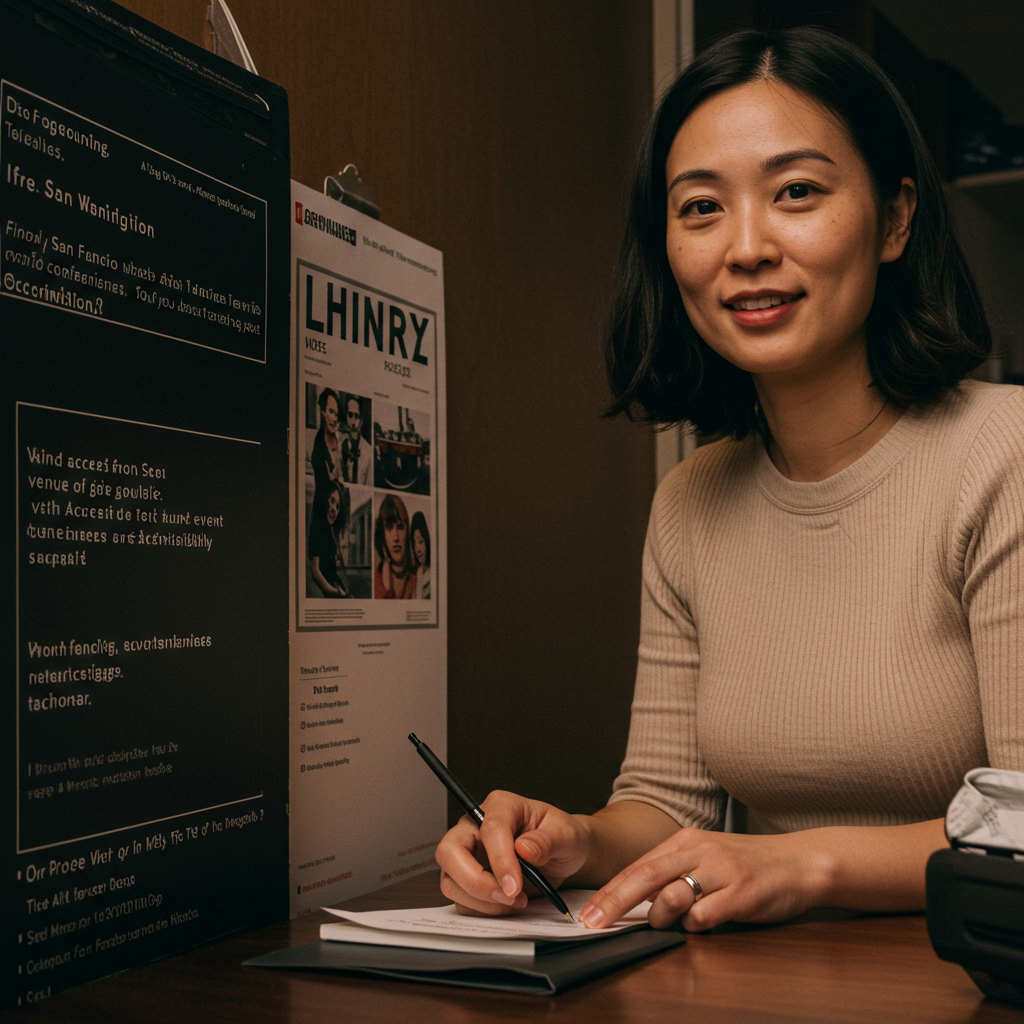
An event’s success depends on the people running it. We provide targeted training for event staff, volunteers, and even venue personnel to ensure they are equipped to handle the specific needs of a tech audience and create an inclusive environment. This training goes beyond standard customer service, focusing on practical skills and awareness.
-
- Module 1: Tech Event Support Basics. Training on common technical issues (e.g., Wi-Fi troubleshooting for different devices), understanding A/V connections (HDMI, USB-C), and effectively triaging technical problems to the right support staff.
- Module 2: Accessibility & Inclusivity Ambassador Training. Based on universal design principles, this module covers disability etiquette, how to use accessibility tools provided (like assistive listening devices), and how to guide attendees to resources like quiet rooms or accessible restrooms.
–
- Module 3: Venue Emergency & Evacuation Procedures. A mandatory session covering the specific venue’s safety protocols, emergency exits, assembly points, and communication tree in case of an incident.
- Module 4: Brand & Content Awareness. Equipping staff with key information about the event’s schedule, speakers, and sponsors, enabling them to be helpful and informed resources for attendees.
Methodology
Our training methodology is hands-on and scenario-based. We use role-playing to simulate common attendee interactions and technical glitches. Competency is assessed via a practical rubric during a pre-event walkthrough. This investment in staff training directly translates to a better attendee experience, as measured by higher satisfaction scores and positive qualitative feedback. A well-trained, confident team is one of the most powerful assets for a smooth and successful event.
Operational processes and quality standards
From request to execution
- Diagnosis (RFP): We issue a highly detailed Request for Proposal that includes our Technical and Accessibility Riders. Venues are required to provide specific data, not marketing fluff.
- Proposal and Vetting: Proposals are scored using our weighted matrix. Top candidates undergo a rigorous in-person site inspection. Deliverable: A comparative analysis report with a clear recommendation. Acceptance Criterion: The recommended venue must score >90/100 on the matrix.
- Pre-Production: A master project plan with bi-weekly check-ins with the venue team is established. All vendor plans are integrated. Deliverable: Finalized Banquet Event Orders (BEOs), production schedule, and floor plans. Acceptance Criterion: All documents signed off by stakeholders 14 days before the event.
- Execution: Our on-site team manages all venue-related logistics, acting as the central point of communication. Real-time issue tracking is implemented. Deliverable: A smooth event execution. Acceptance Criterion: Critical issue resolution time under 5 minutes; zero event-stopping failures.
- Closure and Analysis: We reconcile all invoices, conduct a post-mortem with the venue team, and analyze attendee feedback data. Deliverable: A comprehensive post-event report detailing KPIs, budget variance, and lessons learned. Acceptance Criterion: Final report delivered within 30 days of event conclusion.
Quality control
- Roles: A dedicated Venue Manager from our team is assigned as the primary liaison. A Technical Director oversees all A/V and IT aspects. An Accessibility Officer champions inclusivity.
- Escalation: A clear communication and escalation path is defined for any on-site issues, from the on-the-ground team lead to the executive producer.
- Acceptance Indicators: No part of the venue is considered “ready” until it passes a pre-event walkthrough against a detailed checklist (e.g., Wi-Fi speed tests in all rooms, ramp inclines measured, power outlets tested).
- SLAs: Service Level Agreements are embedded in vendor and venue contracts, with clear penalties for non-performance (e.g., rebates for Wi-Fi downtime).
| Phase | Deliverables | Control indicators | Risks and mitigation |
|---|---|---|---|
| Venue Selection | Scored RFP responses, Site visit reports, Final contract | Number of compliant bids received, Average score on Venue Matrix, Cost savings achieved in negotiation | Risk: Hidden costs (e.g., union labor, rigging). Mitigation: Require all-inclusive pricing in RFP; review contract with an event-specialized lawyer. |
| Pre-Production | Master production schedule, Final floor plans, Signed BEOs | Milestones met on time (%), Number of revisions to floor plan (<3), Budget adherence | Risk: Miscommunication between venue and vendors. Mitigation: Host a mandatory all-hands pre-production meeting with all key stakeholders. |
| Event Execution | Daily status reports, Live issue tracker | Attendee satisfaction (NPS), Tech support ticket volume, Schedule adherence (%) | Risk: A/V or network failure. Mitigation: On-site technical support staff, redundant systems for critical components (e.g., projectors, internet connection). |
| Post-Event | Reconciled budget, Post-event analytics report, Attendee survey results | Final budget variance (<3%), Invoice accuracy (100%), Report delivery on time | Risk: Inaccurate final billing. Mitigation: Track all on-site additions in a signed change order log; review final invoice line by line against BEOs. |
Cases and application scenarios
Case 1: “CodeLaunch” – The Startup Product Launch (150 Attendees)
A Series A startup needed to launch its new developer tool with a high-impact, media-heavy event. The audience consisted of developers, press, and investors. The budget was tight ($75,000 all-in). We bypassed traditional hotel ballrooms and selected a unique warehouse venue in the Dogpatch neighborhood. The raw space allowed for custom branding and an edgy, industrial feel that matched the startup’s brand. Our focus was on flawless technical execution. We brought in a dedicated fiber line for two weeks, ensuring the live-streamed demo was perfect. Power was meticulously planned to accommodate dozens of demo stations. Accessibility was addressed by installing temporary ramps and ensuring all content was live-captioned. The result was an event that generated significant buzz. KPIs: 250+ media mentions, cost per attendee of $500, and a 40% lead conversion rate from attending developers within 3 months. The ROI was estimated at 5x the event cost.
Case 2: “DevConnect SF” – The Mid-Sized Developer Conference (800 Attendees)
An open-source foundation hosted its annual conference for its global developer community. The event featured four simultaneous tracks, a sponsor expo, and networking events. Key requirements were robust Wi-Fi capable of handling 800 developers compiling code simultaneously, numerous breakout rooms with identical A/V setups, and a central, easily accessible location. We selected a mid-sized conference center south of Market (SoMa). Our negotiation focused on a multi-year deal to secure favorable rates. We conducted extensive network stress tests a week prior, simulating full capacity. A dedicated “Accessibility Hub” was created, offering assistive listening devices, braille agendas, and a quiet room. We trained volunteers as “Accessibility Ambassadors.” KPIs: Attendee NPS of +62 (up from +45 the previous year), Wi-Fi satisfaction score of 9.2/10, and a 20% increase in sponsor renewal for the following year due to positive feedback on venue traffic and facilities.
Case 3: “Future of AI” – The Global Executive Summit (250 Attendees)
A Fortune 500 company hosted an exclusive, high-touch summit for C-level executives. The focus was on premium experience, seamless service, and flawless security. The content was primarily high-level panels and intimate networking. We chose a five-star hotel in Nob Hill with dedicated meeting floors and exceptional service. The aesthetic was as important as the technology. We worked with the hotel’s in-house A/V team to integrate our branding subtly into the environment using digital displays and gobos. Security was paramount, with controlled access points and coordination with private security details. The technical rider was simple but non-negotiable: redundant systems for everything. A dedicated “white-glove” tech support concierge was available for all attendees. KPIs: Flawless execution with zero technical or logistical issues reported. Attendee satisfaction was 98%. The event directly led to the formation of three strategic partnerships, representing an eight-figure value proposition for the host company.
Case 4: The Hybrid Hackathon (300 In-Person, 1000 Virtual)
A gaming company hosted a 24-hour hackathon. The challenge was to find a venue that could support the intense power and cooling needs of 300 developers with high-end equipment, while also serving as a broadcast studio for the 1,000 remote participants. We selected a modern venue designed for esports, featuring robust power grids, enterprise-grade internet with low latency, and a built-in production control room. The physical space was organized into pods for teams, with clear pathways for accessibility. For the virtual audience, we ensured a high-quality stream with multiple camera angles and an interactive platform for collaboration. KPIs: 99.99% uptime for both power and internet over the 24-hour period. Virtual attendee engagement rate of 65% (measured by chat, polls, and code submissions). The winning project was later funded by the company’s venture arm, demonstrating a direct business outcome.
Step-by-step guides and templates
Guide 1: The 50-Point Venue Accessibility Audit Checklist
- Parking & Arrival: Are there designated accessible parking spots close to the entrance? Is the path from parking to entrance level and free of obstacles?
- Entrances: Is the main entrance wheelchair accessible (ramped or level)? Is the door automated or easy to open?
- Reception: Is there a lowered section of the registration desk? Is staff trained in disability etiquette?
- Horizontal Circulation: Are all corridors wide enough for a wheelchair to turn? Are floors non-slip and free of trip hazards?
- Vertical Circulation: Are elevators available to all floors? Are elevator controls accessible (Braille, reachable height)?
- Restrooms: Is there at least one accessible restroom on each floor? Does it meet ADA standards for space, grab bars, and sink/toilet height?
- Main Stage & Presentation Areas: Is there a ramp or lift to the stage? Are sightlines clear from designated accessible seating areas?
- Assistive Technology: Does the venue have an in-house assistive listening system (ALS)? Are staff trained to distribute and explain it?
- Sensory Considerations: Is there a designated quiet room for attendees with sensory sensitivities? Is lighting adjustable to reduce glare?
- Emergency Egress: Are emergency exit routes accessible? Are there areas of refuge for those who cannot use stairs? Is there an audible and visual alarm system?
- Checklist Sign-off: Review all 50 points on-site and assign a pass/fail. Any “fail” requires a documented mitigation plan (e.g., renting a portable ramp).
Guide 2: How to Draft a Technical Rider for a San Francisco Tech Event Venue
- Section 1: Network Requirements. Specify if you need a shared or dedicated internet circuit. Define required bandwidth (e.g., 1 Gbps symmetrical dedicated fiber). State the required SSID and password policy. Demand a dedicated VLAN for production/staff traffic. Specify the maximum number of concurrent devices the Wi-Fi must support. Ask for a network diagram and a list of access point locations.
- Section 2: Power Requirements. Create a “power plot” map showing where dedicated circuits are needed (e.g., registration, demo stations, main stage). Specify the amperage for each connection (e.g., 20A, 30A). Request confirmation of backup power/generator capabilities and what circuits it covers.
- Section 3: A/V Specifications per Room. For each room, detail the required screen size/type (e.g., dual 12K laser projectors), sound system (e.g., distributed speakers, lectern mic, 4 handheld mics), and lighting (e.g., stage wash, gobos). Specify required inputs (e.g., 2 HDMI at lectern, 2 at tech table).
- Section 4: Staffing & Support. Specify the number of on-site technicians required (e.g., one dedicated A/V tech per room, one floating network engineer). Defines the required response time for support requests (e.g., 5-minute SLA).
- Section 5: Hybrid/Streaming Requirements. If applicable, specify the need for a dedicated, hard-line internet connection for the streaming encoder (e.g., 50 Mbps symmetrical). Detail requirements for a broadcast control room or area.
Guide 3: Negotiating Venue Contracts in the Bay Area
- Attrition Clause: Negotiate the lowest possible penalty for failing to meet your room block commitment. Aim for 80-85% commitment, not 90%+. Ensure the clause allows you to resell rooms up to the day of arrival.
- Food & Beverage Minimums: Be realistic with your F&B minimum. Always try to negotiate it down, or ask for value-adds (e.g., a complimentary coffee break) if the minimum is met. Ensure that service charges and taxes count towards the minimum.
- Union Labor: Get all potential union labor costs in writing upfront. This includes setup/teardown, A/V technicians, and freight handling. Understand the rules for overtime and breaks to avoid surprises.
- Force Majeure Clause: Ensure the “Act of God” clause is broad enough to cover modern risks, including public health emergencies, civil unrest, or major transportation disruptions.
- Flexibility & Concessions: Ask for concessions that add value without costing the venue a lot. Examples include complimentary Wi-Fi in meeting spaces, a percentage of complimentary rooms in your block, or waived meeting room rental if the F&B minimum is exceeded.
Internal and external resources (without links)
Internal resources
- Venue Scoring Matrix Template (Excel)
- Technical Rider Template (Word)
- Accessibility Audit Checklist (PDF)
- Standard RFP for San Francisco Venues (Word)
- Post-Event Analysis Report Template (PowerPoint)
External reference resources
- Americans with Disabilities Act (ADA) Standards for Accessible Design
- Web Content Accessibility Guidelines (WCAG) 2.1 – for event websites and apps
- IATSE Local 16 (San Francisco Stagehands Union) Work Rules
- San Francisco Travel Association – Venue Finder and City-Wide Event Calendar
- City of San Francisco Entertainment Commission – Permit Guidelines
Frequently asked questions
What are typical union labor costs in San Francisco tech event venues?
Union labor is a significant factor in large venues like convention centers and major hotels. Costs vary, but expect to pay for IATSE stagehands for all A/V setup, Teamsters for loading dock management, and potentially others. Rates can range from $75 to $150+ per hour per person, with minimum call times (e.g., 4 hours) and overtime rates. It is crucial to get a detailed estimate in writing from the venue based on your specific production schedule.
How far in advance should I book a major venue in San Francisco?
For large conferences (1,000+ attendees) requiring a venue like the Moscone Center, it’s common to book 2 to 5 years in advance. For mid-sized events (200-800 attendees) at hotels or dedicated conference centers, a lead time of 12 to 18 months is recommended to secure your preferred dates and have negotiating leverage.
What is the best neighborhood in SF for a tech event?
The SoMa (South of Market) and adjacent Mission Bay neighborhoods are generally considered the hub. They are home to the Moscone Center, numerous tech HQs, and a high concentration of modern hotels and venues. This area also has excellent public transit access (BART, Muni) and is relatively close to Caltrain for attendees coming from Silicon Valley.
How can I guarantee reliable Wi-Fi for hundreds of developers?
Never rely on a venue’s standard “free Wi-Fi.” You must contract for dedicated, enterprise-grade service. Specify your needs in a technical rider: dedicated bandwidth (not shared), a modern array of access points, on-site network engineers, and a service-level agreement (SLA) with financial penalties for downtime. A third-party network provider is often the best option for mission-critical connectivity.
Are there sustainable or “green” venue options in San Francisco?
Yes, sustainability is a major focus for many San Francisco venues. Look for LEED-certified buildings like the Moscone Center. Ask venues about their specific practices, such as waste diversion rates (composting and recycling), use of locally sourced food, energy-efficient lighting, and water conservation programs. This can be a key selling point for your event’s brand.
Conclusion and call to action
Selecting the right venue in San Francisco is the foundation of a successful tech event. A data-driven, methodical approach that prioritizes both state-of-the-art technology and comprehensive accessibility is no longer a luxury—it’s a requirement for meeting the high expectations of the tech community. By leveraging a quantitative scoring system, conducting thorough audits, and negotiating intelligently, you can mitigate risks and create an environment where content and community can thrive. The ultimate goal is to deliver a seamless, inclusive, and valuable experience that resonates long after the closing keynote. Use the frameworks and checklists in this guide to confidently evaluate San Francisco tech event venues and build your next unforgettable event.
Glossary
- ADA (Americans with Disabilities Act)
- A US federal civil rights law that prohibits discrimination based on disability. It sets the minimum standards for accessibility in public accommodations, including event venues.
- AV Rider
- A document attached to a contract that details all the specific audio-visual equipment and support required for an event.
- BEO (Banquet Event Order)
- A detailed document that outlines every specific requirement for an event, including timeline, room setup, catering, and A/V. It serves as a guide for the venue staff.
- IATSE (International Alliance of Theatrical Stage Employees)
- The labor union representing technicians, artisans, and craftspersons in the entertainment industry, including live events. In San Francisco, they are typically required for stage and A/V setup in major venues.
- NPS (Net Promoter Score)
- A metric used to gauge customer loyalty and satisfaction, calculated by asking attendees how likely they are to recommend an event to a colleague on a scale of 0-10.
- RFP (Request for Proposal)
- A formal document that an organization posts to elicit bids from potential vendors for a product or service. In this context, it is sent to venues to request a detailed proposal for hosting an event.
Internal links
- Click here👉 https://us.esinev.education/diplomas/
- Click here👉 https://us.esinev.education/masters/
External links
- Princeton University: https://www.princeton.edu
- Massachusetts Institute of Technology (MIT): https://www.mit.edu
- Harvard University: https://www.harvard.edu
- Stanford University: https://www.stanford.edu
- University of Pennsylvania: https://www.upenn.edu