
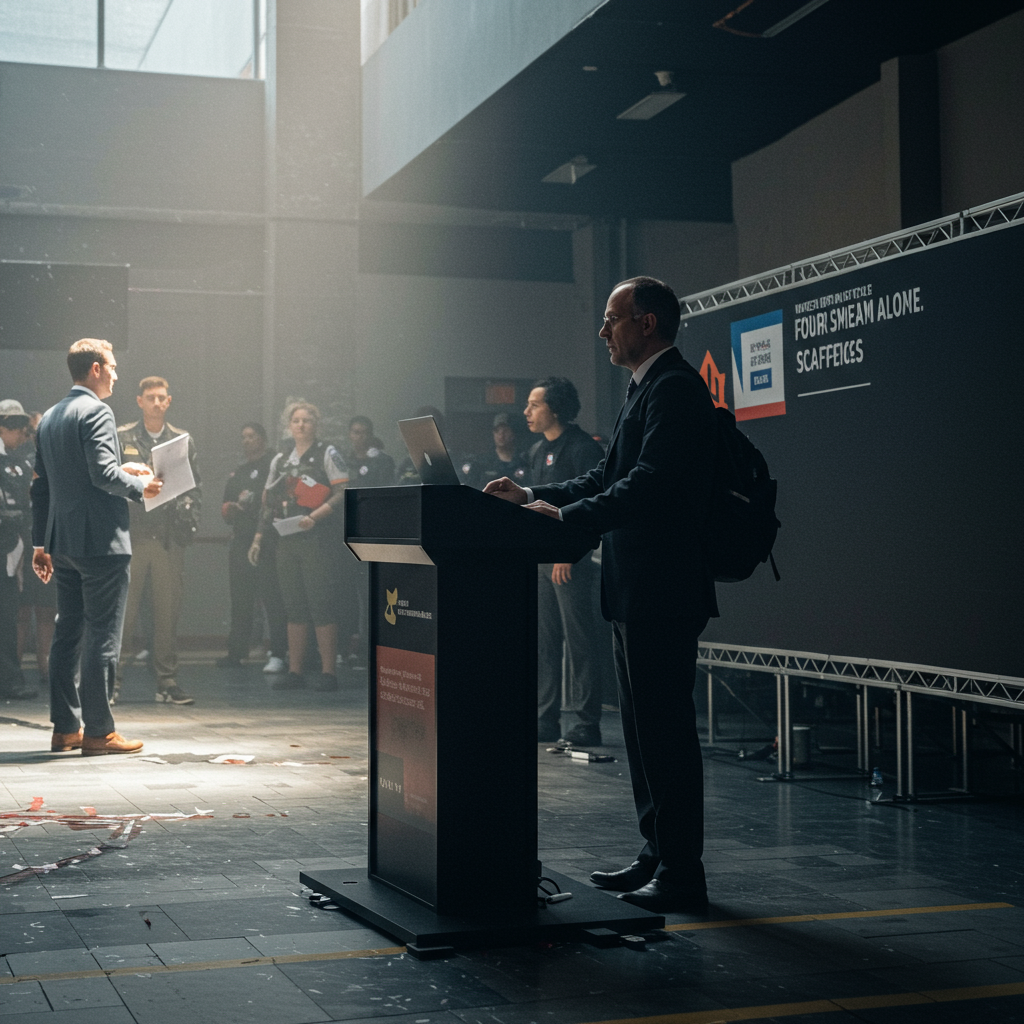
This article provides a detailed framework for event organizers and security managers to develop a successful security staffing plan for medium events, typically ranging from 500 to 5,000 attendees. Moving beyond generic advice, we delve into a data-driven methodology that begins with a thorough risk assessment and culminates in a post-event performance analysis. Readers will learn to define specific security roles, calculate optimal staff-to-guest ratios, and implement effective deployment strategies. We will explore key performance indicators (KPIs) such as incident response time, cost-per-attendee, and guest safety satisfaction scores (NPS). The ultimate goal is to equip you with the tools and processes needed to create a security environment that is not only safe and compliant but also enhances the overall guest experience, ensuring your event is memorable for all the right reasons.
Introduction
Medium-scale events occupy a unique and challenging space in the event management landscape. They are too large for an informal, ad-hoc security approach, yet often lack the budget and resources of a stadium-sized production. This is precisely why a well-structured security staffing plan for medium events is not a luxury, but a critical component of operational success. A successful plan does more than just place guards at doors; it creates a secure, welcoming atmosphere that mitigates risks proactively, responds to incidents efficiently, and ultimately protects the event’s reputation and financial viability. This guide moves beyond simple checklists to offer a comprehensive, actionable framework for building and executing a security plan tailored to the specific needs of your event.
Our methodology is rooted in a five-phase cycle: Assess, Plan, Deploy, Monitor, and Review. We will break down how to conduct a thorough risk assessment, translate those risks into specific staffing needs, and deploy your team for maximum effectiveness. Performance will be measured through a series of Key Performance Indicators (KPIs), including average incident response time (target: < 3 minutes), staff-to-guest ratio variance (target: < 10% deviation from plan), security cost per attendee (e.g., aiming for $2.50–$5.00 per head), and post-event guest surveys measuring perceived safety (target NPS > 50). By the end of this article, you will have a clear roadmap to elevate your event’s safety from a cost center to a value-added service.
Vision, Values, and Proposition
Focus on Results and Measurement
Our vision for event security transcends the traditional “guard” mentality. We advocate for a proactive, intelligence-led approach where security personnel are integrated as “safety ambassadors.” The core mission is to prevent incidents before they occur, manage situations with professional de-escalation, and contribute positively to the guest experience. Our values are centered on Professionalism, Vigilance, and Integrity. We prioritize using the 80/20 principle: 80% of potential security issues can be mitigated by focusing on the 20% most critical areas, such as ingress/egress points, high-traffic corridors, and points of sale for alcohol. All planning adheres to recognized standards, such as those from ASIS International and the guidelines set forth by the National Fire Protection Association (NFPA), ensuring compliance and best practices are at the forefront.
- Value Proposition: Moving from reactive incident response to proactive risk mitigation, reducing liability and enhancing brand reputation.
- Quality Criteria: All personnel must possess valid state-level licensing, have documented training in de-escalation, and pass a venue-specific orientation test with a score of 90% or higher.
- Decision Matrix: Staffing levels and roles are determined not by a generic formula, but by a weighted matrix considering:
- Event Type (e.g., corporate, concert, festival)
- Audience Demographics
- Venue Complexity and History
- Presence of Alcohol or High-Value Assets
- Specific Threats Identified in the Risk Assessment
- Strategic Goal: Achieve a year-over-year reduction in security-related incidents by 15% through data analysis and continuous process improvement.
Services, Profiles, and Performance
Portfolio and Professional Profiles
A comprehensive security staffing plan for medium events is built upon a portfolio of specialized services and clearly defined professional roles. It’s not about having more bodies, but about having the right people in the right places with the right skills. Key services include: Risk and Threat Assessment, Access Control Management, Crowd Dynamics Monitoring, Perimeter Security, Asset Protection, and Emergency Response Coordination. Each service is executed by personnel in specific roles.
- Access Control Officer: Stationed at entrances/exits. Responsibilities include ticket scanning, credential verification, bag checks, and use of metal detectors. KPI: Process an average of 10-12 guests per minute while maintaining a >99% screening accuracy.
- Patrol & Response Officer (Rover): Mobile units covering designated zones. Responsibilities include visible deterrence, identifying potential issues (e.g., overcrowding, disputes), and being the first responder to incidents. KPI: Acknowledge dispatch and be en route to an incident within 60 seconds.
- Static Guard: Assigned to a fixed post, such as a VIP area, stage front, or high-value asset location. Responsibilities include preventing unauthorized access and maintaining a sterile area. KPI: Zero breaches of the assigned post throughout the shift.
- Security Supervisor: Oversees a team of 5-10 officers within a specific zone. Responsibilities include conducting pre-shift briefings, managing breaks, responding to escalated incidents, and reporting to the Security Manager. KPI: Complete and submit accurate shift reports within 30 minutes of shift end.
- Command Post Operator: Monitors CCTV, radio communications, and other information feeds from a central command center. Responsibilities include dispatching units and logging all security-related activity. KPI: Log 100% of radio communications and dispatch calls with time-stamped accuracy.
Operational Process
- Phase 1: Needs Analysis & Risk Assessment (Weeks 8-6 Pre-Event): Initial meeting with the client to understand goals and concerns. Conduct a physical and procedural vulnerability assessment of the venue. Deliverable: Risk Assessment Report. KPI: Report delivered within 5 business days of site visit.
- Phase 2: Plan Development (Weeks 6-4 Pre-Event): Use the risk report to create the detailed staffing plan, defining roles, post orders, and deployment maps. Deliverable: Draft Security Staffing Plan. KPI: Plan accurately reflects a risk-based implementation with a cost variance of less than 5% from the initial estimate.
- Phase 3: Staffing & Training (Weeks 4-1 Pre-Event): Select and schedule qualified personnel. Conduct a mandatory pre-event briefing and venue walk-through. Deliverable: Finalized Staff Roster and Training Completion Records. KPI: Achieve a 100% attendance rate for the pre-event briefing.
- Phase 4: Deployment & Live Operations (Event Day): Execute the plan, manage staff on-site, operate the command post, and document all activities. Deliverable: Live Event Operations. KPI: Maintain <2-minute average response time for all called incidents.
- Phase 5: Post-Event Analysis (Week 1 Post-Event): Consolidate all incident reports and supervisor logs. Conduct a debrief with the client. Deliverable: After-Action Report with recommendations. KPI: Report delivered to client within 3 business days of the event conclusion.
Performance Metrics Framework
| Objective | Key Performance Indicators (KPIs) | Actions & Tactics | Expected Result |
|---|---|---|---|
| Ensure safe and efficient guest ingress | Average wait time at entry < 5 minutes; Screening failure rate < 0.5% | Implement a tiered entry system (bag vs. no bag); use clearsignage; staff entry lanes based on projected arrival flow. | A positive first impression for guests and minimal chokepoints that could pose a security risk. |
| Maintain a secure perimeter | Number of unauthorized access attempts; Perimeter breach alerts | Deploy mobile patrols along the perimeter; use physical barriers; ensure adequate lighting and CCTV coverage. | Zero successful perimeter breaches during the event. |
| Provide rapid response to incidents | Average incident response time < 3 minutes; Incident resolution time | Establish a grid-based zone map for patrols; use clear radio codes for incident types; empower supervisors to manage on-scene response. | Incidents are contained and resolved quickly, minimizing disruption and potential for escalation. |
| Optimize staff performance and budget | Staff cost per attendee; Staff overtime percentage < 5%; Staff no-show rate < 2% | Use historical data to forecast staffing needs; implement an efficient check-in/out system; maintain a list of pre-vetted on-call staff. | The security staffing plan for medium events is executed within 5% of the approved budget. |
Deployment, Coordination, and Production
Professional Development and Management
The successful execution of a security plan—the “production” phase—hinges on meticulous logistical planning and seamless coordination. It’s where the plan on paper becomes a living operation. This involves managing not just people, but equipment, information flow, and inter-agency communication. Every officer must be equipped with reliable communication devices (e.g., two-way radios with dedicated channels), high-visibility uniforms or vests appropriate for the event, and any other required personal protective equipment. The deployment schedule must be rigorously managed, with clear shift times, designated break areas, and a structured check-in/check-out process to ensure accountability. A crucial part of this phase is coordinating with external agencies, including local police, fire departments, and emergency medical services. A pre-event meeting with these stakeholders is non-negotiable to establish a unified command structure and clear lines of communication for any major incident.
- Pre-Deployment Documentation Checklist:
- Signed contracts and certificates of insurance are on file.
- Copies of all security personnel licenses have been verified.
- All necessary event permits (e.g., alcohol, street closure) have been obtained and reviewed.
- A contact list with all key event staff, venue managers, and emergency services is distributed.
- Equipment & Stock Checklist:
- Radios are fully charged, and a spare battery is available for each unit.
- All metal detector wands have been calibrated and tested.
- First aid kits are fully stocked at the command post and with supervisors.
- Sufficient quantities of wristbands, credentials, and incident report forms are available.
- Contingency Planning Checklist:
- A clear plan for severe weather (e.g., evacuation to a designated shelter).
- Protocols for a medical emergency, including designated access routes for EMS.
- A plan for managing a lost child or vulnerable person.
- Communication protocols for a power outage or technology failure.
- A reserve force of at least 10% of the total staff is on standby or can be activated within 30 minutes.
Communication and Briefing Materials
Messages, Formats, and Conversions
In the context of security operations, “content that converts” refers to communication materials that effectively convert instructions into correct and consistent actions by the security team. The clarity and quality of these materials—from post orders to briefing sheets—are paramount. The central hook is clarity and conciseness; an officer must be able to understand their primary duties within 30 seconds of reading their post orders. The primary Call to Action (CTA) in any security document is to “Observe, Report, and Respond” according to training. We use A/B testing on formats for incident reports, for example, to see if a checklist-based form yields more accurate data than a free-form text field. The effectiveness of a security staffing plan for medium events is directly tied to how well its details are communicated to the frontline staff. Every piece of content is a tool for performance.
- Content Development Workflow:
- Step 1: Information Gathering (Planner): The security manager gathers all relevant data from the risk assessment, venue maps, and client requirements.
- Step 2: Draft Post Orders (Manager): For each unique security position, a one-page document is drafted outlining: Position Title, Location, Supervisor, Primary Duties, Secondary Duties, Prohibited Actions, and Emergency Contacts.
- Step 3: Create Master Briefing Document (Manager): A comprehensive presentation is created for the pre-event briefing, including event schedule, key personnel photos, chain of command, radio protocols, emergency codes, and venue map with all security posts marked.
- Step 4: Review and Refine (Supervisor Team): Supervisors review all draft materials for clarity, accuracy, and feasibility. Feedback is incorporated.
- Step 5: Final Production & Distribution (Administrator): All materials are printed, laminated (if necessary), and organized into briefing packets for each team member. Digital copies are loaded onto tablets for supervisors.
- Step 6: Post-Event Content Review (Manager): After the event, incident reports and supervisor feedback are used to identify areas where communication was unclear, and templates are updated for future events.
Training and Team Readiness
Catalog of Essential Training Modules
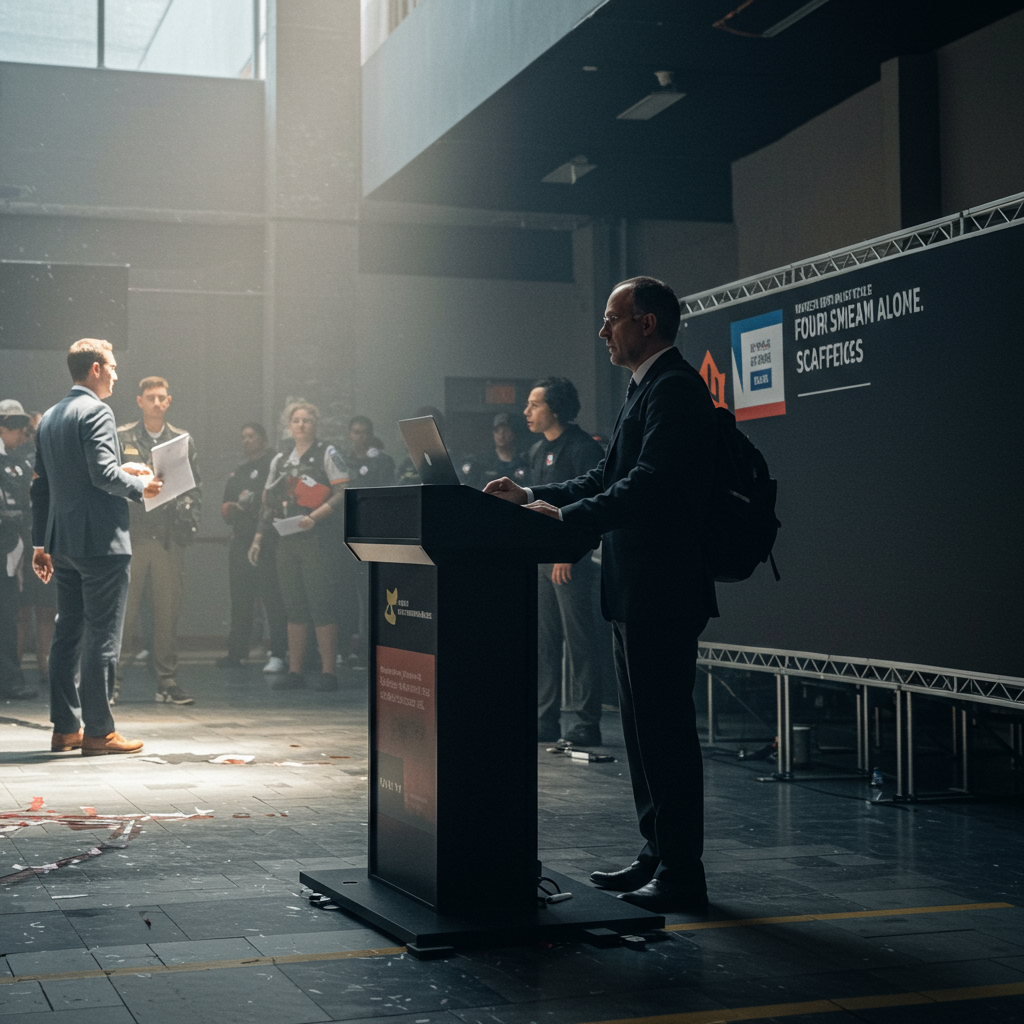
A security plan is only as strong as the people executing it. Continuous training and development are essential to ensure team readiness and professional service delivery. The following training modules are critical for personnel working medium-scale events.
- Module 1: Legal Authority and Limitations: Covers the scope of a private security officer’s authority, including citizen’s arrest, use of force, and search and seizure. Emphasizes the importance of avoiding liability.
- Module 2: Advanced De-escalation Techniques: Focuses on verbal and non-verbal communication skills to defuse potentially volatile situations without physical intervention. Includes scenario-based role-playing.
- Module 3: Crowd Dynamics and Management: Teaches staff to read crowd behavior, identify signs of distress or agitation, and implement strategies to prevent crushing, surging, and panic.
- Module 4: Venue-Specific Emergency Procedures: A mandatory module covering the specific evacuation routes, fire extinguisher locations, shelter-in-place areas, and medical emergency protocols for the event venue.
- Module 5: Customer Service and the “Safety Ambassador” Role: Trains officers to interact with guests in a positive, helpful manner while maintaining their security posture. The goal is to be approachable, not intimidating.
- Module 6: Comprehensive Reporting: Instructs on how to write clear, concise, and factual incident reports that can be used for post-event analysis and, if necessary, in legal proceedings.
- Module 7: Radio Communication Protocol: Drills the team on proper radio etiquette, including the phonetic alphabet and specific pro-words and emergency codes for the event.
Methodology
Our training methodology combines classroom instruction, practical exercises, and on-the-job mentoring. Performance is evaluated using a detailed rubric for scenario-based drills, with pass/fail criteria for critical tasks. For example, in a “disruptive guest” scenario, the officer must demonstrate at least three distinct de-escalation tactics before considering any other action. All personnel who successfully complete the core modules are added to our preferred employment roster, creating a reliable pool of vetted professionals. The expected result is a security team that operates with confidence and consistency, leading to a measurable reduction in escalations and guest complaints (target: < 1 complaint per 1,000 attendees).
Operational Processes and Quality Standards
From Request to Execution: The Security Pipeline
- Phase 1: Diagnostic & Scoping:
- Activities: Initial client call, review of event concept, gathering of basic parameters (date, time, venue, expected attendance).
- Deliverable: A formal Scope of Work document and a preliminary budget estimate.
- Acceptance Criteria: Client signs off on the Scope of Work.
- Phase 2: Proposal & Planning:
- Activities: Conduct the detailed Risk Assessment. Develop the draft security staffing plan, including deployment maps and post orders.
- Deliverable: A formal proposal with a firm quote and the detailed security plan.
- Acceptance Criteria: Client approves the plan and signs the service agreement.
- Phase 3: Pre-Production & Mobilization:
- Activities: Staff selection and scheduling, equipment procurement and testing, coordination meetings with venue and emergency services, staff training.
- Deliverable: Finalized staff roster, confirmed equipment list, and completed training records.
- Acceptance Criteria: All scheduled staff have confirmed their shifts; all radios are tested and functional.
- Phase 4: Execution & Monitoring:
- Activities: On-site deployment, pre-shift briefings, live event security operations, real-time incident logging and response.
- Deliverable: A safe and secure event environment.
- Acceptance Criteria: Adherence to all post orders and achievement of key performance indicators (e.g., response times).
- Phase 5: Closure & Review:
- Activities: Staff check-out and equipment return, consolidation of all reports, post-event debrief with client.
- Deliverable: A comprehensive After-Action Report including metrics, incident summaries, and recommendations.
- Acceptance Criteria: Client acknowledges receipt of the report and provides feedback via a satisfaction survey (target NPS > 50).
Quality Control
- Roles and Responsibilities: The on-site Security Manager has final authority on operational decisions. Supervisors are responsible for the performance and well-being of their teams. All officers are responsible for adhering to their post orders and the code of conduct.
- Escalation Path: Officer -> Supervisor -> Security Manager -> Event Director. Any incident involving significant injury, property damage, or the involvement of law enforcement must be escalated to the Security Manager immediately.
- Service Level Agreements (SLAs):
- Acknowledge any radio call within 10 seconds.
- Supervisory check-in with each officer at their post at least once every 2 hours.
- Critical incident reports (e.g., medical, fight) must be completed and submitted to the manager before the officer ends their shift.
| Phase | Key Deliverables | Quality Control Indicators | Risks and Mitigation Strategies |
|---|---|---|---|
| Planning | Risk Assessment Report; Staffing Plan | Plan is reviewed against a 50-point checklist; Staffing numbers are justified by the risk assessment. | Risk: Underestimating risk. Mitigation: Use a multi-factor risk matrix and peer review the assessment. |
| Pre-Production | Trained Staff Roster; Functional Equipment | 100% of staff pass venue orientation quiz; All equipment passes a pre-deployment function test. | Risk: Staff no-shows. Mitigation: Maintain a 10% standby roster and use an automated shift confirmation system 24 hours prior. |
| Execution | SafeEvent; Incident Logs | Supervisors conduct random post inspections; Command post logs are audited for completeness. | Risk: Communication failure. Mitigation: Have backup radios and batteries; establish a runner system as a tertiary backup. |
| Closure | After-Action Report | Report is delivered within 3 business days; All data is cross-referenced with supervisor and command logs. | Risk: Inaccurate reporting. Mitigation: Use standardized digital report forms to reduce errors; manager reviews all reports for consistency. |
Case Studies and Application Scenarios
Case Study 1: Mid-Sized Tech Conference (1,200 Attendees)
Challenge: A three-day tech conference at a downtown hotel and convention center. Key risks included protecting high-value assets (laptops, proprietary prototypes), preventing unauthorized access to paid sessions, and ensuring the safety of a high-profile keynote speaker. The client wanted a discreet but effective security presence.
Staffing Solution: A team of 15 security personnel was deployed. The plan focused on access control and asset protection.
- 4 Access Control Officers (wearing conference polos, not security uniforms) at main registration and session entrances, using barcode scanners for credentials.
- 6 Roaming Officers (in business casual attire) patrolling exhibit halls and breakout rooms, trained to spot suspicious behavior and engage guests helpfully.
- 2 Static Officers for overnight protection of the main exhibit hall.
- 1 Dedicated Executive Protection specialist for the keynote speaker.
- 1 Supervisor to manage each shift and 1 overall Security Manager.
Outcome: The event concluded with zero reported asset thefts, a significant improvement from the previous year. Unauthorized access attempts were kept below 10 for the entire event, all of which were handled discreetly. The post-event survey included a question on safety, which received a 9.2/10 average rating. The total security cost was $28,800, or $24 per attendee, which was within 3% of the projected budget.
Case Study 2: Outdoor Community Food Festival (4,500 Max Capacity)
Challenge: A one-day, open-layout food festival in a public park. Major risks included crowd control near popular food trucks, managing alcohol consumption, securing a soft perimeter, and a plan for rapid medical response due to the summer heat.
Staffing Solution: A larger, more visible team of 30 was required, focused on crowd management and public safety.
- 8 Officers at the two main entry/exit points conducting bag checks for prohibited items (e.g., outside alcohol).
- 12 Roaming Officers in high-visibility vests, patrolling designated zones including the beer garden, kids’ area, and main stage.
- 4 Crowd Management Specialists positioned at the front of the stage.
- 2 Officers assigned to the medical tent to provide a secure area for EMS.
- 1 Command Post Operator monitoring a temporary CCTV tower.
- 3 Supervisors and 1 Security Manager.
Outcome: The team managed three major medical incidents (heat exhaustion) by quickly clearing a path for EMS, reducing response time by an estimated 2 minutes. They successfully de-escalated over 20 minor disputes related to alcohol consumption, with only two requiring removal from the event. The local police department, who were on standby, commented on the professionalism and proactivity of the team. The staffing plan successfully maintained a safe environment despite the challenging open layout.
Case Study 3: High-End Charity Gala (750 Attendees)
Challenge: An exclusive fundraising gala at a historic museum with high-net-worth individuals and valuable art on display. Security needed to be impeccable yet almost invisible to maintain the event’s upscale ambiance. Key risks were protecting the venue’s assets, ensuring guest privacy, and managing a silent auction with high-value items.
Staffing Solution: A highly-trained, elite team of 12 was deployed. The focus was on surveillance, access control, and discreet response.
- 4 Officers in formal attire (black suits) at the entrance, managing the guest list with hosts.
- 6 Officers in formal attire positioned discreetly throughout the venue, particularly near high-value art installations and the silent auction area. They were trained to blend in as event staff.
- 1 dedicated Command Post Operator in the museum’s existing security office, monitoring all internal CCTV feeds.
- 1 Supervisor acting as a “Floor Manager,” coordinating the team via covert earpieces.
Outcome: The event was a complete success with no security incidents. The museum’s curator reported zero issues with asset protection. Several high-profile guests later commented to the event organizer that they felt “incredibly safe and well looked-after.” The seamless integration of the security team preserved the event’s atmosphere, contributing to a record-breaking fundraising total. This demonstrated how a tailored security staffing plan for medium events can add value beyond simple protection.
Step-by-Step Guides and Templates
Guide 1: How to Conduct a Basic Event Risk Assessment
- Identify Assets: List everything of value you need to protect. This includes People (guests, staff, VIPs), Property (venue, equipment, merchandise), and Information (data, reputation).
- Identify Threats: Brainstorm potential threats for each asset. Examples:
- People: Medical emergency, active assailant, disorderly conduct, theft.
- Property: Vandalism, fire, equipment failure.
- Information: Negative press, protests.
- Assess Vulnerabilities: Analyze the venue and plan for weaknesses. Walk the perimeter: are there gaps in the fencing? Check lighting. Are there CCTV blind spots? Are there chokepoints in the layout?
- Calculate Risk Level: For each threat, assign a score (1-5) for both Likelihood and Impact. Multiply them to get a Risk Score (1-25). A medical emergency might be Likelihood=4, Impact=4, so Risk=16. Theft might be Likelihood=3, Impact=2, so Risk=6.
- Prioritize and Mitigate: Focus on the highest scores first. For the Risk=16 medical emergency, mitigation includes having on-site EMS, training staff in first aid, and ensuring clear access routes. For the Risk=6 theft, mitigation includes bag checks and visible patrols. Your security staffing plan should directly address these high-priority risks.
- Final Checklist: Have you considered natural hazards (weather), human-caused threats (accidental and intentional), and technological threats (power failure)? Is the assessment documented and shared with key stakeholders?
Guide 2: Calculating Your Core Staffing Ratio
- Establish a Baseline: For a low-risk medium event (e.g., corporate meeting), a common baseline is 1 security officer per 100-150 guests. For 1,000 guests, this would be 7-10 officers.
- Apply Risk Modifiers: Adjust the baseline using a multiplier for specific risk factors. Create a table:
Risk Factor Multiplier Example Calculation (10 officer baseline) Alcohol Served +20% 10 * 1.20 = 12 officers High-Profile Speaker/Talent +10% 10 * 1.10 = 11 officers Complex Venue (many rooms/exits) +15% 10 * 1.15 = 11.5 (round up to 12) History of Incidents at Venue +25% 10 * 1.25 = 12.5 (round up to 13) - Factor in Fixed Posts: After calculating the ratio for general patrol, add dedicated staff for fixed posts that are non-negotiable. This includes main entrances, stage fronts, VIP rooms, and overnight asset protection. If you have 4 essential fixed posts, add those to your ratio-based number.
- Add Supervisory Staff: For every 7-10 frontline officers, add one Supervisor. For a total deployment of 20 officers, you would need 2-3 supervisors. Then add one overall Security Manager.
- Review and Refine: Does the final number feel right? Can you cover all critical areas and still have a response team? Adjust based on professional judgment. It is better to be slightly overstaffed than even one person understaffed.
Guide 3: The Ultimate Pre-Shift Briefing Checklist
- Roll Call & Inspection: Account for all staff. Inspect uniforms and equipment. Ensure everyone is fit for duty.
- Introduction of Leadership: Introduce the Security Manager, Supervisors, and any key client or venue contacts.
- Event Overview: Briefly describe the event, type of audience, and key schedule points (e.g., “Doors open at 18:00, main act at 21:00, event ends at 23:00”).
- Review of the “Big Picture”: State the primary security objective for the event (e.g., “Tonight our focus is on preventing intoxication and ensuring smooth crowd flow.”).
- Weather & Environmental Factors: Announce the forecast and any related contingency plans (e.g., “Rain is expected, so watch for slippery floors at the entrance.”).
- Post Assignments: Announce each officer’s specific post and their direct supervisor. Distribute printed post orders.
- Chain of Command & Communication: Review the escalation path. Confirm radio channels and conduct a radio check. Reinforce proper radio etiquette.
- Emergency Protocols: Quickly review codes and procedures for the three most likely emergencies (e.g., Medical, Fire, Fight). Point out locations of first aid kits and extinguishers.
- Rules of Engagement: Clearly state policies on use of force, guest interaction, and specific client requests (e.g., “No photos of the VIPs,” “Be extra helpful with directions.”).
- Final Questions & Motivation: Open the floor for questions. End with a positive, motivating statement. (“Let’s have a safe and professional night. Look out for each other.”).
Internal and External Resources (sin enlaces)
Internal Resources
- Template: Event Security Risk Assessment Matrix
- Template: Security Post Order Form
- Template: Security Incident Report Form
- Checklist: Pre-Deployment Equipment Inspection
- Standard Operating Procedure: Radio Communication Protocols
- Standard Operating Procedure: Use of Force Policy
External Resources of Reference
- ASIS International: Private Security Guideline (PSG)
- National Fire Protection Association (NFPA) 101: Life Safety Code
- The Event Safety Alliance: Event Safety Guide
- Department of Homeland Security: Active Shooter Preparedness Resources
- Local and State Government Websites for Private Security Licensing Requirements
Frequently Asked Questions
How much does a security staffing plan for a medium event typically cost?
Costs vary widely based on location, risk level, and the experience of the officers. A general range is $50 to $100 per officer per hour. A 1,000-person, 8-hour event with 10 officers might cost between $4,000 and $8,000. Always get a detailed quote that breaks down hourly rates, administrative fees, and any equipment rental costs.
When should I start creating the security plan for my event?
For a medium-scale event, you should begin the security planning process 6 to 8 weeks in advance. This allows enough time for a thorough risk assessment, plan development, securing a qualified security partner, and coordinating with local agencies.
What is the key difference between event security and regular event staff?
The primary difference is training and legal authority. Event security personnel are typically licensed by the state, have training in conflict resolution and emergency response, and their primary focus is safety and risk mitigation. Event staff focus on guest services like ticket taking, ushering, and providing information. While their roles can overlap, they are not interchangeable.
Do I need armed guards for my medium-sized event?
In over 95% of cases, armed guards are unnecessary and can even be detrimental for medium-scale events, as they can escalate tension. An armed presence is typically only justified when there is a specific, credible threat of lethal violence, or for the protection of high-value assets like large amounts of cash. A well-trained unarmed team is sufficient for most scenarios.
How does a security team handle a medical emergency?
The security team’s role is not to provide medical care (unless they are also certified EMTs). Their “Observe and Report” function is critical. They will: 1) Immediately call for medical assistance via radio, providing a precise location. 2) Secure the area around the patient to provide privacy and space for medical responders. 3) Guide EMS personnel from the entrance to the patient’s location. 4) Control any crowds that may form and gather witness information if necessary.
Conclusion and Call to Action
Developing a sophisticated security staffing plan for medium events is a non-negotiable element of modern event management. By moving away from arbitrary numbers and adopting a data-driven, risk-based approach, you can create a safer environment, protect your brand, and enhance the guest experience. As we’ve detailed, the process involves a cycle of assessment, planning, meticulous deployment, and post-event analysis. Key KPIs like response time, cost-per-attendee, and guest satisfaction provide the metrics needed to measure success and drive continuous improvement. A successful plan is not a static document but a dynamic strategy that adapts to the unique challenges of each event.
Do not leave safety to chance. Use the guides, checklists, and case studies in this article as a foundational blueprint to begin building your own security plan today. For your next event, we urge you to conduct a formal risk assessment as your first step. Engage a qualified security consultant or partner to review your findings and help you craft a plan that is both effective and efficient. Investing in professional security planning is one of the most critical decisions you can make for the long-term success and sustainability of your events.
Glossary
- After-Action Report (AAR)
- A detailed report created after an event that summarizes security operations, details all incidents, analyzes performance against KPIs, and provides recommendations for future events.
- Chain of Command
- A clear, hierarchical structure of authority within the security team, outlining who reports to whom, from the frontline officer to the overall Security Manager.
- De-escalation
- A set of verbal and non-verbal techniques used to reduce tension and prevent a situation from becoming violent or confrontational.
- Ingress/Egress
- The points of entry (ingress) and exit (egress) for an event. Securing and managing the flow of people through these points is a primary security function.
- Post Orders
- Specific, written instructions for a security officer assigned to a particular post or position, detailing their duties, responsibilities, and emergency procedures.
- Risk Assessment
- A systematic process of identifying potential threats and vulnerabilities, and analyzing them to determine the level of risk they pose to an event.
Internal links
- Click here👉 https://us.esinev.education/diplomas/
- Click here👉 https://us.esinev.education/masters/
External links
- Princeton University: https://www.princeton.edu
- Massachusetts Institute of Technology (MIT): https://www.mit.edu
- Harvard University: https://www.harvard.edu
- Stanford University: https://www.stanford.edu
- University of Pennsylvania: https://www.upenn.edu