
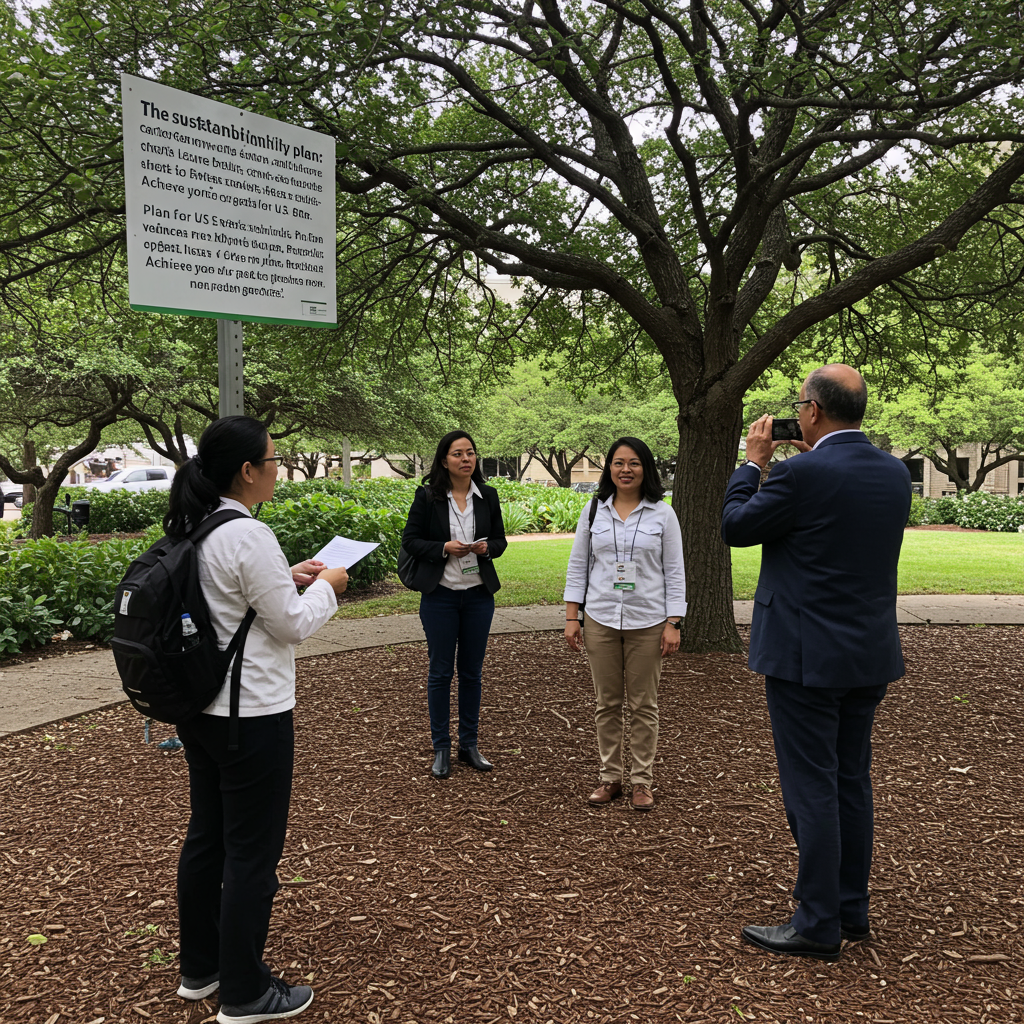
This guide provides a definitive framework for creating and implementing a successful U.S. events sustainability plan. It is designed for event planners, corporate social responsibility managers, and venue operators aiming to significantly reduce their environmental impact. By focusing on three core pillars—carbon footprint, waste management, and material sourcing—this article outlines actionable strategies, verifiable processes, and key performance indicators (KPIs). Readers will learn to set realistic goals, such as achieving a 90%+ waste diversion rate, reducing event-related carbon emissions by up to 30%, and realizing cost savings through efficient resource management. The content moves from high-level strategy to detailed operational guides, ensuring a clear path to delivering certifiably sustainable events in the United States.
Introduction
In the dynamic landscape of the American events industry, creating a robust U.S. events sustainability planis no longer a niche consideration but a core business imperative. Stakeholders, from attendees and sponsors to regulators and host communities, increasingly demand demonstrable environmental responsibility. The traditional event model—often characterized by high consumption, significant waste, and a large carbon footprint—is facing a necessary evolution. This shift presents a powerful opportunity for innovation, brand differentiation, and long-term operational resilience. An effective plan moves beyond superficial “greenwashing” to embed measurable, science-based targets into every facet of event production, from initial concept to post-event reporting. It addresses the complete lifecycle of an event’s impact, focusing on the critical areas of carbon emissions, waste generation, and material consumption.
This article provides a comprehensive methodology for developing and executing such a plan. Our approach is rooted in data-driven decision-making and continuous improvement. We will explore how to conduct baseline assessments to understand your event’s current impact, set ambitious yet achievable targets, and implement strategies that deliver tangible results. Key performance indicators (KPIs) are central to our framework, including metrics like waste diversion rate (%), carbon footprint per attendee (kg CO2e), percentage of locally sourced materials, and water consumption per day (gallons). By tracking these metrics, event organizers can not only validate their sustainability claims but also identify areas for further optimization, creating a cycle of positive environmental and economic returns.
Vision, values and proposal
Focus on results and measurement
Our vision is an American events industry where sustainability is standard operating procedure, not an afterthought. We champion a value system based on accountability, transparency, and impact. This means prioritizing actions that yield the greatest environmental benefit—a classic 80/20 approach. Rather than pursuing every possible green initiative, we focus on high-impact areas: energy, transportation, waste, and supply chain. Our proposal is to equip event professionals with a framework that aligns with internationally recognized standards like ISO 20121 (Sustainable Events Management) while being practical for the U.S. market. This involves setting science-aligned targets for carbon reduction and striving for “true” zero-waste, where at least 90% of all materials are diverted from landfill and incineration.
- Accountability through Data: Every recommendation is backed by a method for measurement. We replace vague goals like “be more green” with specific targets like “Reduce Scope 2 emissions by 25% by switching to a verified renewable energy provider.”
- Prioritization Matrix: We use a decision matrix that scores initiatives based on impact (e.g., CO2e reduction potential) versus effort (e.g., cost, logistical complexity). This ensures resources are allocated to what matters most.
- Stakeholder-Centric Value: A successful plan delivers value to all parties. For attendees, it’s an enhanced, guilt-free experience. For sponsors, it’s alignment with corporate ESG (Environmental, Social, and Governance) goals. For organizers, it’s operational efficiency and a stronger brand reputation.
- Quality and Compliance: Adherence to local and federal regulations (e.g., EPA guidelines on waste) is the baseline. Our quality standard pushes beyond compliance to leadership, adopting best practices from organizations like the Events Industry Council.
Services, profiles and performance
Portfolio and professional profiles
We offer a suite of services designed to guide event organizers through every stage of implementing a U.S. events sustainability plan. These services are delivered by a team of specialized professionals, including Certified Sustainability Practitioners, Waste Management Experts, and Carbon Accountants. Our portfolio includes:
- Sustainability Assessment and Auditing: A comprehensive baseline analysis of an event’s current environmental footprint. This involves data collection on energy, water, waste, travel, and procurement. Deliverable: A detailed report with benchmarks and a “hotspot” analysis identifying key areas for improvement.
- Strategic Plan Development: Collaborative creation of a customized sustainability plan with clear objectives, targets, and KPIs. This service aligns the plan with the event’s brand, budget, and logistical constraints.
- Implementation Support and Vendor Management: Hands-on assistance in executing the plan. This includes sourcing and vetting sustainable suppliers, training staff and volunteers, and managing on-site resource recovery systems (e.g., 3-stream waste stations).
- Impact Reporting and Certification: Post-event data analysis, creation of a public-facing sustainability report, and guidance through third-party certification processes like ISO 20121 or Council for Responsible Sport standards.
Operational process
- Phase 1: Discovery & Scoping (1-2 weeks): Initial consultation to understand event goals, scale, and budget. KPI: Proposal delivery within 5 business days of the initial call.
- Phase 2: Baseline Audit (2-4 weeks): Data collection from past events or venue standards. KPI: Completion of a preliminary footprint analysis with a margin of error less than 15%.
- Phase 3: Strategy & Plan Finalization (2 weeks): Workshop with key stakeholders to set targets and define action items. KPI: Finalized sustainability plan signed off by the client.
- Phase 4: Pre-Event Implementation (4-24 weeks, depending on event lead time): Vendor selection, procurement, and logistics planning. KPI: At least 80% of high-impact vendors contracted meet sustainability criteria.
- Phase 5: On-site Execution & Monitoring (Event duration): Management of waste streams, energy monitoring, and attendee engagement. KPI: Achieve a minimum 75% waste fun rate during the event.
- Phase 6: Post-Event Reporting & Analysis (2-3 weeks): Final data crunching and report generation. KPI: Deliver final impact report within 15 business days of event conclusion, with data accuracy of 95% or higher.
Tables and examples
| Objective | Indicators | Actions | Expected result |
|---|---|---|---|
| Reduce Event Carbon Footprint | Total tCO2e; kg CO2e per attendee | Send renewable energy from the venue; promote public transportation with incentives; source 75% of food from within a 150-mile radius. | A 20% reduction in total emissions compared to the baseline event. Per-attendee footprint below 100 kg CO2e. |
| Achieve Zero-Waste Status | Waste Diversion Rate (%); Total landfill weight (lbs) | Eliminate all single-use plastics; implement a 3-stream (compost, recycling, landfill) waste system with clear signage; contract a certified waste hauler. | Waste diversion rate of 90% or higher. Less than 0.5 lbs of landfill waste per attendee. |
| Promote Sustainable Sourcing | % of budget spent on local suppliers; # of single-use items avoided | Develop a Sustainable Procurement Code for all vendors; prioritize reusable or compostable service ware; choose decor made from recycled or upcycled materials. | Over 50% of procurement budget spent with suppliers within 100 miles. Elimination of over 100,000 single-use plastic items. |
Representation, campaigns and/or production
Professional development and management
The successful production of a sustainable event hinges on meticulous coordination and management. It’s not just about having a plan, but about executing it flawlessly. This involves deep integration with all production departments, from logistics and catering to marketing and technical crews. Our role in production is to act as the central nervous system for sustainability, ensuring that every decision made aligns with the overarching goals. This requires securing the necessary permits for specialized activities (e.g., on-site composting systems), managing a complex schedule of deliverables, and rigorously vetting every vendor and supplier to ensure they meet our stringent criteria. A key part of this is building a supply chain of partners who are not just compliant, but genuinely committed to sustainability.
- Vendor Vetting Checklist: Does the caterer have a documented food waste reduction plan? Can the staging company provide energy efficiency ratings for their lighting? Does the print supplier use FSC-certified paper and vegetable-based inks? Is their transportation fleet low-emission?
- Material Sourcing Documentation: We require material safety data sheets (MSDS) and chain-of-custody documents for items like temporary flooring, signage, and decor to verify recycled content and non-toxic composition.
- Contingency Planning: What happens if a contracted compost hauler is unavailable? We maintain a pre-vetted list of backup suppliers. What if unseasonable weather requires more indoor heating? We have pre-calculated the carbon impact and have a plan to purchase high-quality carbon offsets as a last resort.
- Logistical Integration: Sustainability checkpoints are built into the master production schedule. For example, a “Waste Management Plan Review” is scheduled 6 weeks prior to the event, and a “Final Vendor Compliance Check” is conducted 2 weeks out.
Content and/or media that converts
Messages, formats and conversions
Communicating your sustainability efforts is as important as the efforts themselves. A well-crafted content strategy can turn your environmental initiatives into a powerful marketing tool, enhancing brand reputation, attracting sponsors, and driving ticket sales. The key is authenticity and transparency. Avoid generic claims and instead, use data and storytelling to showcase your impact. We develop content that “converts”—not just into sales, but into genuine stakeholder buy-in. An important part of this is framing theU.S. events sustainability plannot as a restriction, but as an enhancement to the attendee experience.
Our approach uses various formats tailored to different platforms. For social media, we use engaging infographics (“Did you know our event composted 5,000 lbs of food scraps?”) and short video testimonials from sustainable vendors. For the event website, we create a dedicated sustainability page with the full plan, real-time data dashboards (e.g., a live waste diversion rate), and a detailed post-event impact report. A/B testing is used on email campaigns to see which messages resonate more: a cost-saving message (“Our efficiency saves you money”) versus an impact-focused one (“Your attendance helps us restore local habitats”). Conversion metrics include not just ticket sales, but also click-through rates on the sustainability page, sign-ups for green-themed workshops, and social media engagement on sustainability-related posts.
- Content Planning (Pre-Event): Define key messages and identify stories. Responsible party: Marketing Lead & Sustainability Manager. Task: Create a content calendar mapping stories to channels (blog, Instagram, LinkedIn).
- Asset Creation (Pre-Event): Develop infographics, videos, and articles based on the plan’s goals. Responsible party: Content Creator. Task: Produce a 60-second video explaining the “zero-waste” goal.
- On-site Communication (During Event): Use digital screens, event app push notifications, and clear on-site signage to guide attendee behavior (e.g., “Use this bin for all food and drink containers”). Responsible party: On-site Coordinator. Task: Run hourly updates on sustainability achievements on main stage screens.
- Impact Reporting (Post-Event): Compile all data into a visually appealing and easily digestible public report. Responsible party: Sustainability Manager. Task: Publish the final Sustainability Impact Report within 30 days of the event and promote it across all channels.
Training and employability
Demand-oriented catalogue
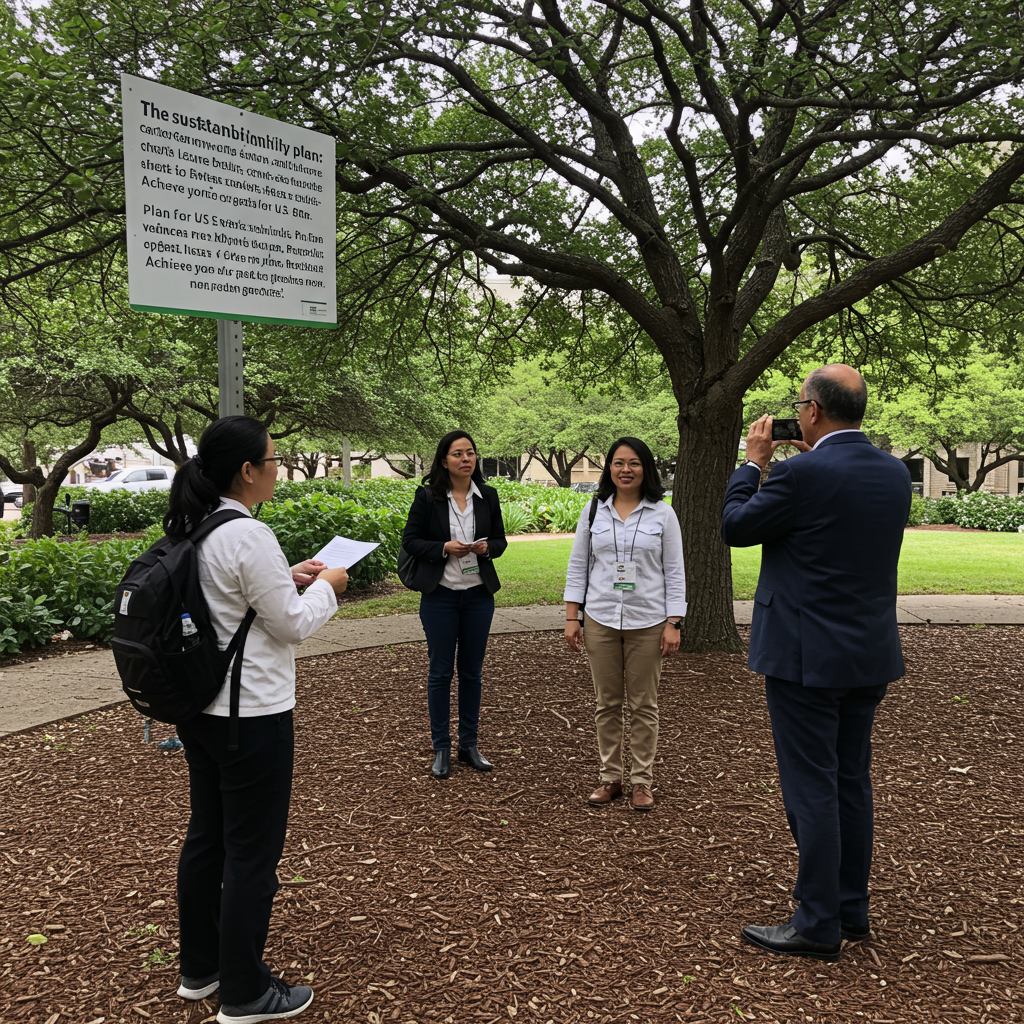
To ensure a sustainability plan is executed effectively, everyone involved—from temporary staff to senior management—must understand their role. We provide targeted training programs designed to build capacity and ensure consistent implementation. These modules are tailored to the specific needs of different roles within the event production ecosystem.
- Module 1: Sustainability 101 for All Staff (1-hour, online): Covers the basics of the event’s sustainability plan, key goals, and how each individual’s actions contribute. Focuses on waste sorting and water conservation.
- Module 2: Green Team Volunteer Training (4-hour, on-site): In-depth training for dedicated sustainability volunteers. Covers how to manage waste stations, answer attendee questions, and conduct on-site waste audits.
- Module 3: Sustainable Procurement for Managers (2-hour, workshop): For department heads and procurement officers. Covers how to use the sustainable vendor scorecard, negotiate green clauses in contracts, and track material lifecycle.
- Module 4: Advanced Waste Management (Full day, practical): For the operations and sanitation crew. Covers advanced sorting techniques, contamination management, and reporting requirements for hauling partners.
- Module 5: Leadership & ESG Reporting (Half-day, executive): For event producers and C-level executives. Focuses on linking the sustainability plan to broader business goals, investor relations, and corporate ESG reporting frameworks.
Methodology
Our training methodology is hands-on and results-oriented. We use a combination of theoretical instruction, practical exercises, and competency-based assessments. For example, the Green Team training includes a mock waste-sorting challenge. Performance is evaluated using clear rubrics: a volunteer is considered “competent” if they can correctly sort a mixed bag of items with less than 5% contamination. Successful completion of advanced modules can lead to internal “Sustainability Champion” certifications, enhancing an individual’s skills and employability within the industry. We also partner with local workforce development programs to create a pipeline of trained, sustainability-literate staff for future events, contributing to a greener local economy.
Operational processes and quality standards
From request to execution
A standardized operational process ensures that every event we manage receives the same high level of sustainability rigor, regardless of its size or scope. Our pipeline is transparent, auditable, and designed for maximum efficiency.
- Initial Inquiry & Scoping: A potential client fills out a detailed online questionnaire. Our team follows up with a scoping call to define the event’s boundaries and primary goals. Deliverable: A formal proposal outlining 2-3 tiered service options with clear pricing and projected KPIs. Acceptance Criteria: Signed proposal and initial deposit.
- Diagnostic & Baseline Assessment: We conduct a deep dive into the client’s past event data or venue specifics. This includes energy bills, waste hauling invoices, and supplier lists. Deliverable: A comprehensive Baseline Report. Acceptance Criteria: Client agrees on the baseline figures, which will be used for all future comparisons.
- Strategy & Plan Co-Creation: A multi-stakeholder workshop to set specific, measurable, achievable, relevant, and time-bound (SMART) goals. Deliverable: The final, detailedU.S. events sustainability plandocument. Acceptance Criteria: Formal sign-off on the plan by the client’s project lead.
- Pre-Production & Integration: The sustainability manager is embedded with the production team. They oversee procurement, logistics, and communications to ensure alignment. Deliverable: A “Green Production” binder with all vendor contracts, material specs, and on-site plans. Acceptance Criteria: All high-impact contracts contain sustainability clauses.
- On-Site Execution & Monitoring: The Green Team is deployed. Real-time data is collected on waste weights, energy consumption, and water usage. Deliverable: Daily progress reports with key metrics. Acceptance Criteria: On-site processes run with less than a 10% deviation from the plan.
- Closure & Reporting: All data is compiled and analyzed. A final impact report is drafted, reviewed, and published. Deliverable: The final, public-facing Sustainability Impact Report. Acceptance Criteria: Report delivered within the agreed-upon timeframe (e.g., 30 days post-event).
Quality control
Quality control is embedded at every stage. We have clear roles, escalation paths, and service level agreements (SLAs) to maintain high standards.
- Roles: Each project has a dedicated Sustainability Lead who is the single point of contact for the client. The Lead is supported by specialists in waste, carbon, and communications.
- Escalation: If an on-site issue (e.g., high waste contamination) cannot be resolved by the on-site team within 2 hours, it is escalated to the Sustainability Lead. If a vendor fails to meet a contractual sustainability clause, the issue is escalated to the event producer and legal team.
- Indicators of Acceptance: An event is not considered “zero-waste” unless the official weight tickets from the hauling company confirm a diversion rate of 90%+. A carbon footprint report is not final until it has been peer-reviewed by a second carbon accountant on our team.
- SLAs: We guarantee a response to any client query within 12 business hours. We commit to a final report data accuracy of +/- 5%.
| Phase | Deliverables | Control indicators | Risks and mitigation |
|---|---|---|---|
| Diagnosis | Baseline Report | Data availability from client; Margin of error on estimates < 15% | Risk: Incomplete or inaccurate historical data. Mitigation: Use industry-specific benchmarks and clearly state assumptions in the report. |
| Pre-Production | Sustainable Vendor Matrix; Signed Contracts | % of vendors meeting sustainability criteria; # of green clauses integrated | Risk: Lack of available sustainable vendors in a specific region. Mitigation: Begin sourcing 6+ months in advance; create a vendor education program to upskill local suppliers. |
| Execution | Daily Metric Dashboards; On-site Audit Photos | Waste contamination rate < 10%; Staff compliance with protocols > 95% | Risk: Attendee confusion leading to poor waste sorting. Mitigation: Implement a robust “Green Team” of volunteers at every waste station to educate and assist attendees. |
| Closing | Final Impact Report | Data accuracy > 95%; Delivery within 30 days post-event | Risk: Delays in receiving final data from third parties (e.g., venue energy bills). Mitigation: Establish data-sharing agreements with all partners upfront with clear deadlines. |
Cases and application scenarios
Case 1: 5,000 People Tech Conference in San Francisco, CA
Challenge: A major tech company wanted to transform its annual developer conference into a flagship example of corporate responsibility. The previous year’s event generated over 15 tons of landfill waste and had a significant carbon footprint due to international travel. The goal was to achieve zero-waste certification (90%+ fun) and reduce the overall carbon footprint by 25%.
Solution: We developed a multi-faceted U.S. events sustainability plan. For waste, we worked with the venue to replace all disposable service ware with reusable cups, plates, and cutlery, serviced by a mobile washing station. Single-use swag was eliminated in favor of a digital gift bag. A comprehensive 4-stream waste system (compost, recycling, landfill, special materials like batteries) was deployed with trained staff at each station. For carbon, we promoted a “fly local” campaign, offering discounted tickets for attendees from the West Coast. We purchased verified carbon offsets for all remaining air travel and switched the venue’s power source to 100% renewable energy for the event’s duration through a renewable energy certificate (REC) purchase.
Results:
- Waste Diversion Rate: 92.4% (achieved certification). Total landfill waste was reduced from 15.2 tons to just 1.1 tons.
- Carbon Footprint: Reduced by 28% year-over-year, from an estimated 4,500 tCO2e to 3,240 tCO2e.
- Cost: The investment in the washing station and additional staff was offset by savings from eliminating disposable items and reduced waste hauling fees, resulting in a net operational cost increase of only 2%.
- ROI: Post-event surveys showed a 15-point increase in the Net Promoter Score (NPS), with 60% of positive comments specifically mentioning the sustainability initiatives. The positive press coverage was valued at over $250,000 in media equivalency.
Case 2: 3-Day Music Festival with 20,000 Attendees in Austin, TX
Challenge: A popular outdoor music festival faced criticism for the vast amount of waste left behind each year, particularly plastic water bottles and food vendor packaging. The city was also pressing them to reduce their water consumption during the hot Texas summer. The goal was to eliminate single-use plastic water bottles and reduce overall waste by 50%.
Solution: The core of the plan was a “Reusable Revolution.” We banned the sale of single-use plastic water bottles. Instead, we installed 15 free water refill stations across the festival grounds and sold branded, reusable water bottles as merchandise. All food vendors were required to use 100% BPI-certified compostable service ware. We worked with a local composting facility to handle the large volume of organic waste. A “plogging” (picking up litter while jogging) event was organized each morning to engage attendees in the cleanup effort. To address water use, we installed temporary, low-flow fixtures in all restrooms and used gray water from sinks to flush toilets, saving thousands of gallons of potable water.
Results:
- Waste Reduction: Total landfill waste was reduced by 65%, exceeding the 50% goal. Over 250,000 single-use plastic bottles were avoided. The festival composted over 20 tons of food scraps and packaging.
- Water Consumption: Potable water usage was reduced by 40% compared to the previous year, despite similar attendance and weather conditions.
- Attendee Engagement: The NPS score related to “Festival Values” increased by 25 points. The reusable water bottles sold out, generating a new revenue stream.
Case 3: High Level Corporate Gala of 500 Guests in New York, NY
Challenge: A luxury brand wanted its annual fundraising gala to reflect its new corporate commitment to sustainability without compromising the high-end, premium experience. The primary concerns were food waste from the multi-course meal, the carbon footprint of guest travel, and the environmental impact of elaborate, single-use decor.
Solution: We focused on “conscious luxury.” The menu was designed as a “low-carbon” culinary experience, featuring locally sourced, plant-forward dishes. We partnered with a food rescue organization to ensure any unserved, safe food was immediately donated to local shelters. For decoration, we replaced cut flowers with potted native plants that were later donated to community gardens. All staging and lighting were sourced from a company using 100% LED fixtures. We also implemented a sophisticated RSVP system that calculated the travel footprint of each guest and offered them a seamless way to purchase a matching carbon offset, with the company matching all contributions. The event was powered by a temporary generator running on renewable biodiesel.
Results:
- Food Waste: Post-event audit showed that 98% of all food was either consumed or donated, with less than 20 lbs of food waste going to compost.
- Materials: 100% of decor was reused or donated. No materials were sent to landfill.
- Carbon Impact: 75% of guests opted to offset their travel. Combined with the on-site measures, the event achieved certified Carbon Neutral status.
- Brand Image: The event was featured in several high-profile lifestyle magazines, which praised its innovative approach to sustainable luxury. Sponsor retention for the following year was 100%.
… Decide whether you will conduct the audit during the event (more accurate) or after the event (simpler). - Prepare the Equipment: Gather the necessary equipment: personal protective equipment (PPE) such as gloves and goggles, a large tarp, calibrated scales, labeled containers for each waste category (e.g., Plastic #1, Aluminum, Glass, Paper, Cardboard, Organic/Compost, Landfill), and a data recording sheet.
- Select the Sample: It is impractical to audit all waste. Select a representative sample. For example, collect one bag from every 10 containers in the main area over a 2-hour period. Record the total number of bags generated during that time so you can extrapolate the data.
- Sort the Waste: Empty the contents of the sample bags onto the tarp. Carefully sort each item into its corresponding container. Pay attention to contamination (e.g., liquid food in the paper recycling bin).
- Weigh and Record: Weigh each categorized container and record the weight on your data sheet. Be sure to subtract the weight of the container itself (tare) to get the net weight of the waste.
- Analyze the Data: Calculate the percentage of each waste stream. For example, if you have 100 lbs total and 25 lbs are paper, then 25% of your waste stream is paper. Identify the most common contaminants and the largest items in the landfill stream.
- Create an Action Report: Summarize your findings. What is your current diversion rate? What are the top 3 items that could be eliminated or replaced with a reusable/compostable alternative? Utiliza esta información para establecer objetivos para tu próximo evento.
- Checklist final:
- [ ] Equipo de PPE asegurado
- [ ] Básculas calibradas
- [ ] Contenedores de clasificación etiquetados
- [ ] Hoja de registro de datos impresa
- [ ] Área de auditoría segura y designada
- [ ] Plan de muestreo definido
- [ ] Plan de comunicación para el personal del evento
Guía 2: Plantilla para una Cláusula de Sostenibilidad en Contratos con Proveedores
- Declaración de Intención: Comienza con una declaración general. “El Proveedor reconoce que [Nombre del Evento] se compromete a producir un evento ambientalmente responsable. Como tal, el Proveedor se compromete a cumplir con los siguientes requisitos como condición de este contrato.”
- Gestión de Residuos: Especifica los requisitos. “El Proveedor deberá minimizar los residuos de embalaje de todos los bienes entregados. Toda la mercancía debe entregarse sin embalaje de poliestireno. El Proveedor es responsable de retirar todos sus propios residuos de la parte trasera del local y clasificarlos en los contenedores designados de reciclaje, compost y vertedero proporcionados por el evento.”
- Materiales y Adquisiciones: Sé específico sobre los materiales. “Toda la vajilla proporcionada por el proveedor de catering debe ser 100% reutilizable o, con aprobación previa por escrito, certificada por BPI como compostable. Todos los materiales impresos deben tener un contenido reciclado postconsumo mínimo del 30%.”
- Informes: Requiere datos. “Dentro de los 10 días hábiles posteriores a la conclusión del evento, el Proveedor deberá proporcionar un breve informe que detalle el peso de los residuos retirados, el porcentaje de ingredientes de origen local (dentro de un radio de 150 millas) utilizados y los kilovatios-hora de electricidad consumidos por el equipo del proveedor.”
- Incumplimiento: Define las consecuencias. “El incumplimiento de estas cláusulas puede resultar en una deducción del pago final de hasta el 10% del valor del contrato, a discreción del organizador del evento.”
Guía 3: Cálculo Básico de la Huella de Carbono de un Evento (Alcances 1 y 2)
- Identificar Fuentes de Emisiones de Alcance 1: Estas son emisiones directas de fuentes que el evento posee o controla. Lo más común son los generadores que funcionan con diésel o gas natural para la calefacción.
- Recopilar Datos de Actividad de Alcance 1: Registra la cantidad de combustible utilizado. Por ejemplo, “Usamos 500 galones de diésel para los generadores”.
- Identificar Fuentes de Emisiones de Alcance 2: Estas son emisiones indirectas de la compra de electricidad, vapor, calefacción o refrigeración. La fuente más común es la electricidad de la red utilizada por el recinto.
- Recopilar Datos de Actividad de Alcance 2: Obtén las lecturas del medidor de electricidad del recinto para el período del evento. Mide el consumo en kilovatios-hora (kWh). Por ejemplo, “El evento consumió 10.000 kWh de electricidad”.
- Encontrar los Factores de Emisión Correctos: Utiliza la herramienta eGRID de la EPA de EE. UU. para encontrar el factor de emisión específico para la red eléctrica de la región donde se encuentra tu evento. Los factores de emisión para combustibles como el diésel son más estandarizados. Por ejemplo, el diésel es aproximadamente 10,18 kg CO2e por galón. La red eléctrica de California podría ser 0,208 kg CO2e por kWh.
- Calcular las Emisiones: Multiplica los datos de actividad por el factor de emisión.
- Cálculo de Alcance 1: 500 galones de diésel * 10,18 kg CO2e/galón = 5.090 kg CO2e.
- Cálculo de Alcance 2: 10.000 kWh * 0,208 kg CO2e/kWh = 2.080 kg CO2e.
- Sumar y Convertir: Suma las emisiones de todos los alcances. 5.090 kg + 2.080 kg = 7.170 kg CO2e. Divide por 1.000 para convertir a toneladas métricas: 7,17 tCO2e. Este es el total de la huella de carbono de Alcance 1 y 2 de tu evento. (Nota: Esto excluye el Alcance 3, que incluye los viajes de los asistentes y la cadena de suministro, que suelen ser las mayores fuentes).
Recursos internos y externos (sin enlaces)
Recursos internos
- Plantilla de Plan de Sostenibilidad para Eventos de EE. UU. (Formato .docx)
- Lista de verificación para la selección de recintos sostenibles
- Matriz de puntuación de proveedores sostenibles (Hoja de cálculo)
- Plantilla de informe de impacto de sostenibilidad post-evento
- Guía de comunicación sobre sostenibilidad para redes sociales
- Catálogo de formación de Green Team
Recursos externos de referencia
- Norma ISO 20121: Sistemas de gestión de la sostenibilidad de eventos
- Estándares del Consejo para el Deporte Responsable
- Protocolo de GEI: Estándar corporativo de contabilidad e informes
- Herramienta de Gases de Efecto Invernadero Equivalencias de la EPA de EE. UU.
- Guías de la Iniciativa Global de Informes (GRI) para informes de sostenibilidad
- Guías de la Fundación Ellen MacArthur sobre la economía circular
Preguntas frecuentes
¿Cuánto cuesta implementar un plan de sostenibilidad para eventos en EE. UU.?
El costo varía mucho según la escala y los objetivos. Algunas iniciativas, como reducir el consumo de energía y agua, pueden generar ahorros netos. Otras, como contratar a un transportista de compost certificado o comprar compensaciones de carbono de alta calidad, son un costo adicional. Una buena regla general es presupuestar entre el 1% y el 5% del presupuesto total del evento para iniciativas de sostenibilidad. Sin embargo, el ROI a menudo proviene de un aumento del patrocinio, mayores ventas de entradas y una mejor reputación de la marca.
¿Qué es una “tasa de desvío de residuos” y cómo se calcula?
La tasa de desvío de residuos es el porcentaje de residuos totales generados por un evento que se desvía del vertedero. Se calcula con la fórmula: (Peso de Reciclaje + Peso de Compost) / (Peso de Reciclaje + Peso de Compost + Peso de Vertedero) * 100. Una tasa de desvío del 90% o más es el estándar de oro para calificar como un evento de “cero residuos”.
¿Es mejor usar productos compostables o reutilizables?
Los reutilizables son casi siempre la mejor opción desde la perspectiva del ciclo de vida, ya que eliminan por completo los residuos y reducen la demanda de recursos vírgenes. Sin embargo, requieren una logística significativa (recolección, lavado, redistribución). Los compostables son una buena alternativa a los plásticos de un solo uso, pero solo si el evento tiene acceso a una instalación de compostaje comercial que los acepte y un sistema de recolección limpio para evitar la contaminación.
¿Cómo puedo abordar las emisiones de los viajes de los asistentes, que es mi mayor impacto?
Las emisiones de los viajes de los asistentes (parte del Alcance 3) son a menudo el 80% o más de la huella de carbono de un evento. Las estrategias para abordarlo incluyen: 1) Elegir una ubicación que sea fácilmente accesible en transporte público. 2) Ofrecer incentivos para viajes compartidos, uso de transporte público o viajes en tren. 3) Proporcionar opciones de participación virtual de alta calidad (eventos híbridos). 4) Ofrecer una opción fácil y transparente para que los asistentes compren compensaciones de carbono de alta calidad durante el registro de entradas.
¿Qué es la certificación ISO 20121?
ISO 20121 es una norma internacional para sistemas de gestión de la sostenibilidad de eventos. No certifica que un evento es “sostenible”, sino que certifica que la organización que produce el evento tiene un sistema de gestión sólido para identificar, controlar y mejorar continuamente su rendimiento de sostenibilidad. Es un estándar de proceso que demuestra un compromiso serio y sistemático con la gestión de los impactos económicos, ambientales y sociales.
Conclusión y llamada a la acción
La transición hacia eventos más sostenibles en los Estados Unidos no es una tendencia pasajera, sino una evolución fundamental de la industria. Como hemos demostrado, la creación de un U.S. events sustainability plan es un proceso estratégico que va mucho más allá de las papeleras de reciclaje. Se trata de integrar la responsabilidad ambiental en el ADN de un evento, desde la selección del lugar y la contratación de proveedores hasta la participación de los asistentes y la presentación de informes de impacto. Al centrarse en los pilares clave del carbono, los residuos y los materiales, y al comprometerse con la medición rigurosa de KPI como la tasa de desvío de residuos (>90%) y la reducción de la huella de carbono por asistente (objetivo <100 kg CO2e), los organizadores pueden lograr resultados significativos. Los casos de estudio ilustran que la sostenibilidad no solo es buena para el planeta, sino que también es buena para los negocios, impulsando la reputación de la marca, la lealtad de los clientes y, en muchos casos, la eficiencia operativa.
El camino hacia la sostenibilidad es un viaje de mejora continua. El primer paso es el más crucial: tomar la decisión de actuar. Comience hoy mismo evaluando el impacto de su próximo evento. Utilice nuestras guías para realizar una auditoría de residuos básica o para calcular su huella de carbono de Alcance 1 y 2. Comprométase a implementar al menos tres nuevas iniciativas de sostenibilidad en su próximo evento. Si está listo para transformar sus eventos y liderar el camino en la industria, póngase en contacto con nuestro equipo para desarrollar un U.S. events sustainability plan completo y personalizado que ofrezca resultados medibles y un legado positivo duradero.
Glosario
- tCO2e
- Toneladas de dióxido de carbono equivalente. Una unidad estándar utilizada para consolidar las emisiones de diferentes gases de efecto invernadero en una sola métrica.
- Tasa de desvío de residuos
- El porcentaje de residuos generados que se desvía del vertedero a través del reciclaje, el compostaje o la reutilización.
- Alcance 1, 2 y 3
- Categorías de emisiones de gases de efecto invernadero definidas por el Protocolo de GEI. El Alcance 1 son las emisiones directas. El Alcance 2 son las emisiones indirectas de la electricidad comprada. El Alcance 3 son todas las demás emisiones indirectas en la cadena de valor de una empresa (incluidos los viajes de los asistentes).
- ISO 20121
- Una norma de sistema de gestión internacional que especifica los requisitos para que una organización mejore la sostenibilidad de sus actividades relacionadas con los eventos.
- BPI Certified
- Certificación del Instituto de Productos Biodegradables que verifica que un producto es compostable industrialmente según las normas de EE. UU.
- Economía circular
- Un modelo económico que tiene como objetivo eliminar los residuos y la contaminación, hacer circular los productos y materiales en su valor más alto y regenerar la naturaleza.
Internal links
- Click here👉 https://us.esinev.education/diplomas/
- Click here👉 https://us.esinev.education/masters/
External links
- Princeton University: https://www.princeton.edu
- Massachusetts Institute of Technology (MIT): https://www.mit.edu
- Harvard University: https://www.harvard.edu
- Stanford University: https://www.stanford.edu
- University of Pennsylvania: https://www.upenn.edu