
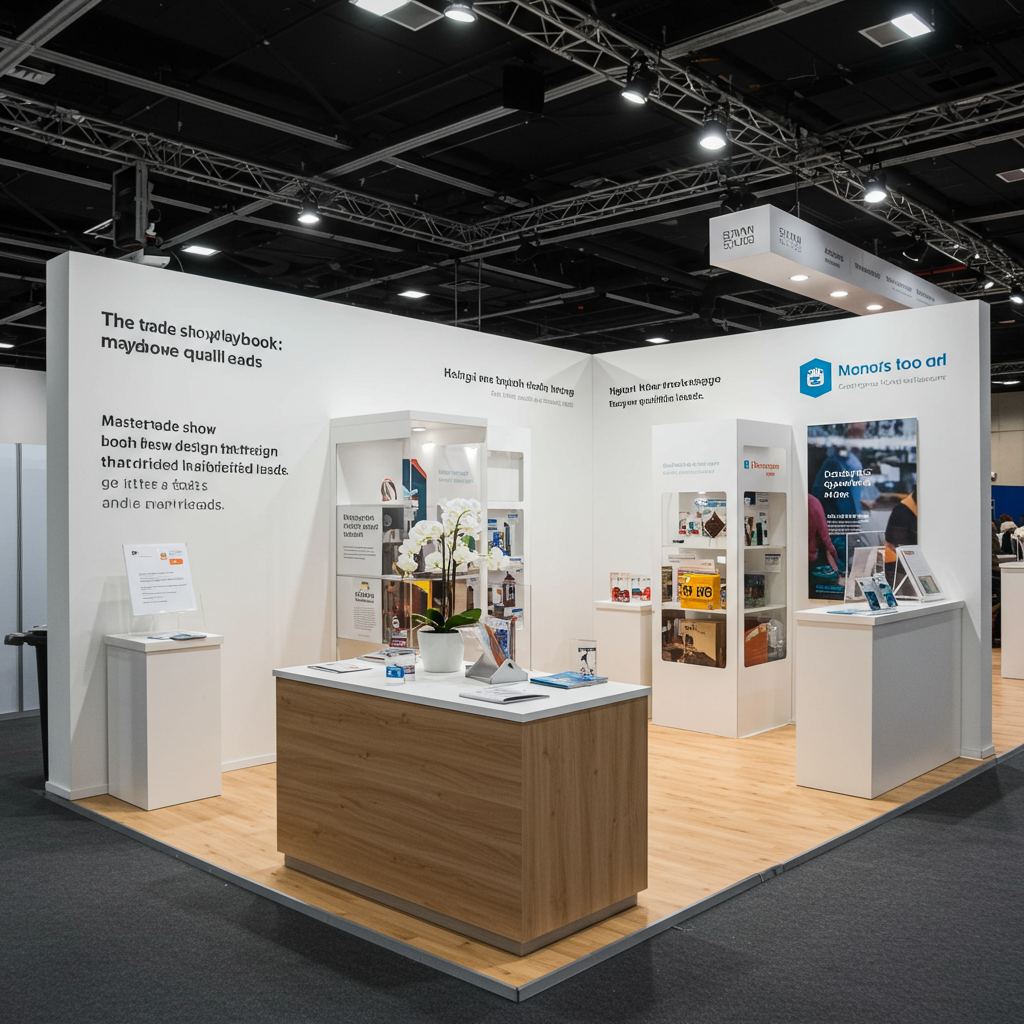
This playbook provides a complete framework for transforming your trade show exhibit from a static display into a dynamic lead-generation engine. We delve into the critical connection between thoughtful design, brand messaging, and sales funnel integration to help you capture high-quality prospects. This guide is for marketing managers, event coordinators, and business owners who want to move beyond measuring foot traffic and focus on tangible business outcomes. We will explore key performance indicators (KPIs) such as Cost Per Lead (CPL), Lead Qualification Rate, and Booth Engagement Rate. By implementing the strategies, processes, and checklists outlined here, you will learn how to architect an experience that not only draws crowds but also effectively identifies and captures your ideal customers, ensuring your investment in trade shows yields measurable and significant returns.
Introduction
In the highly competitive and often saturated environment of a trade show floor, simply showing up is a recipe for wasted investment. The difference between a booth that sinks into the background and one that becomes a hub of activity and business opportunity lies in its design. However, exceptional design is more than just aesthetics; it’s a strategic tool. The primary objective of any B2B marketing effort, including trade shows, is to generate a pipeline of potential customers. Therefore, the most critical function of your exhibit is to support this goal. This guide focuses on the specific discipline of **trade show booth design for leads**—an approach that strategically integrates marketing objectives, brand identity, and visitor psychology to create an environment optimized for attracting, engaging, and converting qualified prospects. We move beyond colors and furniture to architecting a customer journey within your limited square footage.
This playbook will provide a methodological approach to designing, executing, and measuring the success of your trade show presence. We will break down the process into actionable phases, from initial strategy and goal setting to post-show analysis and lead nurturing. The success of this approach is measured by a clear set of Key Performance Indicators (KPIs), including but not limited to: Lead Qualification Rate (LQR), Cost Per Qualified Lead (CPQL), Booth Dwell Time, Product Demonstration Rate, and ultimately, the Return on Investment (ROI) calculated from the business closed from show-generated leads. By the end, you will have a repeatable framework for ensuring your trade show booth is a powerful and predictable lead-generation asset for your organization.
Vision, values and proposal
Focus on results and measurement
Our core philosophy is that trade show booth design is an investment, not an expense. Every design decision must be justified by its potential contribution to the primary goal: generating qualified leads. We apply the 80/20 principle, focusing the majority of budget and effort on elements that directly influence visitor behavior and lead capture. This means prioritizing a clear value proposition, an intuitive traffic flow, and compelling interactive experiences over purely decorative elements that don’t serve a strategic purpose. Our technical standards are uncompromising, ensuring all structures are compliant with venue regulations, ADA guidelines, and safety protocols. We believe in data-driven design, where insights from past events and market research inform the layout, messaging, and technology choices for future shows.
- Strategic Alignment First: Before a single sketch is made, we define clear objectives. Is the goal to book 50 qualified demos, capture 200 MQLs, or build relationships with 10 key accounts? The design must serve the specific, measurable goal.
- Visitor-Centric Design: We design from the outside in, considering the attendee’s journey. What will they see from 30 feet away? What will draw them in? What is the experience once inside? The design must answer these questions to guide visitors seamlessly toward a conversion point.
- Frictionless Lead Capture: Technology and process must make lead capture instantaneous and effortless for both staff and visitors. This involves integrating badge scanners, tablets with qualifying questions, and digital contact forms directly into the booth’s flow.
- Quality and Reliability: We prioritize high-quality materials and construction to ensure the booth not only looks professional but also withstands the rigors of shipping, installation, and the show itself. A failing screen or wobbly counter can kill credibility.
- Post-Show ROI Analysis: The project isn’t over when the show ends. Our value proposition includes providing the data and framework to analyze performance, calculate ROI, and generate actionable insights for the next event.
Services, profiles and performance
Portfolio and professional profiles
We offer an end-to-end suite of services designed to manage every aspect of your trade show presence, ensuring your booth design effectively generates leads. Our team consists of experienced strategists, 3D designers, project managers, and technology specialists. We handle everything from the initial strategy session to the final post-show report.
Operational process
- Phase 1: Discovery & Strategy (2-4 weeks):We work with your team to define goals, budget, target audience, and key messaging. KPI: A signed-off strategic brief with a target CPL of less than $250 and a Lead Qualification Rate goal of >60%.
- Phase 2: Conceptual Design (3-5 weeks): Our designers create initial 3D renderings and floor plans based on the brief, focusing on traffic flow, engagement zones, and branding. KPI: Design concept approval with a client Net Promoter Score (NPS) of +50 or higher.
- Phase 3: Design Development & Fabrication (8-12 weeks):We refine the approved design, select materials, and manage the construction of all booth components. KPI: All manufacturing milestones met on schedule with less than a 2% budget variance.
- Phase 4: Logistics & On-Site Management (2-3 weeks):We coordinate all shipping (drayage), installation, and dismantling (R&D) labor, and provide on-site supervision to ensure a flawless setup. KPI: Booth fully operational 24 hours before show opening.
- Phase 5: Post-Show Analysis (1-2 weeks): We compile all lead data, analyze performance against initial KPIs, and deliver a comprehensive report with recommendations for future events. KPI: Final report delivered within 10 business days of the show’s conclusion.
Tables and examples
| Objective | Indicators | Actions | Expected result |
|---|---|---|---|
| Increase Qualified Leads by 25% | Number of leads with budget & timeline (SQLs), Lead Qualification Rate (LQR) | Implement a two-tier qualification process: badge scan for initial interest, followed by a 2-minute tablet survey at a demo station. | Capture 300 total leads, with at least 180 (60%) meeting the criteria for a Sales Qualified Lead. |
| Improve Brand Recall | Post-show attendee survey, social media mentions | Design a highly memorable centerpiece, like a large-scale interactive digital wall or a unique architectural feature. | Achieve >40% aided brand recall score in post-show surveys. |
| Enhance Product Engagement | Average Dwell Time, Number of Demos Given | Create three distinct, hands-on demo stations, each focused on a key product feature. Staff with trained product experts. | Increase average visitor dwell time from 3 minutes to over 5 minutes. Deliver 150+ one-on-one demos. |
| Reduce Cost Per Lead (CPL) | Total Event Cost / Total Leads | Use lightweight, modular design components to reduce shipping and drayage costs by 15%. Pre-show digital marketing to drive booth traffic. | Lower the overall CPL from $300 (previous year) to under $250. |
Representation, campaigns and/or production
Professional development and management
The successful production of a trade show booth is a complex logistical operation. Our project management team serves as your single point of contact, coordinating a vast network of suppliers, including manufacturing shops, AV and lighting technicians, furniture rental companies, and logistics providers. We manage the entire production calendar, from securing manufacturing slots months in advance to submitting electrical and rigging plans to the show organizers by their strict deadlines. Our team is well-versed in navigating the complexities of union labor rules, material handling (drayage) contracts, and venue-specific regulations, ensuring a smooth and cost-effective installation process. We handle all necessary paperwork, including certificates of insurance and fire safety permits, to guarantee full compliance.
-
- Critical Documentation Checklist: Signed contracts with all vendors, proof of insurance submitted to the venue, electrical floor plan approved, rigging plan submitted, and shipping BOLs (Bills of Lading) for all freight.
- Vendor Management: We maintain a roster of pre-vetted suppliers. For each project, we obtain at least two competitive bids for major components like custom fabrication and AV packages to ensure cost-effectiveness without sacrificing quality.
- Contingency Planning: What if a critical shipment is delayed? What if a video wall malfunctions? We develop a plan B for key components. This includes having backup media players, sourcing local replacement options for standard items, and building buffer time into the installation schedule.
– Timeline Management: We use project management software to create a detailed Gantt chart, tracking every dependency from design approval to the arrival of the installation crew. Weekly status reports keep all stakeholders informed.
Content and/or media that converts
Messages, formats and conversions: Content for trade show booth design leads
Content is the fuel for your lead generation engine. The physical design of the booth attracts visitors, but it’s the content that engages them and persuades them to act. Our approach is to develop a content hierarchy that guides visitors through a journey. High-level, bold “hooks” visible from the aisle draw them in (e.g., “Cut Your Production Costs by 30%”). Mid-level content at eye-level provides context and details via monitors or static graphics. Deep-level content is delivered through interactive tablets or one-on-one demos. Every piece of content must have a clear Call-to-Action (CTA). We frequently use A/B testing on digital screen CTAs during the show (e.g., “Scan for a Free Trial” vs. “Book a 15-Min Demo”) to optimize conversion rates in real-time. Key conversion metrics include form submissions, badge scans per station, and demo requests.
- Content Strategy Workshop: The marketing team and our content strategist define the core messages, value propositions, and target audience pain points to be addressed.
- Asset Inventory & Creation:We identify existing assets (videos, case studies, white papers) that can be repurposed and create a production plan for new content, such as animated explainers for the main screen or interactive product tours for tablets. The assigned producer manages this workflow.
- Format-Specific Development: The creative team designs the content for each specific format—ensuring video loops are seamless, text on large graphics is readable from 50 feet, and interactive UI is intuitive.
- Technology Integration & Testing:The tech specialist loads all content onto the hardware (media players, tablets, touchscreens) and conducts a full system test at the warehouse before shipping. This prevents on-site failures.
- Performance Analysis: Post-show, we analyze which content was most effective. We look at dwell time in front of certain videos or the number of downloads for a specific white paper offered via QR code to inform future content strategies.
Training and employability
Demand-oriented catalogue
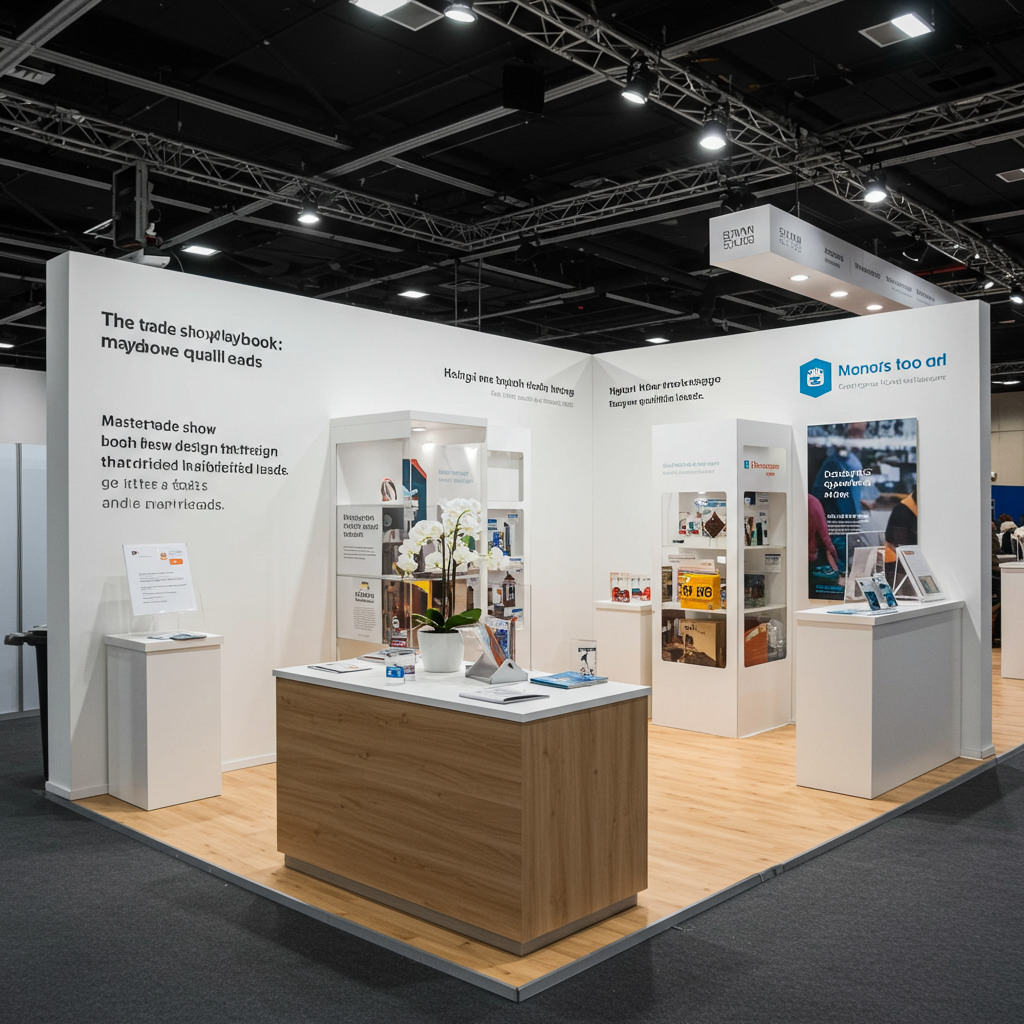
The most brilliant booth design will fail if the staff operating it are not properly trained. Your booth team is the living, breathing extension of your brand and the final, critical link in the lead-generation chain. We provide comprehensive training programs to equip your team with the skills and knowledge they need to be effective.
- Module 1: The 30-Second Elevator Pitch: Training staff to articulate the company’s core value proposition concisely and engagingly to capture interest from aisle traffic.
- Module 2: Proactive Engagement Techniques: Moving beyond the passive “Can I help you?” to asking open-ended, qualifying questions that start meaningful conversations.
- Module 3: Mastering the Lead Capture Technology: Hands-on training with the specific badge scanner or tablet app, including how to properly categorize leads and add qualifying notes on the spot.
- Module 4: The Art of the Product Demo: Structuring a compelling 3-5 minute product demonstration that focuses on benefits, not just features, and ends with a clear next step.
- Module 5: Booth Etiquette and Best Practices: Covering the fundamentals of professional conduct, from body language and attitude to managing crowd flow and knowing when to hand a conversation off to a technical expert.
Methodology
Our training methodology combines classroom-style learning with practical role-playing scenarios. We use a standardized evaluation rubric to assess each team member’s proficiency during mock interactions. The training culminates in a “live-fire” exercise within the actual booth before the show opens, allowing staff to become comfortable in the environment. We expect trained staff to increase the lead-to-demo conversion rate by at least 15% and improve the quality of lead data captured, as measured by the percentage of leads with complete qualifying notes.
Operational processes and quality standards
From request to execution
- Initial Consultation & Needs Analysis:We begin with a deep-dive meeting to understand your goals, brand, and budget. The key deliverable is a project brief document. Acceptance criterion: Client sign-off on the brief.
- Proposal & Contract:We deliver a detailed proposal with scope, timeline, and pricing. Deliverable: Signed Master Services Agreement (MSA). Acceptance criterion: MSA executed by both parties.
- Pre-Production & Design:This phase includes all design work, vendor selection, and production scheduling. Deliverable: Final 3D renderings and technical drawings. Acceptance criterion: Final design approval from the client.
- Production & Logistics:Manufacturing of booth components and coordination of all shipping and services. Deliverable: “Ready to ship” confirmation with photos from the manufacturing shop. Acceptance criterion: All components pass a quality control inspection.
- On-Site Execution: Installation, show support, and dismantling. Deliverable: The booth is 100% “show ready” 24 hours prior to opening. Acceptance criteria: Client walkthrough and sign-off on the final installation.
- Post-Show Wrap-Up & Analysis:Lead data compilation, budget reconciliation, and performance review. Deliverable: A comprehensive post-show ROI report. Acceptance criterion: Report delivered within 10 business days.
Quality control
- Roles: A dedicated Project Manager is assigned to each client. A Production Supervisor oversees all manufacturing. An On-Site Lead manages the R&D process.
- Escalation Path: Issues are first addressed by the On-Site Lead. If unresolved, they are escalated to the Project Manager, then to the Director of Operations.
- Indicators of Acceptance: Design renderings must be approved in writing. Material samples must be signed off on before procurement. The final on-site build must match the approved renderings with less than a 5% deviation in dimensions or finish.
- Service Level Agreements (SLAs): We guarantee a response to any client communication within 4 business hours. We commit to the booth being show-ready 24 hours before the event start time.
| Phase | Deliverables | Control indicators | Risks and mitigation |
|---|---|---|---|
| Discovery | Signed Project Brief | Clarity of objectives (SMART goals); budget alignment. | Vague client goals. Mitigation: Use a structured questionnaire and workshop to force specificity. |
| Design | Approved 3D Renderings | Number of revision rounds (<3); alignment with brand guidelines. | Design-by-committee causing delays. Mitigation: Establish a single point of contact for client feedback. |
| Fabrication | Finished Booth Components | Material quality checks; dimensional accuracy (+/- 2 mm). | Supply chain delays for specific materials. Mitigation: Order long-lead items early; have pre-approved alternatives. |
| On-Site Install | Show-Ready Booth | No safety violations; all tech functional; completion on schedule. | Freight damage or delays; union labor issues. Mitigation: Crate robustly; use experienced R&D teams; build buffer time into the schedule. |
Cases and application scenarios
Case Study 1: B2B SaaS Startup in a 10×20 Inline Booth
A Series A software startup needed to make a big impact at a major industry conference on a limited budget ($40,000 all-in). Their goal was to book 50 qualified demos for their sales team. The design focused on a single, bold statement: a large, backlit fabric wall with its value proposition in huge letters (“Automate Your Compliance Reporting in 10 Minutes”). The rest of the space was open, with two sleek demo pods. Instead of complex hardware, each pod had a large monitor and comfortable stools. The key was a digital “demo queue” system on an iPad, allowing visitors to book a time slot, which reduced crowding and captured their contact info. Staff were trained to qualify leads in under 60 seconds before offering a demo slot.
KPIs:
- Goal: 50 qualified demos booked. Result: 72 demos booked.
- Cost Per Demo: $555.
- Lead-to-Demo Rate: 40% of engaged visitors booked a demo.
- Projected ROI: Based on their 20% demo-to-close rate and average contract value, the projected ROI was 6:1 within six months.
Case Study 2: Medical Device Manufacturer in a 30×40 Island Booth
A leading medical device company was launching a new surgical tool and needed a design that conveyed precision, innovation, and trust, while accommodating private meetings and hands-on demonstrations. The budget was $250,000. The design featured a clean, clinical aesthetic with white surfaces, brushed metal, and controlled blue lighting. The booth was divided into zones: an open reception area, three semi-private demo stations with simulated surgical environments, two enclosed conference rooms for high-level meetings, and a hospitality area. The centerpiece was a suspended, slowly rotating, large-scale model of the new device. Lead capture was integrated with their CRM, and staff used tablets to schedule follow-ups with sales reps in real-time. The design had to be fully compliant with healthcare industry marketing regulations.
KPIs:
- Goal: Generate 150 leads from target surgeons and hospital administrators. Result: 210 qualified leads captured.
- Meetings Booked: 25 private meetings with key opinion leaders and buyers were held in the conference rooms.
- Dwell Time: Average visitor time in the booth was over 8 minutes, a 50% increase from their previous design.
- Cost Per Qualified Lead: Approximately $1,190.
Case Study 3: Eco-Friendly CPG Brand in a 20×20 Booth
A sustainable consumer packaged goods (CPG) brand wanted a booth that physically embodied their commitment to the environment, targeting retail buyers and distributors. The budget was $75,000. The entire structure was built from reclaimed wood, recycled aluminum, and other sustainable materials. Living plant walls and natural lighting created an organic, fresh atmosphere. Instead of digital screens, messaging was printed on recycled cardboard with soy-based inks. The focus was on product sampling. A central “tasting bar” allowed buyers to try the product, while seating areas with comfortable, recycled-fabric furniture encouraged longer conversations. Lead capture was done via a simple QR code that led to a digital catalog and contact form, reducing paper waste.
KPIs:
- Goal: Secure 30 meetings with new retail distributors. Result: 45 meetings scheduled during or immediately after the show.
- Brand Perception: Post-show surveys showed a 95% positive association of the brand with sustainability among booth visitors.
- Sample-to-Lead Ratio: 60% of visitors who sampled the product provided their contact information.
- This case highlights how a strong **trade show booth design for leads** can be achieved by perfectly aligning the physical space with the core brand values.
Step-by-step guides and templates
Guide 1: How to Write an Effective Trade Show Booth Design Brief
- Section 1: Company & Brand Overview.Who are you? What is your brand personality (e.g., innovative, reliable, playful)? Include a link to your brand style guide.
- Section 2: Event Details. Specify the show name, dates, venue, and your booth number and size (e.g., 20×30 Island).
- Section 3: Goals & Objectives.This is the most important section. Be specific. Instead of “generate leads,” write “Capture 200 qualified leads, defined as contacts from companies with over 500 employees who have a purchasing timeline of less than 6 months.”
- Section 4: Target Audience. Describe your ideal customer profile. What are their job titles? What are their pain points? What will motivate them to visit your booth?
- Section 5: Key Messaging. What is the single most important message you want visitors to leave with? List 2-3 supporting messages.
- Section 6: Booth Functionality Requirements. List everything the booth must *do*. For example: “Three semi-private demo stations with monitors,” “One enclosed meeting room for 4 people,” “Secure storage for 10 laptops,” “A welcome/reception counter.”
- Section 7: Look & Feel.Describe the desired aesthetic. Use keywords like “open and airy,” “tech-focused and sleek,” “warm and inviting.” Include inspiration photos if possible.
- Section 8: Budget. Provide a realistic, all-inclusive budget range, specifying if it includes costs outside of the booth itself (like travel, sponsorships, etc.).
- Checklist: Before sending, ensure you have included: Booth number, SMART objectives, a link to brand guidelines, and a clear budget.
Guide 2: The Ultimate Pre-Show Booth Staffing Checklist
- 4 Weeks Out: Finalize the staff roster. Book all travel and accommodations. Send out a “Save the Date” for a mandatory pre-show training session.
- 3 Weeks Out: Create and distribute the official staffing schedule, ensuring adequate breaks and coverage during peak hours. Assign roles (e.g., Greeter, Demo Specialist, Lead Qualifier).
- 2 Weeks Out: Hold the mandatory 3-hour training session. Cover all modules from the training catalog (pitch, tech, etiquette). Conduct role-playing exercises.
- 1 Week Out: Send a pre-show briefing packet to all staff. It should include the schedule, booth layout, key objectives (KPIs), a list of target companies attending, and the lead capture process.
- On-Site (Day Before Show): Hold a 1-hour final briefing in the completed booth. Walk through the space, test all equipment, and do a final Q&A. Distribute staff uniforms/shirts.
- Daily Huddle (15 Mins Before Show Opens): Review the previous day’s performance, set daily goals, and share any new competitive intelligence. Keep energy and morale high.
Guide 3: Post-Show Lead Follow-Up Action Plan
- Within 24 Hours: Export all leads from the capture system. Send a personalized “Thank You for Visiting” email to every single lead. This email should reference the event and offer a specific next step (e.g., a link to a resource they discussed).
- Within 48 Hours: The marketing team triages and scores all leads based on the notes from the booth staff. “Hot” leads (SQLs) are immediately assigned to the appropriate sales representatives in the CRM.
- Within 3 Business Days: Sales representatives must make their first personal contact (phone call or personalized email) with their assigned “Hot” leads.
- Within 1 Week: All “Warm” leads (MQLs) are entered into a specific, event-themed marketing automation nurture campaign. This could be a series of 3-5 emails over several weeks, offering valuable content.
- Within 2 Weeks: Hold a post-mortem meeting with the sales and marketing teams. Review the lead data, discuss what worked and what didn’t, and gather anecdotal feedback from the booth staff.
- Within 1 Month: Generate the initial ROI report. Track how many leads have progressed to the “Opportunity” stage in the sales pipeline and calculate the initial pipeline value generated from the show.
Internal and external resources (without links)
Internal resources
- Corporate Brand & Style Guide
- Product Marketing One-Sheets and Spec Sheets
- Standard Trade Show Project Brief Template
- Post-Show ROI Calculation Worksheet
- Booth Staff Training Manual
External reference resources
- Exhibitor Services Manual (provided by the show organizer for each event)
- Americans with Disabilities Act (ADA) Standards for Accessible Design
- Local fire code and safety regulations for public assembly spaces
- CEIR (Center for Exhibition Industry Research) Reports and Benchmarks
- ESCA (Exhibition Services & Contractors Association) Best Practices
Frequently asked questions
What is a realistic budget for a trade show booth?
A common rule of thumb is to budget approximately $100-$200 per square foot for a custom booth rental. For a 20×20 foot (400 sq ft) booth, this would be $40,000-$80,000. This typically covers design, fabrication, and basic installation, but often excludes other show services like drayage, electrical, and shipping, which can add another 30-50% to the cost.
How far in advance should we start planning our booth?
For a custom-built booth, you should begin the process 6-9 months before the show date. This allows ample time for strategy, design, revisions, manufacturing, and logistics without incurring rush fees. For a smaller, modular or rental booth, 3-4 months is a more typical timeline.
How do I measure the ROI of my trade show booth?
The basic formula is: (Total Sales Revenue from Show Leads – Total Event Investment) / Total Event Investment. To track this, you must have a robust CRM system where you tag leads from the specific show. It can take 6-18 months to fully realize the ROI, so it’s important to track pipeline value as a leading indicator.
What’s the difference between an island and an inline booth?
An inline (or linear) booth is arranged in a straight line with other booths, with only one side open to an aisle. An island booth is open on all four sides and is typically larger (e.g., 20×20 or greater). Island booths offer much more flexibility in design and traffic flow but come at a premium space rental cost.
Should we rent or buy our booth?
Renting is often better if you attend shows infrequently (1-2 times per year), want to change your look often, or have a tight upfront budget. Buying is more cost-effective if you attend 3+ shows per year, have a consistent brand message, and have the capital and storage space. A custom rental can often provide the best of both worlds.
Conclusion and call to action
Ultimately, a trade show booth is a three-dimensional marketing campaign. When executed with strategic intent, it can be one of the most powerful tools for generating high-value business relationships and revenue. Success is not a matter of chance; it is a direct result of a disciplined process that aligns design with specific, measurable business objectives. By focusing on a visitor-centric journey, creating compelling content, and thoroughly training your staff, you can transform your exhibit space from a passive backdrop into an active lead generation machine. The principles in this playbook provide a clear roadmap. The next step is to apply them. Begin your planning for your next event not by asking “What should our booth look like?” but by asking “What do we need our booth to achieve?” This simple shift in perspective is the foundation for a successful strategy for **trade show booth design for leads** and a significant return on your event marketing investment.
Glossary
- Drayage
- Also known as Material Handling. The service of moving an exhibitor’s freight from the shipping dock to their booth space and back again after the show. This service is a mandatory, exclusive service provided by the show’s official contractor and is charged by weight.
- Island Booth
- An exhibit space with aisles on all four sides. It offers maximum visibility and design flexibility.
- Inline Booth
- A booth that is in a line with other booths, typically with only the front side open to the aisle. Also called a Linear Booth.
- Lead Retrieval
- A system, often a handheld scanner or mobile app, used by exhibitors to capture and save the contact information from an attendee’s badge.
- Modular Display
- A reusable exhibit system made of standardized components that can be reconfigured into different sizes and layouts for different shows. It offers flexibility and can be more cost-effective than a fully custom build.
- Turnkey Service
- A service package where the exhibit house manages all aspects of the booth, including design, fabrication, shipping, installation, and dismantling for a single, fixed price.
Internal links
- Click here👉 https://us.esinev.education/diplomas/
- Click here👉 https://us.esinev.education/masters/
External links
- Princeton University: https://www.princeton.edu
- Massachusetts Institute of Technology (MIT): https://www.mit.edu
- Harvard University: https://www.harvard.edu
- Stanford University: https://www.stanford.edu
- University of Pennsylvania: https://www.upenn.edu