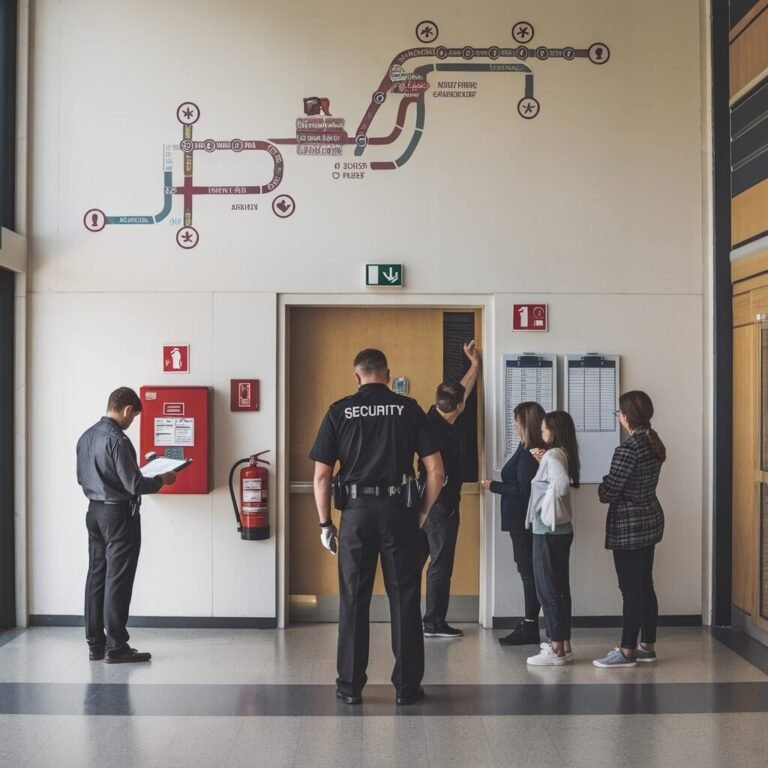
Course in Event Cybersecurity and Attendee Data Protection
The Course in Event Cybersecurity and Attendee Data Protection is a 100% online course (150 hours, 8 weeks) for anyone who wants to build practical skills in event cybersecurity and attendee data protection. You learn through practical modules and real case studies, guided by tutors with industry experience.
New intake every two months · Interest-free payment plans · ESINEV certificate of completion (non-degree).

Overview
The Course in Event Cybersecurity and Attendee Data Protection prepares you to work with confidence on projects related to Event Cybersecurity and Attendee Data Protection. You will learn to:
- Analyze needs, risks and opportunities.
- Design realistic solutions, plans and procedures.
- Coordinate teams, vendors and resources.
- Define KPIs to measure and improve results.
Your learning path
Curriculum
A 150-hour program in 5 modules to protect events' digital infrastructure and handle attendee data in line with privacy regulations.
Submodule 1.1. An event's attack surface
Identify registration websites, apps, Wi-Fi, ticketing and screens as targets.
Submodule 1.2. Common types of attack
Recognize phishing, ransomware, DDoS, ticket fraud and impersonation.
Submodule 1.3. Social engineering against the team
Detect scams targeting staff, speakers and suppliers.
Submodule 1.4. Real incidents at events
Analyze breaches and outages suffered by events and their consequences.
Submodule 1.5. Cyber risk assessment
Prioritize threats by likelihood and impact on operations.
Submodule 2.1. Data protection law applied to events
Determine the lawful bases, information requirements and attendees' rights.
Submodule 2.2. Data minimization and registration forms
Design registrations that collect only the data needed.
Submodule 2.3. Consent for images and marketing
Manage separate consents for photos, newsletters and data sharing.
Submodule 2.4. Data processors and transfers
Sign contracts with platforms and control international data transfers.
Submodule 2.5. Sensitive data and biometrics
Evaluate the use of facial recognition, health and accessibility data with safeguards.
Submodule 3.1. Secure, segmented Wi-Fi networks
Separate public, production, payment and press networks.
Submodule 3.2. Securing registration platforms and apps
Require authentication, encryption and security testing from suppliers.
Submodule 3.3. Device and credential control
Manage passwords, staff access and shared equipment.
Submodule 3.4. Protecting payments and cashless systems
Apply PCI DSS requirements to POS terminals and payment wristbands.
Submodule 3.5. Security for hybrid events and streaming
Prevent webinar intrusions, zoombombing and signal theft.
Submodule 4.1. Incident response plan
Define roles, escalation and decisions in the event of an attack mid-event.
Submodule 4.2. Data breach notification
Meet the deadlines for notifying the authority and those affected.
Submodule 4.3. Operational continuity and backup plans
Prepare offline alternatives for accreditation, payments and communication.
Submodule 4.4. Digital crisis communication
Inform attendees and the media transparently and in a controlled way.
Submodule 4.5. Post-incident analysis
Document causes, impact and corrective measures after the incident.
Submodule 5.1. Data protection impact assessment
Carry out a DPIA for high-risk processing at events.
Submodule 5.2. Record of processing activities
Document data processing across the event cycle.
Submodule 5.3. Staff training and awareness
Train the team in good security and privacy practices.
Submodule 5.4. Auditing technology suppliers
Evaluate platform security through questionnaires and certifications.
Submodule 5.5. Data retention and deletion
Set retention periods and secure deletion after the event.
Prepare the cybersecurity and privacy plan for a conference, with a risk analysis, DPIA and incident response protocol.
Career paths
This program strengthens your profile for roles related to Event Cybersecurity and Attendee Data Protection: project coordination, operations, consulting and specialized event services at agencies, venues, hotels and corporate event teams.
Admissions
- Request information
Leave your details and an adviser will contact you.
- Guidance call
We review your profile and career goals.
- Enrolment and access
Secure your place and get access to the campus.
Fees & payment
Indicative instalment. Please confirm payment terms with the admissions team.
Frequently asked questions
Is this an official degree?
On completion you receive an ESINEV certificate. It is not an official degree; recognition can be assessed depending on the programme you complete and local regulations.
How long is it and how many hours?
Duration: 8 weeks. Study load: 150 hours, designed to fit around your work.
Is it taught online?
Yes. It is 100% online, with a virtual campus, downloadable materials and tutoring from industry professionals.
Can I pay in instalments?
Yes. Payment: Up to 5 monthly payments. The admissions team will confirm the terms.
When can I start?
Classes start exactly one month after you enroll: if you enroll today, you start on 29 December 2026. Enrollment is open all year and closes every Friday.
Shall we talk about your future in events?
Leave your details and an adviser will walk you through the programme, dates and payment options.
WhatsApp